
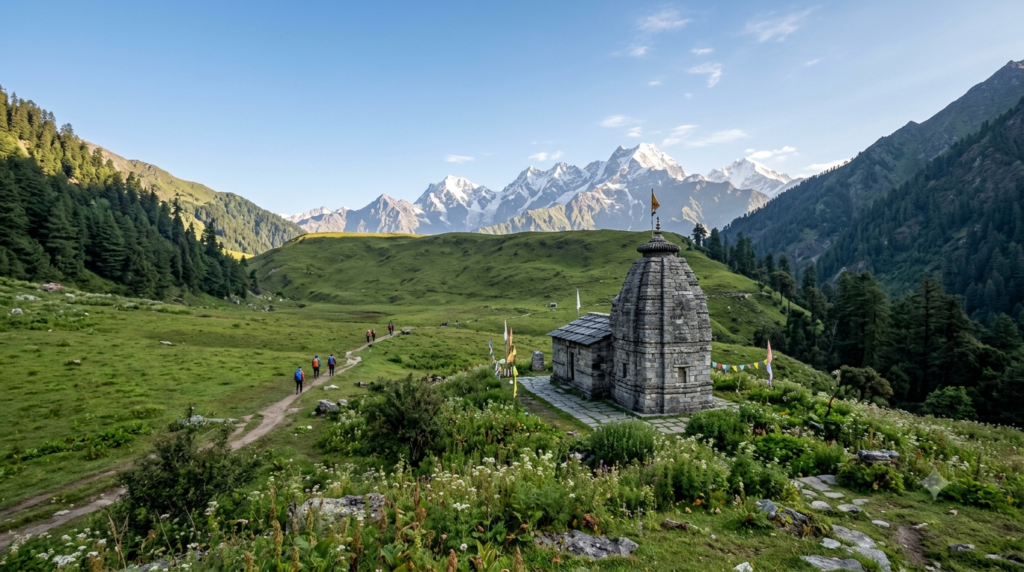
A Madhyamaheshwar Temple darshan is one of the most rewarding Shiva pilgrimages in the Garhwal Himalayas, yet it remains far quieter than nearby Kedarnath. This stone shrine sits at 3,497 metres in Uttarakhand’s Rudraprayag district, and it can only be reached on foot. The reward for that effort is a black-stone, navel-shaped lingam ringed by meadows and the towering Chaukhamba peaks.
This guide covers the verified route, the 2026 season dates, timings, stay options and costs. It also flags the safety details that most pages skip.
Go Kshetra is an independent pilgrim guide. We are not affiliated with, endorsed by, or the official website of the Madhyamaheshwar temple or the Shri Badrinath-Kedarnath Temple Committee. We take no bookings, donations or payments. Use the official portals linked below for registration and current information.
Madhyamaheshwar Temple darshan at a glance
- Location: Gaundar valley, Rudraprayag district, Uttarakhand (not Chamoli, as some sites claim).
- Altitude: 3,497 m (11,473 ft); Buda Madmaheshwar sits about 2 km higher.
- Deity: Lord Shiva, worshipped here as the navel (nabhi) in his bull form.
- Panch Kedar rank: the Second Kedar (Dwitiya Kedar), though often visited fourth in the circuit.
- Managed by: Shri Badrinath-Kedarnath Temple Committee (BKTC).
- 2026 season: opened 21 May 2026; expected to close around 20 November 2026.
- Trek: roughly 16 km one way from Ransi, the last road head.
- Entry fee: none. Darshan is free, and there is no online ticket system.
Is it the Second Kedar or the fourth temple?
This is the single biggest confusion online, so let us settle it clearly. Madhyamaheshwar is the Second Kedar in scriptural rank, because it enshrines the madhya (middle) or navel of Shiva. Kedarnath, the hump, is the First Kedar.
Many travel pages call it the “fourth temple”, and they are not entirely wrong either. In the traditional Panch Kedar yatra, pilgrims usually visit Kedarnath, then Tungnath, then Rudranath. Only after that do they reach Madhyamaheshwar, before finishing at Kalpeshwar.
So the shrine ranks second by legend, yet fourth by walking order. Both facts are true, and now you know why the numbers clash.
Where is the Madhyamaheshwar temple located?
The temple stands above Gaundar village in the Rudraprayag district of Uttarakhand, deep inside the Kedarnath Wildlife Sanctuary. Several aggregator sites wrongly place it in Chamoli, but the shrine, Ransi, Gaundar and Ukhimath all fall within Rudraprayag. Ukhimath is the nearest town with proper road links, while Ransi is the last motorable point before the trek.
The setting itself is the draw. Snow peaks such as Chaukhamba, Neelkanth and Kedarnath ring a wide alpine meadow, and the Madhyamaheshwar Ganga runs alongside much of the trail. Because the valley gets heavy rain, the forests stay lush and green well into autumn.
Madhyamaheshwar Temple darshan timings, rituals and entry fee
The shrine opens through daylight hours during the season, with a morning and an evening aarti performed by the temple priests in the traditional Shaivite manner. Unlike large temples such as Kedarnath, this remote shrine does not run fixed ticketed darshan slots, so timings stay flexible and unhurried. Since crowds are thin, most pilgrims enjoy a calm, personal Madhyamaheshwar Temple darshan of the black-stone lingam.
Darshan here is completely free. There is no entry fee, and there is no official online booking portal for a Madhyamaheshwar Temple darshan, whatever some websites suggest. If a site asks you to pay for a “darshan ticket” or a “confirmed slot”, treat it as a scam and walk away. The evening aarti, when the whole hamlet gathers, is the experience regular visitors remember most.
You can also request local puja and abhishekam through the priests on the spot. Because facilities are basic, carry your own offerings where you can, and always follow the priests’ instructions inside the sanctum.
Best time for a Madhyamaheshwar Temple darshan
The temple stays open for roughly six months, so timing your Madhyamaheshwar Temple darshan well matters more than most travellers expect. Two windows stand out, and each suits a different kind of pilgrim.
| Window | What to expect | Best for |
|---|---|---|
| Late May to June | Freshly opened shrine, blooming rhododendrons, cool days, cold nights | First-timers who want the opening-season energy |
| September to October | Golden meadows, clear skies, thinner crowds after the rains | Photographers and those seeking quiet |
Avoid the July to August monsoon if you can. Heavy rain triggers landslides and slippery trails, and leeches appear on the lower forest stretches. Because the deity moves to Ukhimath in winter, the shrine itself is shut and snowbound from late November until the next May.
How to reach Ransi for your Madhyamaheshwar Temple darshan
Every Madhyamaheshwar Temple darshan funnels through Ukhimath and then Ransi. Here is how to get there from the plains.
By air
The nearest airport is Jolly Grant (Dehradun), around 220 km from Ransi. From there you hire a taxi or take a bus toward Rudraprayag and Ukhimath, and finally reach Ransi by local cab.
By train
Rishikesh and Haridwar are the closest railheads, both well connected to Delhi and other cities. From either station, shared and private cabs run toward Ukhimath through Rudraprayag. This is the route most independent pilgrims take, since trains from across India feed into Haridwar.
By road
Ukhimath links to Rishikesh, Rudraprayag, Gopeshwar and Dehradun by regular buses and shared jeeps. After Ukhimath, the road narrows toward Ransi, so start early because mountain services thin out by afternoon. If you are already exploring the region, our Rudraprayag darshan guide maps the wider circuit that surrounds this trek.
The Madhyamaheshwar trek route, stage by stage
Reaching the shrine means walking roughly 16 km one way from Ransi. You will hear other figures, so let us clear that up before you plan.
| Stage | Approx. distance | Terrain |
|---|---|---|
| Ransi to Gaundar | ~6 km | Gentle descent through forest, river crossing |
| Gaundar to Bantoli | ~2 km | Easy walk to the river confluence (sangam) |
| Bantoli to Nanu | ~4 km | Steep uphill through oak and rhododendron |
| Nanu to the temple | ~4 km | Continued climb, then flat meadow before the shrine |
Different sources quote 16 km, 18 km or even 24 km one way. The gap comes from where each writer starts counting and whether they use milestones or GPS tracks. The milestone sum from Ransi lands near 16 km, so plan for about 32 km round trip and add the 2 km climb to Buda Madmaheshwar if you attempt it. Most pilgrims split the ascent over two days, resting overnight at Gaundar, Bantoli or the temple meadow.
Trek difficulty and important safety notes
The trek is graded moderate, yet it is not a casual stroll, so honest preparation matters. The trail gains serious height, and the steep “khadi chadhai” after Bantoli tests even fit walkers. Because you climb above 3,400 metres, altitude, cold and remoteness are real factors on this route.
Acute mountain sickness can affect anyone at this height, so walk at a steady pace and drink water often. Carry warm layers, a rain jacket, sturdy trekking shoes and a basic first-aid kit with your regular medicines. Since mobile networks barely work at Ransi and Gaundar, and fail entirely at the temple, download offline maps and tell someone your plan before you start.
If you are elderly, pregnant, or have a heart or breathing condition, consult a doctor before attempting the climb, and consider hiring a mule or porter for support. Never treat a temple visit as a substitute for medical care, and turn back if you feel unwell. Single-use plastic is banned inside the Kedarnath Wildlife Sanctuary, so carry a refillable bottle and bring your waste back down.
Where to stay near Madhyamaheshwar
There are no hotels or resorts on this trail, and that simplicity is part of the charm. Instead, you sleep in village homestays, GMVN guesthouses and basic camps, which also give you home-cooked Garhwali meals like mandua ki roti and local dal.
Indicative rates run from about ₹1,000 to ₹2,500 per night at Ukhimath, Ransi and Gaundar, though prices rise on opening day and peak weekends. At the temple itself, the BKTC and local families offer very basic rooms with warm blankets. Because rooms are limited, book ahead through registered local homestays rather than any unverified agent. Confirm current tariffs directly with your host.
Buda Madmaheshwar and nearby highlights
Serious pilgrims and trekkers rarely stop at the main shrine alone. A short but steep 2 km climb leads to Buda Madmaheshwar, a high meadow that opens a 360-degree view of the Chaukhamba massif. Reach it near sunrise, around 5:30 AM on a clear morning, and the peaks glow orange over the ridge.
Further afield, Kanchani Tal is a difficult high-altitude lake trek for the experienced only. On the way in, Ukhimath’s Omkareshwar Temple is worth a halt, since it is the winter seat of both Madhyamaheshwar and Kedarnath. Devotees heading onward often pair the trip with our Vishnuprayag darshan guide and the wider Shiva circuit covered in our Neelkanth Mahadev temple guide.
Planning your Madhyamaheshwar Temple darshan: guided or solo?
Your biggest choice when planning a Madhyamaheshwar Temple darshan is whether to trek independently or book a guided package, and the right answer depends on your experience. Below is a simple way to decide.
- Go guided if you are a first-timer, travelling from outside Uttarakhand, or unsure about logistics. The trail can confuse walkers after Bantoli, so a local trek captain adds real safety.
- Go solo if you are a fit, experienced trekker comfortable with basic stays and route-finding. Even then, hiring a local guide for roughly ₹800 to ₹1,500 a day is a sensible call.
Whichever you choose, register on the official Uttarakhand pilgrim portal before your yatra, and confirm whether registration is currently required for this route. Because the season is short and weather shifts fast, build a buffer day into your plan for delays.
Common myths and how to avoid booking scams
Misinformation follows this shrine around, so keep these corrections handy. First, no official app or website sells a Madhyamaheshwar Temple darshan ticket, because darshan is free and unticketed. Second, the temple is managed by the Shri Badrinath-Kedarnath Temple Committee, not by the older state Devasthanam board that was scrapped years ago.
Watch out for websites that copy an official look and ask for advance payment toward “confirmed darshan” or “VIP entry”. Route any real transaction, such as Char Dham registration, only through government portals. When a deal sounds urgent or too smooth, slow down and verify it against the official Uttarakhand Tourism page for this shrine.
Before you go
A Madhyamaheshwar Temple darshan rewards planning more than money, since the shrine asks for fitness, warm clothing and a flexible schedule rather than deep pockets. Fix your season first, favouring late May to June or September to October. Then sort your Ransi transport, your two-day trek plan and your stay, and register on the official portal before you leave. Do all that, respect the mountain, and this quiet Second Kedar will likely stay with you far longer than any crowded temple queue.
Frequently asked questions
Is a Madhyamaheshwar Temple darshan free?
Yes. Darshan is completely free, and there is no entry fee. The shrine also has no official online ticket portal, so ignore any site charging for a “darshan slot”.
How long is the Madhyamaheshwar trek?
It is roughly 16 km one way from Ransi, or about 32 km round trip. Some sources quote 18 to 24 km, depending on their start point and measuring method. Most people split the walk over two days.
When does Madhyamaheshwar Temple darshan open in 2026?
The shrine opened for the 2026 season on 21 May 2026, decided by the temple priests around Akshaya Tritiya. It is expected to close around 20 November 2026, though the exact closing date is confirmed later at Ukhimath.
Which district is Madhyamaheshwar in?
It lies in the Rudraprayag district of Uttarakhand, above Gaundar village. Some websites wrongly list it under Chamoli, but the temple and its base villages are in Rudraprayag.
Is the Madhyamaheshwar Temple darshan trek suitable for beginners?
Fit beginners can manage it, since the grade is moderate rather than extreme. Even so, the steep climb after Bantoli and the altitude demand basic fitness, warm gear and, ideally, a local guide.
Is there mobile network at the temple?
No. Signal is patchy at Ransi and Gaundar and absent at the shrine. Download offline maps and share your plan before you begin the trek.
What is Buda Madmaheshwar?
It is a small older shrine and viewpoint about 2 km above the main temple, at a higher altitude. The steep climb rewards you with sweeping views of the Chaukhamba peaks, especially at sunrise.
Can I do Madhyamaheshwar Temple darshan during the monsoon?
It is best avoided. July and August bring landslides, slippery trails and leeches on the lower forest sections. Late May to June and September to October are far safer and clearer.