
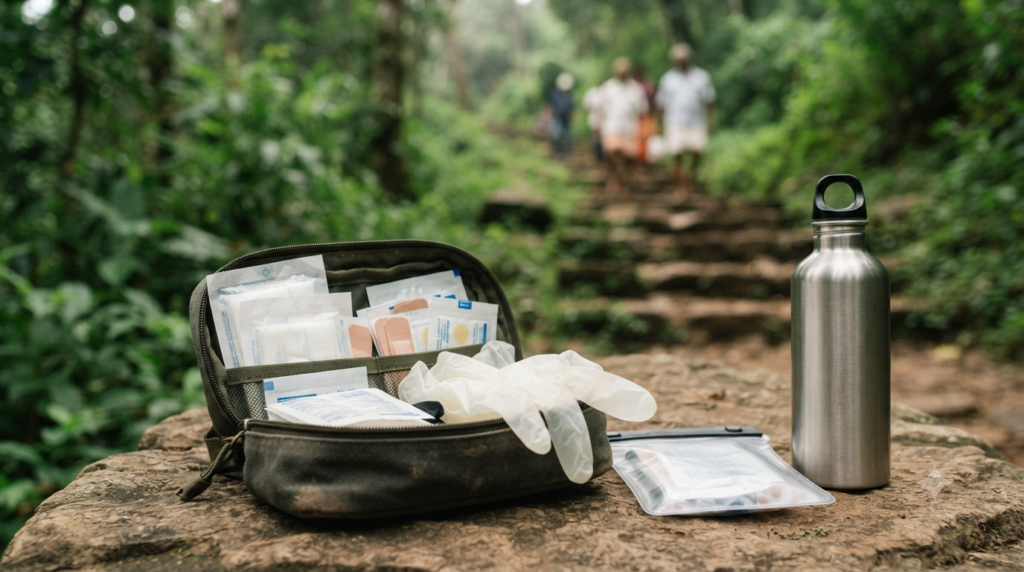
A Sabarimala first aid kit should be small enough to carry uphill yet useful when a foot rubs, a hand gets scraped or a dressing needs changing. The best kit does not try to turn a pilgrim into a doctor. Instead, it keeps basic supplies clean and easy to reach while you seek qualified help for anything serious.
Independent guide: Go Kshetra is not affiliated with Sabarimala Temple or the Travancore Devaswom Board. We accept no bookings, donations or payments. Check current instructions through the official Sabarimala website.
Sabarimala first aid kit at a glance
- Pack sterile dressings, adhesive plasters, gauze, medical tape and blister protection for minor problems.
- Add disposable non-latex gloves, hand sanitiser, a small waste pouch and clean water access for safe handling.
- Keep your prescribed medicines in their original packaging and follow your clinician’s plan.
- Put frequently needed items near the top of a light, water-resistant pouch.
- Know the nearest staffed medical point before starting the climb from Pamba.
The key distinction: A personal kit helps with minor first aid; it cannot replace the medical services that Kerala authorities list along the pilgrimage route. The official Sabarimala pilgrim facilities page lists healthcare centres along the route, so seek help from staffed medical services when needed.
What belongs in a Sabarimala first aid kit?
Build the kit around small cuts, rubbing feet and clean handling rather than a long shopping list. The American Red Cross hiking checklist includes plasters, gauze, tape, blister care and gloves. Your Sabarimala first aid kit may need personal additions, so discuss your health needs with a clinician before travel.
| Supply | Why carry it? | Packing note |
|---|---|---|
| Adhesive plasters | Cover small, clean cuts | Keep individual wrappers intact |
| Sterile gauze and dressings | Protect minor wounds | Choose sealed packs |
| Medical tape and rolled bandage | Secure a dressing | Keep dry and easy to find |
| Blister pads or dressings | Protect rubbed skin | Keep a few ready to reach |
| Non-latex disposable gloves | Reduce contact with body fluids | Store in a clean pocket |
| Hand sanitiser and sterile wipes | Support hand and skin hygiene | Seal liquids against leaks |
| Small waste pouch | Hold used dressings temporarily | Keep separate from clean supplies |
| Personal health information | Help clinicians understand your needs | Keep accessible, not on display |
These are practical suggestions, not a temple-issued checklist or a claim about what security will permit. Check current baggage instructions and cooperate with checks. Avoid carrying sharp tools simply because a general hiking checklist mentions them.
Which items deserve the easiest-to-reach pocket?
Choose a small set for likely stops: a plaster, a blister dressing, clean gauze and hand sanitiser. Put these inside a sealed inner pocket, not loose beside snacks or wet clothing. A companion should know where the kit sits, especially if the owner becomes unwell.
Keep the bulk supply elsewhere in the same bag. This simple split helps prevent a messy search on crowded steps. It also reduces the chance that you touch every sterile packet while looking for one plaster.
Prepare your feet before the Sabarimala trek
Foot friction can spoil a climb long before a major injury occurs. Examine areas that often rub, including heels and toes, before setting off. Keep feet clean and dry, and follow the footwear and devotional practices applicable to your pilgrimage.
Some devotees walk barefoot, while others use footwear where permitted. Neither approach makes cuts or blisters impossible. If your feet feel sore, move out of the flow before checking them, and do not block a narrow path.
What if a blister starts forming?
Stop rubbing the affected spot and inspect it in a safe place. A suitable blister dressing may protect intact skin, but you should not cut or puncture a blister with an improvised tool. Seek medical help when pain prevents walking, infection seems possible or a blister affects someone with diabetes.
Recheck the dressing after walking because sweat and moisture can loosen its edges. If a dressing gets wet or dirty, replace it with clean supplies. A fresh pad is more useful than an impressive kit that remains buried beneath heavy luggage.
How to keep your Sabarimala first aid kit clean
A Sabarimala first aid kit only helps if the person using it keeps clean items separate from dirty ones. The NHS guidance on cuts and grazes recommends clean hands, rinsing a minor wound with safe water and covering it with a suitable dressing. A serious wound needs medical assessment.
- Move to a safe stopping place before opening the kit. Ask for help if the person feels faint or cannot walk.
- Clean your hands with soap and safe water when possible. Use sanitiser only when hands are not visibly dirty.
- Put on disposable gloves if you may touch blood or other body fluids.
- For a minor graze, rinse with clean drinking-quality water or use appropriate sterile cleansing wipes.
- Open a sterile dressing just before use. Avoid touching the surface that will contact the wound.
- Cover the area, then separate used materials into a waste pouch. Clean your hands again afterwards.
Do not pour questionable stream water over a wound. Avoid putting ash, soil, powders or ritual substances into damaged skin. For deep wounds, heavy bleeding, bites or embedded objects, stop self-treatment and seek urgent professional care.
When is hand sanitiser not enough?
Sanitiser helps when soap and water are unavailable, but it works poorly on visibly soiled hands. The US Centers for Disease Control and Prevention advises soap and water where possible. Keep the sanitiser for hands, not as a substitute for proper wound cleaning.
After handling a used dressing, clean your hands again before touching food or another person’s supplies. Keep clean dressings inside the Sabarimala first aid kit’s sealed pocket. If the pouch becomes wet inside, replace affected sterile items.
How to pack a Sabarimala first aid kit
Pack by urgency, not by product type. A Sabarimala first aid kit works best as a light pouch with a quick-access section, a sealed clean section and a separate place for waste. This arrangement saves time without adding a second bulky bag.
- Inspect each item. Check seals, expiry dates and packaging damage before leaving home.
- Build the clean section. Group sterile dressings, gauze, plasters and tape in a dry inner pouch.
- Build the quick-access section. Keep a small blister pad, gloves and sanitiser where you can reach them.
- Separate personal medicines. Keep them identifiable, protected from moisture and available when needed.
- Add a waste pouch. Carry used materials to a suitable disposal point rather than leaving them on the path.
- Test the packed bag. Reach the kit while standing still without unpacking your whole load.
Use a secure outer zip because a pouch that falls open on steps creates another hazard. A compact water-resistant bag is helpful, yet it is not proof against every leak. Protect critical items with sealed inner sleeves, especially during wet weather.
Should a Sabarimala first aid kit go inside the irumudi?
Do not treat the irumudi, the sacred offering bundle, as an ordinary storage bag. Ask your guru swami or authorised temple staff how to carry personal supplies within the practices that apply to you. This guide does not invent an official rule about medicine or first-aid placement.
Keep essential treatment accessible through an arrangement that respects those instructions. You may also need to explain the contents during a security check. Read our Sabarimala rainwear packing guide for more ways to protect small essentials from moisture.
Prescribed medicine is not the same as first aid
Plasters and gauze cannot replace treatment for heart disease, asthma, diabetes or other ongoing conditions. Follow your own prescriber’s instructions and keep prescribed medicine identifiable. Do not stop a regular medicine for fasting or travel without medical advice.
Bring a current prescription or medicine list, relevant health details and information about serious allergies. The details should stay private but accessible to someone helping you. Ask a clinician before travel whether your condition makes a steep climb unsafe or needs a specific emergency plan.
Should you carry painkillers, allergy tablets or oral rehydration salts?
Only carry medicines that suit your own health plan and that you know how to use safely. Ask a clinician or pharmacist about over-the-counter products, interactions and storage. A general packing article cannot choose medicines or doses for a pilgrim it has never assessed.
Do not share prescription medicines with other pilgrims. Serious allergic reactions, severe dehydration and sudden breathing problems need prompt professional care. A first-aid pouch should support that response, not delay it.
Trek preparation starts before reaching Pamba
A small kit is useful only if your body is ready for the effort. Practise comfortable walking and gentle climbs before departure, within your health limits. Arrange a medical review if you have heart, breathing, mobility or other conditions that may raise the risk.
For the wider journey, our Sabarimala pilgrimage guide covers vratham, irumudi, the route and darshan planning. Use it alongside this first-aid checklist to prepare for the full pilgrimage.
Rest as needed during the climb rather than trying to keep a fixed pace. Stop sooner whenever you feel tired or unwell, and follow current route and crowd directions from staff.
Drink safe water, but do not depend on every published tap or kiosk being available at the exact time you arrive. Our Sabarimala drinking water guide covers bottle hygiene and refill planning. Keep the drinking bottle separate from soiled dressings and waste.
How should a group share responsibility?
Agree who carries the main first-aid pouch and who can find it. Each person who needs prescribed emergency medicine should still have appropriate access to it. Explain the plan to older pilgrims, first-time visitors and companions who may not speak the local language.
Choose a meeting point if the group separates, and follow directions from police or authorised volunteers. Do not crowd around someone needing help. Give responders clear space and accurate information about the person’s symptoms.
When the Sabarimala first aid kit is not enough
A Sabarimala first aid kit is not treatment for chest pain, severe breathlessness, fainting, major injury or uncontrolled bleeding. Stop the climb and alert nearby police, medical staff or authorised volunteers. Do not push someone to continue because the destination feels close.
The official pilgrim facilities directory lists medical support around Pamba, Neelimala, Appachimedu and Sannidhanam. However, a directory does not guarantee a particular centre’s live staffing or opening status. Check the latest arrangements on arrival.
Kerala’s official Sabarimala helpline page lists the Emergency Medical Centre Control Room as 04735 203232. Save the number before departure and verify it on the official page. If calling fails, ask the nearest staffed help point or police officer to arrange emergency care.
What if you cannot find an open medical point?
Stop in a safe area and ask authorised staff to direct you to the nearest operating service. Tell them where you are, what happened and whether the person can walk. Do not take an unmarked shortcut or assume a first-aid tent will be present at every rest point.
For more detailed information about listed facilities and emergency help, read our Pamba medical facilities and trek safety guide. It covers the medical network rather than the contents of your personal kit. Staff instructions on the day take priority over a published travel article.
Sabarimala first aid kit mistakes to avoid
A Sabarimala first aid kit can fail through poor packing even when it contains the right products. Most mistakes are simple: damaged wrappers, wet dressings, mixed waste or medicines nobody can identify. Correct them at home, before you are tired and surrounded by people.
- Unlabelled tablets: Keep medicines in original containers, with your own instructions and prescription details.
- One shared messy pocket: Separate sterile supplies from used items, wet cloth and food.
- Excessive gear: Leave out bulky items you cannot use safely or that create unnecessary baggage.
- Hidden kit: Tell a trusted companion where you packed it and how to reach it.
- Untested waterproofing: Check seals before departure and inspect them after heavy rain.
- Ignoring symptoms: Stop early rather than using a plaster or tablet to push through a worrying illness.
Also avoid assuming that ordinary hiking equipment is automatically permitted in every controlled temple area. Follow security directions and current official notices. A sensible kit respects both personal safety and the pilgrimage setting.
Final Sabarimala first aid kit check before leaving
Make the Sabarimala first aid kit light, dry and easy to find. Prioritise sterile dressings, blister protection, clean handling and your own prescribed treatment plan. Then match the kit with realistic walking preparation, safe water and a clear route to professional help.
Check your Sabarimala first aid kit the night before travel and again at Pamba. If anyone feels unwell, change the plan rather than forcing the trek. Basic first aid is useful, but timely medical care matters more.
Frequently asked questions
Is a first aid kit mandatory at Sabarimala?
This guide has not verified an official rule making a personal first-aid kit mandatory for every pilgrim. Carrying basic supplies is a sensible precaution, not a substitute for following temple instructions. Check the current official Sabarimala website for any route or baggage notices.
What is the most useful first aid item for the Sabarimala climb?
There is no single item for everyone. Blister protection and clean plasters help with common minor problems, while sterile gauze supports basic wound care. Your personal prescriptions may matter far more than any general-purpose supply.
Can I pack my own medicines for the pilgrimage?
Keep prescribed medicines with their labels and supporting information, following your doctor’s advice. Confirm any current baggage or security instructions with the responsible authorities. Do not assume that a personal prescription changes access rules in controlled areas.
How do I keep dressings dry during rain?
Place sealed dressings inside a water-resistant pouch, then protect that pouch within the bag. Inspect for moisture after heavy rain because an outer cover can leak. Replace supplies with damaged wrappers instead of using them on broken skin.
Can hand sanitiser replace washing a cut?
No. Hand sanitiser helps clean hands when appropriate, but it does not replace rinsing a minor wound with safe water. Seek medical help for deep, very dirty or infected wounds instead of trying repeated self-treatment.
What should I do if someone has chest pain while climbing?
Stop the climb and seek urgent medical assistance immediately. Tell authorised staff the person’s location and symptoms, and follow trained responders’ directions. Do not treat a possible heart emergency with supplies from a personal first-aid pouch.
Where can pilgrims find medical help on the route?
Official Sabarimala information lists facilities around Pamba, Neelimala, Appachimedu and Sannidhanam. Actual services and staffing can change, so confirm locally. Use the official helpline directory or ask nearby police and authorised staff for assistance.
Should every person carry a separate large kit?
Not necessarily. A group can share general dressings if everyone knows who carries them and where they are. However, each person must maintain reliable access to their own prescribed medicines and personal emergency information.