
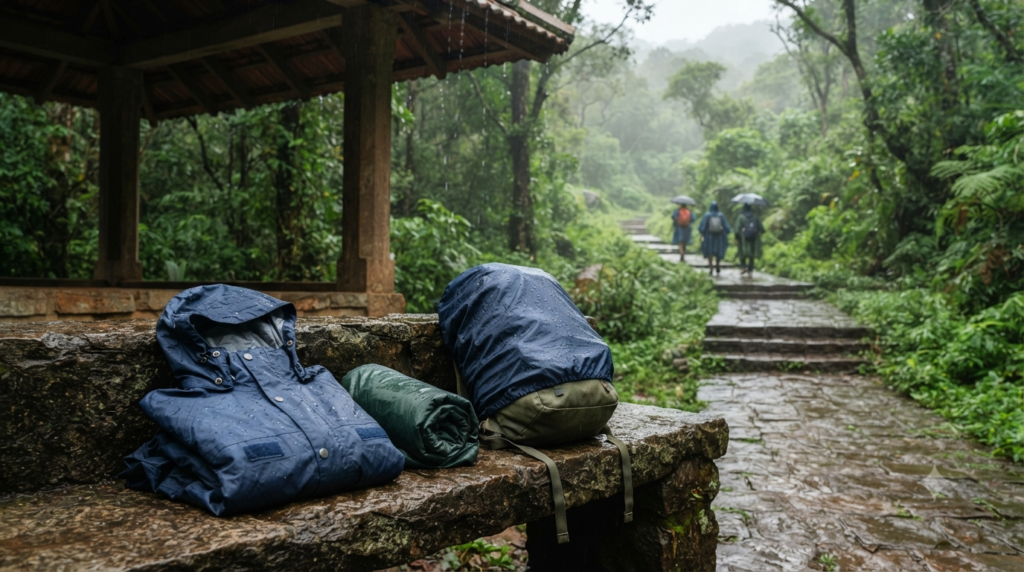
A Sabarimala raincoat should keep you dry without making the uphill walk hotter, harder or less safe. The useful choice is not simply the thickest waterproof layer. Fit, airflow and the way you protect your belongings matter just as much when rain reaches the forested path.
There is also an important limit to any packing guide: a raincoat that works for trekking does not automatically have permission inside every temple area. Check current directions from authorised staff before joining a controlled queue.
Independent guide: Gokshetra is not affiliated with Sabarimala Temple or the Travancore Devaswom Board. We take no bookings, rentals, payments or donations. For rules and services, use the official channels linked below.
Sabarimala raincoat: the quick decision
- Choose a rain layer that lets you raise your arms, see the path and move freely on steps.
- Look for adjustable cuffs, a secure hood and a way to release heat without soaking your clothes.
- Keep medicines, travel papers and a phone in separate water-resistant inner pouches.
- Do not cover or rearrange an irumudi without guidance from your guru swami or authorised temple staff.
- Check the India Meteorological Department (IMD) forecast and any local route warnings before leaving.
- Ask temple or police personnel about rainwear handling near restricted areas; online advice cannot grant entry permission.
For a Sabarimala raincoat, the key test is simple: rain protection helps only while you can still walk, breathe and respond safely to instructions. A wet-weather plan must work when the path gets crowded, not only during a short trial at home.
Why a Sabarimala raincoat matters on the trek
Kerala Tourism describes the Sabarimala shrine in Pathanamthitta district as a forested hill pilgrimage site. Pilgrims commonly approach Sannidhanam from Pamba, then face uphill walking, steps and managed queues. A Sabarimala raincoat can help, yet wet clothing may still feel heavy during a stop-and-start climb.
The Sabarimala raincoat decision therefore involves more than staying dry. An oversized hem can catch your foot, while a hood that slips over your eyes can hide a wet step. A tight, unvented jacket may also leave you drenched in sweat beneath its waterproof shell.
Kerala Tourism tells pilgrims to rest during the climb, use the designated route and follow police and Devaswom personnel. See its official Sabarimala do’s and don’ts before planning how to move in wet conditions.
Sabarimala raincoat or poncho: which is easier to walk in?
A fitted rain jacket usually stays closer to the body, while a poncho can offer more room over loose clothing. Neither is automatically better. Your Sabarimala raincoat choice depends on wind, baggage, heat and whether the hem stays clear of your feet.
| Rainwear type | Practical advantage | Check before the trek |
|---|---|---|
| Rain jacket with hood | Closer fit and easier arm movement | Room at shoulders, cuffs and chest |
| Long raincoat | More coverage over clothing | Hem clearance on stairs and slopes |
| Loose poncho | Air space and some bag coverage | Flapping edges and blocked vision |
| Light packable shell | Less bulk when carried | Seams, zip coverage and breathability |
This comparison covers ordinary outdoor use, not temple approval. Do not assume that a poncho, a particular fabric or any commercial product carries official permission.
How to test rainwear fit at home
Put on your usual pilgrimage clothing, then wear your Sabarimala raincoat over it. Climb a few steps, bend your knees and reach forward as though holding a railing. Your Sabarimala raincoat should move with you, not tug across the shoulders or rise sharply at the waist.
Next, turn your head left and right under the hood. If the hood blocks side vision, adjust it or choose another design. Check that loose ends cannot catch a handrail or trail under your feet, especially while descending.
Ventilation: staying dry without overheating
Waterproof material can keep rain outside yet trap sweat inside. This matters on the Sabarimala climb because uphill effort continues even after a shower passes. A clammy inner layer can feel much like rain leakage, although the shell itself may be intact.
Look for a Sabarimala raincoat with an adjustable front opening, a stable hood and sleeves that do not bind. Underarm vents can help on some jackets, while a loose poncho may allow air to circulate. However, extra openings also need careful handling in driving rain.
When it is safe to stop, loosen a zip or adjust the hood before you feel too hot. Avoid taking a layer off while moving through a dense queue. Keep your hands free when the ground requires balance, and use a designated stopping place rather than blocking others.
What to wear underneath
Under your Sabarimala raincoat, choose light layers that you can change or dry without much fuss. A heavy cotton garment may stay damp for longer after rain or sweating. Carry a compact dry change for later, but do not add so much weight that the climb becomes harder.
Test the complete outfit before departure, not just the outer jacket. A Sabarimala raincoat that feels fine over a thin shirt may become restrictive over several layers. Your devotional dress and any local instructions take priority over general clothing suggestions.
Protecting your phone, documents and medicines
A Sabarimala raincoat is not a substitute for waterproof packing. Water may enter around the neck, cuffs, seams or a bag opening even when your shoulders stay dry. Protect the essentials independently so one leak does not ruin everything.
- Separate the essentials. Put medication, identification and important journey details into small, reusable water-resistant pouches.
- Double-check closures. Close zips or roll-tops fully, then place pouches inside your main bag rather than in an exposed pocket.
- Keep urgent items reachable. Carry prescribed emergency medicine where you can reach it without unloading your whole pack.
- Use a bag cover carefully. Secure any loose edge so it cannot snag or slip off during the climb.
- Plan for a wet return. Keep a separate reusable pouch for damp clothing, and dry all items after the journey.
Even an expensive Sabarimala raincoat cannot secure a bag zip, so seal inner pouches carefully. Gokshetra’s Sabarimala luggage guide discusses why you should not depend on unconfirmed storage arrangements. Meanwhile, its mobile phone guide explains the separate restrictions on phone use inside temple premises.
What about the irumudi?
The irumudi kettu is a sacred offering bundle, not ordinary travel luggage. Therefore, do not assume a commercial rain cover, plastic wrapping or a change in carrying method is appropriate. Ask your guru swami about the customary handling of offerings in rain.
If a security official gives a particular direction, follow it and seek clarification when needed. Keep ordinary electronics and documents in their own protective containers. That way, a packing decision for personal items does not become an unverified instruction about religious offerings.
Rain protection from Pamba to Sannidhanam
The Sabarimala raincoat plan should change with the stage of the journey. At Pamba, organise your load before climbing. Along the ascent, keep the hood stable and check your footing, while giving other pilgrims enough room to move.
Near busy queues, a loose Sabarimala raincoat can snag on rails or other bags. Secure it before you join the line and avoid making sudden clothing adjustments on steps. At Sannidhanam, staff instructions and controlled-area requirements govern what you may carry or wear.
For wider visit preparation, read Gokshetra’s Sabarimala pilgrimage and temple-planning guide. Confirm any opening hours or schedules separately with the Board, since older guides may contain outdated times.
Is a Sabarimala raincoat allowed near the temple?
The official Sabarimala guidance reviewed for this article does not publish a universal raincoat-permission list for every checkpoint and temple area. Your Sabarimala raincoat choice cannot establish temple-entry rights. That means neither an automatic ban nor unconditional permission can be claimed. Follow current signs and directions from the Travancore Devaswom Board, police and security staff.
The distinction matters because practical rainwear advice is not a religious dress rule. The Kerala government Sabarimala instructions require pilgrims to follow queues and security checks. They do not identify a standard poncho deposit point or a raincoat removal charge.
If staff ask you to fold or remove a garment, step aside where permitted and ask about the correct next step. Never leave it unattended or assume a rental or storage counter operates nearby. Check the Travancore Devaswom Board website for current notices before your visit.
What if rain gets heavy or the route is restricted?
A Sabarimala raincoat cannot make a hazardous trek safe. Heavy rain can affect visibility and footing, while lightning creates risks that waterproof clothing cannot prevent. Officials may issue warnings or control access when conditions change, so completing your planned route is never guaranteed.
Check the India Meteorological Department’s Kerala weather page for district warnings and Sabarimala forecasts. Also check Pathanamthitta district warnings before travel. An old forecast or a friend’s photo cannot describe conditions at the time you arrive.
The Kerala State Disaster Management Authority advises people to seek proper shelter during lightning and avoid standing under trees. Follow its lightning safety advice. Do not shelter beneath an isolated tree or assume a poncho protects against a thunderstorm.
When the plan fails: safer alternatives
- Before departure: Check official alerts and delay travel if authorities advise against the journey.
- At Pamba: Ask police or authorised staff whether the intended route is open and safe before starting.
- On the ascent: Stop at a safe, permitted point if visibility or balance deteriorates. Seek official help.
- If access stops: Follow any closure or rerouting instruction. Do not take an unofficial forest shortcut.
- If someone becomes unwell: Use official medical help instead of trying to finish the climb at any cost.
These are decision steps, not promises of shelter, transport or alternative entry. Availability and route directions may change on the day.
Footing and movement on wet steps
A Sabarimala raincoat can improve comfort, but it does not prevent slips. Watch the surface rather than your phone, and avoid rushing when the line advances. Use a railing where available and follow the approved route.
Footwear practices require their own check. Gokshetra’s Sabarimala footwear guide separates ordinary walking preparation from temple-entry instructions. It does not claim blanket permission to wear shoes on every stretch or invent a shoe-storage service.
If you follow a barefoot devotional practice, take extra care with slippery surfaces and any existing foot injury. A wet hem should never hide your feet. Likewise, do not tie a long poncho so tightly that you cannot take a normal step.
Sabarimala raincoat mistakes that are easy to avoid
- Buying a Sabarimala raincoat by size label alone: Test the layer over your actual pilgrimage clothing and bag.
- Ignoring the return walk: Check hem clearance and vision while walking downhill, not just uphill.
- Assuming waterproof means breathable: Build in safe chances to release body heat.
- Covering every belonging in one bag: Use separate protection for essentials in case the outer pack leaks.
- Wrapping the irumudi without advice: Confirm respectful handling with your guru swami and obey site directions.
- Depending on a rental counter: No current, verified official raincoat rental facility or tariff was established by the sources reviewed.
- Leaving wet gear behind: Carry it out and dispose of any waste in designated bins.
The official Sabarimala general instructions describe the Mission Green Sabarimala effort to reduce plastic waste. Use reusable protection where suitable, but do not confuse that environmental advice with a verified ban on every rainwear material. Read the official general instructions for context.
Sabarimala raincoat packing checklist
- Try the rain layer over your full walking outfit; check arm reach and step length.
- Adjust the hood, cuffs and hem so vision and movement stay clear.
- Test airflow during a short walk, including a few uphill steps.
- Place medicines, identification and travel details in separate reusable water-resistant pouches.
- Pack a light dry layer and a place to keep damp clothing after the walk.
- Discuss the irumudi and any required devotional dress with your guru swami.
- Check IMD forecasts, district warnings and current temple notices.
- Ask authorised staff about rainwear handling before entering controlled areas.
Pack your Sabarimala raincoat within a load you can manage on a strenuous uphill route. For health planning, Gokshetra’s Pamba medical and pilgrimage-safety guide explains how to prepare for help during the climb.
Before you leave for the trek
Choose a Sabarimala raincoat for safe movement, useful ventilation and manageable weight. Protect vital belongings separately, since a rain layer will never make an open bag waterproof. Above all, keep official permission and weather-related access decisions separate from clothing advice.
People with heart, lung, mobility or other serious health conditions should discuss a strenuous climb with a qualified clinician. Carry prescribed medicines and seek help for chest pain, severe breathlessness, dizziness or injury. No rain garment can replace medical advice or a safe decision to turn back.
Frequently asked questions
Can I wear a raincoat while trekking to Sabarimala?
Rainwear can be useful for ordinary wet-weather walking, but this is practical advice rather than official permission. The public guidance reviewed does not set out a blanket raincoat policy for every part of the route. Follow the current directions of authorised staff.
Is a poncho better than a jacket for Sabarimala?
A poncho may offer more room and airflow, while a fitted Sabarimala raincoat can reduce loose fabric around steps. Neither option works well if the hood blocks your view or the hem catches your feet. Test both against your clothing and baggage.
How do I stop sweating inside a Sabarimala raincoat?
Choose a layer with usable vents or an adjustable opening, and avoid wearing unnecessary thick layers underneath. If the path and queue allow, pause safely to release heat. Sweat can collect under waterproof fabric even when no rain gets through.
Can I cover my irumudi with a raincoat or plastic sheet?
Do not treat sacred offerings as ordinary baggage. Ask your guru swami how to protect the irumudi respectfully and follow any direction from authorised temple personnel. This guide cannot confirm a universal wrapping method or grant permission for one.
Will a Sabarimala raincoat keep my phone and documents dry?
Not reliably on its own. Rain can enter a coat opening or reach an exposed bag, so use separate, securely closed water-resistant pouches. Remember that official guidance restricts mobile phone use inside temple premises.
Can I rent a raincoat at Pamba or Sannidhanam?
The official materials reviewed did not confirm a current authorised raincoat rental counter, an operating schedule or a rental price. Therefore, do not plan around an assumed service. Bring suitable rain protection and ask official staff about any local arrangement.
Are raincoats banned inside the Sabarimala temple?
No blanket ban could be verified from the official public guidance reviewed, but that does not establish unconditional permission. Temple areas can have specific staff and security directions. Ask before entering and comply with the instructions in force.
What should I do if there is lightning during the climb?
Seek appropriate shelter and follow police, district and disaster-management directions. The Kerala State Disaster Management Authority warns against sheltering under trees during lightning. A raincoat or poncho offers no protection against a lightning strike.