
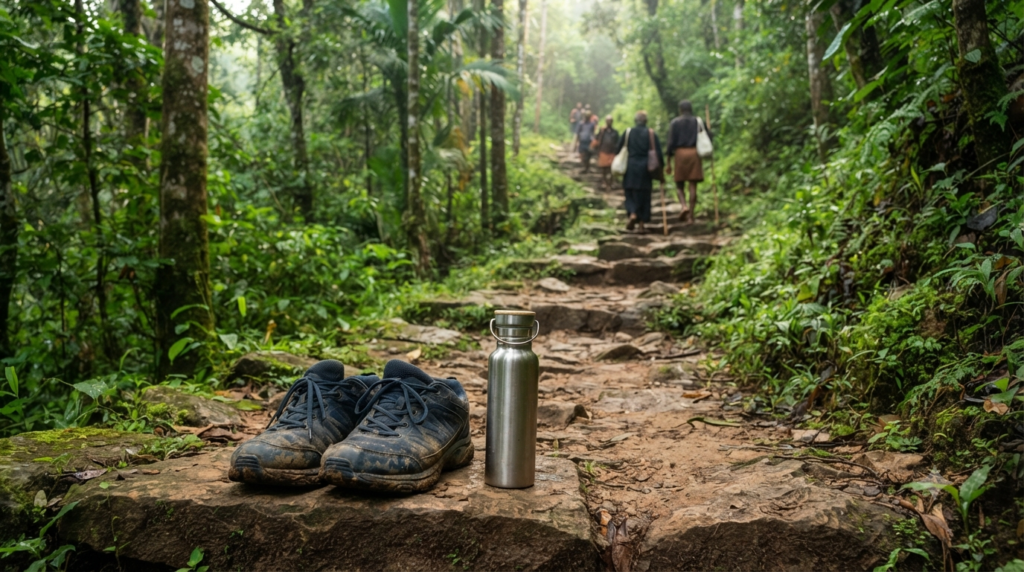
Sabarimala footwear rules need two separate checks: how to prepare for the hill walk and what temple staff require near the shrine. Kerala Tourism’s published guidance explains the route, queues and security checks. However, that page does not state a universal barefoot rule for the whole trek or confirm a footwear-storage arrangement.
The safest plan is to choose footwear for travel without assuming permission at every stage. Before joining the final temple approach, follow current signs and ask authorised staff how to handle footwear.
Independent-guide notice: Gokshetra is not the official website of Sabarimala Temple or the Travancore Devaswom Board. We are not affiliated with either body and accept no bookings, payments or donations. Use official channels for current instructions.
Sabarimala footwear rules at a glance
- Confirmed: Kerala Tourism’s Sabarimala do’s and don’ts call for route discipline, rest breaks, queues and security checks.
- Not confirmed by that page: A blanket rule saying every pilgrim must walk barefoot from Pamba.
- Also not confirmed: A universal exemption for medical shoes, a named shoe counter, fixed storage hours or a footwear-deposit fee.
- Useful approach: Separate the footwear you may need for travel from the instructions staff give for shrine entry.
- At the site: Follow the police and Travancore Devaswom Board staff, even when online advice says something different.
One important distinction protects both safety and accuracy: trekking advice is not the same as an official temple-entry rule. A shoe can suit a slope yet still need different handling at a controlled religious area.
What do the official Sabarimala footwear rules actually say?
The Kerala Tourism Sabarimala do’s and don’ts explain the traditional route, security checks and conduct near the holy steps. They also advise pilgrims to cooperate with officers and rest during the climb. This page does not set out a full footwear policy for every part of the pilgrimage.
For Sabarimala footwear rules, that gap matters because a custom or photograph cannot establish a universal rule. Some pilgrims follow barefoot devotional practices, but an observed tradition is not proof of a universal requirement covering every walker.
Likewise, the lack of a footwear line on a general-instructions page is not a guarantee that shoes are permitted inside the temple. Specific instructions may apply at checkpoints, shrine approaches or other controlled areas.
For the latest notices, consult the Travancore Devaswom Board. At the pilgrimage site, follow the authorised staff responsible for the area you are entering.
Footwear decisions from Pamba to Sannidhanam
Sabarimala footwear rules need stage-by-stage thought because the journey passes through different places. Consider both the physical demands and any religious or security directions currently in force.
| Stage | What to prepare for | What remains to check |
|---|---|---|
| Travel to Pamba | Walking between transport, waiting areas and the trek start | Any local footwear direction at pilgrim facilities |
| Uphill trekking route | Slopes, steps, wet ground, crowds and repeated stops | Whether your intended footwear matches current route instructions and religious observance |
| Controlled approach to Sannidhanam | Queues, signs and security screening | The location and method for removing or handling footwear, if directed |
| Temple entry and darshan | Temple-specific conduct and staff instructions | What footwear arrangement the authorities require that day |
This table is a planning tool, not a permission chart. It does not grant approval for any particular shoe at a checkpoint or shrine space.
Sabarimala footwear rules for trek preparation
Sabarimala footwear rules should not replace basic preparation: stable, well-fitting footwear helps on ordinary hill walks. Yet Sabarimala is also a religious pilgrimage. Any footwear decision must respect your observance and the directions in effect on the route.
If you expect to use shoes during any permitted walking stage, test them before travel. A new pair can cause blisters even on a short climb. Check the soles for grip and make sure the heel does not slide.
Wet surfaces deserve special attention. Smooth soles can lose traction, while loose sandals may shift on steps. Do not treat expensive trekking shoes as essential, or assume a particular brand or style has temple approval.
For barefoot devotees, conditioning and route awareness deserve equal care. Avoid suddenly attempting a demanding walk without preparation. Seek advice from a qualified clinician if you have diabetes, reduced foot sensation, circulation problems or a recent injury.
What about socks, sandals and slippers?
Socks may reduce friction inside suitable shoes, while lightweight sandals can be convenient during ordinary travel. Neither point establishes a temple rule. The Kerala Tourism guidance does not confirm permission for socks, slippers or sandals at checkpoints.
Do not pack several pairs on the assumption that an official changeover point exists. Ask an authorised officer about the current arrangement before entering a controlled area.
Do Sabarimala footwear rules require barefoot trekking?
The Kerala Tourism do’s-and-don’ts page reviewed here does not state a universal requirement to walk barefoot for the entire Pamba-to-Sannidhanam journey. That omission does not grant permission to wear shoes everywhere. Observe your own religious commitments and follow current directions from temple and security staff.
Many pilgrims understand barefoot walking through their own devotional discipline or guidance from a guru swami. Such practice should receive respect without turning it into an unsourced legal or administrative claim.
Do not infer a broad rule from photographs of pilgrims without shoes. A picture shows what those people wore at one moment, not what every visitor must wear on every stretch.
Where should you remove footwear near the shrine?
The Kerala Tourism guidance does not identify a universal footwear-removal point. Therefore, do not promise a named gate, staircase, counter or queue entrance as the required place. On arrival, read the current signs and ask authorised Devaswom or police personnel before proceeding toward the shrine.
If a staff member directs you to remove footwear, ask how to comply safely without blocking a queue. Do not leave shoes in a passage or beside an emergency route. Equally, do not argue that the general website gives you permission to keep wearing them.
Take special care when travelling with children or a group. Agree on a simple plan before joining a tightly managed line, since people can get separated while adjusting bags and clothing.
Are there Sabarimala footwear storage counters or fees?
Sabarimala footwear rules and shoe storage are separate questions. The Kerala Tourism guidance does not confirm a current dedicated footwear counter, its location, accepted items or charge. A general luggage cloakroom is not automatically a shoe-storage service. Verify the available option directly with authorised staff before leaving any footwear behind.
Gokshetra’s Sabarimala luggage cloakroom guide explains why older storage records cannot guarantee today’s accepted items or rates. Never present a past luggage-related price as a current shoe-deposit fee.
If an approved service operates on your visit, check its identity, hours, receipt system and collection arrangements. Keep the receipt accessible. Never leave footwear with an unknown person or send money through an unsolicited storage link.
Sabarimala footwear rules: What if staff stop you?
Entry handling is not guaranteed by a blog’s advice. Officers may require a change before you can proceed, and a storage service may not be available. The sensible response is to follow the specific direction, seek an authorised explanation and avoid holding up the queue.
- Ask what the instruction covers. Is it about this queue, the next security point or the shrine area? Listen to the officer’s answer.
- Ask for the approved next step. If staff require removal, ask where you can safely put or keep it. Do not assume a counter exists.
- Reassess if you cannot comply safely. Step aside where permitted and seek further help from Devaswom staff or police.
- Get medical help when needed. If foot pain, dizziness or injury affects your ability to continue, do not press on merely to keep your place.
No online source can guarantee that staff will grant an exception or offer special access. Even a medical concern does not establish a verified footwear exemption. Ask the authorities for current instructions rather than relying on a claimed entitlement.
Foot care during the uphill pilgrimage
Kerala Tourism advises pilgrims not to climb in one stretch without rest. Its guidance also asks visitors to follow police and Devaswom officers’ directions. Pace yourself, especially when the route is crowded or damp.
Sabarimala footwear rules do not replace a personal foot check before setting out. Existing cuts, painful blisters or swelling may worsen on slopes. If your footwear is rubbing, stop in a safe place and address it before a small problem becomes a serious one.
Carry water and take sensible breaks. Our Sabarimala drinking water guide covers refill planning, while the Pamba medical facilities guide explains when to seek help.
People with heart, breathing, nerve or mobility conditions should seek clinical advice before a strenuous climb. Carry prescribed medicines as directed. If you develop chest pain, severe breathlessness, faintness or serious foot injury, stop and seek medical assistance promptly.
Common mistakes about Sabarimala footwear rules
- Treating every online claim as an official rule. Check whether it cites a current Travancore Devaswom Board notice or a named authority.
- Choosing brand-new shoes for a long walk. Test the fit beforehand, so the first climb does not become a blister test.
- Assuming barefoot means risk-free. Watch for heat, rough patches, wet steps and signs of injury.
- Carrying a spare pair without a storage plan. Extra weight can become inconvenient in a long queue.
- Confusing luggage storage with footwear storage. Ask what the service actually accepts before leaving anything.
- Leaving belongings unattended. Use only a confirmed approved arrangement, if one exists.
A good plan stays flexible because route conditions, queue movement and on-site instructions may change. Prepare for the walk, but do not turn your preparations into a claim about temple policy.
Sabarimala footwear rules: a pre-trek checklist
- Read the Kerala Tourism do’s and don’ts and check the latest Board notices before travel.
- Discuss any customary barefoot observance with your guru swami or trusted pilgrimage group.
- Check the condition of your feet and test any walking shoes you plan to use where permitted.
- Pack light. Bring essential medicines, water and the items your pilgrimage requires.
- At Pamba, ask authorised staff about any current footwear instructions for the approach you will take.
- Before the controlled shrine area, follow signs and security directions about removal and handling.
- Do not rely on an unverified shoe counter, fee, medical exception or guarantee of entry.
This Sabarimala footwear rules checklist leaves room for both faith and practical safety. It also avoids the common error of presenting one pilgrim’s experience as a regulation for everyone.
Before you start the climb
The right answer to a footwear question depends on the stage of the journey and the instructions there. Prepare your feet for a strenuous walk, while respecting your own religious practice. For shrine access, rely on current official directions rather than a blanket claim about Sabarimala footwear rules.
If you need a specific answer about footwear handling, ask authorised staff before joining the final queue. A clear answer at the checkpoint is more useful than a guessed counter location or fee.
Frequently asked questions
Can I wear shoes while trekking from Pamba?
The Kerala Tourism do’s-and-don’ts page does not provide a universal shoe-permission rule for the whole climb. Choose your travel plan with care, respect your observance and check current route instructions with authorised staff. Do not assume that footwear suitable for trekking is automatically permitted at temple entry.
Must every pilgrim walk barefoot to Sabarimala?
The Kerala Tourism guidance does not state a blanket barefoot rule for the entire trek. That does not cancel the religious discipline followed by many devotees or any current instruction at the site. Ask your guru swami about your practice and temple staff about access rules.
Are slippers or sandals allowed near Sannidhanam?
The Kerala Tourism guidance does not provide a precise permission list for sandals or slippers at every checkpoint. Do not assume that light footwear receives different treatment from shoes. Follow the signs and ask the staff controlling the area before entering.
Where do I leave my shoes before darshan?
The Kerala Tourism guidance does not confirm a universal shoe-removal or storage location. Ask authorised personnel for the current arrangement before leaving anything. Do not place shoes in a queue, exit route or unattended corner.
Is there a fee to store footwear at Sabarimala?
The Kerala Tourism guidance does not identify a verified current footwear-storage fee. Do not substitute an old luggage-locker charge for a shoe fee. If an authorised facility operates, confirm its displayed terms and payment procedure there.
Can someone with a foot injury obtain an exemption?
The Kerala Tourism guidance does not establish an automatic medical exemption from temple footwear instructions. Seek medical advice about the climb and ask authorised temple personnel about current access requirements. Do not rely on an internet claim that a doctor’s letter guarantees a particular arrangement.
Are socks allowed inside the temple?
The Kerala Tourism guidance does not settle sock requirements at every temple access point. Local staff may give different instructions for socks and shoes, so confirm before entering. Follow the direction given by the responsible staff rather than assuming permission.
What if the footwear counter is closed?
First establish whether an approved footwear service exists; the Kerala Tourism guidance does not guarantee one. If staff require footwear removal, ask them for the authorised next step. If no safe solution is available, seek further guidance before joining the queue.