
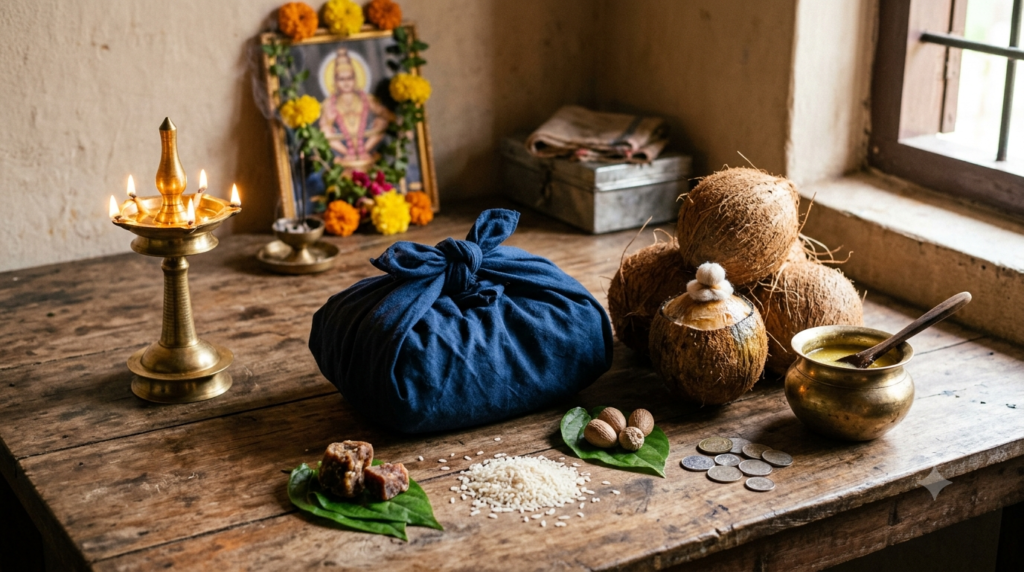
The Sabarimala irumudi items list begins with a ghee-filled coconut, a two-part cloth bundle and guidance from a Guru Swamy. But the shopping list is only one part of the preparation. The correct traditional order is to wear the Ayyappa mala, begin the vratham, prepare the irumudi near departure and then undertake the pilgrimage.
Independent-guide notice: Gokshetra is not affiliated with Sabarimala Temple or the Travancore Devaswom Board. We do not accept darshan bookings, payments or donations. Follow the Travancore Devaswom Board for current official directions.
Sabarimala irumudi items list at a glance
- First: wear the mala (Malayidal), which traditionally marks the start of the vratham.
- Next: follow the traditional 41-day observance with guidance from your Guru Swamy.
- Before departure: prepare the two-compartment irumudi during Kettunirakkal or Kettunira.
- Front pouch: pack offerings, especially the ghee-filled coconut for Neyyabhishekam.
- Rear pouch: use it for items directed by your tradition; do not overload it.
- At Sabarimala: carry an irumudi to use the sacred 18 steps. Check separate darshan-entry requirements before travelling.
This Sabarimala irumudi items list is a planning checklist, not a compulsory inventory for every family, regional tradition or group. The Kerala Government’s Sabarimala ritual guidance explains the mala, vratham and irumudi in that order.
What is Ayyappa mala and irumudi kattu?
The Irumudi Kattu is a two-compartment bundle carried by devotees undertaking the pilgrimage to Sabarimala. It contains items needed for worship and offerings to Lord Ayyappa. In fact, the word irumudi refers to its two sections: munmudi at the front and pinmudi at the rear.
The front holds devotional offerings, while the rear carries different items. The rear traditionally holds provisions for the journey or other items specified by the Guru Swamy. Customs vary, so you should not buy every item printed on an online checklist.
Correct order: mala, vratham, kettunira and pilgrimage
Wearing the Ayyappa mala starts the traditional observance; it does not follow the 41-day vratham. This corrects a common sequence mistake. Kerala Tourism calls the mala-wearing ritual Malayidal and identifies it as the start of the period of abstinence.
- Wear the mala: receive the prayer beads with appropriate prayers. A temple priest or Guru Swamy commonly guides this step. The Kerala Government also describes an option to wear it in one’s home prayer space.
- Observe the vratham: the customary Mandala observance lasts 41 days. Devotees focus on simple living, prayer, self-discipline and abstaining from intoxicants. Discuss personal practice and any health limits with your guide.
- Prepare for Kettunira: check the items list with your Guru Swamy before buying or packing. Prepare the coconut and cloth bag as instructed.
- Conduct Kettunirakkal: after prayers, pack and tie the irumudi under the Guru Swamy’s guidance. The ceremony normally comes close to departure, not before the vratham starts.
- Travel and follow official entry procedures: carry the irumudi respectfully, follow authorised routes and comply with queue and security checks.
However, the customary observance and the admission process are different matters. A pilgrim should not assume that wearing a mala alone provides a virtual-queue booking or an exemption from on-site checks.
Sabarimala irumudi items list: front and rear pouches
The Sabarimala irumudi items list makes more sense when grouped by purpose instead of by a fixed number of purchases. The munmudi carries offerings for worship, while the pinmudi holds traditional journey provisions. Actual quantities and some placements vary by custom.
| Item | Common purpose | Preparation note |
|---|---|---|
| Two-compartment irumudi cloth | Separate offerings and provisions | Use the type your Guru Swamy recommends |
| Ghee-filled coconut (neyy-thenga) | Neyyabhishekam offering | Prepare and seal as guided |
| Rice | Traditional offering or provision | Amount and pouch placement vary |
| Jaggery | Traditional offering | Carry only the required amount |
| Betel leaves, areca nut and offering coins | Traditional offerings | Confirm with your group |
| Additional coconuts | Customary offerings at designated spots | Ask where they belong in the bundle |
| Simple journey provisions | Traditional rear-pouch contents | Keep the bundle light |
This Sabarimala irumudi items list describes common items; it does not claim to be a universal temple-issued inventory. For example, some groups include additional pooja articles. Others use a smaller set. Therefore, your guide should settle the final contents before Kettunira.
Sabarimala irumudi items list for the front pouch
The front pouch, or munmudi, carries offerings to Lord Ayyappa and other deities. Kerala’s official ritual description places the ghee-filled coconut and sacred offerings here. The ghee is then used for Neyyabhishekam, one of the pilgrimage’s central devotional acts.
- Neyy-thenga: a coconut with its water removed and ghee placed inside for offering.
- Rice and jaggery: traditional offerings, in quantities specified by the Guru Swamy.
- Betel leaves, areca nut and coins: items used in many groups’ devotional preparations.
- Other customary offerings: include them only when your temple or Guru Swamy advises them.
Some older versions of the Sabarimala irumudi items list add camphor, incense, flowers, turmeric and vermilion. That does not mean every item is required for admission or even suitable to carry. Avoid unnecessary, hazardous or plastic-wrapped materials. Check what the local ceremony actually uses.
How should the ghee coconut be prepared?
During Kettunira, the pilgrim or guide drains the coconut water through a small opening and fills the shell with ghee. The opening then needs a secure seal. Kerala’s official Sabarimala ritual page describes this offering as a symbol of replacing worldly attachments with spiritual purpose.
Do not attempt the preparation with unsafe tools, since a leaking coconut can spoil the offerings. Ask your Guru Swamy to supervise the filling and packing. Also confirm how the coconut will be handled at Sannidhanam; its ghee is for the authorised Neyyabhishekam process.
Sabarimala irumudi items list for the rear pouch
The rear pouch, or pinmudi, traditionally holds selected provisions for the pilgrimage. Some practices place additional coconuts there. Other groups use simple food supplies or small quantities of rice. Consequently, there is no sound basis for declaring one universal rear-pouch inventory.
For this Sabarimala irumudi items list, pack only what your Guru Swamy directs. Heavy clothes, toiletries, large food packets and bulky electronics should not automatically go into the sacred bundle because they add weight. Keep essential medicines, drinking water and travel documents safely accessible in a separate practical arrangement where current rules permit.
Before packing, ask one useful question: is this a traditional offering or ordinary travel luggage? The answer often saves weight and confusion during the climb.
Sabarimala irumudi items list: how Kettunira packing works
Kettunirakkal, also called Kettunira, is the prayerful preparation and tying of the irumudi. Devotees commonly perform it at a temple or suitable prayer space, with a Guru Swamy guiding the sequence. However, the precise prayers and family customs may differ.
- Check the inventory: review the pouch contents with your Guru Swamy before the ceremony starts.
- Prepare a clean place: arrange the cloth, offerings and ghee coconut respectfully. Follow the local prayer custom.
- Fill the ghee coconut: use a secure method under experienced guidance.
- Pack the front pouch: place the coconut and approved offerings in the munmudi.
- Pack the rear pouch: add the provisions or coconuts required by your tradition, without unnecessary weight.
- Tie and receive the bundle: the Guru Swamy guides the tying and places the irumudi for the onward journey, often amid Ayyappa chants.
The ritual may take place at home or in a temple according to local practice. However, a website checklist cannot substitute for someone who understands your group’s ceremony. Keep the prepared bundle secure and treat it respectfully while travelling.
Traditional observance versus current Sabarimala entry rules
Tradition explains why devotees wear a mala, observe vratham and prepare an irumudi before travel. Admission rules decide how pilgrims enter the site on a particular day. Mixing these categories therefore creates the false impression that a devotional checklist guarantees entry.
| Traditional practice | Official access or safety instruction |
|---|---|
| Wear mala and observe vratham | Check current darshan registration and entry rules separately |
| Carry irumudi respectfully | Irumudi is required for access via the sacred 18 steps |
| Pack coconuts for offerings | Never break coconuts on the 18 steps |
| Set out with a pilgrimage group | Follow authorised queues, security checks and crowd directions |
Kerala’s official Sabarimala guidance says only devotees carrying irumudi can ascend the sacred 18 steps. It also describes another passage for devotees without the bundle. Therefore, irumudi is not the same as a universal requirement for every form of darshan.
The Travancore Devaswom Board’s Sabarimala page links to the Virtual-Q system. The Board homepage has displayed a notice describing online Virtual-Q booking as mandatory.
However, the live booking portal could not be checked during this review, so current exceptions or on-site registration arrangements remain unconfirmed. Before travelling, check the Board’s latest notices and applicable registration instructions. Wearing the mala or carrying irumudi does not replace any entry procedure the authorities require.
Can you break a coconut on the 18 steps?
No. Kerala Tourism’s official dos and don’ts explicitly prohibit breaking coconuts on the 18 holy steps. Carrying coconuts for worship does not grant permission to break them wherever you wish. Use only the designated places and follow temple staff directions.
Sabarimala irumudi items list: common packing mistakes
- Starting the vratham before wearing the mala: the traditional order begins with Malayidal, so plan the dates accordingly.
- Buying every online-listed item: ask for your group’s actual list; some ingredients belong to local custom, not universal rules.
- Assuming incense and camphor are compulsory: do not add fire-related items merely because an older checklist mentions them.
- Putting all personal belongings into the irumudi: separate ordinary travel needs from devotional packing.
- Assuming the mala or irumudi replaces the queue pass: check the current Travancore Devaswom Board procedure.
- Using the holy steps for coconut breaking: ask officials for the designated offering area instead.
Also keep plastic waste out of the forest and temple surroundings. Do not throw clothing, food wrappers or discarded offerings into the Pamba River. Moreover, follow every security direction even if your pilgrimage group has used a different custom before.
Sabarimala irumudi items list: final Pamba checklist
- Confirm that your mala, vratham and Kettunira plans follow the guidance of your Guru Swamy.
- Check the final irumudi contents before the bundle is tied.
- Confirm official Virtual-Q instructions, opening days and any required identity or queue documents.
- Keep medicines accessible, plan clean drinking water and avoid unnecessary weight.
- Check whether your group has a safe pace and rest plan for the uphill walk.
- Know where authorised police and medical help points are located.
The climb can be strenuous, so prepare for breaks and changing conditions. If you have heart, breathing or mobility concerns, seek medical advice before attempting it. Do not undertake fasting or restrict food or fluids against medical advice. Gokshetra’s Pamba medical facilities guide explains how to plan for help, while its drinking-water guide covers safer hydration planning.
Phone-use limits also matter during the final approach. Read the separate Sabarimala mobile phone rules guide, and follow the signs and officers on duty rather than making assumptions about every checkpoint.
What if an item or a darshan slot is missing?
If an irumudi item is missing before Kettunira, ask the Guru Swamy whether that item belongs to your group’s actual ritual. Some listed articles are optional local customs. Do not open or alter a completed bundle independently during travel just because an online list differs.
If a current Virtual-Q slot is unavailable, the Sabarimala irumudi items list cannot guarantee temple admission. Check the Board’s official booking channel for another eligible date or any formally announced arrangement. Never rely on agents promising special entry. Similarly, if security turns you back or crowd access stops, follow police and Devaswom instructions.
Before you begin the pilgrimage
The best Sabarimala irumudi preparation is not the longest shopping list. Start with the mala, observe the vratham in a safe and thoughtful way, and let your Guru Swamy confirm the offerings before Kettunira. Keep devotional customs distinct from current entry rules. This Sabarimala irumudi items list therefore protects both the meaning of the pilgrimage and your travel plan.
Frequently asked questions
Is the Sabarimala irumudi items list identical for everyone?
No. The Sabarimala irumudi items list has shared basics, especially the ghee-filled coconut and two-part bundle, but items and quantities vary by tradition. Ask your Guru Swamy for the list used by your temple or pilgrimage group before buying optional offerings.
Do I wear the mala before or after the 41-day vratham?
Wear the mala at the beginning of the traditional observance, not at the end. Kerala Tourism identifies Malayidal as the start of Mandala Vratham. Kettunira comes later, close to the pilgrimage departure.
Is the 41-day vratham an official Virtual-Q booking requirement?
The 41-day vratham is a traditional devotional observance, not proof of Virtual-Q registration. The Travancore Devaswom Board homepage has described online booking as mandatory, but the live portal could not be checked to confirm current requirements or exceptions. Check official instructions for your travel date; wearing a mala or completing the vow is not a booking confirmation.
Can I visit Sabarimala without an irumudi?
The official ritual guidance also describes a separate passage for devotees without irumudi. However, pilgrims need the irumudi to ascend the 18 sacred steps. Current darshan eligibility, route access and booking conditions must still be checked through the Board.
Do I have to prepare the irumudi in a temple?
Not necessarily. Local tradition may allow preparation at home or another suitable prayer place under the Guru Swamy’s guidance. Therefore, follow the established ceremony of your group rather than inventing a universal location requirement.
Are camphor and incense sticks compulsory irumudi items?
No official universal requirement for every pilgrim to carry these items was established when preparing this Sabarimala irumudi items list. Some older customary lists mention them, but that does not make them mandatory. Avoid unnecessary fire-related or plastic-packed articles and confirm any planned offering locally.
Can women carry an irumudi and visit Sabarimala?
Carrying an irumudi and the legal question of temple entry are separate issues. The Supreme Court’s 2018 majority judgment struck down the blanket age-based exclusion of women, while related litigation and practical access have remained contested. Check the latest official instructions rather than relying on a fixed age rule from an old blog post.
What if the ghee coconut leaks or an item is forgotten?
Stop and ask your Guru Swamy for a safe, appropriate correction before setting off or at an authorised assistance point. Do not handle a sharp tool in a moving queue or unpack the bundle casually. A missing optional item should not trigger unsafe last-minute improvisation.
Can I break the offering coconut on Pathinettampadi?
No. The official dos and don’ts forbid coconut breaking on the 18 holy steps. Temple staff can direct pilgrims to designated areas. Observe the instructions even if an older family account describes a different practice.