
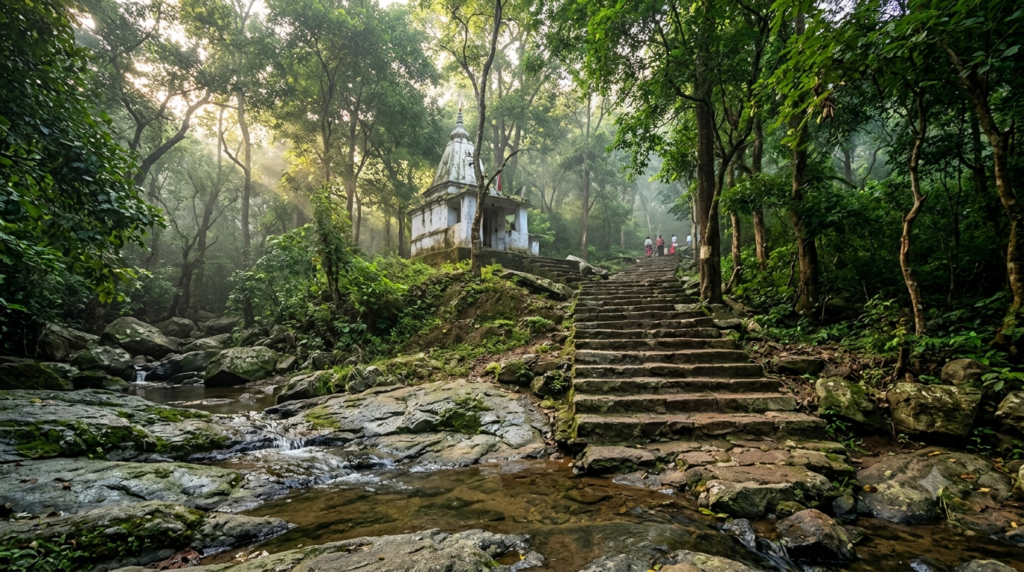
A Panchalingeshwar Temple darshan in Odisha means lying flat on wet rock to touch five Shiva lingas hidden inside a hill stream. This is not the usual stand-and-pray shrine. The temple sits on a hillock in the Nilagiri hills of Balasore district, where a perennial stream flows straight over the lingas.
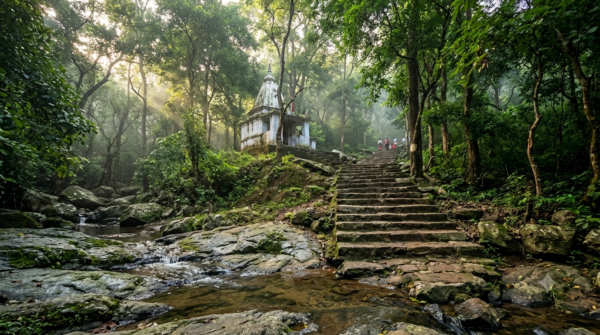
So the water itself performs a natural abhishekam, all day, every day. Most listing pages skip the one detail that decides your trip. This verified guide fixes that first, so you can plan the climb and the timing with confidence.
Go Kshetra is an independent pilgrimage guide. We are not affiliated with, endorsed by, or the official website of the temple or the Odisha endowments department. We do not accept bookings, donations, or payments. For anything official, please use the government portals linked below.
Panchalingeshwar Temple darshan at a glance
Here is the quick summary before the full details. It helps you plan the climb and the timing fast.
- Temple: Panchalingeswar (Panchalingeshwar) Saiva Pitha, five Shiva lingas in a stream
- Location: Nilagiri hills, Balasore (Baleswar) district, Odisha
- Main deity: Lord Shiva, worshipped as five swayambhu lingas
- Entry fee: Free for all pilgrims
- Timings: Roughly 7:00 AM to 6:00 PM daily (confirm locally)
- The climb: About 263 steps to the shrine
- Online booking: None; this is a free walk-in temple
- Best season: October to February
Which Panchalingeshwar temple is this? Clearing the confusion
This is the biggest mix-up online, so it is worth stating plainly. Several temples across India share the name, and pages often blend them together. This guide covers the Balasore temple in Odisha only.
It is not the Hoysala-era Panchalingeshwara Temple at Govindanahalli in Karnataka, which is an Archaeological Survey of India monument. It is also not the Talakad Panchalinga Darshana, a festival held once every several years in Karnataka. Because the names look identical, travellers sometimes drive to the wrong state entirely.
The Odisha temple is a hill shrine near Nilagiri, about 27 to 30 km from Balasore town. Its whole identity rests on the five lingas washed by a natural stream. Keep that picture in mind, since it shapes everything from the climb to the dress you should wear.
The legend behind the five lingas
Two stories explain the shrine, and locals repeat both. The popular one credits Goddess Sita, who is believed to have enshrined the lingas during the exile years she spent with Lord Rama. A second tradition names the demon king Banasura, a devotee of Shiva, who is said to have worshipped the swayambhu lingas here.
These accounts are matters of faith and regional tradition, not documented history. The temple’s true construction date remains uncertain, though the site is regarded as ancient. Devotees also link the five lingas to the five elements, namely earth, water, fire, air, and space. So the number five carries symbolic weight beyond mere counting.
Panchalingeshwar Temple darshan timings and entry
The temple usually opens around 7:00 AM and closes near 6:00 PM. It stays open on all days of the week, including festival days. Because different directories quote slightly different hours, treat these as the widely reported pattern rather than a fixed official schedule.
Entry is completely free. You need no ticket, pass, or prior registration for a normal Panchalingeshwar Temple darshan. You only spend money if you choose flowers, prasad, or a small offering on the day itself.
There is no separate queue system on ordinary days. During Maha Shivratri and the Magha Saptami fair, however, crowds swell sharply, and the hill path slows to a shuffle. So plan those festival visits with extra patience and an early start.
Is there any online booking for darshan?
No. There is no official online booking for a Panchalingeshwar Temple darshan or for any pooja here. Any website or number offering to “book” your visit for a fee is not connected to the temple. This is a free walk-in shrine, so you simply climb, reach the stream, and worship.
How the Panchalingeshwar Temple darshan works at the stream
This is where the temple differs from every other Shiva shrine you have visited. The five lingas sit low, inside a shallow pool fed by the flowing stream. To touch and worship them, you have to bend down and lie flat on your chest on the rock beside the water.
On a normal day the water is clear and the lingas are easy to feel by hand. This is what makes a Panchalingeshwar Temple darshan unlike any other Shiva visit. The natural flow keeps washing them, which devotees see as a continuous abhishekam by nature itself. Because the rock stays wet, move slowly and watch your footing near the pool.
During the monsoon the stream swells, and the lingas become hard to locate by touch. If you visit in the rains, expect a fuller waterfall and a trickier reach. That is one more reason the drier months make for a calmer darshan.
The 263-step climb: what to actually expect
Reaching the shrine means climbing roughly 263 stone steps up the hillock. The path winds through forest, so the walk is scenic but genuinely tiring for some. Carry water, and pace yourself if you are not used to steady climbs.
The steps can get slippery after rain, since the hill holds moisture under the tree cover. Grip-friendly footwear helps on the way up, even though you remove it near the shrine. Handrails are limited in stretches, so children and elderly pilgrims need a steadying hand.
A quick safety note: the climb, the wet rock, and the lie-flat posture together demand reasonable mobility. Pilgrims who are pregnant, elderly, or managing heart or knee conditions should judge the effort honestly and rest often. If you feel breathless, stop and wait rather than pushing on. This is practical travel advice, not medical guidance, so consult a doctor before a strenuous climb if you are at risk.
How to reach Panchalingeshwar Temple
The temple lies near Nilagiri, deep in Balasore district, within reach of several transport hubs. Balasore (Baleswar) is the anchor town for most pilgrims. From there, taxis and buses run toward Nilagiri and the temple foothill.
By train
Balasore railway station is the practical railhead, roughly 30 km from the temple. It sits on the busy Howrah–Chennai coastal line, so trains from Kolkata, Bhubaneswar, and beyond stop here often. From the station, hire a taxi or catch a bus toward Nilagiri.
By road and bus
Regular buses connect Balasore, Baripada, and Chandipur to the Nilagiri side. After Nilagiri town, a short taxi or auto ride brings you to the base of the steps. Because the last stretch is rural, self-drivers should start early and keep fuel topped up.
By air
Biju Patnaik International Airport in Bhubaneswar is the nearest major airport, about 180 to 200 km away. Kolkata airport is another option, roughly 230 to 250 km from Balasore. From either city, combine a train or a hired car to reach the temple region.
Best time for a Panchalingeshwar Temple darshan
The stretch from October to February is the clear winner. The weather stays pleasant, the steps are dry, and the forest looks lush after the rains. So a winter morning gives you the calmest Panchalingeshwar Temple darshan of the year.
Summer turns hot and sticky, which makes the climb harder than it looks. Monsoon brings the most dramatic waterfall, yet also slippery steps and lingas that are tough to touch. Weigh that trade-off before you pick a rainy-season trip.
For a quiet visit, arrive soon after opening on a weekday. Weekends draw local families and picnic groups to the hill. Festival days are spiritually vibrant but crowded, so choose according to the mood you want.
Dress code, rules, and temple etiquette
There is no rigid uniform, yet modest clothing is expected at this active shrine. Cover your shoulders and knees, and pick clothes you can move in easily for the climb. Remove footwear before the shrine area, as is standard at Indian temples.
Keep your voice low near the lingas, and let others take their turn at the narrow pool. Photography rules can vary at the shrine itself, so check signage or ask a local attendant first. Because the site sits inside forest surroundings, carry your litter back down with you.
Things to explore around Panchalingeshwar
The temple pairs beautifully with the wider Nilagiri and Balasore circuit. So you can build a full weekend around a single darshan.
- Kuldiha Wildlife Sanctuary: dense forest with elephants and rich birdlife, right beside the temple zone
- Nilagiri town: the old Jagannath temple and small-town markets
- Chandipur Beach: famous for a sea that recedes several kilometres at low tide
- Panchalingeshwar waterfall and deer park: easy nature stops near the base
- Emami Jagannath Temple, Balasore: a notable stop on the way back
If you love Odisha’s temples, you can extend the trip toward the coast. A visit to the Jagannath Temple in Puri makes a natural larger pilgrimage. Shiva devotees who enjoy multi-linga sites may also like the Panchalingeshwar cluster near Gokarna in Karnataka.
Insider tips for your Panchalingeshwar Temple darshan
A few practical notes will make your Panchalingeshwar Temple darshan smoother and safer. Locals treat the hill as much a picnic spot as a shrine, so the mood stays relaxed. Plan around these small things, and the darshan feels effortless.
- Go on a weekday morning if you want the stream almost to yourself.
- Carry a small towel, since you will kneel and lie on damp rock to reach the lingas.
- Keep cash handy for flowers and prasad, because counters are informal and cash-first.
- Avoid heavy monsoon days if touching the lingas matters to you.
- Start the climb before the midday heat, and rest at the shaded landings.
How to spot fake booking portals
Because this is a free temple, no genuine site sells darshan tickets for it. Some portals still advertise paid “Panchalingeshwar darshan booking” or fake pooja packages. Treat every such offer as a red flag, since the real shrine takes no online payment.
A genuine official page sits on a government domain, not on a random booking site. So verify details on the Odisha endowments portal or the Baleswar district site before you pay anyone. Never share card details with unofficial numbers claiming to represent the temple. For official information, see the Odisha Hindu Religious Endowments department and the Baleswar district portal.
Panchalingeshwar Temple darshan: the bottom line
A Panchalingeshwar Temple darshan rewards you with a rare, hands-on encounter with five lingas under a living stream. Go in winter, climb early, and set your mind on a nature-wrapped shrine rather than a grand ritual hall. Confirm the day’s hours locally before a long trip, since directories vary.
The visit is free, the setting is forested, and the walk is genuinely part of the pilgrimage. Carry water, wear clothes you can climb in, and respect the wet rock near the pool. Do that, and this hill shrine becomes one of Odisha’s most memorable stops.
Frequently asked questions about Panchalingeshwar Temple darshan
What are the Panchalingeshwar Temple darshan timings?
The temple usually opens around 7:00 AM and closes near 6:00 PM on all days. These hours vary between sources, so confirm locally before travelling. Festival days often run longer with heavier crowds.
Is there an entry fee for the temple?
No, entry and darshan are free for everyone. You only pay if you choose flowers, prasad, or a small offering on the day. There is no ticket counter for regular darshan.
Can I book a Panchalingeshwar Temple darshan online?
No. There is no official online booking for this temple, and it works entirely as a free walk-in. Ignore any website or number offering paid “bookings,” since they are not linked to the shrine.
How many steps are there to climb?
There are roughly 263 stone steps up the hillock to reach the shrine. The path runs through forest and can be slippery after rain. Carry water and pace yourself, especially in summer.
Where is the Panchalingeshwar Temple located?
It stands on a hillock in the Nilagiri hills of Balasore district, Odisha. The temple lies about 27 to 30 km from Balasore town. Nilagiri is the nearest town, roughly 8 to 10 km away.
What is the best time to visit?
October to February offers the most comfortable weather and dry, safe steps. Monsoon brings a fuller waterfall but slippery paths and hard-to-touch lingas. A weekday winter morning is ideal for a calm visit.
Is this the same as the Karnataka Panchalingeshwara temple?
No. This Odisha hill shrine is separate from the Hoysala-era Panchalingeshwara Temple at Govindanahalli in Karnataka. It is also unrelated to the Talakad Panchalinga Darshana festival, despite the similar names.
Can elderly or unwell pilgrims manage the climb?
The 263 steps and the lie-flat posture at the stream demand reasonable fitness. Elderly, pregnant, or unwell pilgrims should rest often and travel with support. Consult a doctor before a strenuous climb if you have any health risk.