
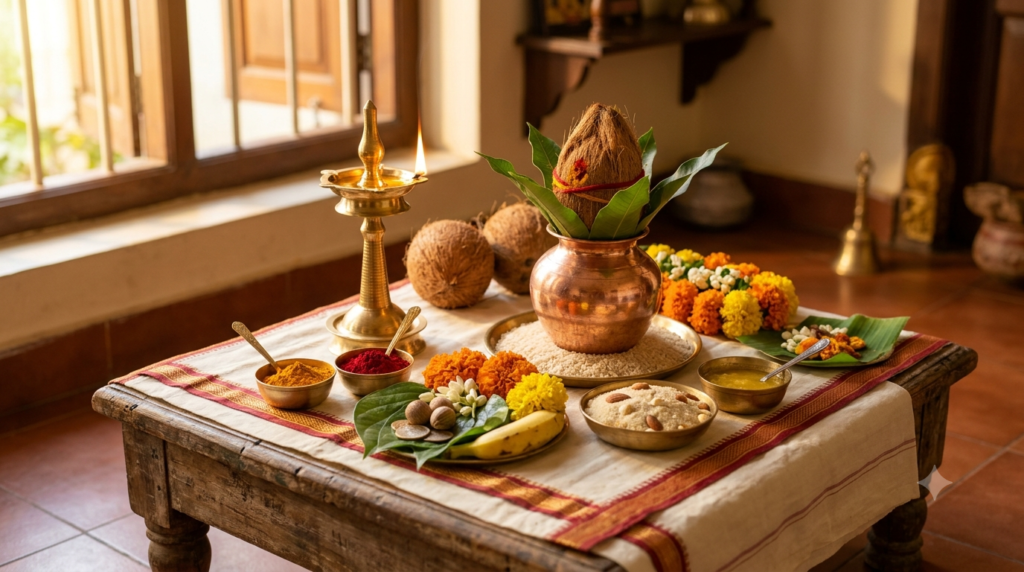
Satyanarayana vratham samagri is easier to arrange when you separate reusable pooja vessels, fresh offerings and prasadam ingredients. A packet sold as a pooja kit may cover only part of that list. Before shopping, compare its contents with your family’s custom and the checklist from your priest.
Independent guide: Go Kshetra is not a temple or priest’s official website. We do not arrange vratham bookings, sell kits or accept payments through this guide.
Satyanarayana vratham samagri: quick facts
- Purpose: Materials for a household Satyanarayana Swamy vratham, a devotional worship of Lord Vishnu.
- Sort into three groups: Reusable vessels, pooja consumables and food ingredients for offerings.
- Common setup: Swamy photo or idol, peeta, kalasham, lamp, flowers, rice, coconut and pooja powders.
- Prasadam: Many Telugu households prepare rava prasadam; other traditions may use wheat-based sheera or another agreed offering.
- Quantities and substitutions: Confirm them with the priest or the person guiding your family’s vratham.
- Online kits: Check the itemised contents. No generic kit can guarantee every household requirement.
This Satyanarayana vratham samagri list is a planning aid, not a universal rulebook. Families differ in the number of coconuts, betel leaves, vessels and offerings they use. For example, published temple lists do not always specify the same quantities. Ask about those differences before placing a large order.
Satyanarayana vratham samagri checklist by category
Keep reusable utensils apart from items you must buy fresh. This simple change avoids buying another kalasham or bell while forgetting milk, flowers or fresh fruit. The groups below cover common household arrangements, but your priest’s list takes priority.
1. Reusable pooja vessels and setup items
- Satyanarayana Swamy photo or idol and a clean wooden platform (peeta or chowki).
- Clean cloth for the platform and a suitable mat for participants.
- Kalasham or kalasam, commonly a copper, brass or silver vessel.
- Panchapatra and uddharani, the small water vessel and spoon, if used in your tradition.
- Deepam or diya, plus a stable lamp holder.
- Harathi plate, a bell, and plates or trays for flowers and offerings.
- Small bowls, spoons and drinking-water vessels for the ceremony.
- A clean pan and serving bowls for preparing and sharing prasadam.
You may already own most of these vessels. Ask the priest which items they will bring, since some conduct household poojas with their own ritual utensils. A clean, suitable vessel is more useful than an unnecessary duplicate purchase.
2. Pooja consumables and fresh offerings
- Turmeric powder (pasupu), kumkum and sandalwood powder or paste (gandham).
- Akshata: uncooked rice used during pooja, prepared according to family practice.
- Incense sticks (agarbatti), camphor, cotton wicks and lamp oil or ghee.
- Fresh flowers and, if the family uses one, a flower garland.
- Betel leaves (tamalapakulu), betel nuts (vakkalu) and coconuts.
- Bananas and other fresh fruits chosen for the offering.
- Water, mango leaves when available, and a cloth for the kalasham if requested.
- Tulasi leaves, sacred thread, coins, dry dates or navadhanyam only as your family or priest directs.
There is no reliable single count for every home. One temple list asks for several coconuts, while another gives a different amount. So do not copy a number from a kit advertisement and treat it as mandatory.
Buy fresh leaves, flowers and fruit close to the pooja day. Also, check household preferences before buying separate packets of powders and other supplies.
3. Prasadam ingredients for the food offering
For many Telugu-speaking families, Satyanarayana prasadam includes rava (sooji or semolina), ghee and a sweetener. Some families use banana, milk, cardamom and nuts. Other traditions prepare wheat-based sheera or another sweet offering, so agree on the recipe before buying ingredients.
- Rava or the grain used in your family’s prasadam recipe.
- Sugar or jaggery, according to that recipe.
- Ghee, milk or water as the chosen preparation requires.
- Banana, cardamom, cashew nuts or raisins if included in the family version.
- Clean serving bowls and enough ingredients for the expected participants.
Prasadam is the food offered during worship and then shared with those present. However, laddu is not a universal requirement. Also, do not assume that a sealed pooja kit contains fresh or safe-to-eat prasadam ingredients.
Rava/semolina contains wheat; milk and ghee are dairy ingredients, and some versions contain nuts. Tell participants the actual ingredients before sharing prasadam.
4. Panchamritam is a separate preparation
Panchamritam commonly combines milk, curd, ghee, honey and sugar. Therefore, it differs from cooked rava prasadam. If the priest requests both, plan for both rather than treating one as a replacement for the other.
Keep dairy ingredients chilled until needed. Use clean utensils and check for food allergies before serving. Families with young children or people with health concerns should follow their usual food-safety and dietary advice.
What should you buy, reuse or confirm?
This comparison helps you avoid paying twice for utensils and overlooking fresh offerings. It is a shopping guide, not a promise that every listed item is compulsory.
| Item group | Practical plan | Check before buying |
|---|---|---|
| Vessels and plates | Reuse clean household items where suitable. | Will the priest bring a kalasham or other utensils? |
| Powders, wicks and incense | Check stock, then buy missing supplies. | Does your household already have them? |
| Leaves, flowers and fruit | Buy fresh near the pooja date. | Which types and quantities does the priest request? |
| Prasadam and panchamritam | Shop from the agreed food recipe. | Are these separate offerings in your family’s practice? |
| Cloth and other extras | Buy only after checking the ritual list. | Are new cloth, thread, coins or grains needed? |
The most useful shopping order is simple: confirm the ritual list, inspect existing utensils, then purchase missing dry goods. Leave perishables until nearer the ceremony. This approach works even when local shops sell only small pooja packets.
Buying Satyanarayana vratham samagri online
Buying a packaged pooja kit online can save a separate trip for basic dry items. It does not guarantee a complete household setup. Contents, packet sizes and prices vary by seller, so the product’s itemised list matters more than labels like “complete” or “premium”.
How to check a pooja kit before ordering
- Ask for your priest’s list first. Mark the materials your family actually needs.
- Check the product contents. Look for named items and quantities, not only a kit photograph.
- Separate vessels from supplies. See whether the kit includes a kalasham, deepam or panchapatra at all.
- Check food items separately. Fresh fruit, flowers, milk and cooked prasadam often need separate arrangements.
- Review delivery and returns. Check the seller’s current terms and arrival date before paying.
- Match the final list. Buy missing items locally rather than assuming the kit covers them.
There is no verified standard market price for a Satyanarayana pooja kit because the contents differ. When comparing Satyanarayana vratham samagri online, check what each package leaves out. Compare current itemised listings instead of relying on a fixed price range. Go Kshetra does not process kit orders or payments.
What if your kit arrives with missing items?
First, compare the delivered contents against the seller’s itemised order details. Contact that seller through its published support channel if an advertised item is missing. For a ceremony approaching soon, source simple consumables locally and ask the priest about acceptable substitutions.
A missing ritual item is not automatically interchangeable with another. Also, a delivery date or refund is never guaranteed by this guide. Check the seller’s current policy before ordering.
Preparing the Satyanarayana Swamy vratham at home
After confirming the materials, set up the worship space in the order your family follows. These are general preparation steps, not a substitute for the mantras and sequence from your priest.
- Clean the pooja area. Place the peeta in a suitable spot and cover it with a clean cloth.
- Place the deity. Arrange the Satyanarayana Swamy picture or idol where participants can see it.
- Prepare the kalasham. Set out water, rice, coconut and leaves as the priest instructs.
- Group the supplies. Keep powders, akshata, lamps, flowers and harathi materials in separate bowls or plates.
- Prepare the offerings. Make prasadam with clean ingredients and set aside the requested fruit and panchamritam.
- Keep the katha ready. Follow the family or priest’s order for the worship, story recitation, naivedyam and harathi.
If you need the full sequence and story, see Go Kshetra’s Satyanarayana Swamy vratham pooja vidhanam and Vratha Katha guide. This materials page focuses on what to arrange before the ceremony.
Questions to settle with the priest before shopping
A general Satyanarayana vratham samagri list cannot settle each household’s customs. Ask for the final materials list before purchasing new utensils or large quantities of fresh goods. These questions usually resolve the most expensive mistakes.
- Which regional or family method will we follow?
- How many coconuts, betel leaves, fruits and flower bundles do we need?
- Which vessels will the priest bring, and which must the family arrange?
- Do we need tulasi, navadhanyam, dry dates, coins, new cloth or sacred thread?
- Should we make rava prasadam, wheat-based sheera or another family offering?
- Will panchamritam be prepared separately, and in what quantity?
- Are there any restrictions on ingredients, substitutions or the pooja setup?
Different temples publish different lists. For example, compare the Harrisburg Sai Seva Samithi temple list, the Hindu Temple of Rochester samagri list and the India Temple Association’s checklist. Their different quantities show why one generic shopping list cannot fit every ceremony.
Common mistakes when arranging pooja materials
- Buying utensils twice: Check the kitchen and pooja cupboard before ordering a new bell, plate or kalasham.
- Assuming a kit is complete: Sellers may package only dry consumables, so always check its contents.
- Mixing two food preparations: Panchamritam and the cooked prasadam are not the same thing.
- Choosing quantities from another tradition: Ask the priest rather than copying a fixed fruit or coconut count.
- Shopping for fresh items too early: Flowers, leaves, bananas and milk need suitable storage.
If you plan to attend a temple-organised vratham instead, its own rules may differ from home preparation. For a separate temple-specific example, read the Yadagirigutta Satyanarayana vratham guide and confirm current arrangements directly with that temple.
Before your shopping trip
Use this Satyanarayana vratham samagri guide as a starting checklist, not a fixed purchase order. Reuse suitable vessels, prepare fresh offerings separately and compare online kits item by item. Above all, confirm family-specific requirements with the priest before spending money.
That gives you a more reliable plan than a claim that one box contains everything. Review your Satyanarayana vratham samagri again the evening before the pooja, especially fresh offerings.
Satyanarayana vratham samagri FAQs
What items are commonly needed for Satyanarayana Vratham?
Common items include a Swamy image, kalasham, lamp, rice, turmeric, kumkum, flowers, coconuts and betel leaves. Families also arrange fruit and food offerings. The exact list depends on the method they follow.
Can I use pooja vessels already at home?
Often, yes. Clean and suitable household vessels may cover much of the setup. However, ask your priest if your tradition calls for a particular vessel or new cloth.
Does an online Satyanarayana pooja kit contain everything?
No kit can be assumed complete without checking its contents. Many listings focus on packaged supplies, while fresh items and reusable vessels may be absent. Compare the kit against your priest’s list.
What is the difference between prasadam and panchamritam?
Prasadam refers to food offered during worship and later shared. Panchamritam is a specific preparation commonly made with milk, curd, honey, sugar and ghee. Your family may use both.
Is laddu compulsory for Satyanarayana Vratham?
No single sweet fits every tradition. Many Telugu families make rava prasadam, while other households prepare sheera or another offering. Confirm the preferred recipe before shopping.
Must we offer five types of fruit?
Some temple lists specify five fruit varieties, but that number is not universal. Follow the quantity and types requested for your household ceremony. Seasonal availability may also matter.
How much does Satyanarayana vratham samagri cost?
There is no reliable fixed total because families already own different vessels and follow different lists. Kit contents and seller prices also change. Compare current itemised prices for only the materials you need.
Can we conduct Satyanarayana Vratham without a priest?
Some families follow their customary home procedure, while others invite a priest. If you are unfamiliar with the ritual, ask a qualified family priest or elder to explain the sequence and required materials.