
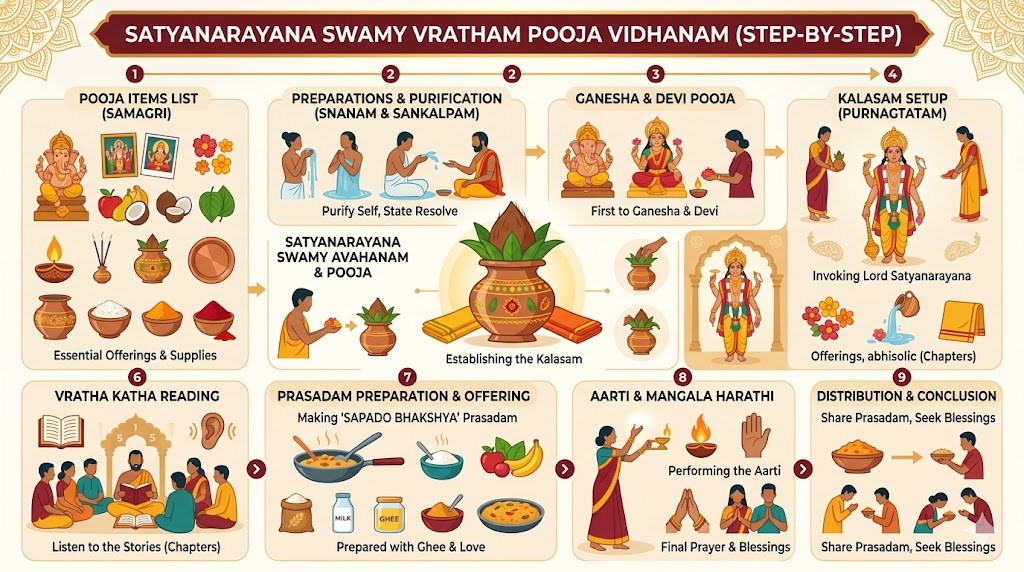
Satyanarayana Swamy Vratham is one of the most widely performed Hindu devotional rituals dedicated to Lord Vishnu in the form of Satyanarayana, the embodiment of truth and righteousness. Devotees perform this sacred vratham to express gratitude to the Lord and to seek blessings for prosperity, harmony, and success in life. Traditionally, families conduct Satyanarayana Swamy Vratham during auspicious occasions such as housewarming ceremonies (Gruhapravesham), weddings, anniversaries, or after fulfilling important life goals. In addition, many devotees perform the vratham on spiritually significant days such as Purnima (Full Moon Day), Ekadashi, or other auspicious tithis. The ritual includes preparing the pooja setup, performing Ganesh pooja, installing the Kalasam, worshipping Lord Satyanarayana with sacred offerings, and most importantly listening to the Satyanarayana Vratha Katha, which teaches the spiritual importance of truth, devotion, and gratitude. When performed with sincere faith and discipline, this vratham is believed to remove obstacles, bring peace to the household, and attract divine blessings. This detailed guide explains the Satyanarayana Swamy Vratham pooja vidhanam, required pooja items, prasadam preparation, vratha katha significance, and correct procedure to perform the ritual at home.
Key Information at a Glance
- Timings: of Day
Most families perform the vratham during:Evening or late after
- Contact: of participants
Satyanarayana Swamy Vratham – Complete Pooja Vidhanam Guide
What is Satyanarayana Swamy Vratham?
Satyanarayana Swamy Vratham is a sacred vow and ritual worship dedicated to Lord Satyanarayana, a divine manifestation of Lord Vishnu associated with truth (Satya) and righteousness. The vratham is described in the Skanda Purana – Reva Khanda, where Lord Vishnu explains the procedure and benefits of the ritual to Sage Narada.
Devotees perform the vratham to:
- Express gratitude for blessings received
- Seek prosperity and success
- Remove obstacles and hardships
- Maintain peace and harmony in the household
- Fulfil wishes and prayers
Moreover, the ritual emphasises devotion, sincerity, and adherence to truth. Therefore, even a simple pooja conducted with genuine faith is considered spiritually powerful.
When Should Satyanarayana Swamy Vratham Be Performed?
The Satyanarayana Swamy Vratham can technically be performed on any day. However, scriptures and traditions recommend certain auspicious timings.
Auspicious Days for the Vratham
- Purnima (Full Moon Day) – Most preferred day
- Ekadashi – Spiritually powerful day for Lord Vishnu worship
- Sankranti days
- After marriage or childbirth
- Housewarming ceremony (Gruhapravesham)
- Before or after major life events
Ideal Time of Day
Most families perform the vratham during:
Evening or late afternoon
This timing allows family members and guests to participate in the pooja and listen to the Vratha Katha together.
Satyanarayana Swamy Vratham Pooja Items List
Preparing the correct pooja items is essential for conducting the ritual properly.
| Pooja Item | Purpose |
|---|---|
| Lord Satyanarayana photo or idol | Main deity for worship |
| Wooden plank (Peeta) | Base for pooja setup |
| Rice | Base for Kalasam placement |
| Kalasam (copper/silver pot) | Symbol of divine presence |
| Mango leaves | Decoration and purity |
| Coconut | Sacred offering |
| Turmeric and Kumkum | Ritual offerings |
| Flowers and garlands | Devotional offerings |
| Betel leaves and betel nuts | Traditional offering |
| Fruits (banana, apple, etc.) | Naivedyam |
| Incense sticks and camphor | Aarti and purification |
| Panchamrit (milk, curd, honey, sugar, ghee) | Sacred offering |
| Tulasi leaves | Essential offering to Lord Vishnu |
| Semolina (rava), sugar, ghee | Preparation of prasadam |
In addition, devotees often decorate the pooja area with rangoli or flowers to create a sacred atmosphere.
Step-by-Step Satyanarayana Swamy Vratham Pooja Vidhanam
Following the traditional procedure ensures the ritual is performed correctly.
Step 1: Preparation and Sankalpam
- First, clean the house and the pooja area thoroughly. Then take a bath and wear clean traditional clothes.
- Place a wooden plank in the pooja area and arrange the idol or picture of Lord Satyanarayana.
- Next, perform Sankalpam, which means making a sacred declaration of your intention to perform the vratham for divine blessings.
Step 2: Kalasam Setup
- Place a small mound of rice on the wooden plank. Then place the Kalasam on top of the rice.
- Fill the Kalasam with water and place mango leaves around its mouth. Finally, place a coconut on top.
- The Kalasam symbolises divine energy and the presence of the gods.
- Step 3: Ganesh Pooja
- Before beginning the main ritual, devotees worship Lord Ganesha, the remover of obstacles.
- Offer flowers, turmeric, and sweets while chanting Ganesh mantras.
Step 4: Navagraha and Dikpalaka Pooja
Next, prayers are offered to:
- Navagrahas (nine planets)
- Dikpalakas (guardians of directions)
This step ensures cosmic harmony before the main worship begins.
Step 5: Satyanarayana Swamy Pooja
Now the main pooja begins.
Offer the following to Lord Satyanarayana:
- Flowers and garlands
- Fruits
- Tulasi leaves
- Panchamrit
- Incense and camphor
Devotees chant Vishnu mantras and offer prayers with devotion.
Step 6: Satyanarayana Vratha Katha
- Listening to the Satyanarayana Vratha Katha is the most important part of the vratham.
- The katha traditionally contains five chapters, each explaining the importance of truth and devotion.
Chapter Highlights
Chapter 1
Sage Narada asks Lord Vishnu how humans can overcome suffering. Lord Vishnu explains the Satyanarayana Vratham.
Chapter 2
A poor Brahmin performs the vratham and receives prosperity.
Chapter 3
A merchant named Sadhu performs the vratham and gains wealth but faces difficulties after forgetting his promise to perform the ritual.
Chapter 4
The merchant realises his mistake and performs the vratham again, receiving blessings.
Chapter 5
A king named Tungadhwaja disrespects the vratham and later suffers losses until he performs it sincerely.
These stories highlight an important spiritual lesson:
Truth, humility, and devotion always bring divine blessings.
Step 7: Aarti and Prasadam Distribution
Finally:
- Perform Aarti (Harati)
- Offer Naivedyam to the Lord
- Distribute prasadam to all participants
Sharing prasadam symbolises the distribution of divine blessings.
Satyanarayana Swamy Prasadam Recipe (Traditional)
The traditional prasadam offered in this vratham is called Satyanarayana Swamy Prasadam or Sheera.
Ingredients
- 1 cup semolina (rava)
- ¾ cup sugar or jaggery
- 3 tbsp ghee
- 2 cups water or milk
- Cashews and raisins
- Cardamom powder
- Banana pieces (optional but traditional in many regions)
Preparation
- Heat ghee in a pan and roast cashews and raisins.
- Roast rava until aromatic.
- Add hot water or milk and cook until soft.
- Mix sugar or jaggery and stir well.
- Add cardamom powder and banana pieces.
Offer the prasadam to Lord Satyanarayana before serving it to devotees.
Spiritual Benefits of Satyanarayana Swamy Vratham
Devotees strongly believe that performing this vratham brings powerful spiritual and material benefits.
Key Benefits
- Removes obstacles and difficulties in life
- Brings prosperity and financial stability
- Improves harmony within the family
- Helps fulfil wishes and desires
- Strengthens faith and devotion
Furthermore, the vratham encourages devotees to live a life based on truth and righteousness, which are the core teachings of Lord Satyanarayana.
Important Rules to Follow During the Vratham
To ensure spiritual discipline, devotees traditionally follow certain guidelines.
Basic Vratham Rules
- Maintain cleanliness in the pooja area
- Wear traditional or clean clothes
- Use fresh flowers and offerings
- Listen to the complete Vratha Katha
- Distribute prasadam to everyone present
Most importantly, devotees must perform the vratham with sincerity and devotion rather than extravagance.
Frequently Asked Questions (FAQ)
Can Satyanarayana Swamy Vratham be performed without a priest?
Yes. Many families perform the vratham at home by following the pooja vidhanam and reading the Vratha Katha themselves.
How long does Satyanarayana Vratham take?
Typically, the complete pooja takes 1.5 to 2 hours, depending on the rituals and number of participants.
Is fasting necessary for this vratham?
Fasting is optional. However, some devotees observe partial fasting until the pooja is completed.
Can unmarried people perform Satyanarayana Vratham?
Yes. Anyone can perform the vratham, regardless of marital status.
Can Satyanarayana Vratham be performed every month?
Yes. Many devotees perform the vratham every Purnima.
External Official Links
https://stotranidhi.com/sri-satyanarayana-vrata-kalpam/
https://www.tirumala.org/satyanarayana-vratam
Important Tips for Visitors
- Check the exact festival dates on the official temple website as lunar calendar dates may shift.
- Be prepared for long queues and allocate extra time for darshan during festivals.
- Carry sufficient cash — ATMs near temple towns may run out during peak festival periods.
- Book accommodation well in advance — rooms fill up quickly during festival season.