
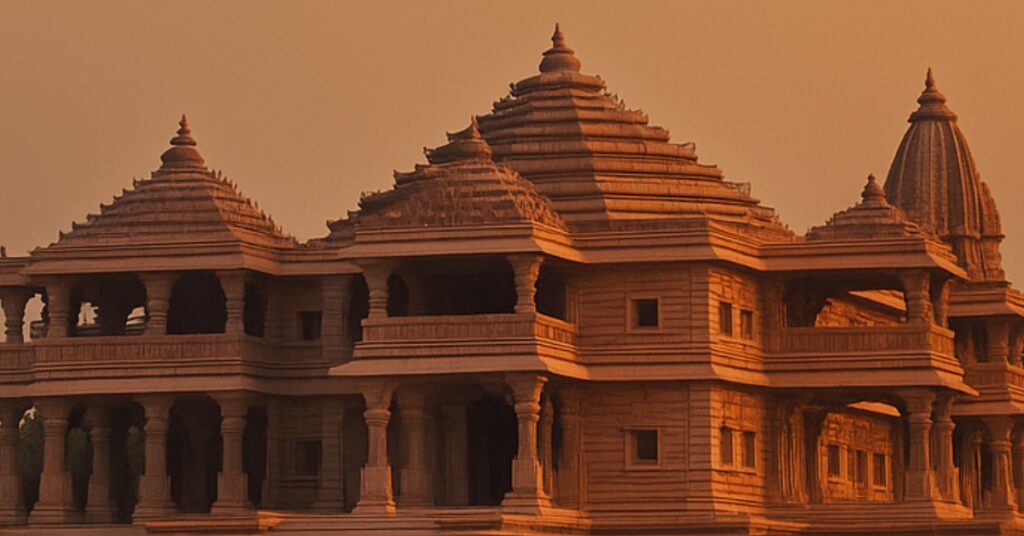
Ram Mandir Ayodhya Explore the history, architecture, timeline & spiritual meaning of the Ram Mandir in Ayodhya — India’s newly consecrated temple.
The Ram Mandir in Ayodhya has captured the world’s spiritual and cultural imagination. A symbol of faith for millions, this temple stands where Lord Rama is believed to have been born. Its consecration marks an epoch in Indian religious history. In this article, we explore the temple’s rich backstory, architectural features, key dates, pilgrim guidance, and its enduring spiritual legacy.
Key Information at a Glance
- Timings: to Visit
Cooler months (October-March) offer comfortable weather and better cro - Location: Ayodhya, Uttar Pradesh, India
Deity
Lord Rama (and Sita, Lakshmana, Hanuma
Quick Facts
| Fact | Detail |
|---|---|
| Location | Ayodhya, Uttar Pradesh, India |
| Deity | Lord Rama (and Sita, Lakshmana, Hanuman) |
| Area / Scale | Spread over ~2.7 acres with multiple mandapas |
| Inauguration | Idols installed and consecrated on 22 January 2026 |
| Architectural style | Nagara (North Indian temple architecture) |
| Visitor count | Among the top pilgrimage destinations in India |
Historical Background
Early Legends & Significance
Ayodhya is immortalized in the Ramayana as the birthplace of Lord Rama. Over centuries, multiple versions of Rama’s birth site existed. Islamic, medieval, and colonial-era texts narrate shifting political-religious control over the site.
Movement toward a Temple
In modern times, debates, court cases, and public movements centered around constructing a grand temple gained momentum. The Supreme Court of India in 2019 cleared the way for a Ram temple by allocating alternate land for a mosque.
Construction & Consecration
The temple’s construction has been carefully phased. Key features include sanctums, mandapas (halls), and a grand Sabha Mandap. On 22 January 2026, the idols of Rama, Sita, Lakshmana, and Hanuman were installed.
Architecture & Design Highlights
Layout & Mandapas
The temple complex includes a Sabha Mandap, Kirtan Mandap, Rang Mandap, and other halls for ritual and congregation. Each structural element reflects symbolism drawn from Vastu Shastra and Hindu tradition.
Towers (Shikharas)
The temple rises with multiple shikharas, with a dominant central tower underscoring the sanctum. The design draws from classical Nagara style, with carvings, spires, and vertical emphasis.
Sculptures & Ornamentation
Walls, pillars, and ceilings are richly carved with scenes from the Ramayana, depictions of gods, saints, flora, and mythological motifs. The artistry is intended to uplift spiritual reflection.
Pilgrim Guide & Visitor Tips
Darshan & Puja Timings
Regular darshan, special aartis, and festival pujas are conducted each day. The temple accommodates thousands of devotees daily.
Best Time to Visit
Cooler months (October-March) offer comfortable weather and better crowds. Festival times like Ram Navami or Diwali draw surges of pilgrims.
How to Reach
- By air: Nearest airport is Ayodhya (Maryada Purushottam Airport).
- By train: Ayodhya Fort railway station or Ayodhya Junction connect to major routes.
- By road: Well-connected by state and national highways.
Facilities & Don’t-Miss Spots
Temple complex offers rest areas, water, toilets, information desks, and parking. Don’t miss the Sabha Mandap, Rang Mandap, and the detailed stone carvings on outer walls.
Spiritual & Cultural Impact
Symbol of Rebirth & Faith
For many Hindus, the Ram Mandir represents spiritual restoration—a place where devotion, myth, and identity converge.
Pilgrimage & Integration
It joins India’s sacred circuit of temples and pilgrimage sites that deeply influence spiritual tourism and religious life.
Contemporary Resonance
Beyond faith, the temple has become a focal point in cultural dialogues, politics, and heritage narratives, shaping India’s evolving identity in the 21st century.
FAQs
Q1: Why is the Ram Mandir so significant now?
Because it marks the realization of a long-held devotional aspiration, combining faith, heritage, and national identity.
Q2: Is access free?
Entry is free, though certain tickets or passes may be needed for organized darshan during peak times.
Q3: Can foreigners visit?
Yes, foreign pilgrims are welcome, subject to temple rules and security screening.
Q4: Are photographs allowed inside?
Photography norms may vary in different mandapas; devotees should follow signage and instructions.
Q5: What about special festivals?
Festivals like Ram Navami see grand processions, cultural programs, and mass attendance.
The Ram Mandir, Ayodhya is more than a temple—it’s a living narrative of devotion, historical memory, architectural splendor, and spiritual convergence. As pilgrims from India and around the world come here, the temple stands as a testament to faith’s power to shape destinies.
May every devotee who visits be blessed with inner peace, clarity, and devotion.
- Kosaleshwar Temple: Legend, Architecture & Pilgrimage Guide Go Kshetra
- The Timeless Spiritual Significance of Hindu Temples in Modern Life Go Kshetra
- The Divine Legacy of Thirunelli Temple: A Hidden Gem in the Western Ghats Go Kshetra
- 15 Iconic Hindu Temples You Must Visit Go Kshetra
- Exploring the Symbolism, Architecture & Pilgrimage of Hindu Temples Go Kshetra
- Indian temple pilgrimage: Divine Architecture, Legends & Pilgrims Go Kshetra
- Gokarna’s Mahabaleshwar Temple: Spiritual Legacy, Myths & Pilgrimage Go Kshetra
- Journey Through India’s Hindu Temple Architecture Go Kshetra
- The Sacred Symphony: How Hindu Temples Speak the Language of Divine Geometry Go Kshetra
- Birla Radha Krishna Mandir, Goa: A New Marvel of Devotion & Architecture Go Kshetra
- Sri Venkateswara Temple, Tirumala (Tirupati) Go Kshetra
Author Box
Author: Gokshetra Editorial Team
Important Tips for Visitors
- Arrive early morning for a peaceful darshan experience — most temples are less crowded before 8 AM.
- Photography may be restricted inside the main sanctum. Check with temple authorities before clicking pictures.
- Carry a valid ID proof — some temples require it for special darshan or accommodation booking.
- Visit during weekdays for shorter queues. Weekends and festival days see significantly higher footfall.