
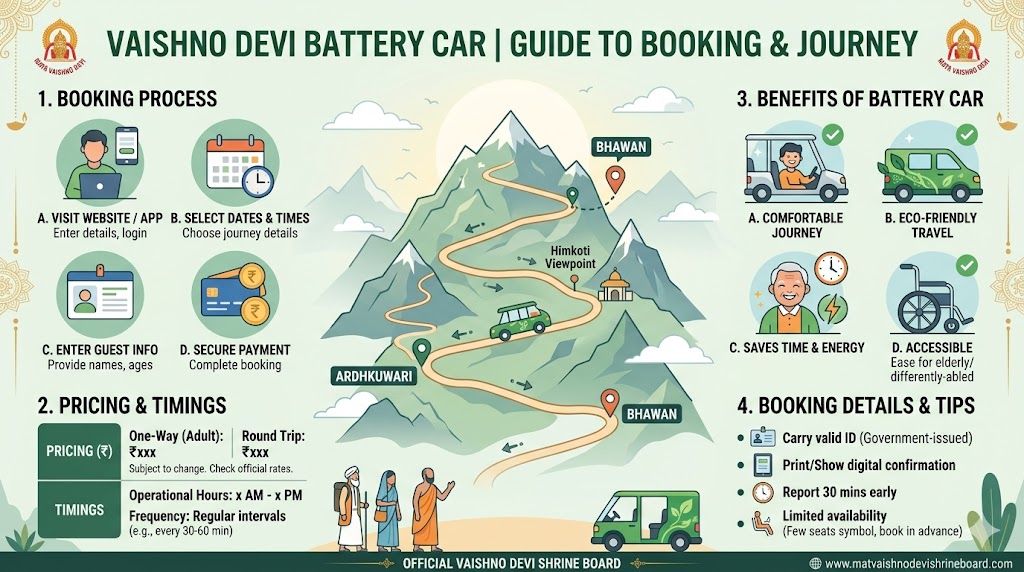
Vaishno Devi battery car booking is a convenient option for pilgrims who want to travel comfortably between Ardhkuwari and Bhawan during their sacred yatra. This service, provided by the Shri Mata Vaishno Devi Shrine Board, is especially helpful for senior citizens, children, and devotees with health concerns. Since the Vaishno Devi trek involves a steep climb of around 13–14 km, many pilgrims prefer this eco-friendly battery-operated vehicle to reduce physical strain. Moreover, the service ensures a smooth and safe journey through a dedicated route, saving both time and effort. Therefore, understanding the booking process, ticket cost, timings, and availability is essential before planning your trip. In addition, online booking has made it easier to reserve seats in advance, avoiding long queues at the counters. This complete guide on Vaishno Devi battery car booking will help you plan a hassle-free journey, ensuring comfort and convenience during your pilgrimage.
Key Information at a Glance
- Timings: and effort
- Entry/Ticket: cost, timings, and availability is essential before planning your trip
Vaishno Devi Battery Car Booking Guide
What is Vaishno Devi Battery Car Service?
The Vaishno Devi battery car service is an eco-friendly transport facility operated by the Shri Mata Vaishno Devi Shrine Board (SMVDSB). It runs between:
- Ardhkuwari → Bhawan
- Bhawan → Ardhkuwari
Moreover, this service is designed to assist pilgrims who may find it difficult to walk long distances.
Vaishno Devi Battery Car Booking Details
Understanding the basic details helps you plan better.
Key Highlights:
- Route Distance: Approx 6 km
- Travel Time: 20–30 minutes
- Vehicle Type: Battery-operated cars
- Capacity: 5–6 passengers per trip
Therefore, it is one of the fastest and most convenient ways to reach Bhawan from Ardhkuwari.
How to Do Vaishno Devi Battery Car Booking Online
Online booking is the most reliable method to secure your seat.
Step-by-Step Process:
- Visit the official Shri Mata Vaishno Devi Shrine Board website
- Login or register your account
- Select “Battery Car Booking” option
- Choose route (Ardhkuwari to Bhawan or return)
- Select date and time slot
- Enter passenger details
- Make payment via UPI, debit/credit card
- Download booking confirmation
Moreover, it is advisable to book tickets at least a few days in advance during peak seasons.
₹ Ticket Price for Battery Car
The cost of Vaishno Devi battery car booking is reasonable and fixed by the Shrine Board.
| Route | Ticket Price (₹) |
|---|---|
| Ardhkuwari → Bhawan | ₹300–₹400 |
| Bhawan → Ardhkuwari | ₹300–₹400 |
Note: Prices may change based on updates by authorities.
Therefore, it remains an affordable option compared to pony or palki services.
Offline Booking Option
If you miss online booking, you can try offline booking.
Steps:
- Visit battery car counter at Ardhkuwari
- Check seat availability
- Provide ID proof
- Pay at counter
However, availability is limited, especially during peak yatra periods.
Timings of Battery Car Service
Battery car services operate throughout the day.
General Timings:
- Early morning to late evening
- Multiple trips at regular intervals
Moreover, availability depends on demand and weather conditions.
Who Should Use Battery Car Service?
This service is ideal for:
- Senior citizens
- Pregnant women
- Children
- People with medical conditions
- Pilgrims short on time
Therefore, it ensures inclusivity and convenience for all devotees.
Benefits of Vaishno Devi Battery Car Booking
Advantages:
- Saves time and energy
- Comfortable seating
- Eco-friendly transport
- Safe and regulated service
- Avoids physical strain
Thus, it enhances the overall yatra experience.
Battery Car vs Pony vs Walking
| Mode | Cost (₹) | Comfort | Time | Effort |
|---|---|---|---|---|
| Battery Car | ₹300–₹400 | High | Fast | Low |
| Pony | ₹800–₹1,500 | Medium | Moderate | Medium |
| Walking | Free | Low | Slow | High |
Decision Insight:
- Choose battery car for comfort and speed
- Choose pony for traditional experience
- Choose walking for spiritual fulfilment
Important Rules and Guidelines
Before booking, keep these points in mind:
- Carry valid ID proof
- Reach boarding point on time
- Follow assigned time slots
- Tickets are non-transferable
- Follow safety instructions
Therefore, adhering to rules ensures smooth travel.
Best Time for Vaishno Devi Battery Car Booking
Recommended Booking Time:
- 3–5 days in advance (normal days)
- 7–10 days in advance (peak season)
Peak Seasons:
- Navratri
- Summer holidays
- Year-end holidays
Moreover, early booking guarantees availability.
Expert Tips for Smooth Journey
- Book tickets online in advance
- Choose early morning slots
- Avoid peak rush hours
- Carry minimal luggage
- Keep digital/printed ticket ready
Thus, proper planning avoids last-minute stress.
Final Decision: Is Battery Car Worth It?
Vaishno Devi battery car booking is highly recommended if:
- You want comfort and convenience
- You have limited time
- You cannot walk long distances
However, if you seek a traditional spiritual trek, walking may be more fulfilling.
Therefore, the choice depends on your personal preference and physical condition.
FAQs – Vaishno Devi Battery Car Booking
1. Can I book battery car tickets online?
Yes, through the official Shrine Board website.
2. What is the ticket price?
Around ₹300–₹400 per person.
3. Is same-day booking available?
Yes, but subject to availability.
4. How long does the ride take?
Approximately 20–30 minutes.
5. Is it safe for elderly people?
Yes, it is safe and comfortable.
6. Can I cancel my ticket?
Cancellation policies depend on Shrine Board rules.
External Official Links
Important Tips for Visitors
- Check cancellation policies before booking — most temple trusts have strict refund rules.
- Book online in advance to avoid disappointment — rooms and darshan slots fill up fast.
- Verify the official website URL carefully — many fraudulent booking sites exist.
- Keep your booking confirmation handy (print or digital) as it will be checked at entry.