
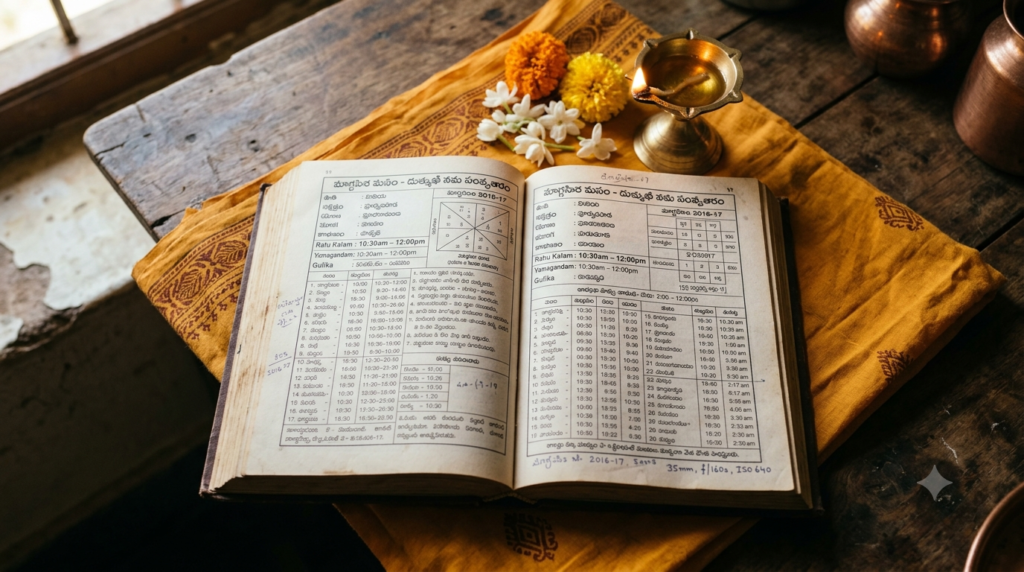
The Relangi Tangirala Gantala Panchangam is the Telugu almanac that TTD priests read aloud at Tirumala every Ugadi. For the current Telugu year it is the Parabhava Nama Samvatsara edition, which began on 19 March 2026. Because millions of devotees trust the Tirumala calendar, this almanac guides muhurtams, festival dates, and daily observances across Andhra Pradesh, Telangana, and beyond.
This guide explains what the almanac holds, where to find the official free PDF, and how to read it. It also corrects a few myths that circulate on copycat “download” pages, so you never hand your money or data to a fake site.
Go Kshetra is an independent temple guide. We are not affiliated with the Tirumala Tirupati Devasthanams (TTD), and we do not sell the Panchangam or accept any payment. Every download and purchase link below points only to the official TTD source.
Relangi Tangirala Gantala Panchangam at a Glance
- Publisher: Tirumala Tirupati Devasthanams (TTD), Tirupati.
- Current edition: Sri Parabhava Nama Samvatsara Panchangam, 2026-27.
- Released: Ugadi day, 19 March 2026, during the Panchanga Sravanam at Tirumala.
- Language: Telugu, printed as a paperback almanac.
- Official PDF: hosted on the TTD e-books portal; printed copies sold at TTD counters.
- Best for: muhurtams, festival dates, tithi and nakshatram timings.
What Is the Relangi Tangirala Gantala Panchangam?
The Relangi Tangirala Gantala Panchangam is a traditional Telugu almanac compiled by the Relangi and Tangirala family of scholars, then published under the TTD banner. “Gantala” means hours, so this is the “clock” almanac that lists auspicious timings down to the ghadiya. It follows the classical calculations the Sri Venkateswara temple itself uses.
Every almanac is built on five limbs of time, which is what “pancha-angam” means. These are tithi (lunar day), vaaram (weekday), nakshatram (star), yogam, and karanam. Together they tell a reader which moments are favourable and which are best avoided.
Because the calculations are traditional, the almanac stays useful all year. It is not a booking service or a ticket, so no one needs to “reserve” it. You simply read it, or listen when priests recite it during temple rituals.
Relangi Tangirala Gantala Panchangam 2026-27: The Parabhava Edition
The current almanac covers Sri Parabhava Nama Samvatsaram, the Telugu year that started on Ugadi, 19 March 2026, and runs until the next Ugadi in 2027. Parabhava is the 40th year in the traditional 60-year cycle. TTD announced it during the Ugadi Asthanam at Tirumala, where Lord Malayappa Swamy is seated in the Asthana Mandapam while scholars perform the Panchanga Sravanam.
The printed edition runs to around 190 pages and is sold in Telugu. TTD prices its almanacs at a small, nominal amount, and recent editions have sold for roughly ₹45 to ₹60 at Information Centres. Since the figure can change each year, confirm the current price on the TTD Publications page before you travel.
Older readers sometimes still search for the 2023-24 Shobhakrutu edition or the 2025-26 Vishvavasu edition. Those years have passed, so the Parabhava 2026-27 almanac is the one to use now. The past editions remain available only as archives, which we list further down.
How to Download the Relangi Tangirala Gantala Panchangam PDF
The official digital edition of the Relangi Tangirala Gantala Panchangam is published by TTD on its own e-books portal. You can read the Parabhava 2026-27 almanac there, and TTD also lists its publications on the official site. A printed copy is available at any TTD Information Centre if you prefer paper.
Follow these steps to reach the genuine copy safely:
- Open the official TTD publications page at tirumala.org/TTDs_Publications.aspx.
- Look for the current Parabhava Nama Samvatsara Panchangam listing.
- Open the TTD e-books portal at ebooks.tirumala.org to read the digital edition.
- For a printed almanac, visit a TTD Information Centre at Tirumala or Tirupati.
One warning matters here. TTD publishes the authentic version itself, so avoid random sites that ask for a “processing fee” or your phone number before a download. Those pages are not official, and the real almanac never needs your personal data.
Print or Digital: Which Copy Should You Choose?
Both formats carry the same Relangi Tangirala Gantala Panchangam content, so the choice comes down to habit. The printed almanac suits elders who like to flip pages and mark dates by hand. Because it needs no phone or signal, it works anywhere in the house or at the temple.
The free PDF, meanwhile, travels in your pocket. You can search it, zoom into dense timing tables, and share a page with family in seconds. Many households keep both, using print at home and the digital copy while travelling. Either way, source it only from the official TTD channels linked above.
What’s Inside the Relangi Tangirala Gantala Panchangam
Open any page and you find the daily building blocks of Hindu timekeeping. Each day lists its tithi, vaaram, nakshatram, yogam, and karanam, along with the start and end times for each. Because the timings are precise, families use them to plan rituals to the hour.
Beyond the daily grid, the almanac also carries the wider planning tools devotees rely on:
- Durmuhurtam and varjyam: the inauspicious windows to avoid each day.
- Rahukalam and Yamagandam: daily periods traditionally kept free of new ventures.
- Festival calendar: Ekadashi, Amavasya, Pournami, and major temple festivals.
- Muhurtams: auspicious dates for marriages, housewarmings, and vehicle purchases.
- Kartari periods: stretches when tradition advises against starting new work.
These sections are why the almanac outlasts a wall calendar. It answers not just “what day is it” but “is this a good time to act,” which is the heart of Panchangam reading.
How Devotees Use the Almanac Through the Year
Most families keep the almanac handy for three jobs. First, they fix muhurtams for weddings and ceremonies, since a good start time is central to Telugu tradition. Second, they track fasting days such as Ekadashi so they never miss an observance.
Third, pilgrims planning a Tirumala visit check the festival dates, because big festivals draw huge crowds. When you know a festival like Jyeshtabhishekam lands on your travel dates, you can plan darshan and travel around it. That single habit saves hours of queueing.
Remember that these timings reflect faith and tradition rather than guaranteed results. Treat the almanac as devotional guidance, and rely on a qualified priest for the finer details of any major ceremony. For more on timing and remedies, our astrology guides cover the basics.
Relangi Tangirala Gantala Panchangam vs Other Telugu Almanacs
Telugu readers can choose from several respected almanacs, so it helps to know where this one fits. The Relangi Tangirala Gantala Panchangam sits alongside the Mulugu, Uttaradhi Math, and Sringeri Peetham editions, and each follows a slightly different calculation school. The TTD-published version appeals to devotees who want the same calendar the Tirumala temple observes.
The practical differences are small, yet they matter when you pick one:
- TTD Relangi Tangirala: the temple’s own almanac, ideal for Tirumala festival planning.
- Mulugu Panchangam: widely used for its detailed muhurtam tables and online tools.
- Uttaradhi and Sringeri Math: favoured by Madhva and Smarta families respectively.
If your rituals follow Tirumala tradition, the TTD edition is the natural pick. For a broader planning tool, many families keep a second almanac too, since cross-checking dates is a common practice.
Ugadi Asthanam and the Panchanga Sravanam
The almanac is not simply printed; it is ceremonially released. On Ugadi morning, Tirumala holds the Ugadi Asthanam, where priests seat the processional deity and read the new year’s forecast aloud. This recital is the Panchanga Sravanam, and it formally opens the Telugu year.
During the reading, scholars announce the year’s rainfall outlook, agricultural indicators, and the ruling planetary lords. Devotees who cannot attend often watch the ceremony online, then buy or download the almanac afterwards. Consequently, the release date and the Ugadi date are always the same.
Past Editions and Their Telugu Year Names
The almanac changes its samvatsara name every Ugadi, though the format stays the same. Here is how the recent editions line up, so an old search still makes sense.
| Telugu Year (Samvatsaram) | Gregorian Period | Started On |
|---|---|---|
| Shobhakrutu | 2023-24 | 22 March 2023 |
| Krodhi | 2024-25 | 9 April 2024 |
| Vishvavasu | 2025-26 | 30 March 2025 |
| Parabhava (current) | 2026-27 | 19 March 2026 |
So if you originally looked for the 2023-24 Shobhakrutu Ugadi Panchangam, the same page now points you to the live Parabhava 2026-27 edition. The older PDFs survive only as archives on almanac aggregator sites, not on the current TTD listing.
Spotting Fake Panchangam Download Sites
Because this almanac is popular, copycat pages try to profit from it. Some charge a “download fee” for a free document, while others harvest phone numbers under the promise of an instant PDF. Neither behaviour is normal for an official TTD release.
Protect yourself with two simple checks. Confirm the web address ends in the official tirumala.org domain, and refuse any page that demands payment or personal data before a “free” download. When in doubt, go straight to the TTD publications page and ignore the rest.
Watch for two more warning signs as well. Some copycat pages upload an altered PDF with wrong timings, which can throw off your muhurtam planning. Others reuse last year’s edition under a new title, so always confirm the samvatsara name reads “Parabhava” for the current year before you trust the dates.
Insider Tips Most Guides Miss
- Buy early: TTD counters can sell out of popular editions within weeks of Ugadi.
- Screenshot your muhurtams: save the pages you need, since the printed timings are dense.
- Cross-check big dates: for a wedding, still consult a family priest alongside the almanac.
- Watch the Sravanam live: the Ugadi recital streams from Tirumala, so you can follow it from home.
- Keep the old copy: last year’s almanac still helps you understand recurring festival patterns.
Before You Download
The Relangi Tangirala Gantala Panchangam remains one of the most trusted Telugu almanacs, and the Parabhava 2026-27 edition is the current one to follow. Get it from the official TTD publications page or the TTD e-books portal, and skip any site that asks for money or data. Read it for muhurtams and festivals, but lean on a qualified priest for the biggest ceremonies. Used that way, this almanac remains a truly dependable companion for the whole Telugu year.
Frequently Asked Questions
Is the Relangi Tangirala Gantala Panchangam available as a free PDF?
Yes. TTD publishes the official digital edition on its e-books portal, where you can read it for free. Printed copies are sold separately for a small price at TTD Information Centres.
Which edition is current right now?
The Sri Parabhava Nama Samvatsara Panchangam for 2026-27 is current. It began on Ugadi, 19 March 2026, and runs until the next Ugadi in 2027.
How much does the printed almanac cost?
TTD sells it for a modest nominal amount, and recent editions have been roughly ₹45 to ₹60. The exact price changes yearly, so confirm it on the TTD publications page or at the counter.
Who publishes this Panchangam?
The Tirumala Tirupati Devasthanams (TTD) publishes it, compiled in the Relangi and Tangirala scholarly tradition. TTD releases it every Ugadi during the temple’s Panchanga Sravanam ceremony.
What is a Gantala Panchangam?
A Gantala Panchangam lists auspicious and inauspicious timings by the hour, since “gantalu” means hours. It gives precise start and end times for tithi, nakshatram, and other elements each day.
Where can I buy a printed copy?
Printed copies are sold at TTD Information Centres in Tirumala and Tirupati and at official distribution points. Check the TTD publications page for current stock and any other language editions.
Does the almanac list Tirumala festival dates?
Yes. The Relangi Tangirala Gantala Panchangam carries the full festival calendar the Tirumala temple follows, including Ekadashi, Brahmotsavam, and other observances. That is why pilgrims use it to plan their visits.
Can I trust third-party download sites?
Be cautious. Any site charging a fee or asking for personal data before a “free” download is not official. Always download from the TTD e-books portal on the tirumala.org domain instead.