
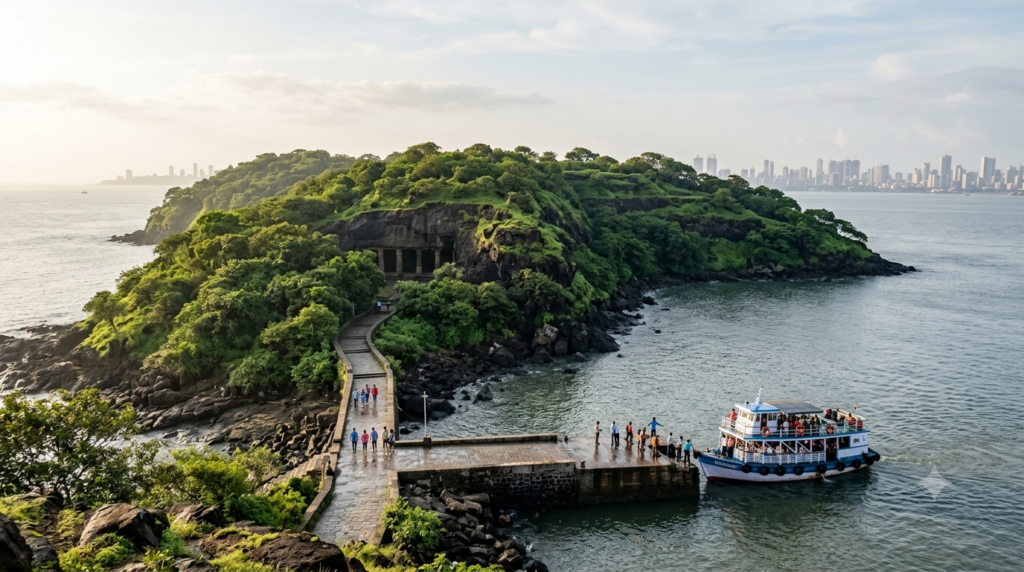
Elephanta Caves visiting rewards you with 1,500-year-old rock-cut sculpture, a breezy harbour ferry ride, and one of India’s finest Shiva carvings. The whole trip fits inside a half-day from central Mumbai. This guide gives you verified ticket prices, real ferry timings, and the step climb to expect. It also flags the small mistakes that catch first-timers. Because two separate tickets and one weekly closed day trip up most visitors, we will sort those first.
Go Kshetra is an independent pilgrimage and heritage guide. We are not affiliated with the Archaeological Survey of India, Maharashtra Tourism, or any ferry operator. We do not sell tickets or take bookings. Always confirm live fees and timings on the official links below.
Elephanta Caves Visiting at a Glance
Here are the essentials before you plan an Elephanta Caves visiting day trip.
- Timings: 9:00 AM to 5:00 PM, closed every Monday.
- ASI entry ticket: ₹40 for Indian, SAARC and BIMSTEC nationals, or ₹35 if paid online. Foreign nationals pay ₹600. Children under 15 enter free.
- Extra on-site charges: ₹10 island entry, ₹25 for videography, and about ₹10 for the toy train.
- Ferry from Gateway of India: roughly ₹200 economy or ₹260 luxury for a round trip, bought at the counter.
- Location: Gharapuri (Elephanta) Island in Mumbai Harbour, about 10–11 km from the Gateway of India.
- Time needed: plan 4–5 hours door to door, including the ferry both ways.
Where Are the Elephanta Caves?
The Elephanta Caves sit on Gharapuri Island in Mumbai Harbour. The island lies roughly 10–11 km northeast of the Gateway of India. Locals still call it Gharapuri.
The Portuguese renamed it “Elephanta” after a large stone elephant they found near the shore. That statue no longer stands on the island. It was moved to the Jijamata Udyan compound in Byculla, Mumbai, where it survives today.
These rock-cut temples are carved straight into basalt hillsides. They are dedicated mainly to Lord Shiva. The site earned its UNESCO World Heritage listing in 1987.
That honour came because the carving quality ranks among the finest surviving examples of early-medieval Indian art. Since there is no bridge, a ferry remains the only way across.
How to Reach the Elephanta Caves
Step 1: Get to the Gateway of India
Every public ferry leaves from the Gateway of India in Colaba, South Mumbai. You can reach it by taxi or app cab. You can also take a local train, since Churchgate and Chhatrapati Shivaji Maharaj Terminus are the two nearest stations.
Both sit about 2 km away. The ferry ticket counter is on the waterfront beside the arch, so head there first.
Step 2: Board the Ferry to Elephanta Island
Ferries run every 30 minutes or so. The first boat leaves around 9:00 AM. The last boat out to the island usually departs by about 2:00 PM.
Return boats then keep running until roughly 5:30 PM. The crossing takes close to an hour. Along the way, it hands you sweeping views of the Arabian Sea and the fading skyline.
Two classes exist: economy and luxury. A luxury ticket costs a little more, yet it lets you choose either boat on the way back.
Step 3: From the Jetty to the Cave Entrance
When you land, a raised concrete jetty stretches about 1 km to the base of the hill. You can walk it in 10–15 minutes past rows of stalls. You can also ride the small toy train for a nominal fee of around ₹10.
From the base, a staircase of roughly 120 steps climbs to the main cave complex. Vendors and a few refreshment stalls line the route, so you will not go thirsty on the climb.
Elephanta Caves Visiting Timings and Entry Fees
The site opens at 9:00 AM and closes at 5:00 PM. It stays shut every Monday. Since Monday closes both the caves and the reason to sail across, treat that day as a complete no-go.
Below are the current Archaeological Survey of India (ASI) charges. They apply to the monument itself, not to the ferry.
| Category | Fee (approx.) |
|---|---|
| Indian, SAARC & BIMSTEC nationals | ₹40 (₹35 online) |
| Other foreign nationals | ₹600 |
| Children below 15 | Free |
| Island / village entry | ₹10 |
| Videography | ₹25 |
| Still photography | Free |
In plain terms, an Indian adult pays ₹40 at the counter or ₹35 online. On top of that comes the ₹10 island charge, collected on arrival. Foreign nationals pay ₹600. Fees change from time to time, so confirm the latest figure on the official ASI page before you travel.
Ferry Ticket vs ASI Entry Ticket: What You Actually Pay
Here is the biggest source of confusion, and clearing it up is the whole point of planning ahead. Your ferry ticket and your monument ticket are two separate purchases. They come from two different sellers.
The ferry fare covers only the boat ride. The ASI ticket covers entry to the caves.
Many pages online claim you can “book the Elephanta ferry online” in advance. In reality, the Gateway of India ferry is almost always bought fresh at the waterfront counter on the day. So do not pay a third-party site a premium for a “guaranteed” seat.
The ASI monument ticket is different, because it can be booked online for a small saving. Carry cash regardless, since card machines at the island counters are unreliable. You will also want small notes for the toy train and the island charge.
What You Will See Inside the Great Cave
Cave 1, known as the Great Cave, is the reason people make the trip. It houses the monumental Trimurti. This three-headed Sadashiva sculpture stands nearly six metres tall.
It shows Shiva as creator, preserver, and destroyer. Art historians widely treat this single panel as the masterpiece of the whole site. Because the interior stays dim, a phone light helps you pick out the finer detail.
Around it, deep relief panels tell familiar Shaivite stories. You will find Ardhanarishvara, the half-Shiva half-Parvati form. Nearby stands Gangadhara catching the descending Ganga.
A dancing Nataraja and the wedding of Shiva and Parvati complete the set. The western hill holds five Hindu caves in all. On the eastern hill, often called Stupa Hill, sit two smaller Buddhist caves and a brick stupa. That is why some guides mention Buddhist influence alongside the Shaivite carvings.
Best Time for Elephanta Caves Visiting
The best window for Elephanta Caves visiting runs from November to February. During those months the sea stays calm and the island walk feels pleasant. Summer, from March to May, turns hot and exposed.
An early ferry matters even more then. During the monsoon, roughly June to September, choppy water and heavy rain can suspend the ferry service without warning.
Whatever the season, the earliest boat is your friend. An early start beats the midday heat. It also leaves room if a return boat runs late.
Every February, the island hosts the two-day Elephanta Festival of classical dance and music. Maharashtra Tourism organises it against the floodlit cave backdrop. If your dates line up, it is a memorable time to go.
Health and Safety Notes for the Climb
Elephanta is an open-air heritage site with real physical demands. A little caution keeps the day enjoyable. The climb of about 120 steps is steady rather than brutal.
Even so, the stone can be uneven, and the sun is unforgiving after 11 AM. Carry water, wear a hat, and use sunscreen, because shade is limited on the way up.
Some travellers should pace the stairs and rest often. That includes anyone who is elderly, pregnant, or managing a heart or knee condition. The toy train covers the flat stretch from the jetty and spares some effort.
If you have any medical concern about a strenuous climb, check with your doctor first. Keep a firm grip on children near the steps and cliff edges. Also watch your snacks around the resident monkeys, which snatch bags and bottles without hesitation.
Insider Tips for Elephanta Caves Visiting
A few habits make Elephanta Caves visiting smooth rather than rushed. First, take the earliest ferry you can manage. The last outbound boat around 2:00 PM leaves little margin.
Second, start your return at least 60–90 minutes before the final boat. The queue back can swell on weekends.
Beyond timing, a couple of choices reward you. A local guide near the entrance can unlock details you would otherwise walk past. Fees are negotiable, so agree the price and language before you begin.
After the caves, a short walk leads to old Portuguese cannons and sea-view points. Most day-trippers miss them entirely. Pack light too, since a small backpack with water, sunscreen, and a camera is all you need.
A Quick History of Elephanta Island
The caves were carved somewhere between the 5th and 8th centuries CE. Most historians credit the Kalachuri dynasty. Some instead point to Chalukya or Rashtrakuta patronage.
Later the region passed through many hands, including the Marathas. Then the Portuguese arrived in the 1500s. As a result, the caves carry layers of history from several ruling powers.
It was the Portuguese who gave the island its modern name, after that large stone elephant near the landing. Centuries of weather scarred several panels. By some accounts, colonial-era damage added to the harm.
Yet the core sculptures survived. That endurance is why the site draws roughly a million visitors a year and holds its UNESCO listing.
Before You Go: Quick Takeaways
Elephanta Caves visiting rewards forward planning far more than a spur-of-the-moment dash. Skip Mondays entirely and board an early ferry. Keep enough cash for the two separate tickets plus the small island charges.
Give yourself a relaxed 4–5 hours, so the Trimurti and the harbour crossing both get their due. If you are already exploring South Mumbai, the caves pair well with a temple stop such as ISKCON Chowpatty near Girgaon or the well-loved Gokuldham Temple in Goregaon. For live details, always defer to the official sources below.
Frequently Asked Questions About Elephanta Caves Visiting
Are the Elephanta Caves open every day?
No. The caves stay closed every Monday and may also shut on certain public holidays. Plan your trip for Tuesday through Sunday. Check the official ASI page if your date falls near a national holiday.
How long should I plan for Elephanta Caves visiting?
Budget 4–5 hours in total. That covers the roughly one-hour ferry each way, the walk or toy train to the base, and the 120-step climb. It also leaves enough time to absorb the Great Cave without rushing.
How much does the whole trip cost?
For an Indian adult, expect roughly ₹200 for the round-trip economy ferry. Add ₹40 for ASI entry, ₹10 island charge, and about ₹10 for the toy train. That lands most solo visitors near ₹260–₹300 before any guide or snacks.
Can I book the ferry online in advance?
Usually no. The Gateway of India ferry is bought at the counter on the day of travel. Treat “guaranteed online ferry seats” claims with caution. The ASI monument ticket, however, can be booked online for a small saving.
Is there accommodation on Elephanta Island?
No. There are no hotels on the island, so nearly everyone returns to Mumbai the same evening. Base yourself in Colaba or South Mumbai for the easiest ferry access.
Is photography allowed at the caves?
Yes, still photography is free across the site. Videography carries a small ₹25 charge. Respect any on-site signage that restricts filming in specific spots.
Can I carry food into the caves?
Outside food and alcohol are generally not allowed inside the protected monument. Eat before you board, or carry only light, sealed snacks. Keep them away from the monkeys near the steps.
What is the best season to visit?
November to February is ideal, with calm seas and comfortable walking weather. Avoid the peak monsoon months, since rough water can cancel ferries at short notice.
For official timings, fees, and access updates, use the Archaeological Survey of India – Elephanta Caves page, the Maharashtra Tourism Elephanta listing, and the UNESCO World Heritage entry.