
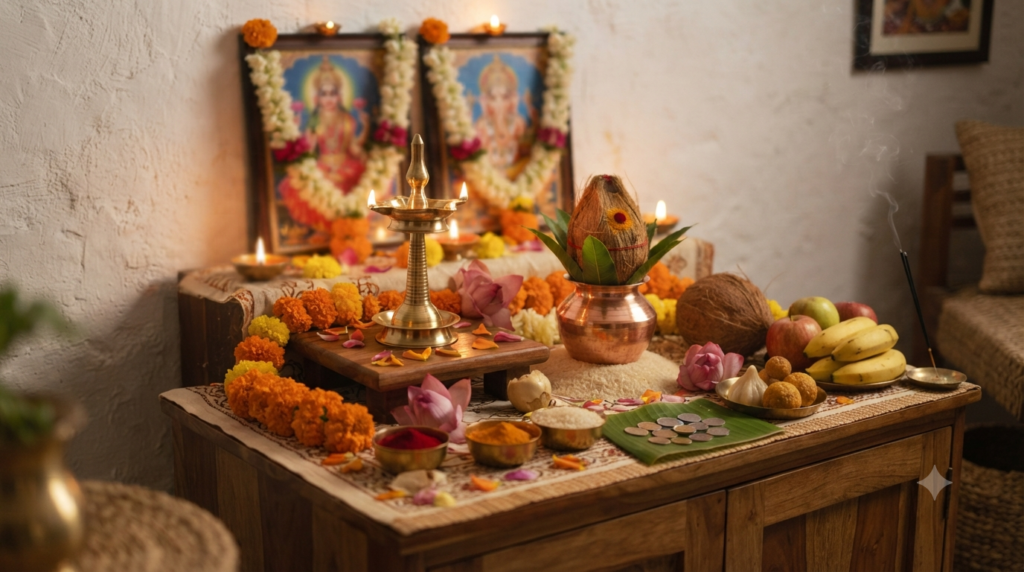
You can keep Lakshmi Kubera Pooja at home simple, devotional, and practical when you follow a clear order of worship. You do not need an elaborate homam or a large list of expensive items for a basic household pooja. Therefore, separate a simple home worship routine from priest-led rituals that use a longer tradition-specific procedure.
Independence note: Go Kshetra is an independent Hindu pilgrimage and pooja guide. We are not affiliated with any temple, trust, priest service, or religious organisation, and we do not accept bookings, donations, or payments.
Lakshmi Kubera Pooja at a Glance
- Main purpose: worship of Goddess Lakshmi and Lord Kubera with prayers for auspiciousness, gratitude, wise use of resources, and prosperity.
- Best-known occasion: Dhanteras or Dhantrayodashi, when Lakshmi and Kubera worship is widely observed.
- Home format: clean altar, lamp, flowers, simple offerings, Lakshmi prayer, Kubera prayer, naivedyam, and arati.
- Time needed: a simple version can be brief, while a fuller upachara pooja takes longer.
- Cost: there is no fixed fee for a home pooja because most items may already be available at home.
- Important: ritual details vary by family, region, sampradaya, and priestly tradition.
A useful way to approach the ritual is to treat this page as a simple household format. If your family follows a specific paddhati, that family practice should take priority.
What Is Lakshmi Kubera Pooja?
Lakshmi Kubera Pooja combines worship of Goddess Lakshmi with worship of Lord Kubera. Lakshmi represents prosperity, abundance, and auspiciousness in Hindu traditions, while Hindu texts and traditions connect Kubera with wealth and the guardianship of treasure. Devotees therefore worship them together as an expression of gratitude and a prayer for responsible prosperity.
Lord Kubera is also described as the guardian of the north and the lord of the Yakshas in Hindu tradition. However, that symbolism does not mean every home must face the altar north. Household customs differ, so use a clean and stable shrine space unless your family tradition gives a specific direction.
Before You Start the Lakshmi Kubera Pooja
Clean the pooja area first, then bathe or wash and wear clean clothes. The Hindu American Foundation’s practical home-puja guide also recommends arranging the shrine on a raised surface and keeping offerings ready before worship begins.
Choose a safe place for the lamp because open flames need attention. If you use incense or camphor, keep the room ventilated and away from curtains, children, and pets. The older version of this page suggested burning benzoin over coal or dried cow-dung cakes, but that is not necessary for a simple indoor home pooja.
Keep the altar uncluttered. A picture or murti of Goddess Lakshmi and a picture or murti of Lord Kubera are enough. If you do not have a Kubera image, some traditions symbolically worship a clean valuables box or chest, as described in Drik Panchang’s Kubera Puja Vidhi.
Lakshmi Kubera Pooja Items List
Because traditions vary, a basic Lakshmi Kubera Pooja does not require every item used in a temple or priest-led ceremony. Sri Lalitha Peetham’s published Lakshmi Kubera Puja list includes turmeric, kumkum, sandalwood, incense, camphor, betel leaves, mango leaves, coconuts, flowers, fruits, ghee, lamps, and wicks. For home worship, you can use a smaller practical set.
| Item | Use | Essential? |
|---|---|---|
| Lakshmi and Kubera image or murti | Focus of worship | Yes |
| Deepam, oil or ghee, cotton wick | Lamp offering | Yes |
| Fresh flowers | Pushpa offering | Yes |
| Fruit or homemade sweet | Naivedyam | Yes |
| Turmeric, kumkum, sandalwood | Traditional offerings | Recommended |
| Akshata or uncooked rice | Offering during worship | Recommended |
| Water in a small cup | Simple ritual offering | Recommended |
| Incense or camphor | Dhupa or arati | Optional |
| Coconut, betel leaves and nuts | Traditional offering | Optional |
| Kalasha with leaves and coconut | Expanded pooja setup | Optional |
| Clean coins | Symbolic wealth offering | Optional |
Do not delay the pooja because one optional item is missing. Hindu home worship ranges from very short offerings to a full sixteen-upachara format. Sincerity and a clean, respectful setup matter more than copying a shopping list.
How to Perform Lakshmi Kubera Pooja at Home
This simple procedure follows the broad structure used in household puja: preparation, dhyana, offerings, prayer, naivedyam, and arati. It suits devotees who want a manageable home practice. However, a formal vrata, homa, or consecrated yantra ritual may require guidance from a knowledgeable priest.
Simple offering sequence for Lakshmi Kubera Pooja
- Prepare the shrine. Spread a clean cloth on a stable platform. Place Lakshmi and Kubera images or murtis neatly, then arrange the lamp and offerings.
- Light the lamp. Light a ghee or oil lamp carefully. You may also use incense if the room has good ventilation.
- Set your sankalpa. Sit quietly and state the purpose of your worship in simple words. You may pray for gratitude, good judgment, family welfare, and ethical prosperity.
- Remember Ganesha. Many Hindu pooja traditions begin by remembering Lord Ganesha before the principal deities. A short prayer is enough for a simple home routine.
- Offer to Goddess Lakshmi. Offer sandalwood, kumkum, akshata, flowers, lamp, and food according to what you have prepared.
- Offer to Lord Kubera. Offer flowers, akshata, incense, lamp, and naivedyam. You may also place clean coins before the shrine as a symbol of wealth managed with care.
- Chant simple names or prayers. Use a prayer you know correctly. Beginners can use short salutations instead of attempting a long mantra without guidance.
- Offer naivedyam. Place fruit, milk, payasam, jaggery, or a vegetarian sweet before the shrine. Use food that your family normally offers in worship.
- Perform arati. Wave the lamp carefully and offer your final prayers. Keep the flame controlled throughout the ritual.
- Close with gratitude. Bow, ask forgiveness for mistakes, and share the prasadam with family members.
If you want a fuller model, the Hindu American Foundation explains five-upachara and sixteen-upachara formats in its home puja guide. That framework helps beginners understand which steps are core and which are part of a more elaborate worship sequence.
Lakshmi Kubera Pooja Mantras for a Simple Home Ritual
The old version of this article labelled the well-known “Om Shreem Hreem Shreem Kamale…” prayer as a Lakshmi-Kubera mantra. Drik Panchang lists that verse as a Mahalakshmi Mantra, so do not present it as a combined mantra for both deities.
For a simple home pooja, short and clear salutations are easier for beginners. You may chant “Om Shri Lakshmyai Namah” for Goddess Lakshmi and “Om Shri Kuberaya Namah” for Lord Kubera. Drik Panchang’s Kubera Puja Vidhi also uses “Om Shri Kuberaya Namah” through the offering sequence.
There is no need to force a fixed count for a basic household ritual. If your family tradition specifies 11, 21, 108, or another count, follow that practice. For advanced beeja mantras, yantra worship, or homa, learn the pronunciation and method from a qualified teacher or priest.
Best Day and Time for Lakshmi Kubera Pooja
Dhanteras is the clearest traditional occasion for Lakshmi and Kubera worship. Drik Panchang says devotees worship Goddess Lakshmi and Lord Kubera on Dhantrayodashi, and it recommends the Pradosh period for Dhanteras puja. Because exact muhurat changes by date and location, never copy a fixed clock time from another city.
During Diwali, families may also include Kubera worship with Lakshmi Puja. Drik Panchang notes that Kubera is traditionally worshipped with Lakshmi on Amavasya as well as on Dhantrayodashi. Therefore, use a location-based panchang when you connect the pooja to a festival muhurat.
For a regular household Lakshmi Kubera Pooja outside a festival, there is no single universal clock time that applies to every tradition. Many families prefer a calm morning or evening, and some choose Friday by custom. If your family observes a vrata or specific muhurta, follow your local panchang or priest.
How Long Does the Pooja Take?
Duration depends on how many offerings and prayers you include. The Hindu American Foundation’s general home-puja model gives a useful benchmark: an express pooja may take about 5–7 minutes, a short five-upachara pooja about 10–12 minutes, and a fuller sixteen-upachara pooja about 20–30 minutes.
A family version with Lakshmi and Kubera prayers may take longer, especially when you include stotras, archana, or multiple naivedyam offerings. So do not rush to meet a timer. Choose a format you can complete calmly and safely.
What Does Lakshmi Kubera Pooja Cost at Home?
There is no fixed price for Lakshmi Kubera Pooja at home. A simple pooja can use items already present in your prayer room, so the extra cost may be very small. Flowers, fruit, coconut, lamp oil, and sweets are the usual variable purchases.
If you invite a priest, dakshina and samagri costs vary by city, language, ritual length, and whether the priest brings the materials. Ask what the ceremony includes before agreeing to any amount. Go Kshetra does not arrange priests, collect payments, or take pooja bookings.
Avoid websites that imply a costly package is required for spiritual results. A paid ceremony is a personal choice, not a guarantee of financial gain. For a home ritual, use what is appropriate to your family tradition and budget.
Benefits and Meaning of Lakshmi Kubera Pooja
Devotees perform this worship with intentions connected to prosperity, gratitude, wise stewardship, and family well-being. These are faith-based religious meanings, not guaranteed financial outcomes. Pooja should not replace budgeting, debt planning, professional financial advice, or practical work toward financial goals.
Hindu traditions widely associate Goddess Lakshmi with prosperity and good fortune, while they connect Kubera with wealth and treasure. The pairing therefore carries a useful ethical idea: prosperity is not only about acquiring money, but also about managing resources responsibly and sharing them appropriately.
Many families also value the ritual because it creates a focused moment of gratitude. Cleaning the worship space, preparing food, lighting a lamp, and sharing prasadam can turn an abstract prayer for prosperity into a disciplined household practice.
Common Mistakes During Lakshmi Kubera Pooja
- Calling every Lakshmi mantra a Kubera mantra: keep deity-specific prayers correctly labelled.
- Copying another city’s festival muhurat: Dhanteras and Diwali timings depend on location.
- Buying an oversized samagri kit: a simple home worship does not need every item used in a priest-led ceremony.
- Using too much smoke indoors: keep incense and camphor moderate, and maintain ventilation.
- Treating pooja as a financial guarantee: devotional benefits are matters of faith, not assured monetary returns.
- Mixing pooja and homam: a fire ritual has extra safety and procedural requirements, so do not improvise one indoors.
For another simple household worship format, see the site’s Lakshmi Ganapathi Pooja guide. Readers comparing home rituals can also review the Sudarshana Homam home guide, while remembering that a homam uses fire and needs stricter safety.
What If You Do Not Have Every Item?
You can still perform a simple pooja when optional items are unavailable. Keep the core practice to a clean shrine, lamp, flowers, a small food offering, prayer, and respectful closure. The Hindu American Foundation’s express-puja model specifically shows that devotees can perform home worship with only a few selected offerings.
If you do not have a Kubera murti, use a picture or follow a family-approved symbolic representation. If you do not know long mantras, use short salutations or a familiar stotra. Do not invent pronunciations or mix unrelated mantras just to make the ritual look elaborate.
If your family has a formal Lakshmi Kubera vrata, yantra installation, or homa tradition, ask a knowledgeable priest for that specific paddhati. The simple method on this page is a household devotional guide, not a substitute for a lineage-specific ritual manual.
Lakshmi Kubera Pooja: Practical Checklist
- Clean the shrine and prepare the space before starting.
- Keep the lamp on a stable, fire-safe surface.
- Arrange Lakshmi and Kubera images or murtis.
- Keep flowers, akshata, water, fruit or sweets ready.
- Use turmeric, kumkum, sandalwood, coconut, and betel items if your tradition uses them.
- Begin with a calm prayer and remember Ganesha according to family custom.
- Offer to Lakshmi and Kubera separately so the prayers remain clear.
- Use a location-based panchang for Dhanteras or Diwali muhurat.
- Finish with arati, gratitude, and prasadam.
- Never leave a burning lamp, camphor, or incense unattended.
For a broader devotional context around Kubera, Go Kshetra’s Venkateswara Swamy story explains the popular Tirumala tradition that connects Lord Venkateswara with Kubera.
Key Points Before You Begin
Lakshmi Kubera Pooja at home is best kept clear rather than complicated. Use a simple sequence, correctly label the prayers, and follow your family’s tradition when it differs from a general guide. For festival worship, always check the muhurat for your own city.
Most importantly, treat prosperity claims as devotional belief rather than a guaranteed result. A pooja can be a meaningful spiritual practice, while sound financial decisions still require practical planning and judgment.
Frequently Asked Questions
Can I do Lakshmi Kubera Pooja at home without a priest?
Yes, you can perform a simple household pooja without a priest. Keep the worship to a clean altar, lamp, flowers, simple offerings, short prayers, naivedyam, and arati. For a formal vrata, homa, yantra consecration, or tradition-specific procedure, priestly guidance is advisable.
What is the best day for Lakshmi Kubera Pooja?
Dhanteras or Dhantrayodashi is one of the best-known occasions because Lakshmi and Kubera worship is traditionally associated with that day. Kubera worship may also accompany Lakshmi Puja during Diwali. For other days, follow your family custom or local panchang.
What is the best time to perform the pooja?
For Dhanteras, use the location-specific Pradosh and muhurat guidance for your city rather than a generic clock time. For a regular home pooja, choose a calm time when you can worship without interruption. Family traditions may specify a preferred period.
Which direction should the altar face?
There is no single direction rule that applies to every household tradition. Tradition associates Kubera with the north, but that does not automatically make north-facing placement mandatory. Use a clean, stable shrine location or follow the direction given by your family’s practice.
Can I use coins during the pooja?
Yes, many devotees place clean coins near the shrine as a symbolic offering connected with prosperity. The coins are not a substitute for any required ritual item in a specific family paddhati. Keep the symbolism simple and respectful.
Is the “Om Shreem Hreem Shreem Kamale…” mantra a Kubera mantra?
No. Drik Panchang lists that prayer as a Mahalakshmi Mantra. You may use it as a Lakshmi prayer, but do not describe it as a combined Lakshmi-Kubera mantra. Use a separate Kubera salutation or a correctly sourced Kubera prayer.
Do I need a Lakshmi Kubera yantra?
No, a yantra is not essential for a simple household pooja. A Lakshmi image and a Kubera image are enough. If you follow a yantra-based practice, learn its installation and worship method from a reliable tradition-specific source.
Does Lakshmi Kubera Pooja guarantee wealth or business success?
A religious ritual does not guarantee financial results. Devotees perform the pooja as an act of faith and prayer for prosperity, good judgment, and auspiciousness. Business, debt, savings, and investment decisions still depend on practical financial choices.