
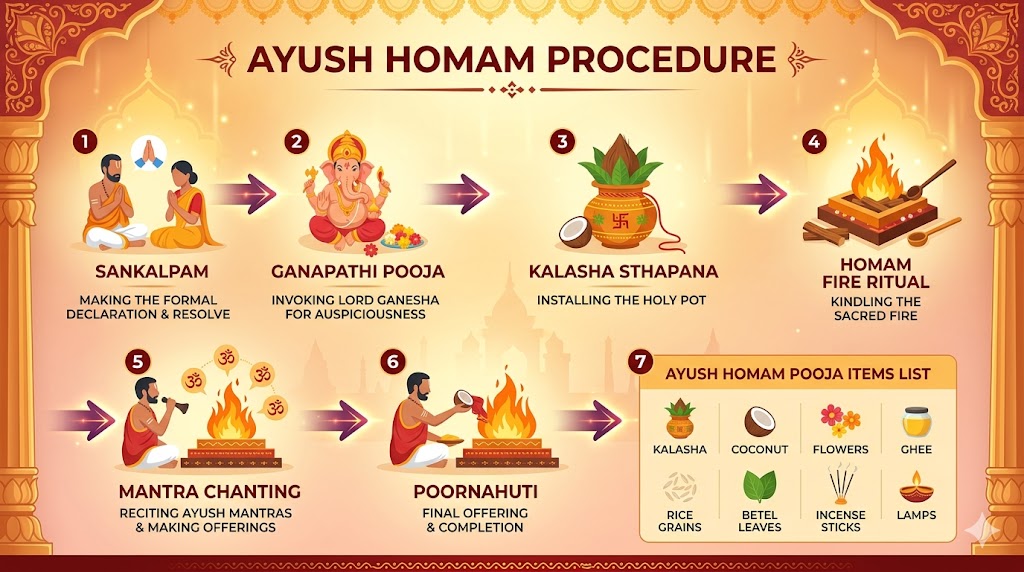
The Ayush Homam Procedure is a sacred Vedic fire ritual performed to invoke divine blessings for longevity, health, and protection from negative influences. Traditionally, this ritual is conducted on a child’s first birthday (Ayushya Homam), Nakshatra birthdays, or during important life milestones. The homam primarily invokes Ayushya Devatas, Lord Dhanvantari (the divine physician), and Lord Ganesha, who together bless devotees with vitality and spiritual protection.
Key Information at a Glance
- Timings: to Perform Ayush Homam
Choosing the right time is important - Entry/Ticket: in India, and powerful spiritual benefits
- Location: and temple
During the ritual, Vedic priests chant powerful Ayushya Sukta mantras from the Rig Veda while sacred offerings such as ghee, herbs, and grains are offered into the homa fire. Consequently, the fire acts as a spiritual medium that carries prayers to the divine. Moreover, families perform this ritual to remove health obstacles, strengthen life energy, and promote overall wellbeing.
This comprehensive guide explains the complete Ayush Homam Procedure, including authentic Vedic steps, required pooja items, traditional mantras, ideal timing, approximate cost in India, and powerful spiritual benefits. Therefore, if you are planning to perform this ritual at home or in a temple, this guide will help you understand every step clearly and perform the ceremony with devotion and accuracy.
Ayush Homam Procedure – Complete Step-by-Step Guide
The Ayush Homam Procedure follows classical Vedic traditions. Priests perform the ritual using specific mantras and offerings to invoke divine blessings for long life.
What is Ayush Homam?
Ayush Homam (also called Ayushya Homam) is a Vedic ritual dedicated to prayers for long life, health, and protection from diseases.
The Sanskrit word:
- Ayush means lifespan or longevity
- Homam means sacred fire ritual
Therefore, Ayush Homam literally means a fire ritual performed for longevity and wellbeing.
Traditionally, the ritual is performed for:
- Babies (especially the first birthday)
- Children with health concerns
- Nakshatra birthdays
- Adults seeking longevity blessings
- People recovering from illness
Moreover, many families perform this homam annually as a spiritual protection ritual.
Deities Worshipped in Ayush Homam
Several divine forces are invoked during the Ayush Homam Procedure.
Lord Dhanvantari
- Hindu god of Ayurveda
- Divine healer
- Associated with health and longevity
Ayushya Devatas
These Vedic deities govern lifespan and vitality.
Lord Ganesha
Worshipped first to remove obstacles from the ritual.
Navagrahas
Planetary deities are sometimes invoked to reduce negative planetary effects.
Spiritual Significance of Ayush Homam
Ayush Homam carries deep spiritual importance.
Firstly, the homa fire represents Agni, the divine messenger between humans and gods. Therefore, when offerings are placed into the fire along with Vedic chants, prayers are believed to reach the divine realm.
Moreover, Vedic mantras generate powerful vibrations that purify the surrounding environment.
Consequently, devotees believe the ritual:
- Strengthens life force energy
- Protects from diseases
- Removes karmic obstacles
- Enhances physical and mental wellbeing
Complete Ayush Homam Procedure
Below is the authentic ritual sequence followed in temples and homes.
Sankalpam – Sacred Resolution
The ritual begins with Sankalpam, a formal declaration of intent.
During this step:
- The devotee’s name is recited
- Birth star (Nakshatra) is mentioned
- Purpose of the homam is declared
The priest then seeks divine permission to perform the ritual.
Ganapathi Pooja
Next, priests perform Ganapathi Pooja.
Purpose
To remove obstacles and ensure the success of the ritual.
Offerings
- Turmeric
- Kumkum
- Coconut
- Fruits
- Flowers
- Betel leaves
Consequently, the ritual proceeds smoothly.
Punyahavachanam – Purification Ritual
The priest purifies the ritual space.
Steps involved
- Holy water is sanctified with Vedic mantras
- Devotees are sprinkled with sacred water
- Ritual materials are purified
Therefore, the ceremony environment becomes spiritually purified.
Kalasha Sthapana
A Kalasha (sacred pot) is installed and worshipped.
Items used
- Copper or silver pot
- Water
- Mango leaves
- Coconut
- Turmeric
- Rice
The Kalasha symbolizes divine presence during the ritual.
Ayushya Devata Invocation
Priests chant the Ayushya Sukta to invoke divine forces responsible for lifespan.
This stage invokes blessings for:
- Long life
- Health
- Strength
- Protection from disease
Moreover, Vedic chanting creates positive spiritual vibrations.
Agni Pratishtha – Establishing the Sacred Fire
The priest prepares the Homa Kund (fire altar).
Sacred fire is ignited using:
- Dried wooden sticks (Samidha)
- Ghee
- Camphor
Agni is invoked as the divine messenger.
Main Homam Ritual
The core part of the Ayush Homam Procedure involves offering sacred materials into the fire.
Common offerings
- Ghee
- Navadhanyam (nine grains)
- Herbs
- Rice
- Medicinal plants
Each offering is accompanied by chanting of Ayushya mantras.
Ayushya Mantra Chanting
Priests chant sacred Vedic hymns for longevity.
Example mantra used in Ayush Homam:
Om Tryambakam Yajamahe
Sugandhim Pushtivardhanam
Urvarukamiva Bandhanan
Mrityor Mukshiya Maamritat
This powerful mantra seeks protection from untimely death.
Poornahuti – Final Offering
The ritual concludes with Poornahuti, the grand final offering.
During this step:
- A special offering is made into the fire
- Devotees pray for fulfillment of wishes
- Blessings for health and longevity are invoked
Finally, prasadam is distributed to participants.
Ayush Homam Pooja Items List
Below is a comprehensive list of items required for the Ayush Homam Procedure.
| Category | Items |
|---|---|
| Basic Pooja Items | Turmeric, Kumkum, Sandalwood paste |
| Fruits | Banana, Coconut, Seasonal fruits |
| Flowers | Lotus, Jasmine, Marigold |
| Sacred Materials | Ghee, Honey, Milk |
| Homam Materials | Samidha sticks, Navadhanyam, Dry coconut |
| Kalasha Items | Mango leaves, Rice, Coconut |
| Ritual Items | Camphor, Incense sticks, Cotton wicks |
Many temples provide ready-made Ayush Homam kits.
Best Time to Perform Ayush Homam
Choosing the right time is important.
Ideal occasions
- First birthday of a child
- Nakshatra birthday every year
- Health recovery prayers
- Before important life events
Ideal time of day
Morning hours during auspicious muhurtham are considered best.
Ayush Homam Cost in India
Costs vary depending on location and temple.
| Ritual Type | Estimated Cost |
|---|---|
| Temple Homam | ₹2,000 – ₹8,000 |
| Home Homam | ₹5,000 – ₹20,000 |
| Temple Special Packages | ₹15,000 – ₹30,000 |
Costs usually include priest dakshina and homam materials.
Checklist Before Performing Ayush Homam
Use this checklist for smooth preparation.
✔ Book a qualified Vedic priest
✔ Fix auspicious muhurtham
✔ Arrange homam materials
✔ Prepare clean ritual space
✔ Arrange Kalasha items
✔ Prepare fruits and offerings
Proper preparation ensures a successful ritual.
Frequently Asked Questions
What is the purpose of Ayush Homam?
The Ayush Homam Procedure is performed to pray for long life, health, and protection from negative energies.
Why is Ayush Homam performed on the first birthday?
Traditionally, Vedic scriptures recommend performing the ritual when a child completes one year to bless them with longevity and strong health.
How long does Ayush Homam take?
The complete ritual typically takes 1.5 to 3 hours.
Can Ayush Homam be performed at home?
Yes. However, a qualified Vedic priest must perform the ritual with proper materials and fire altar setup.
Which mantra is most important in Ayush Homam?
The Maha Mrityunjaya Mantra and Ayushya Sukta are commonly used during the ritual.
External Official Links
Ministry of AYUSH India
Traditional Vedic Mantras Resource
Official Resources
Helpful Tips
- Plan your visit in advance and check official websites for the latest timings and guidelines.
- Carry valid ID proof as it may be required at certain locations.
- Respect local customs and traditions during your visit.
- Keep your belongings secure and avoid carrying valuables.

Go Kshetra covers 1,600+ Hindu temples across 28 states. Content sourced from official temple websites and first-hand visits. About our editorial process