
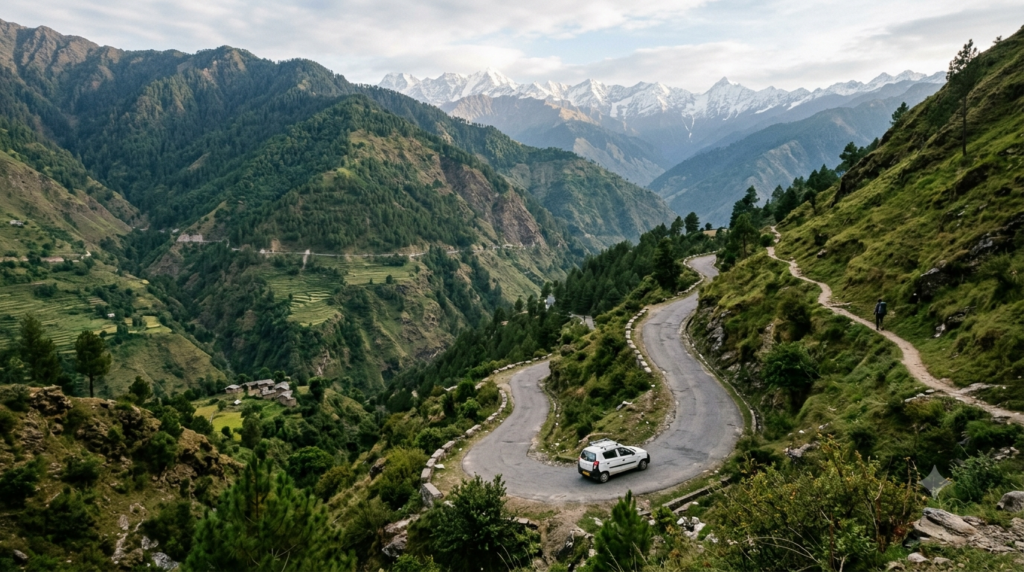
A seven-day Char Dham yatra itinerary can outline all four Uttarakhand shrines, but it cannot promise a safe, completed pilgrimage. The route includes long hill drives, the Yamunotri climb and a demanding Kedarnath visit. Seven days may work only with tightly coordinated transport, suitable health and favourable conditions. For a road-and-trek journey, allow more time.
Go Kshetra is an independent pilgrimage guide, not an official temple or government website. We are not affiliated with the shrine authorities and do not accept bookings, donations or payments. Use the official Uttarakhand Tourism channels linked below.
Char Dham Yatra Itinerary: Seven-Day Reality Check
- Four dhams: Yamunotri, Gangotri, Kedarnath and Badrinath, in the usual clockwise order.
- Seven days: an ambitious planning example, not a guaranteed door-to-door package.
- Road-based alternative: Uttarakhand Tourism publishes a longer GMVN itinerary spanning 10 days and 10 nights.
- Hardest section: Kedarnath involves a roughly 16 km uphill walk from Gaurikund if you do not use a helicopter.
- Registration: compulsory and free on the official Tourist Care Uttarakhand portal.
- Best safeguard: reserve extra nights and do not book an inflexible return connection on Day 7.
Important distinction: reaching Badrinath on Day 6 is not the same as finishing darshan and returning safely to Haridwar on Day 7. Weather, traffic, medical needs and helicopter availability may extend the trip.
Is a Seven-Day Char Dham Yatra Itinerary Realistic?
Seven days can serve as a compressed route sketch for travellers who have arranged their transfers. It is not a reliable all-road timetable for ordinary pilgrims. Uttarakhand Tourism’s published GMVN itinerary uses separate days for the Kedarnath ascent and descent. That official example is much more forgiving than the original seven-day assumption.
The crucial decision is the Kedarnath leg. If you trek up and down, plan separate days and suitable rest. A helicopter may shorten travel, but flights depend on operating conditions and confirmed seats.
Flights can be delayed or cancelled. No option guarantees darshan within your intended window.
Medical fitness alone does not guarantee suitability. Mountain travel affects people differently, including healthy younger adults. Older travellers, families and anyone with heart, lung or mobility conditions should seek medical advice and select a slower schedule.
Char Dham Yatra Itinerary: Conditional Seven-Day Route
This seven-day Char Dham yatra itinerary starts in Haridwar and follows the traditional order. It assumes a dedicated vehicle and a confirmed Kedarnath helicopter plan. You may still need Day 8 or later to reach Haridwar. Treat each night’s destination as a target, not a promise.
| Day | Route and main task | Likely night halt |
|---|---|---|
| 1 | Haridwar to Barkot; settle in before the Yamunotri climb | Barkot |
| 2 | Janki Chatti to Yamunotri and return, subject to weather and fitness | Barkot |
| 3 | Barkot via Uttarkashi to Gangotri; return towards Uttarkashi | Uttarkashi |
| 4 | Uttarkashi to Guptkashi or nearby helicopter base | Guptkashi area |
| 5 | Kedarnath helicopter visit only if tickets, flights and darshan permit | Guptkashi area or Kedarnath |
| 6 | Continue towards Badrinath if the Kedarnath leg finishes in time | Badrinath |
| 7 | Badrinath darshan and begin the return drive | Rudraprayag/Srinagar, or farther if safely possible |
Day 7 is not a guaranteed Haridwar arrival. Leave a further travel day for the remaining descent. If Day 5 runs late, the rest of this sequence shifts automatically. Do not compress the plan by driving through the night on unfamiliar mountain roads.
Day 1: Haridwar to Barkot
The seven-day Char Dham yatra itinerary begins with an early mountain drive from Haridwar. Barkot gives you a base for the Yamunotri approach, while a late arrival leaves little rest. For comparison, the official GMVN itinerary travels from Haridwar through Barkot to Phoolchatti on Day 1.
Confirm the latest route and road notices before departure. Keep drinking water and a warm layer within reach because conditions change as the road climbs. Avoid adding long sightseeing stops to a time-sensitive travel day.
Day 2: Yamunotri from Janki Chatti
Drive towards Janki Chatti, then use the mountain trail to reach Yamunotri. Uttarakhand Tourism describes the current approach as roughly 5–6 km each way. The climb can feel harder than the distance suggests, so allow time for breaks and the descent.
Surya Kund is a very hot spring near the temple, known for cooking ritual offerings. Do not bathe in Surya Kund or put your hands or feet into its hot water. There is a real scald risk. Follow on-site notices for any designated bathing facilities, and never assume a spring is safe to enter.
After darshan, return to Janki Chatti well before dark if conditions allow. Pony and palanquin services may help some pilgrims, but confirm regulated rates and availability locally. Assistance is not a substitute for medical clearance.
Day 3: Gangotri Darshan and Uttarkashi
For this seven-day Char Dham yatra itinerary, Gangotri has road access, unlike the Yamunotri approach. Still, the Barkot-to-Gangotri day is long. Start early, watch road conditions near Harsil and allow for queues at the shrine.
A riverbank visit is optional; entering fast, cold water adds risk without helping you meet the schedule. Skip the separate Gaumukh trek because it needs extra time and permissions. A late return may call for a halt closer to Gangotri rather than a forced drive.
Day 4: Uttarkashi to Guptkashi
This is chiefly a transfer day through hilly terrain. It should remain a road-and-rest day, not an attempt to squeeze in Kedarnath. Traffic and weather can stretch a drive, even when the distance looks manageable on a map.
Check the departure point written on any confirmed helicopter ticket. Guptkashi, Phata and Sirsi are different bases, so the accommodation choice should match the actual boarding location. There is no reason to buy a shuttle ticket from an agent who cannot direct you to the official booking channel.
Day 5: Kedarnath Visit or an Extra Trek Day
A seven-day Char Dham yatra itinerary hinges on Kedarnath, whose walking route begins at Gaurikund with a roughly 16 km climb. The climb and descent should not be presented as a normal same-day excursion. Uttarakhand Tourism’s longer route plans an overnight stop at Kedarnath and descent the following day.
For the compressed plan, only a confirmed helicopter arrangement could free up time. Even then, changing weather may ground aircraft or delay your return. If the service cannot operate, stay near the base, follow official instructions and extend the schedule. Do not try to replace a cancelled flight with an unplanned forced trek.
Our Kedarnath pilgrimage guide offers more context on the shrine and its mountain setting.
Day 6: Travel Towards Badrinath
Continue only after completing the Kedarnath segment safely. The drive towards Badrinath passes through the Alaknanda valley and the Joshimath area. Plan stops for food and rest rather than assuming a fixed arrival time.
If you arrive early enough, check the temple’s current darshan arrangements through the Badrinath-Kedarnath Temple Committee. Otherwise, rest and visit the next morning. For more local context, see our Badrinath temple guide.
Day 7: Badrinath Darshan and Return Leg
Visit Badrinath if you could not do so on Day 6. Then begin your descent through Joshimath towards Rudraprayag or Srinagar. A long return to Haridwar may not be practical after darshan, so avoid tying it to a same-night train or flight.
Mana village and other stops are optional. Skip them when road conditions or daylight are limited. You can also read our Vishnuprayag road-stop guide if your return route permits a safe daylight halt.
Travel Arrangements for a Char Dham Yatra Itinerary
Choose transport based on the most demanding section, not just your budget. A private or shared road vehicle can reach the roadheads, but it cannot drive to the Yamunotri or Kedarnath shrines. Those final approaches require walking or a permitted assistance option.
| Option | What it covers | Main limitation |
|---|---|---|
| Road vehicle or GMVN bus | Between towns and shrine roadheads | Does not eliminate trekking |
| Pony or palanquin | Supported trail segments where permitted | Fitness, supply and local rules still matter |
| Kedarnath shuttle helicopter | Approved helipads to Kedarnath | Limited seats, weight checks and weather cancellations |
| Multi-dham helicopter tour | Air and road transfers described in a package | Cost, operating dates and inclusions vary |
Public buses and shared taxis often require more flexible timing than a fixed seven-day itinerary allows. If you need a scheduled return, compare the full road journey against the published Uttarakhand Tourism GMVN itinerary before choosing transport.
Char Dham Yatra Itinerary: Costs and Fare Verification
A seven-day Char Dham yatra itinerary has no single verified 2026 package fare. Vehicle hire, hotels, meals, pack animals, weather delays and helicopter seats can change the total sharply. The original page’s ₹28,000–₹55,000 per-person quote was not backed by a current, itemised official tariff, so it should not be treated as a confirmed fare.
Two published Uttarakhand Tourism examples provide a useful comparison. Its GMVN conventional road itinerary lists approximately ₹18,000–₹25,000 per person for a longer trip. A separate five-day Char Dham air-tour listing from Uttarakhand Tourism shows approximately ₹1.5 lakh per person.
These are published package examples, not confirmed live offers for your dates. Ask the named operator what the quotation includes before paying through its official channel.
Which Fare Figures Can You Trust?
Use published package examples as context, not as an invitation to assume a current ticket price. Compare a fresh written quote against the listed inclusions. Fixed-price claims for road taxis, ponies and helicopters require a date and official confirmation.
| Cost item | What can be checked | What remains variable |
|---|---|---|
| Char Dham registration | Free on the state portal | No private processing fee is required |
| GMVN road tour example | Approx. ₹18,000–₹25,000 per person on tourism listing | Departure, inclusions, current price |
| Five-day air-tour example | Approx. ₹1.5 lakh per person on official tourism listing | Seats, itinerary and current quote |
| Kedarnath shuttle | Route-wise amounts appear on UCADA’s fare page | Dynamic price, charges, availability and fare direction |
| Pony, doli and private taxi | Confirm authorised local tariff or written quote | Route, season and service type |
Uttarakhand Civil Aviation Development Authority (UCADA) lists route-specific Kedarnath shuttle figures. However, its table does not clearly label each figure as one-way or return, and it warns about dynamic pricing and added charges. Therefore, do not repeat a fixed ₹8,500–₹9,000 round-trip claim. Check the actual ticket total on IRCTC HeliYatra, which the state registration portal links as the helicopter booking channel.
Official Registration for Your Char Dham Yatra Itinerary
- Check shrine opening or closing status, district road alerts and weather for the intended dates.
- Visit Tourist Care Uttarakhand and register every pilgrim using the official instructions.
- Choose the four dhams and intended visit dates, then save the registration letter with its QR code.
- Record the required vehicle details on the official process when applicable.
- Confirm hotel and transport bookings separately; registration does not reserve a room, helicopter seat or darshan.
- Carry identification, the registration letter, prescribed medication and any confirmed travel tickets.
Your seven-day Char Dham yatra itinerary still requires official registration. The Uttarakhand Tourism portal states that registration is free. It also describes registration and verification checkpoints, along with an official mobile app. Do not pay a private website that claims it can sell a faster registration slip.
What If a Road Closes or a Helicopter Is Cancelled?
Completion is never guaranteed. A seven-day Char Dham yatra itinerary leaves little room for heavy rain, landslides, crowd controls, illness or flight disruption. The first fallback is to remain at a safe approved halt and follow local authorities’ instructions.
If a flight is cancelled, use the official operator and IRCTC process for any rescheduling or refund. Do not assume seats will move to the next day. If the Kedarnath visit cannot happen, extend the trip rather than forcing a same-day mountain trek.
For a fully road-based journey, use the longer published itinerary as your starting point. Another option is a shorter Do Dham route, subject to opening dates and personal circumstances. If you cannot add days, it is safer to visit fewer shrines than to chase all four against the clock.
Altitude, Weather and Walking Safety
The altitude and physical effort are part of the decision, not details to handle after booking. Yamunotri requires a steep trail, while Kedarnath can demand many hours of ascent. Cold, rain and reduced oxygen may affect travellers even during the main pilgrimage season.
Speak with a doctor before a strenuous yatra if you have heart, lung, blood-pressure or mobility conditions. Seek urgent medical help for serious breathlessness, chest pain, confusion or worsening altitude symptoms. Do not push ahead just to preserve the itinerary.
Carry warm layers, rain protection, grip-soled footwear, water, food, identification and your usual medicines. Check Uttarakhand Tourism’s Char Dham guidance before departure. Never rely on a fair-weather forecast several days earlier.
How to Choose a Char Dham Yatra Itinerary That Fits Your Time
A seven-day Char Dham yatra itinerary suits comparison shopping, not risk-free scheduling. If your calendar is fixed, ask whether a delay would cost you a non-refundable ticket or cause a missed medical appointment. That is often more important than shaving one night from the plan.
Travellers who plan to walk to Kedarnath should allow separate ascent and descent time. A family group may also need more recovery days after Yamunotri. People seeking a shorter journey can compare the state tourism air-package example, but they must still allow for weather changes and eligibility rules.
My planning recommendation is simple: use this route to understand the order of the four dhams, then build in at least one or two reserve days. Keep the return journey flexible. Your priority should be a safe pilgrimage, not a seven-day completion claim.
Frequently Asked Questions
Is a Seven-Day Char Dham Yatra Itinerary Enough for Four Temples?
It might cover the four shrines if transfers, access and weather line up, but seven days is not dependable. An all-road trip with the Kedarnath trek needs more time. Allow a flexible return date and a reserve night.
Can I complete the seven-day plan without a helicopter?
Do not assume so. A normal Kedarnath trek needs time for the uphill approach, darshan, overnight rest and descent. The longer Uttarakhand Tourism road itinerary is a more suitable model.
Is bathing in Surya Kund at Yamunotri safe?
No bathing recommendation should be made for Surya Kund. The spring’s water is hot enough for cooking ritual offerings, so it poses a burn risk. Follow posted instructions and use only designated facilities when officials permit.
Is Char Dham registration free in 2026?
Yes. Uttarakhand Tourism says registration itself is free on its official portal. Other services, such as transport, accommodation and helicopter tickets, can carry separate charges.
How Much Does a Seven-Day Char Dham Yatra Itinerary Cost?
There is no verified single fare for a custom seven-day plan. Published tourism examples cover longer road itineraries and separate air packages, not this exact schedule. Request a current written quote and check every inclusion before travel.
Where do I book a Kedarnath helicopter ticket?
Use the IRCTC HeliYatra link shown on Uttarakhand’s official registration portal. The ticket price, seat supply and service conditions depend on the route and date. Registration alone does not secure a helicopter ticket.
Can a helicopter booking guarantee Kedarnath darshan?
No. Flights can stop because of weather or operational limits, and queues may also change. Check the operator’s current terms, keep a buffer day and avoid assuming an immediate replacement seat.
Will Day 7 finish in Haridwar or Rishikesh?
Not necessarily. After Badrinath darshan, a safe halt farther down the valley may be wiser. Plan an additional travel day before any fixed train or flight.
What should I do if I cannot extend the trip?
Reduce the number of shrines or choose a shorter approved itinerary that fits your health and dates. You can plan a separate Do Dham visit rather than rushing all four. Follow the latest official road and temple notices before deciding.