
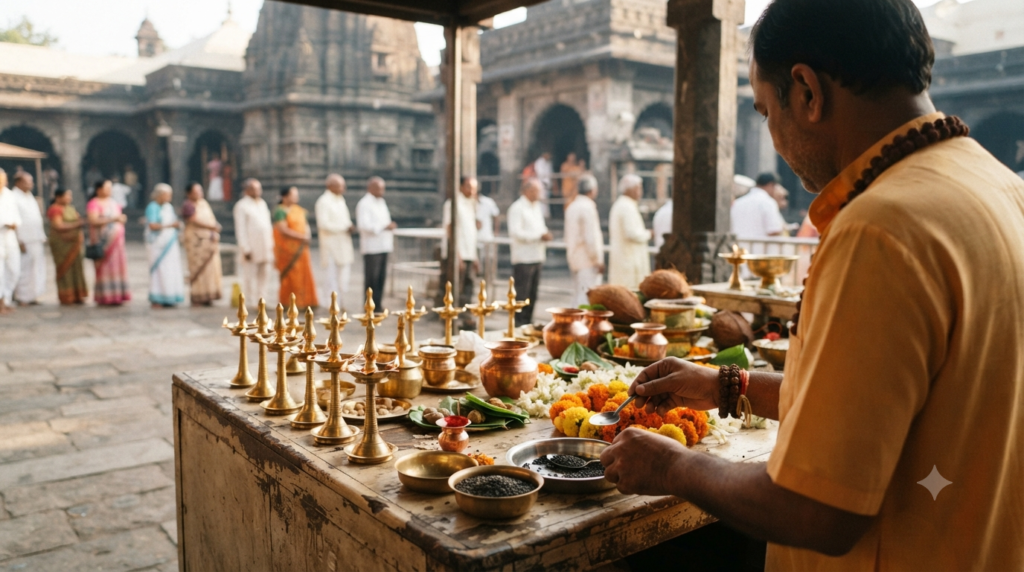
Shani Shingnapur puja is an in-person temple practice, not an authorised online worship service. Shri Shaneshwar Devasthan currently warns devotees against fake online puja apps and websites, so plan to perform puja or oil abhishek at Shani Shingnapur itself. This guide explains the official timings, onsite process, cost reality, ritual basics, and the safest way to avoid misleading booking claims.
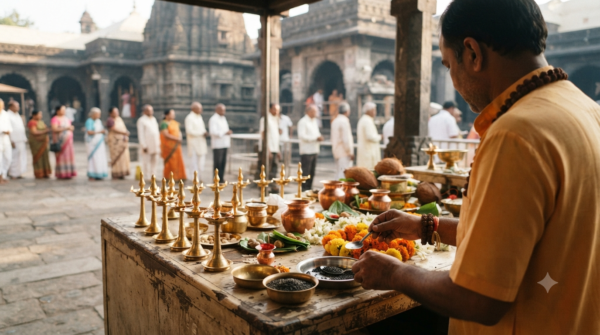
Go Kshetra is an independent pilgrimage guide. We are not affiliated with Shri Shaneshwar Devasthan, and we do not accept puja bookings, payments, donations, or personal details. Use the official Shri Shaneshwar Devasthan website for current notices and temple information.
Shani Shingnapur Puja: Quick Facts
The most important point is simple: the Devasthan says it has not authorised any online worship-service app or website. Devotees should come to Shani Shingnapur and perform puja or oil abhishek at the temple premises. The official website also lists temple hours as 4:00 AM to 10:30 PM.
| Detail | Current guidance |
|---|---|
| Online puja booking | No authorised online worship-service app or website listed by the Devasthan |
| Where to perform puja | At Shani Shingnapur temple premises |
| Temple hours | 4:00 AM to 10:30 PM |
| Aarti times | 4:30 AM, 12:00 PM, and sunset |
| Shani Shanti puja fee | No current fixed tariff found on the official website; confirm at the official counter |
| Official website | shanidev.com |
The Devasthan also says devotees should obtain a bill for puja beforehand. Its published information says priests should not demand separate dakshina for the puja. Therefore, use official counters and receipts rather than private agents or payment links.
Is Shani Shingnapur Puja Available for Online Booking?
No authorised online worship service is listed by Shri Shaneshwar Devasthan. In fact, the official website carries a direct warning about fake online worship-service apps and websites. It asks devotees to visit Shani Shingnapur and perform puja and oil abhishek only at the temple premises.
This distinction matters because many commercial websites sell remote “Shani Shingnapur puja” packages. Those services may be private offerings, but they should not be presented as temple-authorised booking. The Devasthan says it is not responsible for fraud through such online puja services.
If a page asks for your name, gotra, phone number, payment, or puja package selection, first check who operates it. A website using temple images or the words “official booking” is not proof of authorisation. Start with shanidev.com, and follow only links published there.
What Does “Shani Shanti Puja” Mean at Shani Shingnapur?
“Shani Shanti Puja” is a broad devotional term used for worship intended to seek Lord Shani’s blessings and spiritual peace. The official Devasthan website describes abhishek, japa, havan-related practices, sankalp, and remedies associated with Sade Sati. However, it does not currently publish a clearly priced online service under a fixed “Shani Shanti Puja” package name.
The official abhishek information says arrangements exist for devotees who want abhishek. It also describes japa performed with the devotee’s name, gotra, and sankalp. Two mantra-count traditions are mentioned: 23,000 and 92,000 repetitions.
These practices belong to religious and astrological tradition. They are matters of faith, not guaranteed remedies for health, money, legal problems, or personal hardship. If you have a medical, financial, or legal concern, use an appropriate qualified professional alongside any devotional practice you choose.
Shani Shingnapur Puja Timings and Aarti Schedule
The official Shri Shaneshwar Devasthan website currently lists the temple as open from 4:00 AM to 10:30 PM. It lists the first aarti at 4:30 AM, the second at 12:00 PM, and the third at sunset. These timings replace the older 24-hour claims still repeated on some travel pages.
| Temple activity | Official time | Planning note |
|---|---|---|
| Temple opens | 4:00 AM | Arrive early if you want the morning worship period |
| First aarti | 4:30 AM | Early morning aarti |
| Second aarti | 12:00 PM | Midday worship |
| Third aarti | Sunset | Time changes through the year |
| Temple closes | 10:30 PM | Do not rely on old 24/7 listings |
Saturdays draw strong devotional interest because Saturday is traditionally associated with Lord Shani. Shani Amavasya and major festival days can also bring larger crowds. If your main purpose is a specific ritual, arrive with enough time to ask the official counter about that day’s arrangements.
How to Arrange Puja at the Temple
Plan to arrange the ritual after reaching the temple, because the Devasthan does not authorise online worship-service apps. The safest approach is to use the temple’s own counter or office, ask what puja or abhishek options are available that day, and collect an official bill before proceeding.
- Reach Shri Shaneshwar Devasthan during the published temple hours.
- Go to the official temple counter or office for current puja information.
- Ask which abhishek, japa, sankalp, or other worship options are available that day.
- Confirm the current charge before paying, because the official website does not publish a complete current tariff.
- Take an official receipt or bill before the ritual.
- Follow temple staff instructions for the puja area and permitted offerings.
- Keep any faith-based expectation separate from medical, legal, or financial decisions.
For Shani Shingnapur puja, this process avoids the biggest failure mode: paying a private website that implies temple authorisation. If an online seller claims it can “book” the temple puja for you, do not treat that claim as official unless the Devasthan itself links to that service.
What Is the Shani Shingnapur Puja Cost?
There is no reliable current fixed price for a package called “Shani Shanti Puja” on the official Devasthan website. For that reason, this refresh does not repeat the ₹1,000–₹2,500 and similar ranges found on older third-party pages. Confirm the current amount directly at the official counter before paying.
The official site does state that devotees should take a bill for puja beforehand. That makes the receipt an important practical safeguard. It also says priests should not ask devotees for separate puja dakshina, so be cautious if someone demands an unofficial extra payment.
Costs may depend on the ritual chosen, materials, and current Devasthan arrangements. Therefore, a single internet price can become misleading quickly. Treat any third-party tariff as unverified unless the same amount appears on a current official notice.
What Items Are Used for Shani Puja?
The official Devasthan publishes a broader puja-item list rather than one mandatory kit for every devotee. It includes rice, black til, black thread, flowers, incense, lamps, mustard oil, sweets, black urad, camphor, coconut, holy water, and other traditional items. The page says devotees may use only a few items from the list.
For Shani Shingnapur puja, check what the temple currently permits before buying a large package outside the temple. Rules for oil, containers, and access can change for safety or temple management reasons. Buying more items does not make a puja more “official,” so follow onsite guidance instead.
You can review the Devasthan’s published puja item list before travelling. This is also safer than relying on a seller who bundles expensive items into a private puja package.
Official Puja Procedure and Ritual Steps
The Devasthan’s puja procedure follows a traditional sequence of offerings. It includes aasana, water offerings, snanam, cloth, gandham, flowers, incense, lamp, akshata, naivedya, dakshina, and namaskar. The exact ritual you perform may differ, so follow the current instructions of temple staff and authorised priests.
The official puja procedure page also describes black til as a naivedya offering. Meanwhile, the abhishek page discusses sankalp and mantra japa. These pages explain tradition, but they do not create an online reservation system.
If you are unfamiliar with Shani Shingnapur puja, you do not need to memorise every Sanskrit step before arriving. Ask the official counter what is available, then follow instructions at the temple. This is simpler and reduces the risk of being diverted by private guides.
What Can Go Wrong With Online Puja Booking?
The main risk is confusing a private online puja seller with the Devasthan. The temple itself warns about fake online worship-service apps and websites. Other problems include outdated timings, copied price lists, unofficial payment links, and claims that a ritual guarantees relief from a specific life problem.
If an online booking fails, do not send money again through another agent. Instead, visit the temple during official hours and ask the Devasthan counter about available puja options. If you cannot travel, treat any remote puja service as a separate private service rather than an official Shani Shingnapur booking.
If a quoted price seems high, ask for the official bill before paying. The Devasthan’s own guidance says a puja bill should be taken beforehand. That simple step gives you a clearer record of what the temple has actually charged.
Best Time to Visit for Puja
Early morning is practical if you want to combine puja with the 4:30 AM aarti. A weekday may feel easier than a Saturday because Saturday carries special religious importance for Shani devotees. However, the temple does not promise a fixed waiting time for any ritual.
For a quieter visit, avoid assuming that every Saturday will work like a normal weekday. Festival periods and Shani Amavasya can increase crowd pressure. Arrive early, keep water with you in hot weather, and allow extra travel time. For meal planning after darshan, see our Shani Shingnapur Prasadalaya guide.
If you are elderly, pregnant, travelling with children, or managing a health condition, plan around heat and waiting. Carry prescribed medicines and do not replace medical care with fasting, puja, or astrology-based remedies. Devotional practices can be meaningful, but they are not medical treatment.
Before You Go
The safest way to plan a Shani Shingnapur puja is to separate verified temple information from private commercial offers. The Devasthan says puja and oil abhishek should be done at the temple, and it warns against unauthorised online worship services. Check shanidev.com again before travel because timings, ritual access, and charges can change.
Keep the current temple hours in mind: 4:00 AM to 10:30 PM, with aartis at 4:30 AM, noon, and sunset. For puja cost, ask the official counter and collect a bill. If this visit forms part of a wider Maharashtra pilgrimage, our Ranjangaon Ganpati Temple guide can help with another temple stop. Most importantly, do not send money to a site merely because it uses temple photos or the words “official booking.”
Frequently Asked Questions
Can I book Shani Shingnapur puja online?
No temple-authorised online worship service is currently listed. Shri Shaneshwar Devasthan warns devotees against fake online worship-service apps and websites, and it asks them to perform puja and oil abhishek at the temple premises. Use shanidev.com for current official notices.
What is the Shani Shanti Puja cost at Shani Shingnapur?
The official website does not currently publish a fixed tariff for a service named “Shani Shanti Puja.” Confirm the available ritual and charge at the official temple counter. Take a bill before the puja, because older internet price ranges may be outdated or private.
What are the current Shani Shingnapur temple timings?
The official Devasthan website lists temple hours as 4:00 AM to 10:30 PM. It lists aartis at 4:30 AM, 12:00 PM, and sunset. Do not rely on older pages that still describe the temple as open 24 hours.
Is Shani Shanti Puja compulsory during Sade Sati?
No. The Devasthan’s own abhishek information says devotees may choose whether they want such remedies, without compulsion. Sade Sati remedies belong to Hindu religious and astrological tradition, so they should be treated as faith practices rather than guaranteed outcomes.
What should I take for Shani puja?
The Devasthan lists items such as black til, rice, black thread, flowers, incense, lamps, mustard oil, sweets, black urad, camphor, coconut, and holy water. You may not need everything. Check onsite rules before buying a large kit.
Should I pay a priest directly for the puja?
The Devasthan says devotees should take a bill for puja beforehand and states that priests should not ask for puja dakshina. Use official counters and receipts. Avoid private agents who demand payment through personal links or messaging apps.
Does the puja guarantee relief from health or financial problems?
No outcome can be guaranteed. Devotees may perform the ritual as an act of faith, but it should not replace medical care, legal advice, financial planning, or other professional help. Be especially cautious of sellers who promise certain results after a paid puja.