
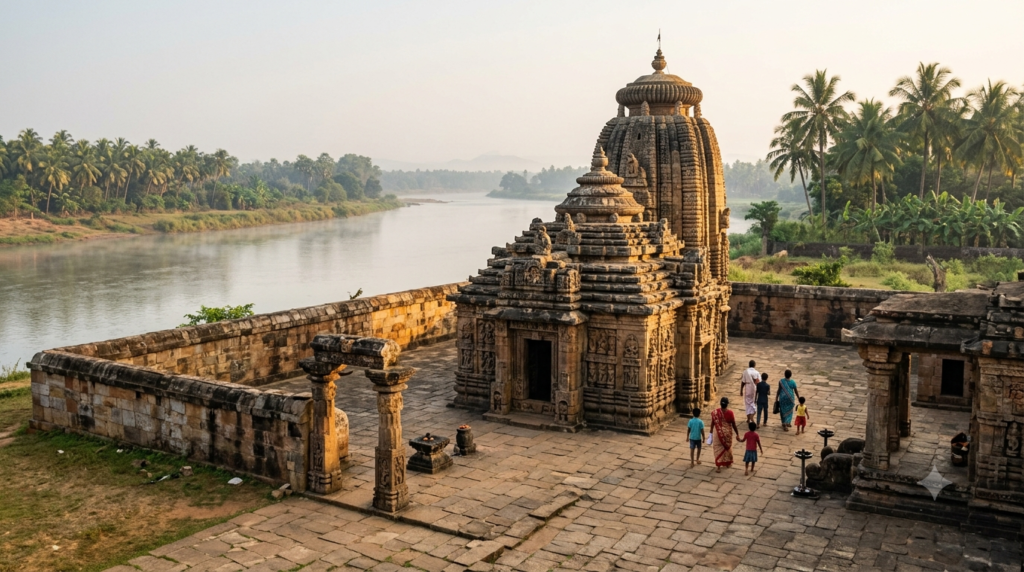
Planning your Mangala Temple Kakatpur Darshan becomes far simpler once you know the real timings, the free entry rules, and the festival calendar that shapes crowds. This revered Shakti shrine sits in the quiet village of Kakatpur, on the banks of the Prachi River in Odisha’s Puri district. Devotees come here year-round to seek the blessings of Goddess Mangala, a powerful form of Durga worshipped across Eastern India.
What makes this temple truly special, though, is its living link with the famed Jagannath Temple of Puri. This guide gives you verified, on-the-ground information so you can plan the trip with confidence.
Go Kshetra is an independent pilgrimage guide. We are not affiliated with, endorsed by, or the official website of the Maa Mangala Temple or the Odisha temple administration. We do not accept bookings, donations, or payments. For official information, use the Odisha endowments resource linked in this guide.
Mangala Temple Kakatpur Darshan at a Glance
Here are the essentials before you travel. Because reported timings vary between sources, treat the schedule below as indicative and confirm locally before you set out.
- Deity: Goddess Mangala, a form of Adi Shakti and Durga
- Location: Kakatpur village, Puri district, Odisha, on the Prachi riverbank
- Entry fee: Free — no ticket is required for general darshan
- Online booking: None — there is no official online darshan booking system
- Signature festival: Jhamu Yatra (fire-walking), during Chaitra (March–April)
- Nearest airport: Bhubaneswar (BBI), about 60 km away
| Attribute | Details |
|---|---|
| Temple name | Maa Mangala Temple (Bata Mangala), Kakatpur |
| Built | Traditionally dated to the 15th century |
| Architecture | Kalinga style |
| Entry fee | Free for general darshan |
| Photography | Ask temple staff; restricted near the sanctum |
| Governing body | Odisha Hindu Religious Endowments |
About the Temple and Its Legend
The Maa Mangala Temple is traditionally dated to the 15th century, and it stands as a proud symbol of Kalinga heritage. The shrine follows the classic Kalinga architectural style, with a modest structure and intricately carved pillars. Goddess Mangala is the presiding deity here, honoured as a protector and divine mother.
The origin story is beautiful. According to local legend, the goddess hid herself beneath the waters of the swollen Prachi River. One night, she appeared in a boatman’s dream and asked him to recover her idol from the riverbed. He dived in, found the idol, and helped establish her shrine nearby.
The village name has its own tale. Locals later saw a crow dive into the exact spot where the deity was found, and the bird never surfaced. In Odia, “kaka” means crow and “atka” means detained, so the place became known as Kakatpur. This story of divine revelation still draws pilgrims seeking blessings and fulfilment of their wishes.
The Jagannath and Nabakalebara Connection
This is the detail most travel pages miss, yet it is the heart of the temple’s fame. Maa Mangala shares a deep ritual bond with the Jagannath Temple of Puri during the Nabakalebara ceremony, when the wooden idols of Jagannath, Balabhadra, and Subhadra are renewed. The link makes Kakatpur a rare meeting point of Shakta and Vaishnava tradition.
During Nabakalebara, the servitors of the Jagannath Temple travel to Kakatpur before searching for the sacred neem trees, known as Daru Brahma, from which the new idols are carved. They pray to Goddess Mangala for guidance. As tradition holds, the goddess appears in their dreams and reveals the location of the sacred wood. Because of this belief, many Odias view Kakatpur as spiritually inseparable from Puri.
If you want to understand the wider tradition, our detailed Jagannath Temple Puri guide explains the Nabakalebara cycle in full. Reading both together gives you the complete picture that a single official page rarely offers.
Is Maa Mangala a Shakti Pitha?
You will see many websites call Kakatpur a “Shakti Pitha,” so a quick clarification helps. Maa Mangala is one of Odisha’s most revered seats of goddess worship and a major centre of the Shakta tradition.
However, it is not usually counted among the classical fifty-one Shakti Pithas linked to the legend of Sati. The honour here comes from its living rituals and its Jagannath connection, not from that specific list. Either way, its spiritual weight in Odisha is beyond doubt.
Mangala Temple Kakatpur Darshan Timings
The temple generally opens in the early morning and closes in the evening, with a midday break in between. Reported timings differ across sources, so plan for a morning or late-afternoon visit to stay safe. A commonly cited pattern is an early-morning opening, a closure around midday, and a reopening in the late afternoon until evening.
Because these hours shift during festivals and are not always published centrally, confirm the current schedule before you travel. The safest approach is to arrive in the morning window, when the shrine is calm and the queue is short. Festival days such as the Chaiti Parba follow special timings, and the doors often open at Brahma Muhurta for the goddess’s morning rituals.
Mangala Temple Kakatpur Darshan: Fees and Booking
General darshan at Maa Mangala Temple is free, and you need no ticket to enter the shrine. You simply arrive during open hours and join the queue. There is no VIP or paid fast-track darshan system of the kind seen at larger temples.
Just as importantly, there is no official online booking for Mangala Temple Kakatpur Darshan. Any website that asks you to pay in advance to “book darshan” here should be treated with caution. Fake booking portals are a real problem across Indian temple travel, so never share money or personal details with an unofficial site. For special poojas or festival rituals, arrangements are made in person at the temple during your visit, not through third-party agents online.
How to Reach Mangala Temple Kakatpur
Kakatpur lies within easy reach of Odisha’s main travel hubs, and the roads are well maintained. The village sits on the Puri–Astaranga route, so a private car or taxi is the smoothest option for pilgrims carrying luggage. Most visitors plan their Mangala Temple Kakatpur Darshan as a day trip from Puri or Bhubaneswar.
By Air
The nearest airport is Biju Patnaik International Airport (BBI) in Bhubaneswar, roughly 60 km from Kakatpur. After landing, you can hire a taxi, rent a car, or take a state bus toward Puri and onward to the temple. A direct cab is easiest if you want to reach the shrine without changing vehicles.
By Train
Puri Railway Station is the closest major railhead, about 50 to 54 km away, with taxis and buses running to the temple village. Bhubaneswar Railway Station, around 60 km out, offers wider long-distance connectivity across India. Choose Puri if you want the shorter road transfer, and Bhubaneswar if you need more train options.
By Road
Kakatpur connects by good roads with Puri, Bhubaneswar, and Konark. Regular buses run from Puri and Bhubaneswar, although many pilgrims prefer a taxi or self-drive car for comfort. Because the temple pairs naturally with Konark, a road trip lets you cover both in one day.
Best Time to Visit for Mangala Temple Kakatpur Darshan
The ideal season for Mangala Temple Kakatpur Darshan runs through the cooler winter months, from October to February. The weather stays pleasant for temple visits and for exploring nearby Konark and the coast. Mornings are especially peaceful, so an early start rewards you with an unhurried darshan.
If you want cultural drama, time your visit around the Jhamu Yatra in Chaitra, though you should expect large crowds and book stays well ahead. Summer, particularly April and May, turns intensely hot in coastal Odisha. Carry water and plan indoor breaks if you travel during these months.
Jhamu Yatra and Festivals
The Chaiti Parba, popularly known for its Jhamu Yatra, is the temple’s grandest celebration. It spans the Tuesdays of the Chaitra month (March–April) and builds toward a dramatic fire-walking ritual. On the opening Tuesday, the goddess is adorned in the resplendent Rajarajeswari besha, and huge crowds gather for darshan.
During the fire-walking ritual, designated sevayats and devotees carry earthen pots of Prachi river water and walk barefoot across a channel of burning charcoal. Devotees believe the goddess’s grace protects them from harm. Exact festival dates shift each year with the lunar calendar, so confirm them before planning a festival trip.
The temple also observes Basanti Durga Puja and other Shakta festivals through the year. Two lakh or more devotees have gathered on peak Jhamu days, which brings heavy footfall and traffic on the Kakatpur–Konark and Kakatpur–Nimapara roads.
Health and Safety for Mangala Temple Kakatpur Darshan
Festival visits demand extra care because of crowds and heat. April temperatures in coastal Odisha can be severe, so carry water, wear a hat, and keep essential medicines with you. The fire-walking ritual is a traditional act of faith performed by practised devotees, and it is not something casual visitors should attempt. If you are elderly, pregnant, or managing a health condition, favour the quieter winter months for a comfortable darshan.
Dress Code and Temple Etiquette
The shrine expects traditional, modest clothing, in keeping with local custom. Men often wear dhoti or full-length trousers, while women choose sarees or salwar suits. Because the temple floors can be crowded, keep footwear at the designated area and stay mindful of queue discipline.
Photography rules are not uniform, so ask staff before taking pictures near the sanctum. Silence and respect during aarti add to the experience for everyone. These small courtesies matter most on festival days, when thousands share the same space.
Planning Your Mangala Temple Kakatpur Darshan: Insider Tips
A little planning turns a good visit into a smooth one. These practical pointers come from how experienced pilgrims actually approach a Mangala Temple Kakatpur Darshan trip.
- Arrive early: The morning window is calmer, cooler, and better for a reflective darshan before crowds build.
- Pair it with Konark: Since the Sun Temple sits about 21 km away, combine both in a single well-paced day.
- Carry cash: ATMs in small temple towns can run dry during festivals, so keep enough on hand.
- Book stays ahead: Rooms in Puri and Bhubaneswar fill fast around Jhamu Yatra, so reserve early.
- Verify timings locally: Ask at the temple or your hotel, because published hours vary and can change on ritual days.
Nearby Attractions After Mangala Temple Kakatpur Darshan
Kakatpur makes a natural base for exploring the Konark–Puri belt. The most rewarding day plan pairs your temple visit with the Sun Temple and a coastal stop. Below are the key distances to help you map the route.
| Attraction | Approx. distance |
|---|---|
| Konark Sun Temple (UNESCO site) | About 21 km |
| Chandrabhaga Beach | About 23 km |
| Puri Jagannath Temple | About 50 km |
| Raghurajpur Artist Village | About 55 km |
| Chilika Lake | About 77 km |
Konark Sun Temple and Chandrabhaga Beach make the easiest add-ons after darshan. If you love Shakti shrines, our Kalighat Temple darshan guide covers another famous goddess seat in Eastern India. For deeper heritage, dedicate a full day so you never feel rushed.
Official and Authority Resources
Always cross-check changeable details like timings and festival dates against authoritative sources before you travel. The temple falls under the Odisha Hindu Religious Endowments, which is the correct governing authority to consult. State tourism resources also help with routes and nearby heritage sites.
Before You Go
Maa Mangala Temple rewards visitors with a rare blend of legend, living ritual, and a sacred bond with Puri’s Jagannath tradition. Entry is free, no online booking exists, and mornings offer the calmest darshan. Plan for the cooler months if you want an unhurried visit, or brave the festival crowds if fire-walking devotion draws you. Confirm the day’s timings locally, keep your travel light, and let the goddess’s ancient story shape a memorable pilgrimage.
Frequently Asked Questions
Is there an entry fee for Mangala Temple Kakatpur Darshan?
No, general darshan is free and needs no ticket. You simply arrive during open hours and join the queue. Special poojas may involve traditional offerings arranged at the temple in person.
Can I book darshan online?
No official online darshan booking exists for this temple. Devotees visit in person during open hours. Be cautious of any website that asks for advance payment to “book” a darshan here, as it is likely unofficial.
What are the Mangala Temple Kakatpur Darshan timings?
The temple generally opens early morning and closes in the evening, with a midday break. Reported hours vary across sources, so confirm locally before you travel. Morning visits are the most reliable and peaceful.
When is Jhamu Yatra celebrated?
Jhamu Yatra falls during the Chaitra month, roughly March to April, on Tuesdays, with the main fire-walking ritual around April. Exact dates change each year with the lunar calendar. Check locally before planning a festival visit.
How is the temple connected to Jagannath of Puri?
During the Nabakalebara ceremony, Jagannath Temple servitors seek Goddess Mangala’s guidance to locate the sacred neem wood for the new idols. Tradition holds that she reveals the location in their dreams. This bond links Kakatpur closely with Puri.
Are there accommodation options nearby?
Kakatpur has only small guesthouses, so most pilgrims stay in Puri or Bhubaneswar and commute. Both cities offer a wide range of hotels for every budget. Reserve early during festival season, when rooms fill quickly.
Is photography allowed inside the temple?
Photography rules are not uniform and can be restricted near the sanctum. Always ask temple staff before taking pictures. Respecting these customs keeps the darshan experience pleasant for everyone.
Which is the best time for Mangala Temple Kakatpur Darshan?
The cooler months from October to February are ideal for a comfortable Mangala Temple Kakatpur Darshan. Festival lovers can time a Chaitra visit for Jhamu Yatra, though crowds and heat rise sharply. Mornings are best in any season.