
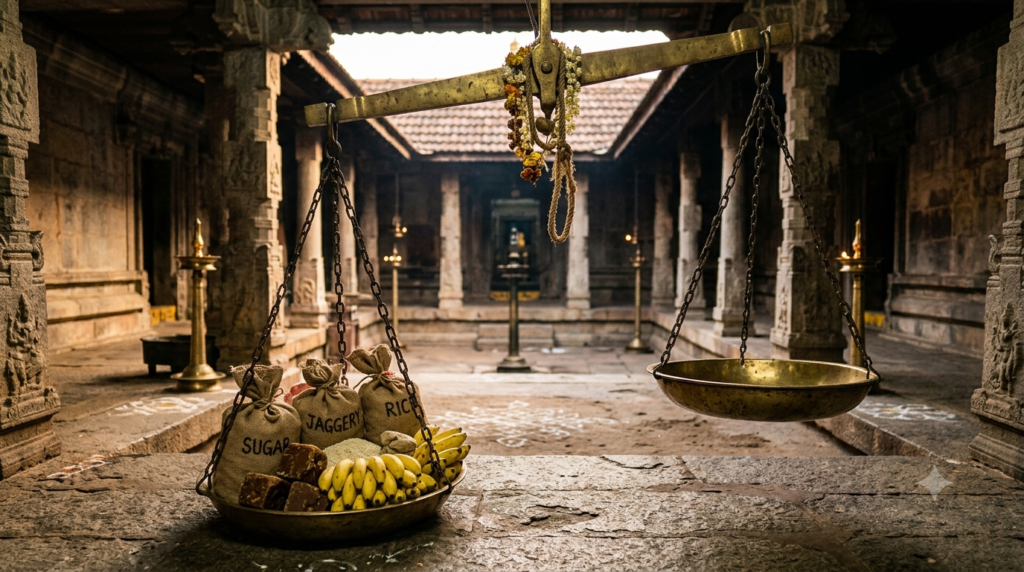
The Kukke Subramanya Thulabhara seva costs only ₹75 as the temple charge, and that single fact surprises most first-time pilgrims. Many people assume this ₹75 covers everything. In reality, you also pay the market rate for whatever you offer against your body weight. So your real spend depends entirely on the item you pick. This guide breaks down the exact timings, the counter booking process, the full cost, and the step-by-step procedure.
Kukke Subramanya Thulabhara at a Glance
Before the details, here are the numbers most devotees search for. Keep this handy while you plan.
- Seva charge: ₹75 per person (paid at the counter)
- Item cost: extra, at current market rate, based on your body weight
- Timings: mainly 10:30 AM to 11:15 AM; buy the ticket before 10:00 AM
- Booking: counter only, on arrival; no online booking
- Common offerings: banana, sugar, jaggery, rice, coconut, fruits, or gold
- Location: inside the main temple premises, Subrahmanya, Dakshina Kannada, Karnataka
What Is Thulabhara at Kukke Subramanya?
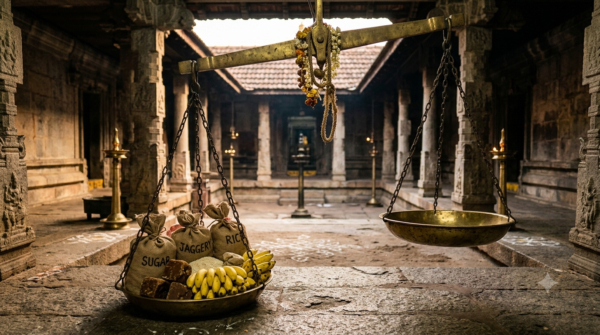
Thulabhara is a body-weight offering where you donate an item equal to your own weight to the deity. Devotees sit on one pan of a large balance. Then priests stack rice, sugar, jaggery, fruits, or gold on the other pan until both sides match. The ritual signals gratitude and surrender to Lord Subrahmanya.
People also spell it Thulabharam or Tulabharam, so don’t get confused by the variations. At this shrine, families often perform it after a wish comes true. Parents frequently weigh a newborn or a young child as thanksgiving. Since the offered goods go to the temple, the act doubles as charity.
Kukke Subramanya Thulabhara Timings
The dedicated Kukke Subramanya Thulabhara slot runs from 10:30 AM to 11:15 AM on most days. You must collect your ticket before 10:00 AM to take part in this slot. The main temple itself opens from 6:30 AM to 1:30 PM, then again from 3:30 PM to 8:30 PM.
Here is a fair caveat, because sources differ on this point. Several devotees report that staff allow the weighing through regular temple hours when the counter stays open. Other guides list only the morning window. To stay safe, reach early and buy your ticket before 10 AM. That way you avoid both the midday crowd and any timing confusion.
Mornings also pair well with darshan, so you finish the ritual and the queue together. For a full schedule of poojas and seva slots, see our Kukke Subramanya pooja list and timings guide.
Kukke Subramanya Thulabhara Cost and Items
The Kukke Subramanya Thulabhara cost has two clear parts. First, you pay a fixed ₹75 seva charge at the counter. Second, you pay for the offering itself at the going market rate. Because the item must match your weight, a heavier person naturally spends more.
Most items sit at the Thulabhara site itself, so you can buy them on the spot. The table below shows typical choices and rough market rates. Treat these item rates as general grocery prices, since the temple does not fix them.
| Offering | Typical market rate | Best for |
|---|---|---|
| Banana | ₹40–₹60 per dozen | Lightest, low-cost option |
| Sugar | ₹45–₹55 per kg | Most popular choice |
| Jaggery | ₹55–₹70 per kg | Traditional sweet offering |
| Rice | ₹45–₹70 per kg | Common staple donation |
| Coconut | ₹25–₹40 each | Symbolic, budget-friendly |
| Gold / silver | Daily metal rate | Special vows only |
The fixed seva ticket stays ₹75 per person regardless of the item. Rates above can change, so check current prices on the day. For the latest, confirm at the counter before you decide.
A Simple Cost Example
Numbers make this easier to picture, so here is a quick example. Suppose a 60 kg adult offers sugar at about ₹50 per kg. The sugar then costs around ₹3,000, plus the ₹75 seva charge. Now take a 15 kg child offered against the same sugar. That works out to roughly ₹750, plus ₹75.
Banana keeps the bill lowest, while gold sits at the top end. Choose the item that fits both your vow and your budget.
Should You Bring Your Own Items?
Yes, you can carry your own grocery items if you prefer. In that case, you pay only the ₹75 seva charge at the counter. This helps if you want a specific brand or a cleaner rate than the on-site sellers. However, buying on the spot saves you from hauling heavy bags up to the temple. For most families, the on-site purchase is simply more convenient.
How to Book Thulabhara at Kukke Subramanya
There is no advance or online booking for this seva, and this is the biggest myth online. Many websites wrongly claim you can book Thulabharam on the official portal. You cannot. The temple sells the ticket only at the counter, on the day of your visit.
So treat any “book Thulabhara online” link with caution. The official Karnataka seva portal lists Sarpa Samskara, Ashlesha Bali, and similar rituals, not the weighing seva. You can confirm this on the temple’s page at the Karnataka HRCE temple portal. To see the sevas that actually allow online booking, check the official Kukke eServices booking page.
Step-by-Step Procedure
- Reach early: Arrive in the morning, ideally before 10:00 AM.
- Take a holy dip: Many devotees bathe in the Kumaradhara River first.
- Buy the ticket: Pay ₹75 at the Thulabhara counter inside the premises.
- Pick your item: Buy it on-site, or hand over goods you carried.
- Sit on the balance: A priest weighs you against the chosen item.
- Complete the offering: The matched goods go to the temple as your donation.
The whole ritual takes only a few minutes once your turn comes. Crowds, though, can stretch the wait on weekends and festival days.
Dress Code and Temple Rules
Traditional attire is mandatory, since the temple enforces this strictly. Men must remove the shirt and vest before entering the sanctum. A white panche or dhoti works best, though plain pants are allowed for darshan. Women should wear a saree, or a salwar kameez with a dupatta.
The temple also bans coats, hats, turbans, Bermudas, shorts, and lungis. Photography is not allowed inside the main temple. Leave your phone and footwear at the designated counters before you go in.
Mistakes Devotees Make With Kukke Subramanya Thulabhara
A few avoidable errors trip up first-timers, so learn from them early. Each one below comes up again and again at the counter.
- Thinking ₹75 is the full cost: The item is extra, at market rate.
- Trying to book online: Thulabhara stays counter-only, every single day.
- Arriving after 10 AM: You risk missing the dedicated morning slot.
- Confusing the two temples: Kukke Subramanya is not Ghati Subramanya near Bengaluru.
- Skipping the river dip: Tradition expects a Kumaradhara bath before darshan.
Get these right, and your Kukke Subramanya Thulabhara visit runs smoothly. While you are there, you can also offer hair as thanksgiving; see our Kukke Subramanya hair offering guide for that ritual.
Planning Your Visit and How to Reach
Kukke Subramanya sits in the Dakshina Kannada district of Karnataka. The shrine rests on the banks of the sacred Kumaradhara River. The nearest railway station is Subrahmanya Road, about 12 km away. Mangaluru International Airport lies roughly 105 km from the temple.
By road, Bengaluru is around 280 km via Hassan and Sakleshpur on NH75. KSRTC and private buses run daily on this route. After your seva, the temple serves free meals at the Annadana hall. You can plan the timing around our Kukke Subramanya Annadanam guide.
Visiting for a dosha remedy too? Our Kukke Subramanya Kuja Dosha pooja guide covers the booking and procedure.
Before You Go
Kukke Subramanya Thulabhara is one of the simplest and most affordable sevas at this shrine. Remember the ₹75 seva charge is fixed, while the item cost rises with your weight. Reach before 10 AM, carry traditional clothes, and skip any site promising online booking. Sugar or banana keeps the offering light on the wallet, so pick what suits your vow. Confirm same-day item rates at the counter, then enjoy a calm, meaningful ritual.
Frequently Asked Questions
How much does Kukke Subramanya Thulabhara cost?
The seva charge is ₹75 per person, fixed at the counter. On top of that, you pay the market price for the item you offer against your body weight. So a heavier person, or a costly item like gold, raises the total. Sugar or banana keeps the overall cost low.
Can I book Thulabhara online at Kukke Subramanya?
No, you cannot book this seva online at all. The temple sells the Thulabhara ticket only at the counter, on the day you visit. Websites that promise online Thulabharam booking are simply wrong. The official Karnataka portal handles other sevas like Sarpa Samskara, not this one.
What are the Kukke Subramanya Thulabhara timings?
The dedicated slot usually runs from 10:30 AM to 11:15 AM. You must buy the ticket before 10:00 AM to join it. Some devotees report flexibility through temple hours, but the morning window is safest. Reach early to avoid both crowds and confusion.
What items can I offer in Thulabhara?
Common offerings include banana, sugar, jaggery, rice, coconut, and fruits. Some devotees offer gold or silver for special vows. Most items are available at the Thulabhara site itself. Choose any item that matches your intention and budget.
Can I bring my own items for the seva?
Yes, you can carry your own grocery items for the offering. In that case, you pay only the ₹75 seva charge at the counter. Bringing items lets you control quality and rate. Still, on-site purchase saves you from carrying heavy loads.
Can Thulabhara be done for a baby or child?
Yes, families often perform Thulabhara for a baby or young child. A child weighs less, so the item cost stays small. Parents commonly do this as thanksgiving for a safe birth. The ₹75 seva charge remains the same.
Is there a dress code for the Thulabhara seva?
Yes, traditional attire is required at the temple. Men remove the shirt and vest before entering the sanctum. Women wear a saree or a salwar kameez with a dupatta. Shorts, Bermudas, and lungis are not allowed.
Where is the Thulabhara counter located?
The counter sits inside the main temple premises near the seva ticket area. Staff and signboards guide you to the balance once you have the ticket. Buy the ₹75 ticket first, then proceed to the weighing point. Ask a volunteer if you cannot spot it.

Go Kshetra covers 1,600+ Hindu temples across 28 states. Content sourced from official temple websites and first-hand visits. About our editorial process