
The Sorakaya Swami temple in Narayanavanam is not a deity shrine at all. It is the living samadhi of a wandering yogi who begged with a bottle gourd and healed the sick. Most pilgrims stumble onto it because it faces the famous Kalyana Venkateswara temple across the road.
This guide covers the timings, the free darshan, the unusual bottle-gourd offering, and the real history behind the saint. You will also learn why there is no online booking, and how to reach the shrine from Puttur or Tirupati without getting misled.
Go Kshetra is an independent temple guide. We are not affiliated with, endorsed by, or the official website of this shrine or its trustees. The samadhi takes no bookings, no donations, and no payments through us. Darshan here is free and in person, so always confirm the day’s timings locally before you travel.
Sorakaya Swami Temple at a Glance
- What it is: the jeeva (living) samadhi of Sri Sorakaya Swami, a yogi-saint, not a temple to a Hindu god.
- Where: Nager Street, Narayanavanam, Tirupati district (formerly Chittoor), Andhra Pradesh 517581.
- Opening hours: roughly 6:00 AM to 8:00 PM daily, though sources vary and small breaks happen.
- Entry: completely free. No tickets, no paid pooja, no online booking exists.
- Signature offering: devotees tie a bottle gourd (surakaya) at the shrine and receive dhuni vibhuti as prasadam.
- Distance: about 6 km from Puttur and roughly 40 km from Tirupati.
Who Was Sorakaya Swami? The Bottle-Gourd Saint
Sorakaya Swami was an avadhoota, a class of God-intoxicated ascetic who lives beyond ordinary rules. He settled in Narayanavanam in the late nineteenth century and passed into samadhi on 9 August 1902. Records place his active years in the town from about 1875 onward, although his birth remains undocumented.
Nobody agrees on his real name. Some devotees call him Ramaswamy, while others insist his name was simply never known. He looked like an ordinary beggar, yet visitors quickly sensed he was anything but ordinary.
Two dogs followed him everywhere. Whenever people gave him food, he handed it straight to the animals and kept nothing for himself. That single detail, repeated across every account, tells you the kind of figure he was.
Why the Name “Sorakaya”?
“Sorakaya” is Telugu for bottle gourd. The saint carried a dried gourd shell wherever he wandered, using it to hold water and to beg for a little food. Because that gourd became his constant companion, locals simply named him after it. So the man’s identity faded while the humble vegetable in his hand gave him a name that has lasted more than a century.
The Healer and the Ever-Burning Dhuni
Sorakaya Swami was also a folk healer. Using neem leaves, turmeric, and simple herbs, he is said to have treated wounds, leprosy, and other ailments that frightened villagers away. People also came to him for relief from what they believed was black magic, and he reassured many who were suffering.
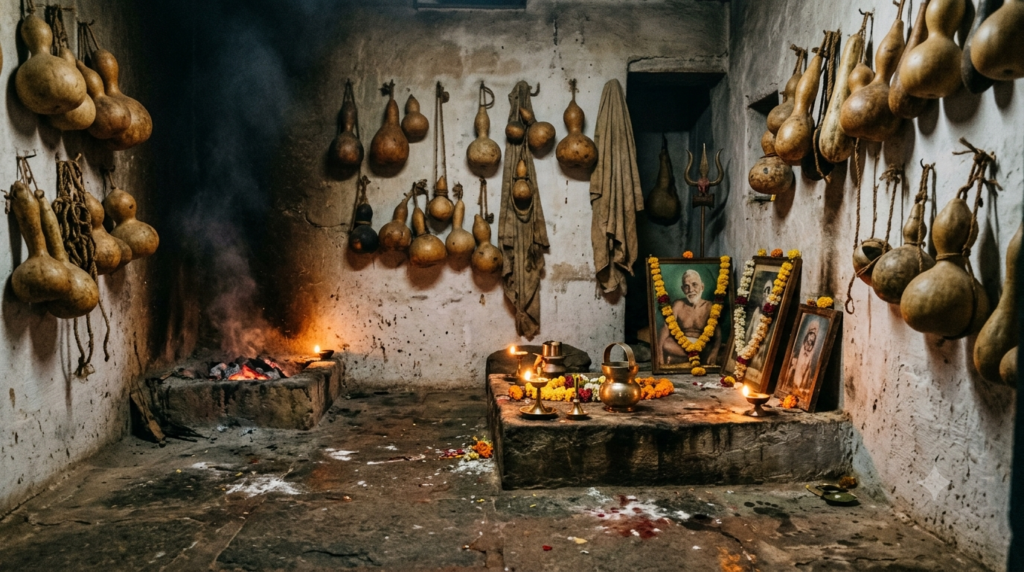
He would sit for hours before a small sacred fire, or dhuni, much like the one at Shirdi. That fire has reportedly been kept alive since his time. The ash from it, called vibhuti, is handed out as prasadam even today, and devotees carry it home as a blessing.
You will hear striking claims that the saint lived for 200 or even 350 years. Treat these as devotional folklore rather than fact. The documented history is remarkable enough on its own, so the guide sticks to what the record actually supports.
His memory also lived on through his devotees. Local tradition remembers a follower named Mangamma, who is said to have absorbed his teachings and later took samadhi herself. Because of stories like hers, people from Puttur, Tirupati, and even neighbouring Tamil Nadu still travel here to sit before the dhuni. The saint’s Datta-sampradaya spirit, plain and service-minded, is what keeps the samadhi quietly alive.
Sorakaya Swami Temple Timings and Darshan
The Sorakaya Swami temple is generally open from about 6:00 AM to 8:00 PM every day. Some listings mention a slightly earlier 5:00 AM start. There is no fixed queue and no ticket, because this is a quiet samadhi rather than a busy managed temple. You simply walk in, sit, and stay as long as you wish.
Mornings are the calmest time to visit. Many devotees try to be present for the morning abhishekam and the aarti, when the atmosphere feels especially still. These small-shrine timings can shift on festival days. So confirm them with locals, or at the Narayanavanam temple opposite, before you plan a tight schedule.
Darshan itself is unhurried. Nobody rushes you through, so people meditate near the samadhi for a long while. If you have come seeking peace rather than spectacle, that slowness is the whole point.
The Bottle Gourd Offering and Vibhuti Prasadam
The most unusual ritual at the Sorakaya Swami temple involves the bottle gourd itself. Devotees buy a fresh gourd, whisper their prayer over it, and then tie it up within the shrine. Walk around inside and you will see gourds of every size hanging from the walls. Each one was left by someone carrying a hope in their heart.
Inside, the space stays plain and unhurried. Photographs of the saint watch over the samadhi, and the low glow of the dhuni sets the mood. Because nobody hurries you, many visitors simply sit and meditate here for an hour or more.
The dhuni ash is the temple’s prasadam. Many believers apply it or keep it because they trust it can ease illness and worry. This belief is a matter of faith and devotional tradition, so treat it that way.
Sacred ash is not a medical treatment. Anyone with a genuine health condition should still consult a qualified doctor rather than rely on prasadam alone. The saint himself is remembered as a healer, yet even his followers approached his blessings alongside ordinary care, not in place of it.
Is There Online Booking for Sorakaya Swami Temple?
No. There is no online booking, no special-entry ticket, and no seva payment for the Sorakaya Swami temple. Darshan is free for everyone, and the shrine runs on the devotion of ordinary visitors, not a ticketing system.
This matters because fake portals often appear for well-known shrines near Tirupati. If any website asks you to pay a “darshan fee,” “booking charge,” or “pooja ticket” for this samadhi, it is not genuine. The real place charges nothing. So you can safely ignore any page that demands an upfront payment, or that collects your personal details for a booking that does not exist.
How to Reach Sorakaya Swami Temple
The shrine sits on Nager Street in Narayanavanam, almost directly opposite the Kalyana Venkateswara temple. Because the two face each other, first-time visitors rarely struggle to find it once they reach the town. Locals will point you across the road the moment you ask.
Narayanavanam lies only about 5 km from Puttur and roughly 40 km from Tirupati, though different sources quote anywhere from 36 to 45 km. Share autos run the short Puttur route regularly, which makes Puttur the easiest launch point. Buses from Tirupati, Puttur, and Pallipattu also serve the town through the day.
| Starting point | Approx. distance | How to get there |
|---|---|---|
| Puttur | ~5 km | Share auto or local bus |
| Tirupati | ~40 km | APSRTC bus or taxi |
| Puttur Railway Station | ~5 km | Nearest railhead, then auto |
| Tirupati Airport (Renigunta) | ~35 km | Taxi |
The nearest railhead is Puttur Railway Station, while Tirupati offers the wider rail and air links. After you reach Narayanavanam, an auto or a short walk brings you to the samadhi. Dress modestly, remove footwear before entering, and carry a small note for the gourd offering if you plan to make one.
Best Time to Visit and Nearby Temples
You can visit the samadhi comfortably in any season, since the site is flat, shaded, and easy to walk. Amavasya, the new-moon day, draws the most devotees, and many regulars swear it is the most powerful time to sit here. The cooler months from November to February are the most pleasant for a longer visit. Early mornings on ordinary days stay peaceful and uncrowded.
Because the shrine faces the Narayanavanam Kalyana Venkateswara temple, most people pair the two in a single trip. That temple marks the spot where Lord Venkateswara is believed to have married Goddess Padmavathi. It has been managed by the Tirumala Tirupati Devasthanams (TTD) since 1967, so its darshan and seva timings are published officially, unlike the samadhi’s.
The nearby Avanakshamma temple in Narayanavanam is another easy addition to the same route. If you have more time, the Sri Prasanna Venkateswara temple at Appalayagunta sits on the wider Tirupati circuit. The Tirupati district religious-tourism page lists several more shrines within a short drive, so it helps if you want to build a longer route.
What Visitors Often Get Wrong
The biggest misconception is that this is an ordinary god’s temple. It is not, and expecting a grand gopuram or a deity idol leaves some visitors confused. Come instead for the samadhi of a saint and the meditative calm around it.
People also assume they must book or pay in advance. They do not, because entry is free and walk-in. A final mistake is treating the vibhuti as a guaranteed cure, when devotees themselves receive it as a blessing, not a prescription.
Before You Go
The Sorakaya Swami temple rewards a slow, sincere visit more than a rushed tick-box stop. Arrive early, sit near the samadhi, and tie your bottle gourd if you wish. Then carry the vibhuti home as a keepsake of the trip.
Pair it with the Kalyana Venkateswara temple across the road, and keep your health decisions with a real doctor. Do that, and you will leave with the calm this humble shrine is known for. Just confirm the day’s timings locally, since a small samadhi like this keeps flexible hours.
Frequently Asked Questions
What are the Sorakaya Swami temple timings?
The shrine is generally open from about 6:00 AM to 8:00 PM daily, though a few listings note a 5:00 AM start. Timings can shift on festival days, so it is wise to confirm locally. Mornings are the quietest and most peaceful.
Is there any entry fee or ticket?
No. Entry and darshan are completely free, and there is no ticket or paid pooja. The samadhi runs on devotion rather than charges, and any website asking for a booking fee is not genuine.
Why do devotees tie bottle gourds at the temple?
Devotees tie a bottle gourd, or surakaya, because the saint carried one throughout his life. They whisper a prayer over the gourd and hang it in the shrine, trusting the wish to be fulfilled. You will see gourds of many sizes on the walls.
How far is the temple from Tirupati and Puttur?
Narayanavanam is about 40 km from Tirupati and roughly 6 km from Puttur. Share autos and buses connect it easily from both towns. Puttur Railway Station is the nearest railhead.
Is the Sorakaya Swami temple the same as the Narayanavanam Venkateswara temple?
No, they are two separate sites that face each other across the road. The Kalyana Venkateswara temple honours Lord Venkateswara, while the samadhi honours the saint Sorakaya Swami. Most pilgrims visit both together.
Can the vibhuti really cure diseases?
Devotees receive the dhuni vibhuti as a blessing and believe it brings relief, which is a matter of faith and tradition. It is not a substitute for medical care. Anyone with a health condition should still see a qualified doctor.
How long did Sorakaya Swami live?
Popular stories claim 200 or even 350 years, but these are devotional folklore. Historical accounts place his time in Narayanavanam from around 1875 until his samadhi on 9 August 1902. His exact birth year is not documented.
Is the temple suitable for elderly visitors?
Yes. The site is flat and easy to reach, with no steep climb or long queue involved. Elderly pilgrims and families can visit comfortably at a relaxed pace.