
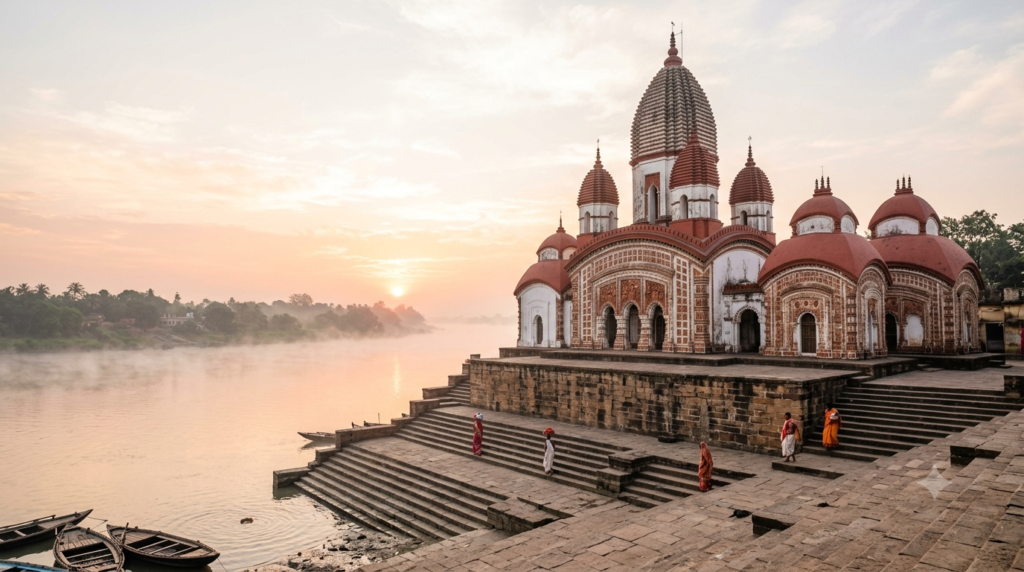
The temples in West Bengal carry a mood you will not find anywhere else in India. Devotion here mixes the fierce power of Kali, the calm of Sri Ramakrishna, and the artistry of terracotta clay. This guide gathers the state’s most famous shrines in one place.
You get verified 2026 timings, entry facts, and honest travel tips. Inside, you will find the great Kali temples of Kolkata, the tantric seat of Tarapith, the new seaside Jagannath temple at Digha, and the clay marvels of Bishnupur.
Temples Map is an independent temple guide. We are not the official website of any temple, trust, or the Government of West Bengal, and we are not affiliated with them. We take no bookings, donations, or payments. Please use the official portals linked below for reservations and confirmed information.
Temples in West Bengal: Timings at a Glance
Short on time? This table sums up the headline facts for the major temples in West Bengal. Timings shift by season and on festival days. So treat these as a planning guide, and confirm on the temple notice board before you travel.
| Temple | District | Main Deity | Typical Timings | Entry |
|---|---|---|---|---|
| Dakshineswar Kali | Kolkata | Kali (Bhavatarini) | ~6 AM–12:30 PM, 3 PM–8:30 PM | Free |
| Kalighat Kali | Kolkata | Kali | ~5 AM–2 PM, 5 PM–10:30 PM | Free |
| Belur Math | Howrah | Sri Ramakrishna | ~6:30 AM–11:30 AM, 3:30 PM–8:30 PM | Free |
| Jagannath Temple, Digha | Purba Medinipur | Jagannath | Morning & evening darshan | Free |
| Tarapith | Birbhum | Tara | ~5 AM–9 PM (varies) | Free |
| ISKCON Mayapur | Nadia | Radha-Madhava | ~4:30 AM–8:30 PM (aarti-based) | Free |
| Bishnupur temples | Bankura | Krishna, Shiva | Daytime; ASI ticket for some | Small fee |
Almost every shrine on this list is free to enter. None of them needs a paid “darshan ticket” from a random website. That single fact saves pilgrims from the fake booking scams we cover below.
Most Famous Temples in West Bengal to Visit
Below are the shrines that define Bengal’s spiritual map. Each entry gives the deity, the story that makes it matter, real timings, and how to reach it. That way, you can slot each one straight into your plan.
Dakshineswar Kali Temple, Kolkata
Dakshineswar Kali Temple is the most visited of all the temples in West Bengal. It sits on the eastern bank of the Hooghly River in north Kolkata. Rani Rashmoni built it in 1855, when she chose the nine-spired Navaratna style of Bengal. The presiding goddess is Bhavatarini, a form of Kali.
The temple matters most because the saint Sri Ramakrishna Paramahamsa served here as priest. His life later shaped the modern Ramakrishna movement. Darshan usually runs from about 6 AM to 12:30 PM, then again from 3 PM to 8:30 PM. Hours stretch on Kali Puja and Amavasya, and entry is free.
The Kolkata Metro now also stops within walking distance at Dakshineswar station. For a peaceful visit, arrive before 8 AM, since Fridays and weekends draw heavy crowds. You can read our detailed Dakshineswar Kali Temple pooja timings guide for the full daily schedule.
Kalighat Kali Temple, Kolkata
Kalighat is the temple that gave Kolkata its name. It also ranks among the holiest of the 51 Shakti Peethas. Tradition also says the right toe of Goddess Sati fell here. The Sabarna Roy Chowdhury family completed the present structure around 1809, though the site is far older.
The idol is unusual. It is a black touchstone Kali, so the three eyes, long golden tongue, and golden hands stand out. Darshan generally runs from about 5 AM to 2 PM, then 5 PM to 10:30 PM, with an afternoon break for bhog. Entry is free.
Touts often crowd the lanes offering “special darshan” for cash. Ignore them, keep your belongings close, and enter through the main gate. Kalighat Metro station also sits right beside the shrine. That makes it one of the easiest temples in West Bengal to reach.
Belur Math, Howrah
Belur Math is the global headquarters of the Ramakrishna Math and Mission. It spreads across a calm 40-acre riverside campus in Howrah. Swami Vivekananda founded it in the late 1890s, and the main Sri Ramakrishna temple opened in 1938. Its architecture also blends Hindu, Islamic, Christian, and Buddhist motifs to symbolise the unity of faiths.
The official schedule opens the campus roughly 6:30 AM to 11:30 AM and 3:30 PM to 8:30 PM, with seasonal changes. Entry is free, and photography inside the temple is not allowed. The Math sits about 5 km from Howrah station, so a short taxi or bus ride gets you there.
Pair it with Dakshineswar, which faces it across the river, for a classic half-day circuit. You can confirm the current schedule on the official Belur Math website before you go.
Jagannath Temple, Digha
The Jagannath Temple at Digha is the newest major shrine among the temples in West Bengal. It opened to devotees on 30 April 2025, after three years of construction. The state housing corporation built it on the Purba Medinipur coast as a large replica of the Puri Jagannath Temple. Priests from Puri carved and consecrated the neem-wood idols of Jagannath, Balabhadra, and Subhadra.
Because the temple is new, official darshan hours are still settling. Expect morning and evening windows similar to other Jagannath shrines, and confirm locally. Entry is free.
One honest note on the controversy. Odisha objected to the “Dham” label, and West Bengal later dropped that word from the complex’s name. So call it the Jagannath Temple, Digha. The shrine pairs naturally with a beach holiday, which makes it an easy family trip from Kolkata.
Tarapith Temple, Birbhum
Tarapith is Bengal’s most powerful tantric shrine. It stands near the Dwarka River in Birbhum district, while the temple town grew around it. Devotees worship the goddess Tara here in a fierce form, and a golden mask covers her idol by day. What sets Tarapith apart is the adjoining cremation ground, where tantric sadhus perform rituals.
The temple usually opens early, around 5 AM, and stays accessible into the evening. Timing shifts with rituals, and entry is free. The nearest railhead is Rampurhat, about 9 km away, and regular buses run from Kolkata’s Esplanade.
A word of care: the cremation-ground setting is sacred and intense. Dress modestly, stay respectful, and keep children close. Many devotees combine Tarapith with the nearby Shakti Peethas of Nalhati and Kankalitala on the same circuit.
ISKCON Mayapur, Nadia
Mayapur sits on the banks of the Ganga in Nadia district. It also serves as the world headquarters of the Hare Krishna movement, or ISKCON. It lies close to Nabadwip, the birthplace of the bhakti saint Chaitanya Mahaprabhu. So the whole area is central to Gaudiya Vaishnavism.
The temple also follows an aarti-based schedule. It opens around 4:30 AM for Mangala aarti and stays active until evening, with a midday break. Entry is free. Mayapur is about 130 km from Kolkata, and most visitors reach it by road via Krishnanagar.
The gigantic Temple of the Vedic Planetarium is still rising on the campus. It already draws large crowds during Gaura Purnima. Time your visit for that festival to see Mayapur at its most vibrant.
Bishnupur Terracotta Temples, Bankura
Bishnupur is a temple town unlike any other, because its shrines rise from terracotta clay rather than stone. The Malla kings raised these temples in the 17th and 18th centuries. Their walls also carry intricate panels showing scenes from the Ramayana and Mahabharata. UNESCO added the group to its tentative World Heritage list in 1997.
The best-known monuments include the Rasmancha, first built around 1650. The Jor Bangla and Shyam Rai temples follow, with their famous carved facades. The Archaeological Survey of India maintains some sites, which carry a small entry ticket, while active worship temples stay free.
Bishnupur is about 130 km from Kolkata and well connected by train to Bishnupur station. Give yourself a full day, since the temples spread across the town. The slow exploration rewards you with detail at every turn.
Kankalitala Temple, Birbhum
Kankalitala is a quieter Shakti Peetha near Santiniketan, set on the banks of the Kopai River. Tradition holds that the waist, or “kankal”, of Goddess Sati fell here. So locals worship the goddess as Kankaleshwari. The rural, green setting makes a gentle contrast to the intensity of Tarapith or Kalighat.
Entry is free, and the temple stays open through the day for darshan. It lies about 9 km from Bolpur, so many travellers add it to a Santiniketan trip. Because it is calmer and less commercial, Kankalitala suits pilgrims who want reflection over spectacle.
More Temples in West Bengal Worth Your Time
Bengal has far more shrines than any single trip can cover. Tarakeswar in Hooghly is a major Shiva temple, famous for its Shravan month processions. Bakreshwar in Birbhum combines a Shakti Peetha with natural hot springs.
Nalhateshwari at Nalhati is another Birbhum Shakti Peetha, and the Kalna cluster is known for its ring of 108 Shiva shrines. Confirm timings for these locally, since smaller temples rarely publish fixed hours online.
Beware Fake Darshan Booking Websites
Here is the correction that most listicles skip. The famous temples in West Bengal do not sell online “darshan tickets” through private websites. Kalighat, Dakshineswar, Belur Math, Tarapith, and Digha all allow free walk-in darshan. So any site charging an advance “booking fee” for entry is a scam.
Fake portals often copy a temple’s name and logo to look official. Then they harvest your money or personal data. Before you pay for anything, check that the web address is a genuine government or temple domain. When in doubt, just walk in and ask at the temple office.
Best Time to Visit Temples in West Bengal
The comfortable season for touring temples in West Bengal runs from October to March. The weather also stays cool and dry through those months. This window also overlaps with the biggest festivals, so you get atmosphere along with pleasant days. Durga Puja in autumn and Kali Puja around Diwali turn Kolkata’s temples into a sea of lamps.
If you prefer calm over spectacle, avoid the peak festival days. Visit on a weekday morning instead. Summer months from April to June turn hot and humid, while the monsoon brings heavy rain. For Mayapur, plan around Gaura Purnima, and for Tarakeswar, the Shravan month draws the largest gatherings.
How to Reach and Plan Your Temple Trip
Kolkata is the natural base for most of these shrines. It also has an international airport and the huge Howrah and Sealdah rail hubs. Dakshineswar, Kalighat, and Belur Math sit inside or beside the city. So you can cover all three in one busy day using the Metro and taxis.
For the outer temples, instead plan district by district. Birbhum groups Tarapith, Bakreshwar, Nalhati, and Kankalitala. Bankura holds Bishnupur, and Nadia holds Mayapur, while Digha sits on the coast about four hours south of Kolkata. You can cross-check routes on the official West Bengal Tourism portal while planning.
Insider Tips Most Guides Miss
A few practical habits make these visits smoother. First, carry small cash, because many temple lanes run on coins and low notes rather than cards. Second, leave your shoes at a shop that sells offerings, since it usually stores footwear free when you buy flowers.
- Dress modestly, with shoulders and knees covered, as most shrines expect it.
- Photography is often banned inside the main sanctum, so check before you raise a phone.
- Fridays, Tuesdays, and Saturdays are busiest at the Kali temples, so pick another day for a calmer darshan.
- Keep a firm grip on bags and phones in crowded queues, especially at Kalighat.
- Drink bottled water and pace yourself in summer heat, particularly on the longer rural circuits.
These small moves protect your time, money, and patience. They let you focus on the experience rather than the hassle.
The Bottom Line Before You Go
Bengal rewards pilgrims who mix the famous and the quiet. So blend the great Kali temples of Kolkata with a slower stop like Kankalitala or Bishnupur. Confirm timings on the temple notice board or an official portal, since seasons and festivals shift the hours. Above all, remember that darshan at these shrines is free, so never pay a private website for entry.
Plan around the October-to-March season, and respect local customs. Then the temples in West Bengal will give you one of the richest spiritual journeys in the country. For festival context, our guide to the Kamakhya Ambubachi Mela pairs well with a Shakti Peetha trip. Our famous temples in Maharashtra guide helps if you plan a wider India pilgrimage.
Frequently Asked Questions
Which are the most famous temples in West Bengal?
The most famous temples in West Bengal are Dakshineswar Kali Temple, Kalighat Kali Temple, and Belur Math, all near Kolkata. Tarapith in Birbhum, ISKCON Mayapur in Nadia, the Bishnupur terracotta temples in Bankura, and the new Jagannath Temple at Digha round out the top sites.
Are temples in West Bengal free to enter?
Yes, almost all major temples in West Bengal offer free walk-in darshan. That includes Kalighat, Dakshineswar, Belur Math, Tarapith, and Digha. Only some Archaeological Survey monuments, such as parts of the Bishnupur complex, charge a small maintenance ticket. No temple sells online entry tickets through private websites.
How many Shakti Peethas are in West Bengal?
West Bengal holds several of the 51 Shakti Peethas, more than most states. Well-known ones include Kalighat in Kolkata, plus Kankalitala and Bakreshwar in Birbhum. Nalhateshwari at Nalhati is another. Tarapith is also revered as a powerful Shakta seat.
When did the Digha Jagannath Temple open?
The Jagannath Temple at Digha opened to devotees on 30 April 2025, on Akshaya Tritiya. It was built as a replica of the Puri Jagannath Temple on the West Bengal coast. Entry is free. So it has quickly become a popular pilgrimage and tourism spot.
What is the best time to visit Kolkata’s temples?
October to March offers the most comfortable weather for temple visits around Kolkata. This period also covers Durga Puja and Kali Puja, when the temples look most festive. For a quiet darshan, choose a weekday morning. Avoid Fridays and Saturdays at the Kali shrines.
Is Dakshineswar the same as Kalighat?
No, they are two different temples in Kolkata, though both honour Goddess Kali. Dakshineswar is famous for its link to Sri Ramakrishna and its Navaratna architecture. Kalighat is an ancient Shakti Peetha in south Kolkata with a distinct touchstone idol.
How do I plan a temple circuit in West Bengal?
Base yourself in Kolkata for Dakshineswar, Kalighat, and Belur Math, which fit into one day. Then plan district trips: Birbhum for Tarapith, Bankura for Bishnupur, Nadia for Mayapur, and the coast for Digha. Group temples by region to save travel time and cost.