
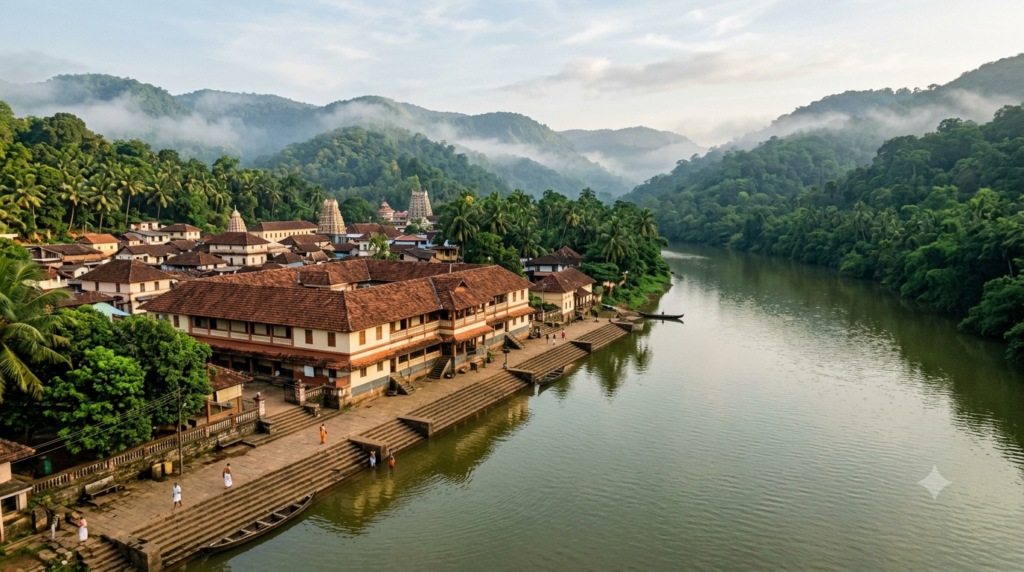
The Dharmasthala hair offering, known locally as Shri Mudi, happens at a dedicated tonsuring hall right at the temple entrance. There is no distant counter to find, and no online booking to chase. Most pilgrims arrive expecting one fixed timing and one fixed price. Then they get caught out, because the schedule shifts by day and the official site lists no rupee figure at all.
This guide fixes that. Every timing, rule and fee below comes straight from the temple’s own pages, so you can plan with real confidence.
Dharmasthala Hair Offering: Quick Facts
Short on time before you travel? These are the points that matter most.
- What it is: Shri Mudi, the ritual tonsuring (head-shaving) offered to Lord Manjunatha.
- Where: the centralised Shri Mudi building at the main temple entrance, near the Nethravati River.
- Timings: 6 AM–2 PM and 5 PM–7 PM on most days; extended morning 5 AM–3 PM on Sundays and Mondays.
- Booking: none online — buy the token at the Shri Mudi seva counter on arrival.
- Cost: a small nominal fee in cash; the temple does not publish a fixed price.
- After: a purifying bath in the Nethravati River, then darshan.
What Is the Dharmasthala Hair Offering (Shri Mudi)?
The Dharmasthala hair offering is a vow ritual. Devotees shave their heads to symbolise surrendering ego and material attachment to Lord Manjunatha. Those who feel the Lord answered a prayer pledge their hair in return.
The temple then removes it in a clean, organised hall. The ritual is faith-based, so the “benefit” is spiritual, never a guaranteed outcome.
Dr. Veerendra Heggade, the temple’s Dharmadhikari (hereditary head), built one centralised tonsuring system. Because of that, the ritual stays orderly and hygienic.
There is also no caste restriction, since every devotee may offer Shri Mudi on the same terms. Families especially bring young children here for a first tonsure, because many take such a vow at birth.
The temple itself sits in Dakshina Kannada, Karnataka, and dates back roughly 800 years. The deity is a form of Shiva. Yet Vaishnava priests perform the rituals, while the Jain Heggade family runs the shrine. It is a rare blend of three traditions under one roof.
You can read the temple’s account on its official Shri Mudi page.
Dharmasthala Hair Cutting Timings (Official Schedule)
The Dharmasthala hair offering timings split by day, and this is exactly where many guides slip up. On Sundays and Mondays the hall opens earlier and runs longer in the morning. On the other days it keeps a shorter morning window. The evening session, however, stays the same all week.
| Day | Morning | Evening |
|---|---|---|
| Sunday & Monday | 5:00 AM – 3:00 PM | 5:00 PM – 7:00 PM |
| Tuesday to Saturday | 6:00 AM – 2:00 PM | 5:00 PM – 7:00 PM |
So picture reaching Dharmasthala on a Tuesday at 3 PM. The Shri Mudi hall stays shut until the 5 PM evening slot. Many third-party pages list a single “7 AM to 4 PM” window and skip the evening session entirely. That is outdated.
Plan around the table above instead. Also arrive 30–45 minutes before a session closes, because the queue stops issuing new tokens near the end.
Dharmasthala Hair Offering Ticket Cost: What You Actually Pay
Here is the detail almost every blog gets wrong. The official Shri Mudi page does not publish a fixed ticket cost for the Dharmasthala hair offering. It only says you visit the seva counter and pay a fee.
Several travel sites confidently quote ₹30, and a few quote ₹35. Yet neither number appears on the temple’s own website.
So treat any exact rupee figure as indicative, not gospel. The charge is genuinely nominal — a small token amount in cash at the counter when you arrive. Prices like this can change quietly. Because of that, confirm the current rate at the counter rather than trusting an old screenshot.
One official line protects you here. The temple’s darshan guidelines say plainly: do not make extra payment for any services. So if a tout or helper asks for money beyond the counter token, treat it as a clear red flag. Walk straight to the official Shri Mudi seva counter, and pay only there.
Dharmasthala Hair Offering Procedure: Step by Step
The process is quick and well-organised. Even first-timers finish in under an hour on a normal day. Follow these steps in order.
- Reach the Shri Mudi building at the temple entrance, near the Nethravati River.
- Buy the token at the Shri Mudi seva counter and pay the nominal fee in cash.
- Wait for your turn in the queue, since trained staff handle the tonsuring hygienically.
- Get tonsured — the barber shaves the head while you sit, and staff treat children gently.
- Bathe in the Nethravati River to purify yourself after the offering.
- Change into fresh clothes using the separate male and female changing rooms.
- Proceed for darshan of Lord Manjunatha once you are clean and dressed per the code.
Where Is the Shri Mudi Building?
The Shri Mudi hall stands at the temple entrance, close to both the main shrine and the river. Because it is centralised in one large building, you never need to hunt for a separate barber in town. Just ask any temple staff member for “Shri Mudi.” They will point you straight to it.
The Nethravati River Bath
After tonsuring, devotees walk down to the Nethravati (Netravati) River for a holy dip. This bath belongs to the ritual, so it is not optional decoration. Carry a towel, soap and a full change of clothes.
Separate changing areas exist for men and women. They can get crowded on weekends, though, so reach early if you want a relaxed bath.
Can You Book the Dharmasthala Hair Offering Online?
No — you cannot book the Dharmasthala hair offering online, and you do not need to. Shri Mudi works strictly on arrival. You walk up to the seva counter, pay the token fee, and join the queue. The temple’s online portal handles room booking and Tulabhara seva, while tonsuring stays a walk-in service for everyone.
Because no online slot exists, beware of any website claiming to “book your Shri Mudi” for an advance fee. Those sites are not official. The temple even warns that you can only book its guest houses through the official site. So apply the same caution to every paid “booking” link you see for Dharmasthala.
Hair Offering and Darshan: What Order, and When?
Tonsuring comes first, then darshan — never the reverse. You offer Shri Mudi, bathe in the river, change clothes, and only then enter the sanctum freshly purified. So time your arrival around both sets of hours, because the Shri Mudi hall and the main shrine do not run identically.
The temple recently revised its darshan timings. The current official schedule differs from older listings, so double-check before you travel.
On regular days the morning darshan runs 6:30 AM to 2:30 PM. The evening then runs 5:00 PM to 8:30 PM. On Sundays, Mondays and special days the windows extend further, to 6:30 AM–4:00 PM and 5:30 PM–9:00 PM.
For a full breakdown of slots and the daily pooja flow, see our Dharmasthala Temple darshan guide. If you want to skip long queues, our guide to Dharmasthala special darshan tickets explains the paid options. You can also confirm live timings on the official Dharmasthala temple website.
Dress Code and Temple Rules You Must Follow
Dharmasthala enforces a traditional dress code, so dress modestly before you reach the sanctum. Men remove the shirt and vest (banian) while entering the inner shrine. A white panche or dhoti is ideal, although trousers also work. Women should wear a saree, or a chudidar or salwar with a dupatta.
A few rules trip up visitors every day, so note them in advance. Temple rules ban bags inside and keep mobile phones out of the premises. Children below two years cannot enter the sanctum either. Because security checks are mandatory, leave valuables at your room and carry as little as possible.
How to Reach Dharmasthala
Dharmasthala sits in the Western Ghats, well-connected by road across Karnataka. Frequent KSRTC and private buses run from Bengaluru, Mangaluru and Udupi. So most pilgrims simply take an overnight bus and arrive by morning.
Travelling by train? Mangaluru is the practical railhead, roughly 75 km away, with taxis and buses onward.
By air, Mangaluru International Airport is the nearest. From there you hire a cab or board a bus for the two-hour drive. Because distances and connections vary, confirm timings before you set out, since hill routes slow during the monsoon.
Dharmasthala vs Kukke Subramanya Hair Offering
Many devotees combine Dharmasthala with Kukke Subramanya, since the two temples sit roughly 50 km apart. Both offer tonsuring, yet the details differ. This quick comparison helps you plan a combined trip.
| Feature | Dharmasthala (Shri Mudi) | Kukke (Mudi Seva) |
|---|---|---|
| Holy river bath | Nethravati River | Kumaradhara River |
| Booking | On arrival only | On arrival only |
| Fee | Nominal, at counter | Nominal token fee |
| Deity | Lord Manjunatha | Lord Subramanya |
Is your child’s first tonsure the goal? Either temple works, although families often pick the one tied to their family vow. For the full Kukke process, fee and timings, read our guide to Kukke Subramanya hair offering before you go.
What Most Guides Get Wrong
After cross-checking dozens of pages, a few myths keep repeating. Here is what experience on the ground actually tells you.
- “It’s a fixed ₹30/₹35.” The temple publishes no fixed price — pay the nominal counter fee and ignore exact figures.
- “Timings are 7 AM–4 PM.” Wrong, because the hall runs morning and evening sessions, with longer Sunday–Monday hours.
- “Book Shri Mudi online.” No online booking exists; it is walk-in for everyone.
- “Bathe after darshan.” No — tonsure, then river bath, then darshan, in that order.
- Carry your essentials. A towel, soap and fresh clothes save you a miserable, wet walk back.
Before You Go: The Bottom Line
The Dharmasthala hair offering is simple once you ignore the noise online. Reach the Shri Mudi hall within the day’s session and pay the small counter fee. Then get tonsured, bathe in the Nethravati, and take darshan — no booking, no fixed price, no stress.
Carry fresh clothes and respect the dress code. Above all, confirm the current fee at the counter rather than online, and your Shri Mudi vow will go smoothly.
Frequently Asked Questions
What are the Dharmasthala hair offering timings?
The Dharmasthala hair offering runs 6 AM–2 PM and 5 PM–7 PM from Tuesday to Saturday. On Sundays and Mondays the morning session extends to 5 AM–3 PM, while the evening stays 5 PM–7 PM. Reach 30–45 minutes before a session ends.
How much does the hair offering at Dharmasthala cost?
The cost is a small nominal fee in cash at the Shri Mudi seva counter. The temple does not publish a fixed price, so the commonly quoted ₹30–₹35 figures are unofficial estimates. Confirm the current rate at the counter on the day.
Can I book the Dharmasthala hair offering online?
No, no online booking exists for Shri Mudi. The ritual is strictly walk-in, so you buy the token at the counter on arrival. Treat any site charging an advance “Shri Mudi booking” fee as unofficial, and avoid it.
Where is the hair offering done at Dharmasthala?
Tonsuring happens at the centralised Shri Mudi building at the temple entrance, close to the Nethravati River. Ask any staff member for “Shri Mudi” and they will direct you. After tonsuring, devotees bathe in the river before darshan.
Is the Nethravati River bath compulsory after tonsuring?
The river bath belongs to the ritual, and most devotees take a dip in the Nethravati right after tonsuring. Carry a towel, soap and a full change of clothes. Separate changing rooms exist for men and women.
Can children get their first tonsure at Dharmasthala?
Yes, families regularly bring babies and young children for a first tonsure at Dharmasthala. Staff handle children gently, and you need no advance booking. Bring fresh clothes and a towel for the post-bath change.
Do I offer hair before or after darshan?
You offer hair before darshan. Complete the tonsure, bathe in the Nethravati River, change into clean clothes, and then enter the sanctum for darshan of Lord Manjunatha. This order keeps you ritually pure for the deity.
What should I wear for darshan after tonsuring?
Men wear a white panche or dhoti and remove the shirt and vest inside the sanctum, though trousers also work. Women should wear a saree, or a chudidar or salwar with a dupatta. Nighties and half-pants do not meet the dress code.