
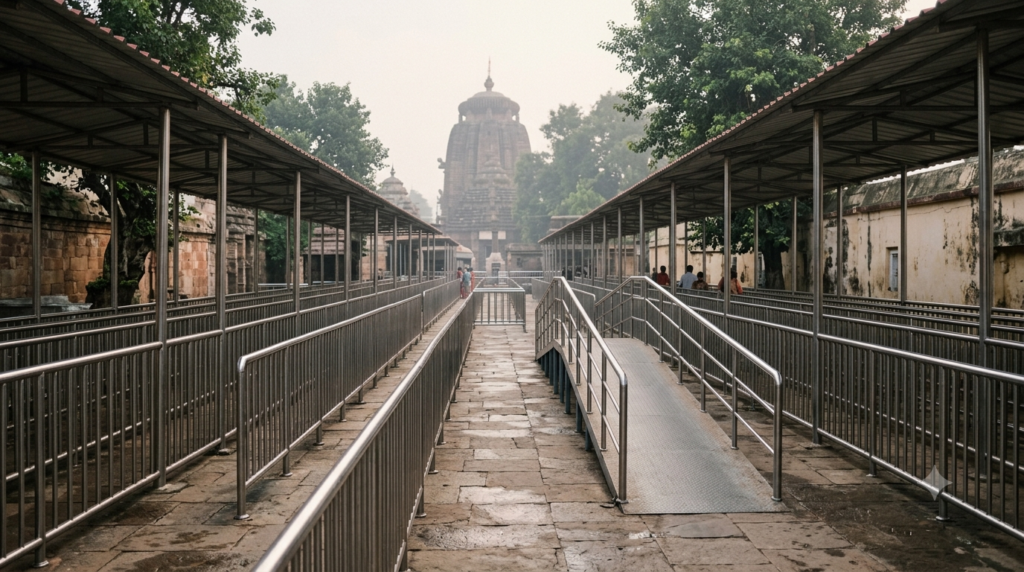
Puri queue darshan system plans have moved forward, but the operational start date remains unconfirmed. According to news reports published on 13 October 2026, Odisha Law Minister Prithiviraj Harichandan said a pilot ramp model had been prepared for the proposed arrangement at Shree Jagannath Temple, Puri. However, servitor consultations and temple management committee approval must take place before a trial can begin.
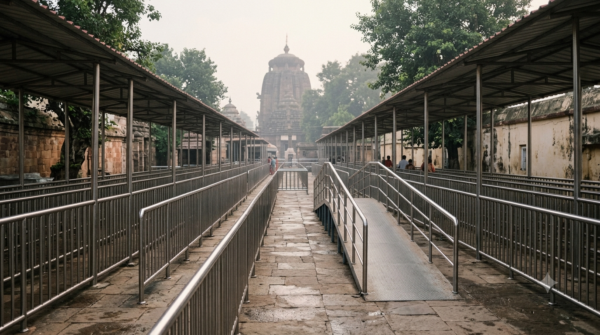
The latest reporting does not establish that the new system has started serving devotees. Therefore, pilgrims should not treat reports of an upcoming launch as confirmation of operational availability. The existing darshan arrangements also could not be independently verified through official sources during this review.
Independent guide disclaimer: Go Kshetra is an independent pilgrimage information website. We are not affiliated with Shree Jagannath Temple Administration (SJTA) or the Government of Odisha. We do not accept darshan bookings, payments or donations. Please use official temple channels for confirmed information.
Puri Queue Darshan System: Latest Update at a Glance
The latest reports indicate progress on the proposed crowd-management arrangement at Puri Srimandir. A pilot ramp model has reportedly been prepared, while the approval process remains incomplete. Officials intend to consult temple servitor groups before bringing the proposal to the temple management committee.
| Key question | Latest reported position |
|---|---|
| Has a pilot model been prepared? | Yes, according to reports dated 13 October 2026. |
| Who will inspect the model first? | The Pratihari Nijog. |
| Are further consultations required? | Yes, other servitor groups must give their views. |
| Is management committee approval pending? | Yes, the proposal must go through committee review. |
| Is a trial proposed? | Yes, subject to consultation and approval. |
| Is the operational start date confirmed? | No confirmed date was provided in the reports. |
| Have current darshan operations been verified? | No. Official operational information could not be independently confirmed. |
This distinction is important because a prepared model does not automatically mean a public service is operating. Similarly, approval discussions do not establish when devotees will begin using a new queue arrangement.
The safest interpretation is that the proposal has advanced, but further decisions are necessary before implementation.
Puri Queue Darshan System: What Did the 13 October Reports Say?
Three reports published on 13 October 2026 described the proposed queue-based darshan arrangement. Each attributed the update to Odisha Law Minister Prithiviraj Harichandan. They reported that a pilot model was ready for inspection and that consultations would precede implementation.
OTV Reports That a Pilot Ramp Model Is Ready
In its 13 October 2026 report on the proposed queue-based darshan system, Odisha Television Limited (OTV) said the Law Minister had confirmed preparation of a pilot model.
According to OTV, the Pratihari Nijog would inspect the ramp before other Nijogs reviewed the arrangement. The report also stated that broader servitor consultation would precede discussion by the temple management committee.
OTV reported that the minister expected the project to move forward soon. However, the article did not provide a confirmed date for public operation.
Utkal Express Details the Pending Approval Process
Utkal Express, in its report dated 13 October 2026, also stated that the pilot model had reportedly been prepared.
The publication explained that the Pratihari Nijog would inspect the model first. Other servitor groups would then examine the proposal and offer their suggestions.
According to the report, authorities would seek consensus before placing the proposal before the temple management committee. A trial would follow the required consultations and approvals.
The report therefore supports the existence of a proposal and a prepared model. It does not independently establish that the new arrangement has entered normal public operation.
Edu News Also Reports a Conditional Trial Plan
A further 13 October report published by Edu News described the same broad sequence.
It stated that the pilot ramp model would undergo servitor review before the temple management committee considered the proposal. The publication also reported that the government intended to proceed with a trial after the required approvals.
These reports give readers a consistent account of the proposal’s latest reported stage. However, they remain news reports rather than a verified SJTA operational notice.
What Is the Proposed Puri Queue Darshan System?
The proposed Puri queue darshan system aims to improve how devotees move through designated darshan areas at Shree Jagannath Temple. Reports describe a planned arrangement involving a ramp model and more organised crowd movement. Its intended purpose is to help manage large gatherings and improve the darshan experience.
Shree Jagannath Temple, commonly called Srimandir, stands in Puri, Odisha. Devotees visit the sacred shrine to worship Lord Jagannath, Lord Balabhadra and Goddess Subhadra.
Managing crowds at such a major pilgrimage destination requires careful planning. Large gatherings can create pressure at narrow movement points, particularly when devotees want to view the deities.
The proposed arrangement seeks to address those concerns through a more structured approach. However, the final operational design remains subject to the reported consultation and approval process.
The available October reports do not establish a final lane count, approved hourly capacity, complete route map or confirmed public operating schedule. Therefore, these details should not be presented as settled facts.
Why Has the Puri Queue Darshan System Not Received Final Approval?
The latest reports identify pending consultations and management committee review as the remaining steps before a trial. They do not establish that the project has received every approval necessary for implementation. Therefore, the proposed system should not yet be described as a fully approved public arrangement.
Temple servitors perform important roles in Srimandir’s religious and daily activities. Their participation matters because any new crowd-management arrangement must fit the temple’s established practices.
A design that looks practical in a model may require changes after people responsible for temple activities examine it. As a result, the consultation stage provides an opportunity to identify concerns before the public uses the system.
The latest reporting also shows that officials have considered different approaches to queue management. The final decision will depend on discussions among the relevant stakeholders.
Role of the Pratihari Nijog
The Pratihari Nijog is the first servitor group expected to inspect the prepared ramp model, according to the October reports. Members will have an opportunity to examine the proposed arrangement and give their views before the plan progresses.
The reports do not establish that this inspection had already been completed. Therefore, readers should distinguish the announced inspection process from a completed approval.
Role of Other Servitor Groups and the Chhatisa Nijog
After the first inspection, the proposal is expected to reach other servitor groups for their feedback. OTV and Utkal Express specifically mention consultation with the Chhatisa Nijog as an important part of the process.
These consultations may influence the final arrangement because servitors understand the temple’s daily working requirements. However, the news reports do not provide a completed approval record from all groups.
Role of the Temple Management Committee
The temple management committee is another important stage in the reported approval sequence. After the relevant consultations, authorities intend to place the proposal before the committee for discussion.
The latest news therefore points to a conditional trial, not an unconditional launch. Until the necessary decisions are complete, the final start date remains uncertain.
Puri Queue Darshan System: Rope Barricades and Ramp Model
The October reports describe rope barricades as an alternative discussed during the queue-management process. The Pratihari Nijog reportedly suggested using rope or other physical barricades to organise devotees. However, the Law Minister raised concerns about their effectiveness during periods of heavy crowds.
According to OTV’s 13 October report, the minister said officials had examined a rope-based queue arrangement. He expressed concern that this approach could create difficulties when devotee numbers increased significantly.
The prepared pilot ramp model represents another approach under consideration. However, the reports do not establish that every design choice has been finalised.
| Proposed approach | What reports indicate | Current certainty |
|---|---|---|
| Rope or physical barricades | Suggested as an alternative by the Pratihari Nijog. | No final selection confirmed. |
| Pilot ramp model | Reportedly prepared for inspection. | Further review pending. |
| Public trial | Expected after required consultations and approvals. | No confirmed trial date. |
| Regular operation | Not established by the October reports. | Start date unconfirmed. |
The key question is not simply which structure officials prefer. Any arrangement must also suit the space, crowd conditions and functioning of the temple.
Therefore, readers should avoid treating illustrations or reports about an early model as confirmation of the final public layout.
When Will the Puri Queue Darshan System Start?
The Puri queue darshan system has no confirmed operational start date in the 13 October 2026 reports reviewed here. Odisha Law Minister Prithiviraj Harichandan expressed confidence that the arrangement could begin soon. However, the reports make implementation dependent on servitor consultations and temple management committee review.
There is an important difference between expecting a launch and announcing one. A statement of intent does not establish a public operating date, even when officials believe the project will progress quickly.
The October reports do not provide a final trial schedule. They also do not identify a confirmed date when all devotees will begin using the proposed system.
A future notice may clarify these details, but its contents cannot be predicted with certainty. Therefore, pilgrims should avoid booking travel around an unconfirmed rollout date.
The Puri queue darshan system should be treated as a proposal awaiting further reported approval steps until reliable official information establishes otherwise.
Is the Puri Queue Darshan System Already Operating?
The available October reports do not confirm that the newly proposed queue arrangement is already operating for the public. They describe a pilot model and pending approval process instead. However, the current on-ground darshan arrangements could not be independently verified because official operational sources were inaccessible during this review.
This limitation matters for devotees who want practical information before travelling. Without a verified current notice, it would be misleading to describe the exact entry route, queue method or waiting-time procedure as settled.
The temple may use crowd-management measures independently of the newly proposed model. However, this review could not confirm their present configuration or daily operation.
Visitors should therefore follow the directions issued by authorised temple personnel and local authorities at the time of their visit.
For general pilgrimage information, readers can consult our Jagannath Temple Puri travel and temple guide. Its background information should not replace current official entry instructions.
Why the New Proposal Matters to Pilgrims
Crowd organisation can directly affect a devotee’s experience at a major pilgrimage temple. When people gather in large numbers, unclear movement routes may create confusion. A well-planned system could potentially improve order and reduce unnecessary crowd pressure.
The proposed Puri queue darshan system seeks to address these issues through a structured arrangement. However, the October reports describe intended benefits rather than measured results from completed public trials.
There is no verified evidence in those reports showing how much waiting time the new design would save. They also do not establish a final operating capacity.
For that reason, pilgrims should not expect a guaranteed faster darshan solely because the proposal advances. The actual experience would depend on the approved arrangement and its performance after implementation.
Will the Puri Queue Darshan System Reduce Waiting Time?
Better queue organisation could potentially make devotee movement more orderly. However, no verified waiting-time reduction has been established for the proposed system. Therefore, claims that darshan will take a specific number of minutes are premature.
Waiting times may also depend on crowd levels, temple rituals and other operational conditions. A structured queue cannot eliminate every cause of delay.
Will the System Help During Major Festivals?
The October reports identify heavy crowds as an important reason for discussing improved queue management. A planned arrangement could help authorities organise movement during busy periods. However, its effectiveness during festivals remains unverified because a completed public trial has not been established.
Special-event procedures may differ from ordinary arrangements. Therefore, devotees should check festival-specific instructions whenever authorities issue them.
What Should Devotees Do Before Visiting Puri?
Pilgrims should plan conservatively while the new queue arrangement remains under review. The October reports provide useful information about the proposal, but they do not replace an official operational notice. Current procedures must therefore be confirmed through authorised channels closer to the visit.
- Check official information: Visit the Shree Jagannath Temple Administration website for temple-related information when the portal is accessible.
- Look for a dated announcement: Check whether the administration has announced a trial, approved operating arrangement or confirmed public start date.
- Avoid unverified booking claims: Do not pay a private seller for supposed access to the proposed queue arrangement.
- Allow extra time: Waiting conditions may vary, so avoid planning tight connections immediately after darshan.
- Follow authorised instructions: Use the routes and procedures directed by temple staff and local authorities at the time of your visit.
Devotees travelling with elderly family members, young children or people with mobility difficulties should take additional care. Carry essential medication and drinking water for use where permitted, and seek authorised assistance if necessary.
Because the current accessibility arrangements could not be verified, do not assume a particular priority lane or assistance facility will be available. Confirm the latest provisions through official channels before visiting.
What If the Puri Queue Darshan System Is Delayed?
A delay remains possible because the reported approval process is unfinished. The October articles do not provide a guarantee that consultations, committee review and trial arrangements will conclude by a particular date.
If the proposed system does not begin before your visit, follow the officially applicable darshan procedure at that time. The exact existing procedure could not be independently confirmed during this review.
Do not assume that an unlaunched queue arrangement creates any special entitlement or alternative booking channel. A private website cannot establish access rights simply by announcing a launch date.
For travellers who need certainty, the practical approach is to keep plans flexible where possible. Avoid making the proposed queue rollout the deciding factor for non-refundable travel arrangements.
How to Identify a Genuine Implementation Announcement
A reliable announcement should come from the temple administration or another authorised government source. It should clearly distinguish between a planned trial and regular public operation. Without that distinction, readers may misunderstand the stage of implementation.
Look for details that explain whether devotees can actually use the arrangement. A complete notice may identify the operating date, entry procedure, applicable restrictions and arrangements during special occasions.
These are recommended verification points, not a claim that officials have already published such instructions.
- A dated notice from an authorised source.
- Clear confirmation of trial operation or regular implementation.
- Instructions explaining which devotees can use the arrangement.
- Information about entry routes and applicable conditions.
- Any special guidance for elderly or disabled pilgrims.
- Clarification of whether the arrangement affects existing darshan procedures.
Reports that only say the project will begin soon do not answer these operational questions. Therefore, verify the underlying announcement before treating a headline as a visitor instruction.
Puri Queue Darshan System: What Happens Next?
The next important development for the Puri queue darshan system would be confirmation of progress through the reported approval process. Based on the 13 October coverage, that includes inspection by the Pratihari Nijog, consultations with other servitor groups, and discussion by the temple management committee.
A trial may follow if the necessary approvals are obtained. However, the reports do not establish when that trial will occur or what final public arrangements it will use.
Future updates should be assessed against completed decisions rather than predicted timelines. A confirmed inspection or committee decision would provide stronger evidence of progress than another general statement about an imminent launch.
Until a verified operational notice becomes available, the best approach is to separate three stages: the proposed design, the approved trial and regular public use.
Before You Plan Your Jagannath Darshan
The latest news gives pilgrims a meaningful update, but not a confirmed launch date. Reports dated 13 October 2026 say a pilot ramp model has been prepared. They also identify servitor consultation and temple management committee review as necessary steps before a trial.
Therefore, visitors should not assume the proposed arrangement has started. Current temple operations could not be independently verified during this review, so official instructions remain essential for trip planning.
For wider information on the temple and its religious significance, read our Puri Jagannath Temple guide. If your trip includes other Jagannath shrines, our Jagannath Temple Hyderabad guide provides separate information about that temple.
Frequently Asked Questions
Has the Puri Queue Darshan System Started?
The 13 October 2026 reports do not confirm that the newly proposed system has started public operation. They describe a pilot model awaiting further consultation and approval. Current on-ground darshan arrangements could not be independently verified through official sources during this review.
What Is the Confirmed Start Date for the Puri Queue Darshan System?
No operational start date was confirmed in the 13 October reports reviewed here. Odisha Law Minister Prithiviraj Harichandan expressed confidence that the system could begin soon. However, the reported approval process remains unfinished, so a fixed date should not be assumed.
Who Will Inspect the Proposed Ramp Model?
According to OTV and Utkal Express reports dated 13 October 2026, the Pratihari Nijog will inspect the pilot ramp model first. Other servitor groups will then have an opportunity to review the arrangement. The reports do not establish that every inspection has already taken place.
Is Temple Management Committee Approval Required?
Yes. The 13 October news reports describe temple management committee review as part of the process before a trial. They also indicate that servitor consultations must take place first. No completed final approval was established in the reports reviewed.
Why Are Servitor Groups Being Consulted?
Servitor groups have important roles in the daily functioning of Shree Jagannath Temple. Their feedback can help authorities assess whether a proposed queue arrangement suits temple activities. The October reports identify this consultation as an important step before implementation.
Is a Five-Ramp Design Confirmed?
No final five-ramp configuration was established by the 13 October reports used for this update. They describe a prepared pilot ramp model without confirming the final number of lanes. Therefore, readers should wait for an authorised design or operating notice before relying on specific layout claims.
How Many Devotees Can the New System Handle Per Hour?
A final hourly capacity could not be confirmed from the latest October reports. They do not provide verified operational performance figures from a completed public trial. Therefore, no specific hourly capacity should be treated as an established fact.
Will the New Queue System Guarantee Faster Darshan?
No such guarantee has been established. The proposal aims to improve crowd management and organise devotee movement. However, its effect on waiting time cannot be confirmed until an approved arrangement operates and reliable performance information becomes available.
Are Rope Barricades Also Being Considered?
Yes. The October reports say the Pratihari Nijog suggested rope or other physical barricades as an alternative. The Law Minister also raised concerns about using rope-based arrangements during heavy crowds. The reports do not establish a final decision selecting that alternative.
Can Devotees Book the Proposed Queue Darshan Online?
The reports reviewed for this update do not establish an official online booking facility specifically for the proposed queue system. Therefore, devotees should not assume such a service exists. Any booking or entry instructions must come from authorised temple channels.
Will Senior Citizens Receive a Separate Queue?
The October reports do not confirm a final special-access arrangement under the proposed system. Therefore, a separate queue for senior citizens cannot be promised. Pilgrims should check current accessibility provisions through official sources before their visit.
Where Can Devotees Find Official Updates?
Devotees can consult the Shree Jagannath Temple Administration website and relevant Government of Odisha Law Department communications when available. For the reported 13 October development, the OTV report and Utkal Express report provide direct coverage. News reports should not be mistaken for official operating instructions.