
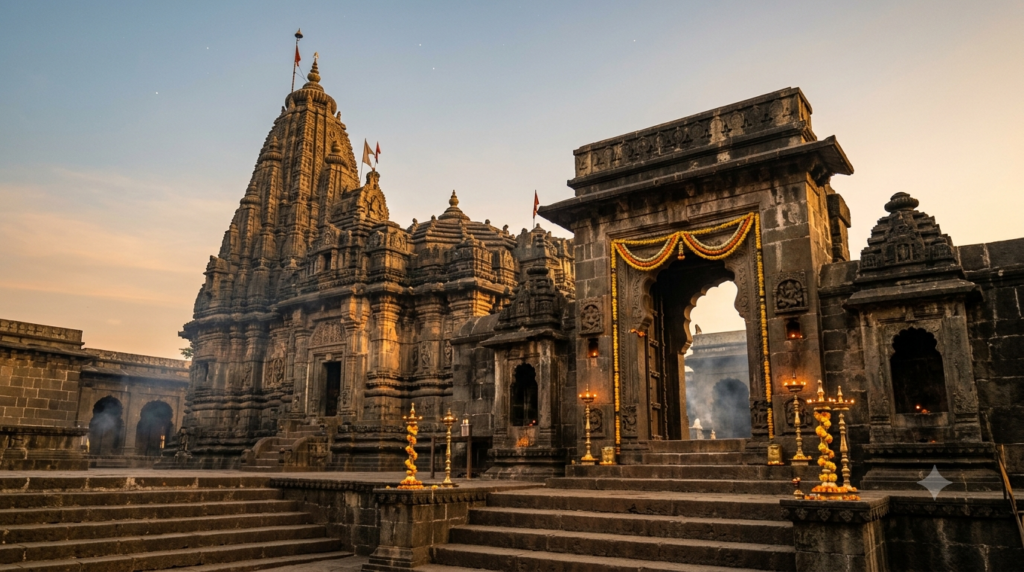
The Tulja Bhavani Abhishek pass costs just ₹50, yet half the travel blogs online quote ₹200, ₹1,551, or even ₹5,000 for it. That gap has cost devotees real money and real confusion at the counter. If you are planning the sacred ceremonial bath of Goddess Bhavani at Tuljapur, this guide gives you the verified fee, the exact daily timings, and the real booking route. Every figure here is checked against the temple trust’s own portal, so there is no guesswork and no inflated number.
Tulja Bhavani Abhishek Pass at a Glance
Here are the core facts most guides get wrong, confirmed from the official religious-fees page of Shri Tuljabhavani Mandir Sansthan.
- Cost: ₹50 per receipt, which covers up to five family members.
- Morning Abhishek: 6:00 AM to 10:00 AM, daily.
- Evening Abhishek: 7:00 PM to 9:00 PM, daily.
- Last entry: the Abhishek Hall stops admitting devotees after 9:00 PM.
- Booking: the official portal at online.shrituljabhavani.org, the Shri Tuljabhavani app, or the temple counter.
- Location: Mahadwar Road, Tuljapur, Dharashiv district, Maharashtra 413601.
- General darshan: free; the Abhishek is a separate paid seva.
What Is the Tulja Bhavani Abhishek Pass?
The Tulja Bhavani Abhishek pass is a ₹50 receipt that lets you take part in the ceremonial bathing of Goddess Tulja Bhavani. During the ritual, priests pour milk, water, and other sacred substances over the deity while chanting. One receipt admits a family of up to five.
Tulja Bhavani is the family deity, or Kuladaivat, of Chhatrapati Shivaji Maharaj. Tradition holds that the goddess gifted him the legendary Bhavani sword. Because of this bond, the temple draws devotees from across Maharashtra and far beyond.
The shrine sits among Maharashtra’s revered Sade Teen Shakti Peethas, the three-and-a-half power seats of the Goddess. Tuljapur counts as one of the full peethas, alongside Mahalakshmi at Kolhapur. So the Abhishek here carries weight that few other Devi rituals match.
Tulja Bhavani Abhishek Pass Cost: The ₹50 Truth
The Tulja Bhavani Abhishek pass costs ₹50, and that single receipt covers up to five members of one family. If more than five people join, you simply take a second ₹50 receipt. The temple trust publishes this rate openly on its religious-fees page.
Many blogs quote ₹200, and that number is wrong for the Abhishek. The ₹200 figure is actually the donation darshan pass, a paid quick-darshan ticket sold at the administrative building. It has nothing to do with the Abhishek seva, so do not let that confusion drain your wallet.
Other sites inflate the cost to ₹1,551 or even ₹5,000. Those numbers usually belong to private priest packages or to the grander Sinhasan Mahapuja, not the standard Abhishek. Below is the verified fee chart so you can see exactly where each ritual sits.
| Seva | Official Fee | Slots / Timing |
|---|---|---|
| Abhishek (up to 5 people) | ₹50 | 6–10 AM, 7–9 PM |
| Sinhasan Shrikhand Pooja | ₹1,001 | 5 morning, 2 evening |
| Sinhasan Curd (Dahi) Pooja | ₹901 | 5 morning, 2 evening |
| Donation (paid) Darshan | ₹200 | Temple open hours |
| Gondhal / Laman Bhogi | ₹20 | By tradition |
To repeat the key number in plain words: the Abhishek receipt is ₹50, while the Sinhasan Shrikhand Pooja is ₹1,001 and the curd version is ₹901. Fees can change, so confirm them on the official website before you travel.
Tulja Bhavani Abhishek Pass Timings, Day by Day
The Tulja Bhavani Abhishek pass works on two daily windows. The morning Abhishek runs from 6:00 AM to 10:00 AM, while the evening Abhishek runs from 7:00 PM to 9:00 PM. These windows hold steady through the week, although festival days can shift the flow.
The Abhishek Hall stops admitting devotees after 9:00 PM. So if you want an evening slot, reach the hall well before that cut-off. Arriving by 8:15 PM keeps you safely inside the window.
Which Days Get Busiest?
On Tuesday, Friday, and Sunday, the temple opens for darshan as early as 1:00 AM. These are the goddess’s special days, so crowds swell and queues stretch. Because the Abhishek shares the same sanctum flow, mornings on these three days move slowly.
For a calmer experience, pick a weekday morning that is not Tuesday or Friday. The 6:00 AM opening is the quietest stretch of the day. Weekends and full-moon days, by contrast, demand patience and an early start.
How to Book the Tulja Bhavani Abhishek Pass Online
You can arrange the Tulja Bhavani Abhishek pass through the official trust portal, the temple’s mobile app, or the on-site counter. The trust lists an online Abhishek Pooja Pass option on its website, and the counter remains the dependable fallback when online slots are limited.
Step-by-Step Online Booking
- Open the official portal at online.shrituljabhavani.org, or install the Shri Tuljabhavani app from the Play Store.
- Choose the Abhishek Pooja Pass or the relevant seva booking section.
- Select your preferred date and the morning or evening slot.
- Enter the names and number of devotees, since one ₹50 receipt covers five people.
- Upload a group photo and ID details where the portal asks for them.
- Pay online through UPI, card, or net banking, then save the confirmation.
After payment, the confirmation arrives by SMS and email. Keep a printed or digital copy, because staff check it at the Abhishek Hall entrance. Always verify the web address carefully, as fake temple-booking sites are common.
Counter Booking vs Online: Which Suits You?
If you live far away or you are travelling during Navratri, book online so your slot is locked before you arrive. Online booking saves you from standing in a separate fee queue. That convenience matters most on weekends and festival days.
For the ₹50 Abhishek specifically, many devotees still take the receipt at the counter on arrival, since same-day participation is usually possible on quiet weekdays. So if you are already in Tuljapur with time in hand, the counter works fine. When online slots show as full, treat the counter as your reliable backup.
What Actually Happens During the Abhishek
The Abhishek begins with a striking tradition. At the start of the morning ritual, milk sent by the Chhatrapati Sansthan of Kolhapur is poured over the goddess’s idol. This link between Tuljapur and Kolhapur reflects the historic Shakti-Peetha bond between the two shrines.
After that opening, other Abhishek and Sinhasan poojas continue before silver padukas, the goddess’s sacred footwear, placed in front of the idol. Priests guide each batch of devotees through the offerings. You sit close to the sanctum, which makes this far more intimate than a standard darshan glimpse.
Carry minimal belongings, because mobile phones and cameras are not allowed near the sanctum. Lockers near the Mahadwar gate hold your items safely. So plan to deposit valuables before you join the Abhishek line.
Dress Code and Temple Rules
Devotees performing the Abhishek are expected to wear traditional attire. Men usually wear a dhoti, while women wear a saree or other modest Indian dress. Western or revealing clothing is best avoided inside the temple.
Leather items, cameras, and phones stay outside the main sanctum. Maintain silence during the ritual, since the priests urge calm while the offerings continue. Following these simple rules keeps the queue moving and the atmosphere serene.
How to Reach Tuljapur
Tuljapur sits in the Dharashiv district of Maharashtra, formerly named Osmanabad. Plenty of older guides still print “Osmanabad,” so do not be confused when maps now show Dharashiv. The town is well connected by road, rail, and nearby airports.
By Train and Road
Solapur Junction, about 45 km away, is the most-used railhead and links to Mumbai, Pune, and Hyderabad. Dharashiv (Osmanabad) station lies closer, roughly 20 km from the temple. From either station, taxis and state buses run regularly to Tuljapur.
By road, National Highway connectivity ties Tuljapur to Solapur, Pune, and Chhatrapati Sambhajinagar. MSRTC buses and private operators serve the town through the day. If you drive, the approach from Solapur is the smoothest.
By Air
Pune and Hyderabad offer the most reliable airports for outstation pilgrims, each several hours away by road. Solapur Airport sits closer but runs limited flights. So most air travellers land at Pune or Hyderabad, then continue by taxi or bus.
Where to Stay in Tuljapur
The temple trust runs its own Bhakta Niwas guesthouses for pilgrims. The Bhavani Road Bhakta Niwas can be reached at 02471-244551. The Jagdamba Yatri Bhakta Niwas takes bookings on 9422956830 or 9067257215.
Private lodges and budget hotels cluster around the Mahadwar gate too. During Navratri, rooms fill weeks ahead, so reserve early. For a peaceful stay, book before the festival rush builds.
What the Booking Pages Won’t Tell You
A few hard-won tips can save your morning. These come from how the sanctum flow actually works on the ground, not from the polished portal text.
- Beat the 1 AM rush. On Tuesdays, Fridays, and Sundays the doors open at 1 AM, so early-bird Abhishek seekers gain a real head start.
- Separate the fees in your head. The ₹50 Abhishek and the ₹200 donation darshan are two different things, so do not pay twice by accident.
- One receipt, five people. A single ₹50 pass covers a family of five, which trims your cost if you travel as a group.
- Carry an ID and a small group photo. Online booking asks for both, and having them ready avoids last-minute scrambling.
- Deposit phones first. Lockers near the Mahadwar gate are quicker before the Abhishek line forms, not after.
Before You Go
The headline facts are simple once you cut through the noise. The Tulja Bhavani Abhishek seva costs ₹50 for up to five people, runs 6–10 AM and 7–9 PM daily, and books through the official portal, the app, or the counter. Treat the ₹200 donation darshan as a separate, optional choice. If you are visiting on a Tuesday, Friday, or Sunday, arrive in the small hours to stay ahead of the crowd, and always reconfirm fees on the official website before you set out. For the wider visit, our Tulja Bhavani Temple darshan guide and the VIP darshan pass guide round out the planning.
Frequently Asked Questions
How much does the Tulja Bhavani Abhishek pass cost?
The Abhishek pass costs ₹50, and that single receipt covers up to five family members. If your group is larger, you take an additional ₹50 receipt. This is the rate published on the temple trust’s official religious-fees page.
What are the daily Abhishek timings at Tulja Bhavani Temple?
The Abhishek runs from 6:00 AM to 10:00 AM in the morning and 7:00 PM to 9:00 PM in the evening, every day. The Abhishek Hall stops admitting devotees after 9:00 PM. Festival days can alter the flow, so reach early.
Can I book the Tulja Bhavani Abhishek pass online?
Yes, the temple trust lists an online Abhishek Pooja Pass on its official portal at online.shrituljabhavani.org and on the Shri Tuljabhavani app. Online slot availability can vary, so the temple counter remains a dependable backup. Verify the web address to avoid fraudulent sites.
Is the ₹200 fee the same as the Abhishek pass?
No, the ₹200 fee is the donation darshan pass, a paid quick-darshan ticket sold at the administrative building. The Abhishek seva is a separate ₹50 receipt. Many websites mix the two, so keep them distinct when you budget.
What is the dress code for the Abhishek?
Devotees performing the Abhishek wear traditional attire, with men in a dhoti and women in a saree or modest Indian dress. Western or revealing clothing is discouraged. Phones, cameras, and leather items must stay outside the sanctum.
Which days are busiest at Tulja Bhavani Temple?
Tuesdays, Fridays, and Sundays draw the largest crowds, and the temple opens as early as 1:00 AM on these days. Navratri and full-moon days are busier still. For a quiet Abhishek, choose an ordinary weekday morning.
How do I reach Tuljapur for the temple?
Solapur Junction, about 45 km away, is the main railhead, while Dharashiv station sits roughly 20 km from the temple. Pune and Hyderabad are the most reliable airports for outstation pilgrims. Buses and taxis connect all these points to Tuljapur.
What is the Sinhasan Pooja and how much does it cost?
The Sinhasan Mahapuja is a grander seva using about 70 litres of offerings such as curd, milk, or shrikhand. The Shrikhand version costs ₹1,001 and the curd version ₹901. Only five morning and two evening slots are issued daily, so book ahead.