
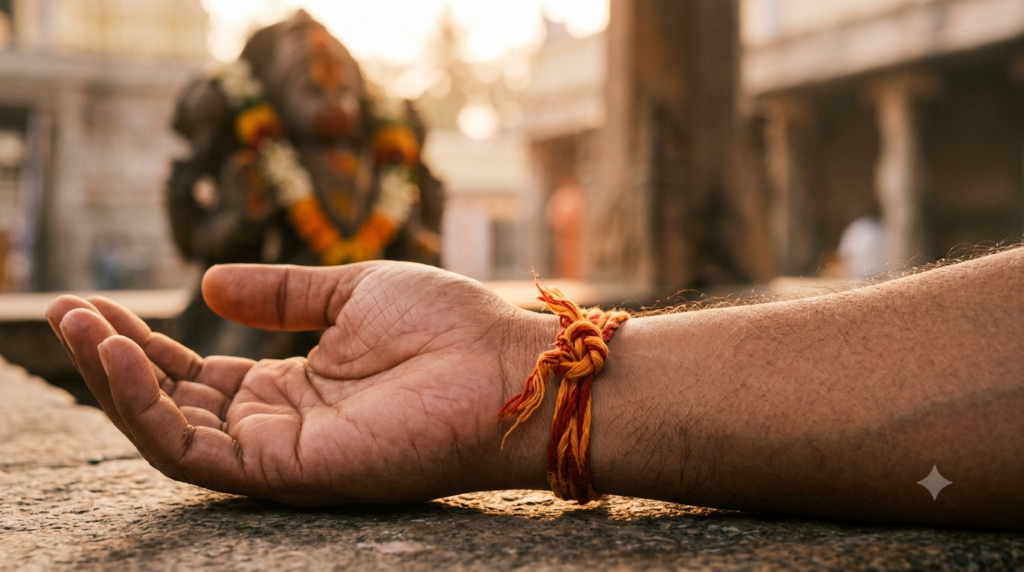
The Nanganallur Anjaneyar Temple Raksha is a blessed protective thread that Chennai devotees tie on the wrist to seek the strength and shelter of Lord Hanuman. If a website recently asked you to pay ₹300 to “book” it online, pause first. The thread is a devotional offering received in person, so it is not a paid online ticket. Below you will find the real rules, the beliefs behind it, and exactly how to receive it the right way.
Raksha at a Glance
- What it is: a sacred protection thread (rakshai) blessed in the name of Lord Hanuman.
- Where: Viswaroopa Adhivyadhihara Sri Bhaktha Anjaneyaswami Temple, Ram Nagar, Nanganallur, Chennai – 600061.
- Best day: Saturday, the day devotees most strongly link with Hanuman worship.
- How to get it: in person at the temple, after darshan — not through any verified online portal.
- Worn on: traditionally the right wrist, with clean hands and a clean mind.
What Is the Nanganallur Anjaneyar Temple Raksha?
The Raksha is a sacred thread, usually saffron or red, that devotees receive at the temple as a symbol of Lord Hanuman’s protection. The word raksha simply means “protection.” Many bhaktas tie it on the wrist after darshan, treating it as a daily reminder of courage and divine guardianship.
This temple is famous for one striking feature. Its idol of Hanuman stands 32 feet tall, carved from a single granite stone. Because the deity here is seen as a powerful guardian, the protective thread carries special meaning for those who receive it.
Why the Anjaneyar Temple Raksha Matters
The Anjaneyar Temple Raksha matters because it ties the devotee to a deity long associated with fearlessness. In tradition, Hanuman removes fear, guards travellers, and shields the home from harm. So the thread is not jewellery. Instead, devotees treat it as a token of faith that they carry through daily life.
The temple itself is widely believed to bestow good health, since locals call the deity a “healer.” That belief is devotional, not medical. Therefore, if you face a health issue, keep following your doctor’s advice while you wear the thread for inner strength.
The shrine’s history adds weight to this faith. Devotees of the Sri Maruti Bhakta Samajam built the giant idol in 1989, and the temple was consecrated in 1995. Because the temple is comparatively young, its reputation rests on devotee experience rather than ancient legend.
Benefits of the Anjaneyar Temple Raksha
Devotees connect several benefits with the Anjaneyar Temple Raksha, though these reflect faith and tradition rather than guaranteed results. Still, understanding them helps you approach the practice with the right mindset.
- Protection: a sense of being shielded from negativity and fear.
- Courage: renewed confidence before exams, travel, or difficult phases.
- Calm: many wearers describe a steadier, more peaceful state of mind.
- Focus on faith: the thread keeps Hanuman’s presence in daily awareness.
Because these effects are spiritual, they vary from person to person. That said, the practice costs you nothing in faith and harms nothing, so most devotees simply wear it with sincerity.
Nanganallur Anjaneyar Temple Raksha Rules to Follow
The rules around the Raksha come from custom, not from a printed rulebook. However, following them shows respect and keeps the thread meaningful. Most priests and regular devotees suggest the same simple habits.
Where and how to wear it
Tie the thread on the right wrist, which tradition links with auspicious acts. Wear it with clean hands, and avoid handling it when your hands are soiled. Many wearers chant a short Hanuman prayer while tying it, since intention matters more than ritual size.
Keeping the thread pure
Treat the Raksha with care once it is on. Avoid wearing it into clearly impure settings, and remove it respectfully if it frays badly. Because it is a faith item, never toss an old thread in the bin. Instead, immerse it in a clean water body or return it at the temple.
Renewing it
The thread naturally wears out over months. So devotees renew it on a later temple visit, ideally on a Saturday. There is no fixed expiry, yet a fresh thread after a few months keeps the practice alive.
How and When to Get the Anjaneyar Temple Raksha
Receiving the Nanganallur Anjaneyar Temple Raksha is straightforward when you visit in person. Devotees commonly receive the thread on Saturdays, after darshan, near the prasadam or seva counter. Because Saturday is Hanuman’s day, the temple draws large crowds, so timing your visit well makes a real difference.
- Reach the temple early, since Saturday queues build quickly after sunrise.
- Complete darshan of the 32-foot Anjaneyar before anything else.
- Ask politely at the seva or prasadam counter about the rakshai.
- Receive the thread, then have it tied or tie it yourself with a short prayer.
- Confirm any charge directly at the counter before you pay anything.
Weekdays are calmer if you simply want a peaceful darshan. Even so, the strongest association with the thread remains Saturday.
Nanganallur Anjaneyar Temple Raksha: Quick Reference
This table sums up the practical details so you can plan in one glance. Because specifics can change, always reconfirm at the temple counter on the day.
| Detail | What to know |
|---|---|
| Item | Blessed protection thread (rakshai) of Lord Hanuman |
| Best day | Saturday (Hanuman’s sacred day) |
| Where to get it | In person at the temple, after darshan |
| Cost | Often given to devotees; confirm any fee at the counter |
| Online booking | No verified official portal — treat paid “booking” sites with caution |
| Worn on | Right wrist, with clean hands |
As the table shows, the single most important rule is simple. You receive the thread at the temple, not through an unknown payment link.
Online Booking Myths: What’s True and What Isn’t
Several websites claim you can “book the Raksha online” for a fixed ₹300 through an “official website.” We found no verified official portal that sells this thread online. So treat such pages with caution, because paying a stranger’s link can mean losing money for nothing.
Another common error is the claim that the idol stands “322 feet” tall. That is a typo repeated across blogs. The real height is 32 feet, still one of the tallest single-stone Hanuman idols in India. Getting this fact right is a small but useful trust check for any guide you read.
The temple is managed by the Tamil Nadu Hindu Religious and Charitable Endowments (HR&CE) Department. Because it is a public temple, basic darshan is free, and most offerings are modest. Therefore, any page quoting a steep online fee deserves a second look before you act on it.
Temple Timings and How to Reach
The temple usually opens early, around 6:00 AM, breaks by midday, and reopens by about 4:00 PM until roughly 9:00 PM. Saturdays often run longer in the evening because of heavy footfall. Since timings shift on festival days, check the latest schedule before you travel — our Nanganallur Anjaneyar Temple timings guide covers the full pooja schedule.
The temple sits in Ram Nagar, Nanganallur, about 10 km from central Chennai and close to the airport. Buses stop at Nanganallur and Keelkattalai, both minutes from the gate. Pazhavanthangal is the nearest suburban railway station. For wider trip planning around the city, the Tamil Nadu Tourism portal is a useful official reference. If you also plan special offerings, see our Vadamalai garland seva details before you go.
What Most Guides Won’t Tell You
A few practical points only regular visitors tend to know. These small tips save time and protect your peace of mind on a busy Saturday.
- Go before 8 AM on Saturdays. The wait to reach the sannidhi can stretch past half an hour later in the morning.
- Carry cash. Electronic payment options near the temple are limited, so small notes help.
- Collect the prasadam. Devotees praise the vada and pongal prasadam, which is often distributed free.
- Mind the parking. Four-wheeler parking is tough on weekends, so use the nearby streets or come by auto.
- Ask, don’t assume. Counter staff can be busy, yet a polite question about the rakshai gets a clear answer.
If you want to combine the visit with a deeper offering, the temple’s pooja list and costs guide is a helpful next read for Hanuman devotees.
Before You Go
The Nanganallur Anjaneyar Temple Raksha is best understood as a thread of faith, not a product to buy online. Receive it in person, preferably on a Saturday, and wear it on a clean right wrist with sincerity. Confirm any charge at the counter, and ignore websites quoting fixed online fees. Approached this way, the thread becomes a simple, meaningful link to Lord Hanuman’s strength.
Frequently Asked Questions
Can I book the Nanganallur Anjaneyar Temple Raksha online?
No verified official online portal sells this Raksha. The thread is a devotional item that devotees receive in person at the temple, usually after darshan on a Saturday. Be cautious of third-party sites quoting a fixed online fee, and confirm everything at the temple counter.
How much does the Raksha cost?
Because this is a public HR&CE temple, basic darshan is free and the rakshai is often given to devotees without a steep charge. Any small fee should be confirmed at the seva or prasadam counter on the day. Avoid paying unknown online links that claim a fixed price.
On which wrist should I wear the Raksha?
Tradition suggests the right wrist, tied with clean hands and a short prayer to Lord Hanuman. The custom values purity and intention over strict ritual. Renew the thread on a later visit once it wears out.
Which day is best to get the thread?
Saturday is the most popular day, since devotees strongly associate it with Hanuman worship. The temple gets very crowded, so arrive early in the morning. Weekdays offer a calmer darshan if you prefer fewer crowds.
What are the benefits of the Raksha?
Devotees link the Anjaneyar Temple Raksha with protection, courage, and a calmer mind, though these reflect faith rather than guaranteed outcomes. Many wear it before exams, travel, or stressful phases. Treat it as a token of devotion, not a substitute for medical or practical action.
Is the Hanuman idol really 322 feet tall?
No, that figure is a common typo online. The idol stands 32 feet tall and is carved from a single granite stone. It remains one of the tallest single-stone Hanuman idols in India.
Where exactly is the temple located?
The temple sits in Ram Nagar, Nanganallur, Chennai – 600061, about 10 km from the city centre. Buses stop at Nanganallur and Keelkattalai, while Pazhavanthangal is the nearest railway station. It is also close to Chennai airport.
Do I need to wear traditional dress to receive the Raksha?
Neat, modest, traditional attire is appreciated at the temple, as at most South Indian shrines. Clean clothes and bare feet inside are the basic expectation. There is no rigid uniform, yet dressing respectfully suits the setting.