
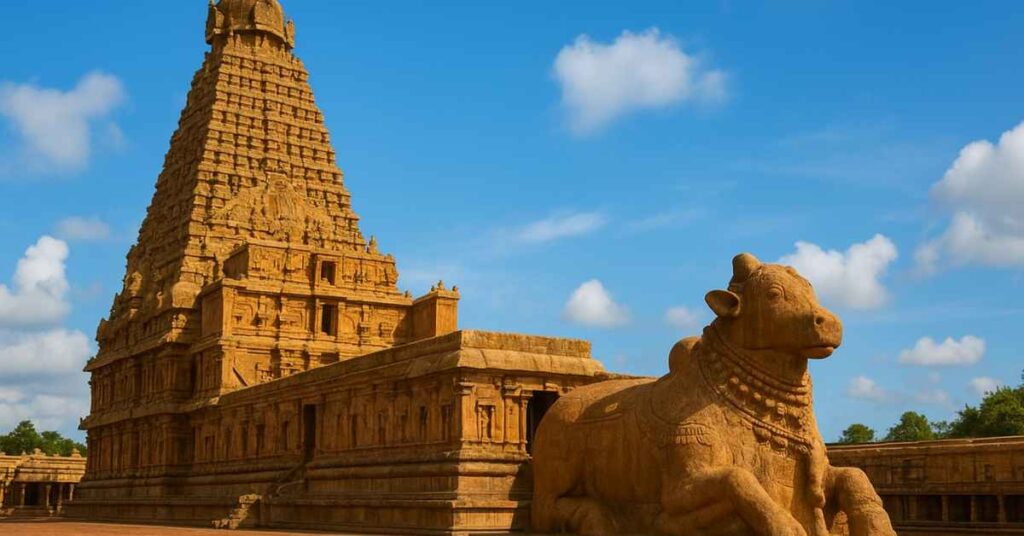
Brihadeeswara Temple Explore the Brihadeeswara Temple in Thanjavur — its 11th-century history, Dravidian architecture, sacred significance & travel tips for devotees.
Key Information at a Glance
- Timings: to visit: November to February for pleasant weather
- Location: Thanjavur, Tamil Nadu, India
Built
Circa 1003–1010 CE by Rajaraja Chola
The Brihadeeswara Temple in Thanjavur stands as an enduring symbol of devotion, artistry and imperial ambition. Built by the mighty Rajaraja Chola I in the early 11th century, this temple dedicated to Lord Shiva encapsulates the apex of Chola-era Dravidian architecture. It is no mere relic: it remains a living shrine, a pilgrimage destination and a testimony to India’s sacred building traditions. In this blog-post we traverse its history, architecture, significance, and essential travel-tips for those planning to visit.
Quick Facts
| Attribute | Detail |
|---|---|
| Location | Thanjavur, Tamil Nadu, India |
| Built | Circa 1003–1010 CE by Rajaraja Chola I |
| Deity | Shiva (in lingam form) |
| Architectural Style | Dravidian, Chola period |
| UNESCO Status | Part of “Great Living Chola Temples” World Heritage Site |
| Vimana (tower) Height | Approx. 66 m (216 ft) |
| Monolithic Capstone | Kumbam topping the vimana ~80 tons |
1. Historical Context & Origins
The temple was built during the zenith of the Chola Dynasty — Rajaraja Chola I, in the year 1003 CE, laid its foundation, and it was completed around 1010 CE.
Its original name was Rajarajeswaram (meaning “Lord of Rajaraja”) and the king intended it as the southern grandeur-mountain of Shiva, often called “Dakshina Meru” (the Meru of the South).
The temple therefore signifies both religious devotion and imperial power: to create a cosmic axis for his realm and for Shiva’s presence in the Chola capital.
2. Architectural Marvels & Symbolism
- The vimana (tower above the sanctum) reaches approx. 66 m and is entirely built of granite despite such stones being sourced from more than 60 km away.
- The topmost stone (the kumbam) weighs about 80 tons — an engineering feat given the era.
- Unlike many later temples where the gate-towers (gopurams) dominate, here the central tower stands tallest — emphasising the sanctum’s supremacy. The monolithic Nandi (Shiva’s bull) carved from a single rock, measuring about 16ft long × 13ft high, overlooks the sanctum.
- Remarkably, the temple is said to “cast no shadow” at certain times due to its orientation and proportions — a blend of myth and architectural precision.
3. Sacred Significance & Ritual Life
Although more than a millennium old, the temple remains a living temple: worship rituals (pujas), festivals and pilgrim visits continue unabated.
For devotees of Shiva, it is a site of consecration (kumbhabhishekam), of offering, and of spiritual aspiration. The temple was consciously built as a cosmic axis linking the terrestrial and the divine for the Chola realm.
4. Art, Inscriptions & Cultural Legacy
The walls and sculptures of the temple bear inscriptions which record temple grants, administrative details, donations of jewels and gold by king and nobles — thus serving as a valuable historical record.
The temple’s art — from massive granite carvings to frescoes (added later) — testifies to apex-level craftsmanship of the Chola age.
5. Why Visit Today?
- For spiritual seekers: entering the sanctum and partaking in the centuries-old ritual context.
- For architecture & art lovers: to witness one of the grandest Dravidian temples, still in use.
- For history buffs: exploring inscriptions, dynastic legacies and Chola’s imperial ambition.
- For pilgrims & tourists alike: the synergy of sacred ambience and heritage spectacle.
6. Practical Travel Tips
- Location: Thanjavur (Tamil Nadu) — easily accessible by train/road from major cities.
- Best time to visit: November to February for pleasant weather.
- Dress code: Traditional modest attire recommended in the temple complex (especially inside).
- Photography: Permitted in outer courtyards; check for restrictions inside sanctum.
- Timing: Arrive early to avoid crowds; morning darshan has serene ambience.
- Nearby: Combine with a visit to the Chola capital site and other Chola-era temples.
7. Myths & Interesting Facts
- It is said the temple has been built so precisely that in selected hours its tower casts no shadow.
- The massive capstone and monolithic Nandi speak to the logistical brilliance of Chola engineering.
- The temple’s inscription shows the king himself donated over 38,000 gold coins at consecration.
8. Preservation & Heritage Status
As a UNESCO-designated World Heritage site (as part of the “Great Living Chola Temples”), the Brihadeeswara Temple is under protection for its outstanding universal value in history, architecture and religious continuity.
Conservation efforts continue to ensure structural integrity, visitor management and protection of artistic surfaces.
FAQs
Q1: Who built the Brihadeeswara Temple?
A1: Built by Rajaraja Chola I circa 1003-1010 CE.
Q2: To which deity is the temple dedicated?
A2: Lord Shiva, in the form of a lingam in the sanctum.
Q3: What is the architectural style of the temple?
A3: Dravidian (Chola period) temple architecture with a tall vimana and granite construction.
Q4: Can non-Hindus visit?
A4: The outer complex is accessible to all; sanctum access may have restrictions; confirm locally.
Q5: What special features should I not miss?
A5: The towering vimana, the monolithic Nandi statue, the detailed inscriptions and the scale of the complex.
The Brihadeeswara Temple is more than a relic of the past — it is a living marvel of spiritual devotion, architectural excellence and historical significance. Whether you come as a pilgrim, a seeker of heritage or simply as an awed visitor, this temple invites you into a grand narrative of divine presence, human artistry and timeless legacy. Plan your visit with respect, patience and curiosity, and you will depart enriched by one of India’s greatest sacred monuments.
Author Box
- Meenakshi Amman Temple – Madurai Guide
- Rameswaram Temple – The Southern Jyotirlinga
- Chidambaram Nataraja Temple – Cosmic Dance of Shiva
- Thanjavur Temples Heritage Circuit
- Temples of the Chola Dynasty – UNESCO Sites
- https://whc.unesco.org/en/list/250
- https://www.incredibleindia.gov.in/en/tamil-nadu/thanjavur/brihadeeswarar-temple
- https://timesofindia.indiatimes.com/life-style/soul-search/7-fascinating-facts-about-thanjavurs-brihadeeswara-temple/photostory/107831371.cms
- 1. Chola Dynasty Temples — Tamil Nadu’s UNESCO Heritage
- 2. Meenakshi Amman Temple — Madurai’s Divine Wonder
Author: Gokshetra Blog Team
About: Specialist writers covering Hindu temples and pilgrimage sites across India for Gokshetra.com
Important Tips for Visitors
- Remove footwear before entering the temple premises. Shoe storage is usually available near the entrance.
- Wear modest, traditional clothing — most temples require covered shoulders and knees.
- Carry a valid ID proof — some temples require it for special darshan or accommodation booking.
- Visit during weekdays for shorter queues. Weekends and festival days see significantly higher footfall.