
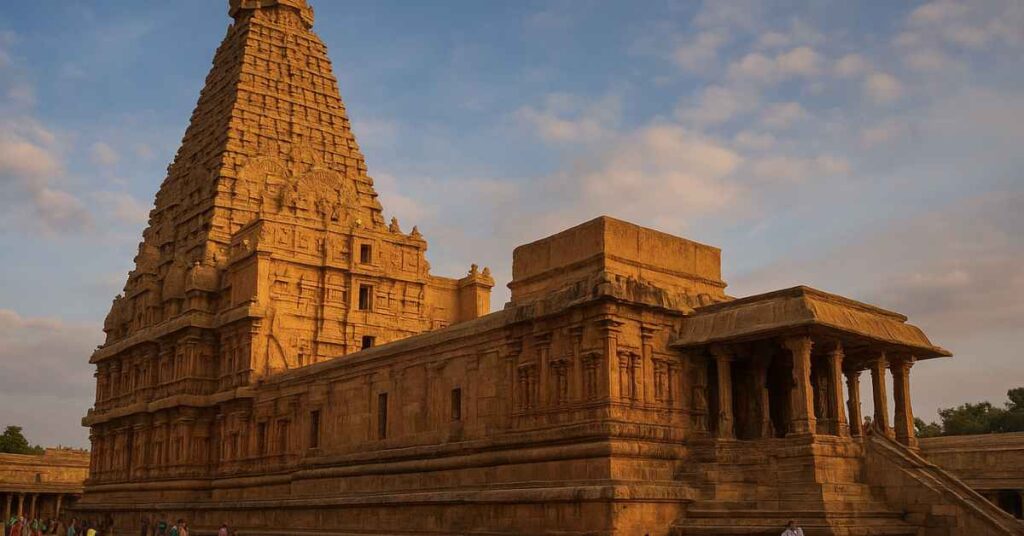
Brihadeeswarar Temple Discover the grandeur of Brihadeeswarar Temple in Thanjavur — history, architecture, rituals & pilgrimage tips for this Chola-era marvel.
Key Information at a Glance
- Timings: 1
- Entry/Ticket: to the temple?A: Entry to the main temple is free
- Location: Thanjavur, Tamil Nadu, India
Deity (Main)
Shiva as BrihadeeswararDyn
Perched proudly in the historic city of Thanjavur, the Brihadeeswarar Temple—also lovingly called the “Big Temple”—stands as a testament to the architectural brilliance of the Chola dynasty. Dedicated to Shiva in his form as Brihadeeswarar, this temple isn’t just a sacred site; it’s a living chronicle of culture, devotion and art from an era when temples were royal statements of faith and power.
In this blog post, we’ll explore the historical roots of the temple, its spiritual significance, architectural marvels, major rituals and festivals, visitor-planning tips, FAQs, and more. If you’re planning a pilgrimage or are simply drawn by heritage, this temple is a must-visit.
Quick Facts
| Aspect | Details |
|---|---|
| Location | Thanjavur, Tamil Nadu, India |
| Deity (Main) | Shiva as Brihadeeswarar |
| Dynasty | Built under the rule of Raja Raja Chola I (c. 1003-1010 CE) |
| Architectural Style | Dravidian (South Indian) — massive vimana, monolithic elements |
| UNESCO Status | Inscribed as part of the “Great Living Chola Temples” UNESCO World Heritage Site |
| Unique Feature | 216-feet tall vimana (tower above sanctum) — among the tallest of its time |
1. Historical & Spiritual Significance
1 The Chola era vision
Raja Raja Chola I initiated the construction of the Brihadeeswarar Temple around 1003 CE and completed it within a remarkably short span of about seven years (approx. 1010 CE). The temple’s creation marked the zenith of Chola power, prosperity and artistic achievement.
Beyond the political assertion, it was a deeply spiritual act — erecting a grand abode for Shiva as the “Lord of the Universe”.
2 Spiritual meaning
The temple symbolizes the union of divine power and royal devotion. Devotees believe that worship at this temple offers profound peace and liberation (moksha), given the celestial energy of the site and the continuous tradition of rituals maintained since the early medieval period.
2. Architectural Highlights & Artistic Marvels
- The standout feature is the majestic vimana (tower) rising approximately 216 feet above the sanctum, crowning the temple as one of the tallest of its era.
- The sanctum houses a massive lingam, shaping the focus of worship.
- The temple walls and halls are adorned with exquisite inscriptions, sculptures of gods, dancers, mythical beings, and detailed reliefs spanning the Chola period.
- The materials and craftsmanship — large monolithic stones, granite construction, finely carved pillars and mandapas — speak of a grand vision and skilled artisanship.
- The temple complex functions not just as a place of worship but a hub of culture: music, dance, festivals and royal ceremonies.
3. Major Rituals, Festivals & Devotional Practices
- Daily Pujas & Abhishekams: The temple follows the traditional Agamic rituals dedicated to Shiva, beginning early morning and continuing through the day.
- Maha Shivaratri: One of the principal festivals here; devotees stay awake singing bhajans, offering special abhishekam (bath) to the lingam in honour of Shiva.
- Navaratri & Cholaera Festivals: Special processions and cultural programmes (music, dance) form part of the temple festival calendar, drawing local devotees and pilgrims.
- Darshan & Prasad: While the main sanctum remains reserved for worship, all visitors can participate in darshan (viewing of the deity) and receive prasad (sacred offering) as per temple practices.
4. Best Time to Visit & Pilgrim Tips
- Best Season: October to March — comfortable climate for exploring Thanjavur and temple surroundings.
- Avoid: Peak summer months (April–June) when heat is high and crowds may be large.
- Dress Code: Modest attire is expected. Traditional dhoti or saree is preferred by many devotees.
- Time to go: Early morning darshan helps in quieter experience.
- Nearby Attractions: The city of Thanjavur itself has rich heritage — palace, museums, art centres. Plan a half-day around the temple.
- Facilities: Local lodging and food options are ample in Thanjavur; book in advance during festival days.
5. Frequently Asked Questions
Q1: Is there an entry fee to the temple?
A: Entry to the main temple is free. Special sevas or guided heritage tours may have charges — check locally.
Q2: Are foreigners allowed inside the sanctum?
A: Yes. Visitors of all faiths are generally welcome — though respectful decorum is required.
Q3: How much time should I allocate for a visit?
A: About 1.5–2 hours for the temple itself; if you include local heritage sites in Thanjavur, consider half-a-day.
Q4: Can I attend the temple festivals?
A: Yes. Visiting during Maha Shivaratri or other major festivals will give you a rich cultural and spiritual experience, though expect larger crowds.
Q5: Is photography allowed inside the sanctum?
A: Photography is usually restricted in the sanctum and during certain rituals — check signage and follow temple guidelines.
The Brihadeeswarar Temple at Thanjavur is not just a historic monument — it is a living embodiment of devotion, architecture, culture and continuity. For pilgrims and heritage-seekers alike, it offers a unique blend of spiritual focus and artistic marvel. Whether drawn by the roar of ancient chants, the silent grandeur of carved stone, or the timeless rhythm of rituals, your visit here will resonate deeply. May your journey be enlightened, and may the divine grace of Shiva guide you.
Usefull Links
- Divine Sanctuaries of India: 15 Iconic Hindu Temples You Must Visit
- Hindu Temple Architecture – Explore India’s Temple Architecture & Spiritual Practices
- 108 Divya Desam Temples List (Telugu): Locations & Travel Guide
- Hindu Temples – Dive into the spiritual world of India’s temples, rituals & pilgrimage paths
- All Temples Archives – A full category of temple posts on Go Kshetra
- Official listing describing Brihadeeswarar Temple and related Chola temples
Government of India tourism site featuring temple history, architecture, and travel info.
Author Box
Author: Goksh Sharma — Spiritual travel writer for Gokshetra.com
About: Passionate about documenting Hindu temples, pilgrimage routes & spiritual traditions across India.
Important Tips for Visitors
- Remove footwear before entering the temple premises. Shoe storage is usually available near the entrance.
- Wear modest, traditional clothing — most temples require covered shoulders and knees.
- Carry a valid ID proof — some temples require it for special darshan or accommodation booking.
- Arrive early morning for a peaceful darshan experience — most temples are less crowded before 8 AM.