
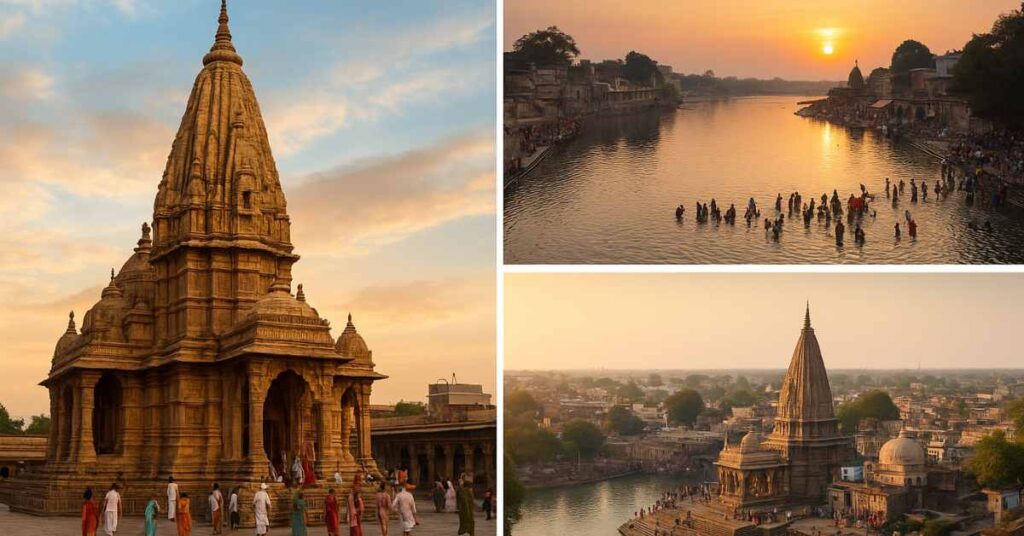
Ujjain temple city Explore the historic city of Ujjain—temple heritage, pilgrimage rituals and spiritual journey in India’s ancient seat of devotion.
Key Information at a Glance
- Timings: to VisitYear-round (check festivals)
Tucked away in the heart of India, the
- Entry/Ticket: Price | Ujjain Mahakal Bhasm Aarti Online Booking Timings Pricing
DetailInform
- Location: Ujjain, Madhya Pradesh, India
Quick Information
| Detail | Information |
|---|---|
| Location | Ujjain |
| Timings | See detailed timings below |
| Online Booking | Available (see guide) |
| Entry Fee | See pricing section |
| Best Time to Visit | Year-round (check festivals) |
Tucked away in the heart of India, the city of Ujjain stands as a living testament to thousands of years of devotion, architecture and pilgrimage. Known often as the “Temple City”, Ujjain is deeply rooted in Hindu spiritual tradition. In this blog we uncover eight compelling reasons why this city should be on every pilgrim’s journey. From its ancient temples to its dramatic river-ghats and the famed Kumbh Mela, Ujjain offers both outer travel and inner transformation.
Quick Facts
- Location: Ujjain, Madhya Pradesh, India.
- Major River: Shipra River, whose ghats form important ritual-sites.
- Iconic Temple: Mahakaleshwar Temple, one of the twelve Jyotirlingas of Lord Shiva.
- Famous Event: The Simhastha Kumbh at Ujjain, attracting millions of pilgrims.
- Architectural Heritage: Ancient temple complexes spanning centuries, layered over cosmic mythologies.
Why Ujjain Captivates the Devotee
1. A Seat of Divine Shiva Worship
The spiritual potency of this shrine makes Ujjain a major destination for those seeking moksha (liberation).
2. The Sacred River and Ritual Ghats
Visiting these ghats offers not just visual beauty but deep spiritual resonance.
3. Host of the Simhastha Kumbh
Ujjain stands among the four sacred sites to host the grand Kumbh Mela—the Simhastha in particular draws millions of devotees who gather for the holy dip.
Timing your visit during or around the Kumbh offers an experience unlike any other pilgrimage.
4. Rich Mythology & Spiritual Geography
Ujjain is steeped in Hindu mythology—legends of Lord Shiva, the great sages, astronomy and cosmic alignment. The city’s spiritual geography integrates temples, ancient observatories and mythic tales. The official tourism site highlights Ujjain’s “ancient history and spirituality”.
Walking through Ujjain is akin to walking through layers of sacred narrative.
5. Temple Heritage & Architectural Marvels
For architecture enthusiasts and spiritual seekers alike, Ujjain offers dual allure.
6. Accessible Pilgrimage for You
Located in Madhya Pradesh, Ujjain is accessible via train and road from major cities like Indore and Bhopal. For devotees, it means easier planning, good amenities and ready temples.
Given your location in Andhra Pradesh, Ujjain can be incorporated into a longer northern India pilgrimage as a culturally rich stop-over.
7. Festivals & Rituals All‐Year-Round
Ujjain’s calendar is vibrant: Mahashivaratri, Shravan Month prayers, Navratri festivals, and of course the Kumbh-cycle. Visiting in any of these times enhances the spiritual atmosphere.
For example, pilgrims throng early morning to the Mahakaleshwar for the Bhasma Aarti. The energy is palpable.
8. The Inner Journey: Stillness Amid Sacredness
Ultimately, a place like Ujjain offers more than external sightseeing—it invites inner reflection. In its calm temple courtyards and along the river’s rhythm, pilgrims often find a space for contemplation and renewal.
As any serious visit to a temple city reminds us: the external journey mirrors the internal one.
FAQs
Q1. What is the best time to visit Ujjain?
A: The months from October to March are generally pleasant for travel and temples. For very large spiritual gatherings, attend during the Simhastha Kumbh or major festivals (though crowded).
Q2. Are non-Hindus allowed inside the temples?
A: Many major temples in Ujjain permit all devotees; however it’s always wise to check specific temple rules on site regarding entry, dress code, photography etc.
Q3. What should I wear when visiting Ujjain’s temples?
A: Modest, clean clothing is recommended. For early morning rituals (like Bhasma Aarti) arriving before dawn is respectful. Remove footwear before entering sanctums.
Q4. How many days should I allocate for Ujjain?
A: A 1-2 day stay gives you a solid visit: major temples + river ghats + some local exploration. For deeper immersion (festivals, Kumbh) allow 3-4 days or more.
Q5. Can Ujjain be combined with other pilgrimage spots?
A: Yes. Ujjain works well in a circuit with temples in Madhya Pradesh or connected to northern pilgrim routes. It complements visits to other historic sites and rivers.Ujjain temple city
The city of Ujjain stands as a luminous beacon among India’s sacred destinations—a fusion of myth, ritual, architecture and spiritual quest. For anyone drawn by the call of temples, pilgrimage or inner stillness, Ujjain offers a rich journey of both the feet and the heart.
Consider making space in your travel-map for this ancient temple city—where every stone has a story, and every river bank echoes with devotion.attention-grabbing
Usefull Links
- ancient Hindu temple cities
- Mahakaleshwar Jyotirlinga Temple
- holy rivers of India
- Official Ujjain Tourism Portal
- Mahakaleshwar Temple Official Website
- Google Maps – Mahakaleshwar Temple Ujjain
Author Box
Author: Alpha v4 – Gokshetra Blog Writer GPT for Gokshetra.com
About: I create in-depth, spiritually accurate and pilgrimage-focused articles for Hindu temple sites across India.
Important Tips for Visitors
- Wear modest, traditional clothing — most temples require covered shoulders and knees.
- Arrive early morning for a peaceful darshan experience — most temples are less crowded before 8 AM.
- Visit during weekdays for shorter queues. Weekends and festival days see significantly higher footfall.
- Carry a valid ID proof — some temples require it for special darshan or accommodation booking.