
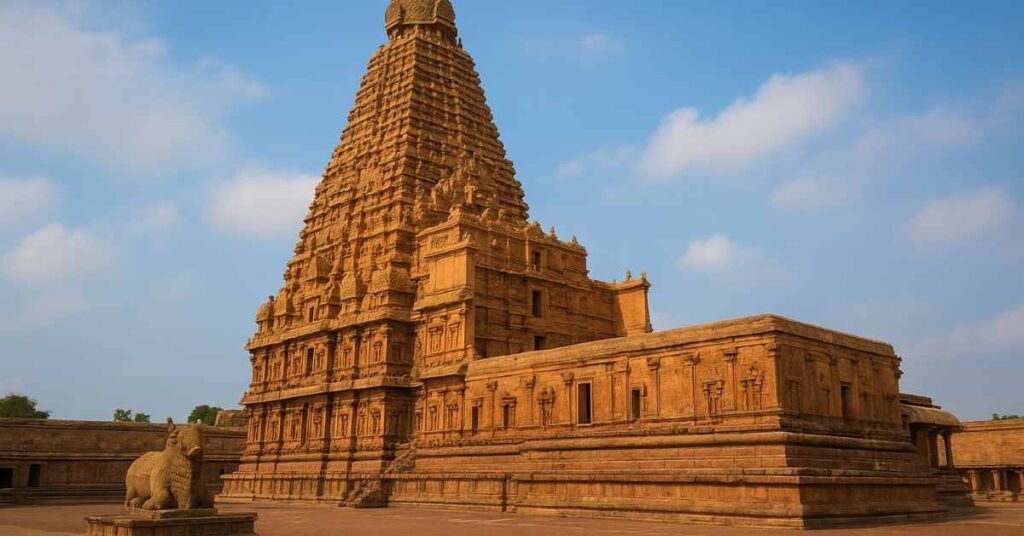
Brihadeeswarar Temple Explore the grandeur of Brihadeeswarar Temple in Thanjavur—its Chola-era architecture, rich heritage, ritual practices & pilgrimage significance.
Key Information at a Glance
- Timings: to Visit
October to March (pleasant climate)1
- Location: Thanjavur (Tanjore), Tamil Nadu, India
Deity
Lord Shiva (in the form of Br
Nestled in the heart of Tamil Nadu’s historic city of Thanjavur, the Brihadeeswarar Temple stands as a colossal tribute to Shiva and the architectural genius of the Chola Dynasty. Constructed over a thousand years ago, this temple isn’t just a place of worship—it is a testament to supreme craftsmanship, imperial ambition and enduring spirituality. For pilgrims, history-lovers and architecture enthusiasts alike, this shrine offers a journey into the heart of South Indian temple culture.
In this blog post we will explore its quick facts, historical background, architectural marvel, ritual life, how to plan your visit, key myths and significance, FAQs and more—always rooted in authentic sources.
Quick Facts
| Attribute | Detail |
|---|---|
| Location | Thanjavur (Tanjore), Tamil Nadu, India |
| Deity | Lord Shiva (in the form of Brihadeeswarar) |
| Built | 1010 CE by Raja Raja Chola I |
| Architectural style | Dravidian (Chola) with towering vimana and monolithic features |
| UNESCO Status | Part of “Great Living Chola Temples” World Heritage Site |
| Best Time to Visit | October to March (pleasant climate) |
1. History & Significance
Under the rule of Raja Raja Chola I (reigned 985-1014 CE), the Brihadeeswarar Temple was commissioned as a grand imperial temple dedicated to Shiva. It marked the zenith of the Cholas’ power and the culmination of centuries of Tamil temple architecture.
The temple’s consecration in 1010 CE signalled the Cholas asserting both religious and political authority: their empire, temple, art and ritual were all intertwined.
Over time the temple has continued to be a living place of worship, not only a monument. Its rituals have been preserved, and successive generations have added to, maintained and revered the shrine.
2. Architectural Marvel: Why It Stands Out
- Towering Vimana: The temple’s vimana (temple tower) soars to about 66 metres (216 feet), making it one of the tallest of its era. It is carved from a single massive granite block for the capstone, moved using ingenuity and manpower.
- Monolithic Nandi: Facing the main shrine sits a monolithic statue of Nandi (the bull mount of Shiva), carved from a single rock and imposing in scale.
- Intricate Frescoes & Inscriptions: The interior walls and pillars are inscribed with Chola grants, detailed sculptures of mythological scenes, and murals depicting the lives of Saivite saints.
- Precise Symmetry & Geometry: The temple’s layout, proportions and axial alignment showcase advanced engineering and sacred geometry, reflecting the Chola mastery of temple planning.
- Living Temple: Unlike some ancient monuments, Brihadeeswarar Temple remains active—rituals happen daily, priests serve, and devotees come in large numbers, preserving its spiritual vibrancy.
3. Ritual Life & Pilgrimage Experience
- Darshan & Puja: Regular daily pujas are held at dawn and dusk, with the main shrine dedicated to Brihadeeswarar. Devotees queue for darshan of the lingam and the sacred space.
- Festivals: Major festivals include Maha Shivaratri, Pradosham days, and the Tamil month of Margazhi, when special abhishekams (ritual baths) and flower decorations occur.
- Pilgrim Vibe: The atmosphere is both majestic and intimate—massive halls, echoing chants, fragrant incense and the soft glow of lamps, contrasted with the sense of individual devotion each visitor brings.
- Cultural Insight: On visiting, one absorbs a temple-town rhythm: nearby halls, temple chariots, music (nadaswaram) and local crafts thriving around the shrine.
4. Planning Your Visit
Getting There: Thanjavur is well-connected by rail (Thanjavur Junction) and road. The nearest airport is in Tiruchirappalli (about 60 km away).
Temple Timings: Generally opens early morning (~6 am) and closes after evening aarti (~9 pm) — always check local schedule on the day of visit.
What to Wear & Carry: Modest traditional attire is recommended. Remove footwear before entering inner sanctum. Photography may be restricted in certain areas.
Best Times: Early morning gives cooler weather and peaceful darshan. Visiting during non-festival weekdays reduces crowds.
Nearby Attractions: After the temple, explore the Thanjavur Royal Palace, Art Gallery, and the Saraswati Mahal Library for a full day of heritage immersion.
5. Myth & Symbolism
The temple is not merely grand architecture—it embodies deep symbolic meaning. The towering vimana represents Mount Kailash, abode of Shiva. The alignment of light and space inside the sanctuary conveys cosmic principles. The Chola inscriptions declare the king as the divine ruler responsible to protect dharma and religion—thus the temple became a statement of both devotion and power. For pilgrims, the journey here is not only architectural admiration but a step into an ancient living spiritual tradition.
FAQs
Q1: Is there any special entry fee?
Standard entry is free for the main darshan; special pujas or external photography may involve charges—check local counter.
Q2: Can non-Hindus enter the temple?
Yes — the temple is open to all faiths for general darshan. For any inner-sanctum area reserved for priesthood, local norms apply.
Q3: How long should I allocate for a visit?
Plan at least 1.5 to 2 hours: darshan, photography of exterior, walkthrough of the halls, and perhaps time at the palace museum.
Q4: Is it accessible for elderly or differently-abled visitors?
Yes – the ground floor of the temple complex is accessible, though some areas may have steps. Carrying assistance helps during the peak hours.Brihadeeswarar Temple
Q5: Best time to visit for fewer crowds?
Weekday mornings (around 6–8 am) are less crowded. Avoid major festivals if you prefer a quieter experience.
The Brihadeeswarar Temple in Thanjavur stands as a magnificent convergence of devotion, royal ambition and architectural brilliance. Whether you seek spiritual solace, historic insight or cultural beauty, this temple delivers on every front. A pilgrimage here is more than a visit—it is a stepping into a thousand-year-old legacy of faith, art and human aspiration.
Step into the grandeur, feel the echo of ancient chants, witness the granite towers against the Tamil sky—and may your journey here deepen both your understanding and your spirit.
Usefull Links
- Explore one of the most sacred Jyotirlingas of Lord Shiva in Varanasi and understand its spiritual connection to liberation (moksha).
- Discover the Himalayan shrine of Lord Vishnu that completes the Char Dham Yatra circuit and its ancient spiritual energy.
- A detailed journey into the Dravidian architectural marvel and divine story of Goddess Meenakshi and Lord Sundareswarar.
- Official UNESCO listing for the Brihadeeswarar Temple, recognizing its architectural and cultural significance.
- Government of India’s official record providing architectural, conservation, and historical insights on the temple complex.
Author Box
Author: Gokshetra Blog Team
Important Tips for Visitors
- Remove footwear before entering the temple premises. Shoe storage is usually available near the entrance.
- Carry a valid ID proof — some temples require it for special darshan or accommodation booking.
- Arrive early morning for a peaceful darshan experience — most temples are less crowded before 8 AM.
- Photography may be restricted inside the main sanctum. Check with temple authorities before clicking pictures.