
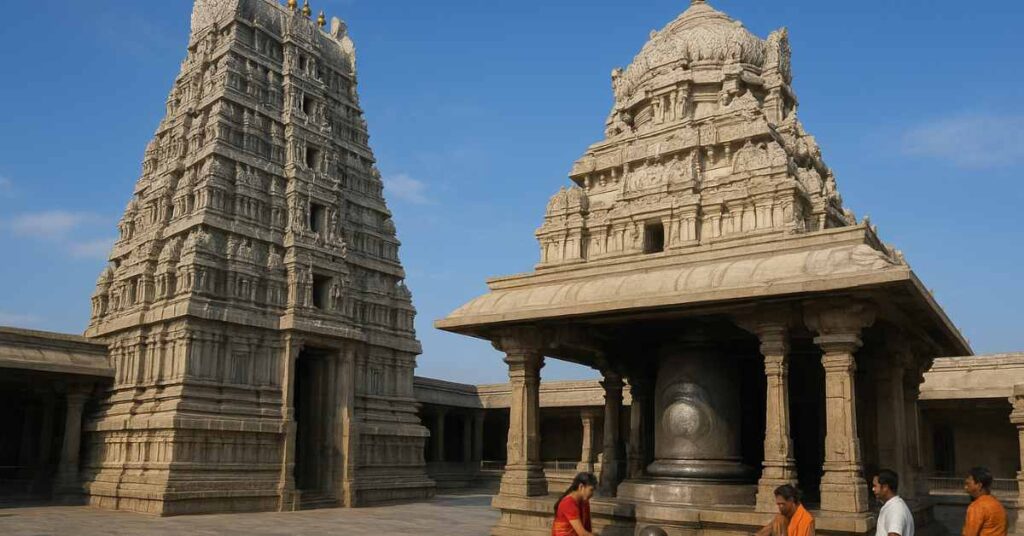
Srikalahasti Temple Discover the ancient Srikalahasti Temple in Andhra Pradesh — its unique Vayu Lingam, Rahu-Ketu pooja, history, architecture & pilgrimage tips.
Key Information at a Glance
- Timings: to VisitYear-round (check festivals)
Nestled in the town of Srikalahasti (T
- Location: Srikalahasti town, Tirupati district, Andhra Pradesh, India
- Contact: with the unique sacred energy of the place
Quick Information
| Detail | Information |
|---|---|
| Location | Srikalahasti |
| Timings | See detailed timings below |
| Online Booking | Available (see guide) |
| Entry Fee | See pricing section |
| Best Time to Visit | Year-round (check festivals) |
Nestled in the town of Srikalahasti (Tirupati district, Andhra Pradesh) lies one of the most spiritually potent and historically rich temples of South India: the Srikalahasti Temple. This shrine is unique in that it honours Lord Shiva in his form as Vāyu (wind) — embodied by the sacred Vayu Lingam. More than just an architectural marvel, this temple is a living testament to devotion, cosmic symbolism, astrology, and nature-worship. In this guide you’ll discover the historical roots, spiritual significance, key rituals, practical travel advice, and meaningful FAQs — everything a pilgrim from Tirupati or beyond needs to know.
Quick Facts
- Location: Srikalahasti town, Tirupati district, Andhra Pradesh, India.
- Deity: Lord Shiva as “Kalahasteeswara” together with Goddess Gnana Prasoonambika (Parvati).
- Element Representation: One of the five Panchabhuta Sthalas — representing air (Vāyu).
- Legendary timeframe: Inner sanctum origins as early as 5th century CE; major Chola and Vijayanagara expansions.
- Famous ritual: Rahu-Ketu Sarpadosha nivarana poojas for planetary remedies.
- Distance from Tirupati: ~36 km (approx. 1-hour drive) from Tirupati city.
1. Why Srikalahasti is spiritually extraordinary
Unique element-temple: Vāyu (Wind)
Among the five elemental temples (earth, water, fire, air, space) the Srikalahasti Temple is the one dedicated to the air/wind element. This makes it spiritually vital for those seeking connection with the intangible, subtle principle of life.
Moksha & Davotion legends
The name “Srikalahasti” is said to come from three creatures — spider (śrī), snake (kāla) and elephant (hasti) — who devoutly worshipped the Lingam and attained moksha.
The story of the hunter-saint Kannappa — who offered his own eyes to the Lingam in pure devotion — is one of the most moving in Shaiva tradition.
2. History & architecture
- The original core of the temple dates to the 5th century CE; the present Dravidian structure saw major contributions under the Chola kings (11th century) and the Vijayanagara rulers.
- The tall Raja Gopuram (main tower) and the intricate pillared halls reflect the Vijayanagara aesthetic of the 16th century.
- Unique architectural features include the representation of creatures (spider, snake, elephant) near the base of the Lingam to remind devotees of the legends.
3. Key rituals & sanctity
Rahu-Ketu Pooja
Because Srikalahasti is viewed as a powerful ‘Rahu-Ketu kshetra’ (place for shadow-planet remedies), many devotees come here to perform poojas aiming to reduce astrological afflictions (sarpadosha, graha dosha, etc.). The spiritual atmosphere is especially strong.
Darshan & timing
The temple is open in the early morning from around 5:30 AM and remains open into the evening, with a gap around midday. It’s best to check the local trust/temple board for exact timings.
Dress code & decorum
Traditional attire is recommended — men in dhoti/kurta or formal wear, women in saree or salwar-kameez. As with many major Hindu temples, modesty and silence of heart help deepen the experience.
4. How to reach & travel tips (from Tirupati or Andhra region)
- By Road: From Tirupati city (approx 36 km), take a taxi or hire an auto-rickshaw; roads are good and well-marked. By Rail: Srikalahasti has its own railway station on the Gudur-Katpadi line; connect from Tirupati if coming by train.
- By Air: The nearest major airport is Tirupati Airport; from there road transport to Srikalahasti.
- Best time to visit: Early mornings, and non-peak festive periods if you prefer more quiet devotion. Also consider visiting during Maha Shivaratri for deep spiritual energy.
- Pilgrim tip: Combine the visit with nearby temples or a trip to Tirupati for a fuller spiritual route.
- Crowd awareness: During major festivals or Rahu-Ketu pooja days, crowds swell — plan accordingly for wait times.
- Local amenities: Facilities are improving but staying in Tirupati and commuting for the darshan might be more comfortable for some pilgrims.
5. What to see & experience
- Walk through the corridors Gopuram → Mandapams → Sanctum: Observe the dravidian carvings, massive pillars and age-old inscriptions.
- In the sanctum, witness the Vayu Lingam, the embodiment of wind, with its aura of subtle energy.
- View the small symbolic figures of spider, snake and elephant near the base of the Lingam — a unique iconographic feature reminding of pure devotion across species. Visit the Swarnamukhi River bank nearby — the river flowing through the temple precinct adds to the tranquillity.
- For architecture-enthusiasts: take time to observe the vaulted Ceilings, murals, the Rajagopuram and the kumbha carvings of Chola era.
6. Spiritual significance & benefits
- Worship at one of the Panchabhuta Sthalas connects you with the cosmic elements and their symbolic interplay — in this case, Vāyu (wind) meaning breath, life-force and subtle motion.
- For devotees facing astrological challenges (Rahu/Ketu) the specialised poojas here hold strong belief value.
- The legends of selfless devotion (Kannappa, spider-snake-elephant) serve as profound reminders that faith and surrender transcend ritual formalities.
- Pilgrims often report a serene sense of peace, clarity and spiritual uplift by coming into contact with the unique sacred energy of the place.
7. FAQs
Q1: Is photography allowed inside the sanctum?
A1: Generally not inside the inner sanctum where the Lingam resides. However external areas and corridors can often be photographed with respect.
Q2: What is the best time of year to visit?
A2: Early mornings year-round are best for peaceful darshan. For special poojas like Rahu-Ketu the crowd rises — choose non-peak days if you prefer solitude.
Q3: Can non-Hindus visit the temple?
A3: Yes, visitors of all faiths are welcome for darshan and to appreciate the architecture and spirituality. However, entry into inner sanctum may be guided by temple rules.
Q4: Is there a recommended dress code?
A4: Yes—Modest, traditional dress is best. Men: dhoti/kurta or formal; Women: saree/salwar-kameez. Avoid shorts, sleeveless tops, etc.
Q5: What other temples can be visited nearby?
A5: Since you’re in Tirupati district: the famed Tirumala Venkateswara Temple, Chandragiri Fort, Talakona waterfalls are easy additions. Also the town of Srikalahasti itself has local temples worth exploring.
The Srikalahasti Temple is much more than a pilgrimage stop — it is a living well of faith, elemental spirituality, and architectural grandeur. Whether you come seeking relief from astrological burdens, longing for a deep Shaiva experience, or simply drawn by the idea of a temple dedicated to the wind element, this shrine will leave a lasting mark on your soul. If you’re based around Tirupati, make the journey to Srikalahasti; the quiet power of the place awaits your presence.
Usefull Links
- Top 10 Most Visited Temples in India
- The Sacred Journey of Indian Temples: Divine Architecture, Legends & Pilgrims
- 7 Spiritual Wonders of Ramanathaswamy Temple — Guide
- AP Temples – Sri Kalahasteeswara Swami Vari Temple (official Andhra Pradesh Govt.)
- Incredible India – Srikalahasti Temple, Tirupati District, Andhra Pradesh
- Wikipedia – Srikalahasteeswara Temple article
- TravellerKaka – Srikalahasti Temple: History, Significance & Travel Guide
- MystReal – Top 10 Mysteries of Srikalahasti Temple
Author Box
- Written by Gokshetra Blog Writer — Alpha v4
Gokshetra.com is your dedicated portal for detailed, spiritually accurate blogs on Hindu temples and sacred pilgrimage sites across India.
Important Tips for Visitors
- Carry a valid ID proof — some temples require it for special darshan or accommodation booking.
- Remove footwear before entering the temple premises. Shoe storage is usually available near the entrance.
- Wear modest, traditional clothing — most temples require covered shoulders and knees.
- Arrive early morning for a peaceful darshan experience — most temples are less crowded before 8 AM.