
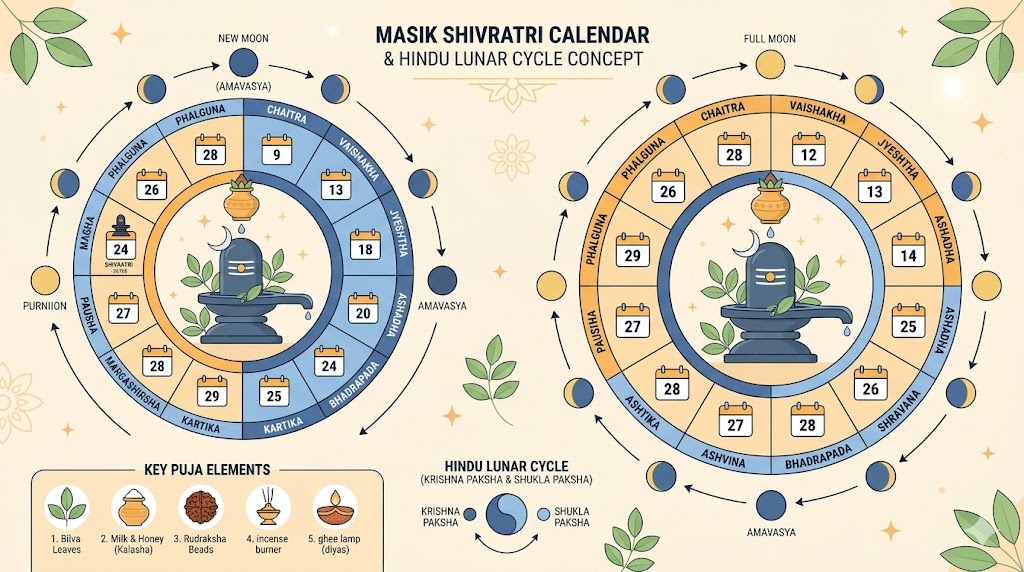
Masik Shivratri is a sacred Hindu observance dedicated to Lord Shiva and celebrated every month on the Krishna Paksha Chaturdashi, the 14th night of the waning moon. Devotees across India observe fasting, night-long prayers, and special Shiva puja on this auspicious day to seek blessings for spiritual growth, peace, and prosperity. Unlike Maha Shivratri, which occurs once a year with grand celebrations, Masik Shivratri happens 12 times annually, making it an important monthly vrat for Shiva devotees. On this day, temples conduct Abhishekam, Rudra chanting, and night-long Jagaran while devotees chant powerful mantras such as “Om Namah Shivaya.” Observing Masik Shivratri vrat is believed to purify the mind, remove negative energies, and strengthen devotion to Lord Shiva. In this guide, you will find the Masik Shivratri dates list for all months, the spiritual significance of the festival, puja rituals, fasting rules, and the best time to perform Shiva worship.
Key Information at a Glance
- Timings: to perform Shiva worship
- Location: and Panchang calculations
Masik Shivratri Dates List
Masik Shivratri occurs every month on the Chaturdashi (14th day) of Krishna Paksha according to the Hindu lunar calendar.
Monthly Masik Shivratri Calendar
| Month | Masik Shivratri Date |
|---|---|
| January | 16 January |
| February | 15 February |
| March | 17 March |
| April | 15 April |
| May | 15 May |
| June | 13 June |
| July | 12 July |
| August | 11 August |
| September | 9 September |
| October | 8 October |
| November | 7 November |
| December | 7 December |
Note: Exact timings may vary depending on location and Panchang calculations.
What is Masik Shivratri?
Masik Shivratri literally means “Monthly Night of Lord Shiva.” It is observed every month as a day of fasting, meditation, and Shiva worship.
Unlike the grand festival of Maha Shivratri, which happens once annually, Masik Shivratri is a monthly spiritual observance that allows devotees to regularly connect with Lord Shiva.
Devotees often:
- Observe a strict fast (vrat)
- Visit Shiva temples
- Perform Rudra Abhishek
- Chant Shiva mantras
- Stay awake during the night in prayer
Masik Shivratri Significance
Masik Shivratri holds deep spiritual importance in Hindu tradition. It is believed that worshipping Lord Shiva on this day helps devotees purify their mind and soul.
Key spiritual beliefs include:
- Removal of negative karma
- Inner peace and mental clarity
- Strengthening devotion to Shiva
- Blessings for prosperity and protection
Many devotees also observe this vrat for marriage harmony, health, and spiritual progress.
Masik Shivratri Puja Rituals
1. Early Morning Preparation
Devotees wake up before sunrise, take a bath, and take a vow to observe the fast.
2. Fasting (Vrat)
There are different fasting methods:
- Nirjala fast (no food or water)
- Fruit and milk fast
- Simple satvik meal after puja
3. Shiva Lingam Abhishekam
The Shiva Lingam is worshipped with:
- Water
- Milk
- Honey
- Bilva leaves
- Sandalwood paste
4. Mantra Chanting
Common mantras include:
- Om Namah Shivaya
- Maha Mrityunjaya Mantra
5. Night Vigil (Jagaran)
The night is divided into four Prahars, and special puja is performed in each phase.
Masik Shivratri Fasting Rules
If you plan to observe the Masik Shivratri vrat, follow these traditional guidelines:
- Avoid tamasic food like onion and garlic
- Maintain a calm and devotional mindset
- Chant Shiva mantras regularly
- Offer Bilva leaves to the Shiva Lingam
- Break the fast after the next morning’s puja
Difference Between Masik Shivratri and Maha Shivratri
| Feature | Masik Shivratri | Maha Shivratri |
|---|---|---|
| Frequency | Every month | Once a year |
| Importance | Regular devotional fast | Grand Shiva festival |
| Celebrations | Simple temple rituals | Major nationwide celebrations |
| Timing | Krishna Paksha Chaturdashi | Magha/Phalguna month |
Benefits of Observing Masik Shivratri Vrat
Many devotees observe this vrat for spiritual and personal reasons.
Commonly believed benefits include:
- Spiritual purification
- Removal of obstacles
- Peace and mental clarity
- Marriage blessings
- Positive energy in life
FAQ – Masik Shivratri
1. What is Masik Shivratri?
Masik Shivratri is a monthly Hindu festival dedicated to Lord Shiva observed on the Krishna Paksha Chaturdashi.
2. How many Masik Shivratri occur in a year?
There are 12 Masik Shivratri days every year, one in each lunar month.
3. Is fasting necessary on Masik Shivratri?
Fasting is optional but widely observed by devotees seeking spiritual benefits.
4. What is the best time for Masik Shivratri puja?
The most auspicious time is Nishita Kaal, which falls around midnight.
5. Can anyone observe Masik Shivratri vrat?
Yes. Men, women, and young devotees can observe the vrat with devotion.
External Official Links
https://www.drikpanchang.com
https://www.timeanddate.com/holidays/hindu/maha-shivaratri
Important Tips for Visitors
- Check the exact festival dates on the official temple website as lunar calendar dates may shift.
- Carry sufficient cash — ATMs near temple towns may run out during peak festival periods.
- Be prepared for long queues and allocate extra time for darshan during festivals.
- Book accommodation well in advance — rooms fill up quickly during festival season.