
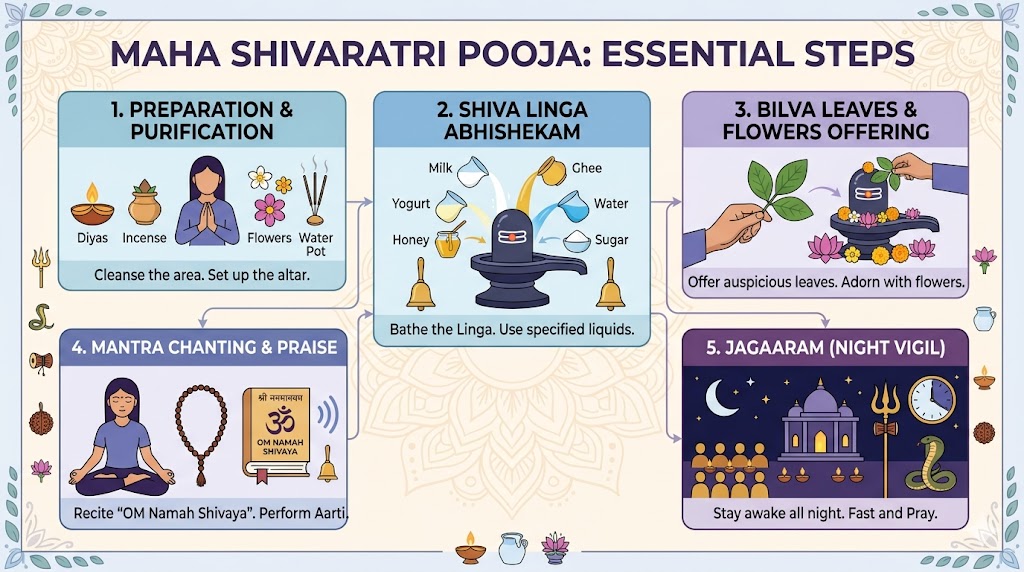
Maha Shivaratri Pooja Vidhanam Telugu is one of the most important guides for devotees who wish to perform Lord Shiva pooja with proper rituals and devotion. Maha Shivaratri is a sacred Hindu festival dedicated to Lord Shiva, observed with fasting, night vigil, and powerful mantra chanting. On this divine day, devotees perform Abhishekam, offer Bilva leaves, and follow specific pooja procedures to receive blessings for health, prosperity, and spiritual growth. Moreover, performing the pooja in the correct vidhanam ensures that every step aligns with traditional practices. Therefore, understanding the complete Maha Shivaratri Pooja Vidhanam Telugu becomes essential, especially for those performing pooja at home. In addition, Telugu instructions make it easier for devotees to follow rituals without confusion. This detailed guide covers step-by-step pooja process, samagri list, mantras, fasting rules, timings, and important tips. Whether you are a beginner or experienced devotee, this guide will help you perform Maha Shivaratri pooja with complete devotion and accuracy.
Maha Shivaratri Pooja Vidhanam Telugu
Maha Shivaratri Pooja Vidhanam Telugu – Complete Step-by-Step Process
The Maha Shivaratri Pooja Vidhanam Telugu follows a sacred sequence of rituals that should be performed with devotion and discipline.
1. Early Morning Preparation (Pratahkaalam)
First, wake up during Brahma Muhurtham (around 4:00 AM to 5:00 AM). Take a head bath and wear clean traditional clothes. Clean the pooja area thoroughly and place a Shiva Lingam or Lord Shiva idol on a clean platform.
Moreover, decorate the pooja place with rangoli and flowers to create a divine atmosphere.
2. Sankalpam (Taking a Sacred Resolution)
Sit facing east or north and take Sankalpam by stating your name, gotram (if known), and purpose of performing the pooja.
For example, you may pray for health, success, peace, or spiritual upliftment.
Therefore, Sankalpam sets your intention and connects you spiritually with the ritual.
3. Ganesh Pooja (Removing Obstacles)
Before starting Shiva pooja, worship Lord Ganesha.
- Offer flowers and turmeric
- Chant “Om Gan Ganapataye Namah”
- Light a diya and incense sticks
This step ensures that the pooja proceeds without any obstacles.
4. Kalasha Sthapana
Place a kalash (pot filled with water) near the Shiva Lingam.
- Decorate with mango leaves
- Place a coconut on top
- Apply turmeric and kumkum
This represents divine presence and purity.
5. Shiva Abhishekam (Most Important Ritual)
Abhishekam is the core part of Maha Shivaratri pooja.
Perform Abhishekam using the following items in sequence:
- Water – purification
- Milk – prosperity
- Curd – strength
- Honey – sweetness
- Ghee – spiritual growth
- Sugar – happiness
- Coconut water – cleansing
While performing Abhishekam, continuously chant:
“Om Namah Shivaya”
Moreover, each offering has symbolic meaning and spiritual significance.
6. Alankaram (Decoration of Shiva Lingam)
After Abhishekam, decorate the Shiva Lingam:
- Offer Bilva (Bel) leaves (very important)
- Apply sandalwood paste
- Decorate with flowers
Bilva leaves are considered extremely sacred and dear to Lord Shiva.
7. Archana (Offering Names of Lord Shiva)
Perform Archana by chanting:
- Shiva Ashtottara Shatanamavali (108 names)
- Shiva Sahasranama (1000 names, optional)
Offer flowers or akshata (rice mixed with turmeric) with each name.
8. Naivedyam (Food Offering)
Offer simple prasadam to Lord Shiva:
- Fruits
- Coconut
- Milk
- Sweets
Avoid onion, garlic, and non-vegetarian food completely.
9. Aarti (Deeparadhana)
Perform Aarti using camphor or diya.
- Rotate the lamp in circular motion
- Ring bell while doing Aarti
- Chant Shiva bhajans
Therefore, Aarti marks the completion of pooja.
10. Night Vigil (Jagaran)
Maha Shivaratri is special because devotees stay awake throughout the night.
- Chant “Om Namah Shivaya”
- Listen to Shiva bhajans
- Read Shiva Puranam
Moreover, night vigil is believed to bring immense spiritual merit.
Four Prahar Pooja Method (Advanced Practice)
The night is divided into four parts (Praharas). Devotees can perform pooja in each phase.
| Prahar | Time | Ritual Focus |
|---|---|---|
| First Prahar | Evening | Basic Abhishekam |
| Second Prahar | Night | Mantra chanting |
| Third Prahar | Midnight | Special pooja |
| Fourth Prahar | Early morning | Final prayers |
Therefore, performing pooja in all four praharas is highly auspicious.
Required Pooja Samagri List
Prepare all items in advance:
- Shiva Lingam or idol
- Bilva leaves
- Milk, curd, honey, ghee
- Fruits and coconut
- Flowers
- Incense sticks and camphor
- Diya and oil
- Vibhuti (holy ash)
- Kalash and mango leaves
Thus, proper preparation ensures smooth pooja flow.
Powerful Shiva Mantras to Chant
Panchakshari Mantra
Om Namah Shivaya
Maha Mrityunjaya Mantra
Om Tryambakam Yajamahe Sugandhim Pushtivardhanam
Urvarukamiva Bandhanan Mrityor Mukshiya Maamritat
Lingashtakam (Optional)
A powerful hymn praising Shiva Lingam.
Chanting these mantras increases spiritual energy and focus.
Fasting Rules for Maha Shivaratri
Fasting plays a crucial role in Maha Shivaratri observance.
Types of Fasting:
- Nirjala (no water) – strict fasting
- Phalaharam – fruits and milk
- Partial fasting – light sattvic food
Rules to Follow:
- Avoid grains and heavy food
- Maintain purity of thoughts
- Break fast next day after pooja
Moreover, fasting helps in detoxifying body and mind.
Spiritual Benefits of Maha Shivaratri Pooja
Performing Maha Shivaratri pooja offers powerful benefits:
- Removes negative karma
- Brings peace and prosperity
- Improves mental clarity
- Strengthens devotion
- Helps in achieving desires
Therefore, devotees consider this day extremely powerful.
Common Mistakes to Avoid
Avoid these errors while performing pooja:
- Skipping Sankalpam
- Not offering Bilva leaves
- Performing pooja without cleanliness
- Ignoring correct timings
- Breaking fast improperly
In addition, always maintain devotion and focus.
Maha Shivaratri Pooja Timings
Important pooja timings include:
- Pradosham (evening)
- Midnight (most powerful time)
- Early morning (final phase)
Therefore, performing pooja during Nishita Kaal (midnight) is highly recommended.
FAQ – Maha Shivaratri Pooja Vidhanam Telugu
1. Can I perform Maha Shivaratri pooja at home?
Yes, it can be performed easily at home with proper steps.
2. Is fasting mandatory?
Not compulsory, but highly recommended.
3. What is the most important ritual?
Abhishekam and mantra chanting.
4. Can beginners perform this pooja?
Yes, this guide is suitable for beginners.
5. What should be avoided during pooja?
Non-vegetarian food, anger, and negative thoughts.
External Official Links
https://www.tirumala.org
https://www.drikpanchang.com
Important Tips for Visitors
- Be prepared for long queues and allocate extra time for darshan during festivals.
- Check the exact festival dates on the official temple website as lunar calendar dates may shift.
- Book accommodation well in advance — rooms fill up quickly during festival season.
- Carry sufficient cash — ATMs near temple towns may run out during peak festival periods.