
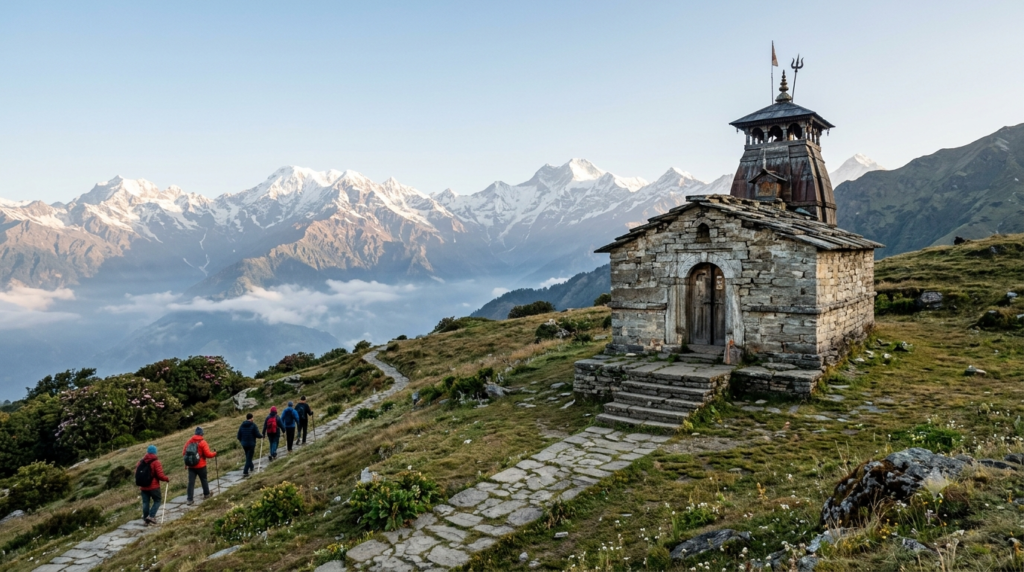
A complete Tungnath Temple darshan starts long before you fold your hands at the shrine, because this is the highest Shiva temple in the world and it sits at 3,680 metres (12,073 feet) in the Garhwal Himalayas. You reach it only on foot, after a 3.5 km climb from Chopta.
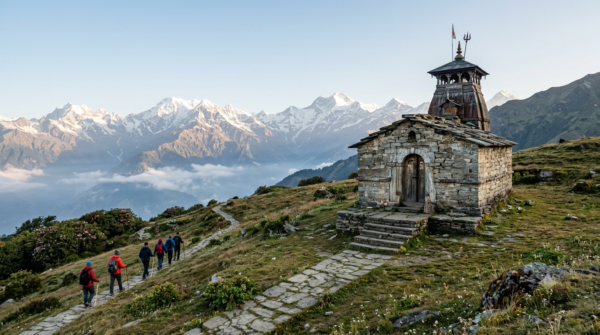
Get the timing, the season and the altitude right, and the visit rewards you richly. You gain a rare mix of devotion and mountain silence. Get them wrong, and you may find locked gates, slippery stone steps or a body that refuses the thin air.
Gokshetra is an independent pilgrimage guide. We are not affiliated with the Badrinath-Kedarnath Temple Committee or any temple trust. We also do not take bookings, donations or payments. Use the official portals linked below for reservations and official confirmations.
Tungnath Temple Darshan at a Glance
- Location: Above Chopta, Rudraprayag district, Uttarakhand.
- Altitude: 3,680 m (12,073 ft) — the world’s highest Shiva shrine.
- Trek: 3.5 km one way from Chopta, moderate, paved, 2-3 hours up.
- Entry: Free. No ticket and no online darshan booking.
- 2026 season: Opened 22 April 2026; expected to close early November.
- Winter seat: The deity moves to Makkumath from November to April.
Tungnath Temple Darshan Timings in 2026
During the open season, Tungnath Temple darshan generally runs from about 6 AM to 7 PM, with a reported afternoon break in the middle of the day. Morning aarti falls around 6 to 7 AM, and evening aarti happens near 6:30 PM. Because this is a remote high-altitude shrine, the schedule flexes with weather and the priest on duty.
So treat published timings as a guide, not a fixed railway timetable. Several travel sites list rigid slots like “6 AM to 12 PM and 3 PM to 7 PM,” yet the reality shifts day to day. Reach the temple in the morning while the trail is dry and the peaks are clear.
There are no VIP tickets and no paid fast-track queues here. The shrine itself is tiny and holds only a handful of people at once, so a short wait is normal when a group arrives together. Photography is not allowed inside the sanctum, although the exterior and the Himalayan backdrop are yours to shoot.
When Does Tungnath Temple Open and Close?
Tungnath opened for the 2026 season on 22 April 2026, the same day the Kedarnath portals opened, as decided by the Shri Badrinath-Kedarnath Temple Committee (BKTC). Many aggregator pages still show an old date of 2 May 2026. That figure was an early prediction printed before the committee’s announcement, so ignore it.
This date confusion is the single biggest planning trap for Tungnath. The opening is fixed each year around Maha Shivratri and the Baisakhi period, then confirmed by the BKTC and the Deval priests of Makkumath. Always cross-check the current year’s date on an official source before you book travel.
The closing date usually falls in the first week of November, soon after Diwali and Bhai Dooj. For 2026, the tentative closing is around 4 to 5 November, but the committee announces the exact day on Vijayadashami, so confirm it closer to your trip. After closure, priests carry the utsav murti down in a doli procession, and winter worship continues at Makkumath near Ukhimath.
The Trek to Tungnath From Chopta
Chopta is the road-head and base for the climb, sitting at roughly 2,680 m (8,790 ft). From here the trail rises 3.5 km to the temple. Most walkers finish the ascent in two to three hours, since the path is stone-paved and clearly marked for much of the way.
Trekkers rate this as one of the easiest Himalayan routes, so beginners with basic fitness manage it well. Even so, the climb is continuous and the air thins as you gain height. Take it slow, rest often, and carry water because there are only a few seasonal tea stalls along the way.
If your legs and lungs feel strong, push another 1.5 km beyond the temple to Chandrashila summit at about 4,000 m (13,123 ft). This stretch is steeper and rockier than the temple trail. The reward is a 360-degree sweep of Nanda Devi, Trishul, Chaukhamba and Kedarnath peaks, best seen at sunrise.
Planning Your Tungnath Temple Darshan
The core of any Tungnath Temple darshan is simple and free: you climb, you offer your prayers at the swayambhu Shiva shrine, and you descend. No agent, portal or phone number can “book” this darshan for you, whatever some websites claim. Anyone selling a guaranteed darshan slot is selling something that does not exist.
Tungnath is the third of the Panch Kedar, where devotees believe the arms of Lord Shiva appeared after the Mahabharata war. Local tradition holds that the Pandavas raised this shrine, and its stone architecture is over a thousand years old. Many pilgrims fold it into a wider Panch Kedar journey that also touches Kedarnath and Madhyamaheshwar.
Dress warmly and modestly, even in summer, because the wind at the top bites hard. Carry a light offering if you wish, though the mountain and the moment matter more than any elaborate ritual. Keep the shrine and the meadows clean, since this is a fragile alpine zone inside a wildlife sanctuary.
How to Reach Chopta and Tungnath
The nearest railhead is Rishikesh, roughly 200 to 212 km away, while Haridwar adds a little more distance. The closest airport is Jolly Grant near Dehradun. From any of these points you travel by road to Chopta, then trek the final 3.5 km on foot.
The usual driving route runs Rishikesh to Devprayag to Rudraprayag to Ukhimath and up to Chopta. The full drive covers about 212 km and takes eight to nine hours, depending on road and weather. Shared jeeps and taxis also run from Ukhimath, Rudraprayag and Gopeshwar during the season.
Private taxis give the most comfort, especially for families or elderly pilgrims. State transport buses reach Ukhimath and nearby towns, after which you switch to a local shared vehicle. Start early from Rishikesh so that you cross the mountain roads in daylight.
Where to Stay Near Tungnath
There is no hotel at the temple itself, and options right at the top are very limited. A small Mandir Committee guesthouse near the shrine offers a few basic rooms on a first-come basis, with no advance booking. Most pilgrims instead stay at Chopta and start the climb before dawn.
Chopta has guesthouses, lodges and tented camps that open through the trekking season. For more comfort, Sari village, Ukhimath and Guptkashi offer hotels and GMVN rest houses at lower altitude. Ukhimath also works well as a warmer base if you are travelling with children or older relatives.
Book your Chopta stay ahead during peak weekends and festival periods, because rooms fill fast. Rates rise sharply in May, June and October, so plan early if you want a specific property. Since Gokshetra takes no bookings, arrange your room directly with the property or through the official Uttarakhand Tourism channels.
Costs to Budget for Tungnath Temple Darshan
The darshan is free, yet the trip carries a few real costs you should plan for. Chopta lies inside the Kedarnath Wildlife Sanctuary, so a conservation entry fee applies at the check post. The figures below are indicative and change year to year, so confirm each one on the spot.
| Item | Indicative cost | Notes |
|---|---|---|
| Temple darshan | Free | No ticket, no online booking |
| Wildlife sanctuary entry | Around ₹150 per person | Levied at the Chopta check post; confirm current rate |
| Mule (return) | ₹800 to ₹1,500 | For those who cannot trek; negotiate at Chopta |
| Porter (bags) | ₹500 to ₹800 | To carry luggage up the trail |
| Chopta camp or lodge | ₹800 to ₹2,500 a night | Varies by season and property |
A mule return trip from Chopta to the temple usually costs somewhere between ₹800 and ₹1,500. Porters who carry bags charge roughly ₹500 to ₹800. Because these rates depend on demand and weather, agree on the price before you start walking.
Health and Safety at High Altitude
A safe Tungnath Temple darshan depends as much on your body as on the weather. At 3,680 m, the air holds far less oxygen than the plains, so acute mountain sickness is a genuine risk. Watch for headache, nausea, dizziness or breathlessness, and stop climbing if these appear. Spend a night at Chopta or Ukhimath first, since even one night of acclimatisation helps your body adjust.
Walk slowly, drink water often, and eat light before the trek. If you have a heart condition, breathing trouble, or you are pregnant or elderly, talk to your doctor before attempting the climb. This safety note is not caution for its own sake, because people do fall ill on high Himalayan trails every season.
Weather turns fast up here, so pack a windcheater, rain gear and warm layers even on a clear morning. Wear proper trekking shoes, as the stone path grows slippery when wet or snow-dusted. Carry a power bank, a torch and any personal medicines, since there is no charging point or medical facility at the top.
Avoid the monsoon months of July to mid-September, when landslides hit the Rishikesh to Chopta road. Faith and ritual bring comfort on this journey. Yet they are no substitute for medical care, so never ignore warning signs to “finish the darshan.” Turn back if your body says so, because the mountain will wait for another year.
Best Time to Visit Tungnath
Two clear windows stand out for a comfortable Tungnath Temple darshan. May and June bring pleasant days, blooming rhododendrons and easy trail access soon after the temple opens. Late September to early November offers crisp air and the sharpest views of the snow peaks.
Photographers often prefer the post-monsoon weeks, when the sky clears and the horizon fills with white summits. Avoid peak monsoon, since clouds hide the mountains and the path stays wet and risky. Winter turns the whole region to deep snow, and only experienced trekkers with guides and gear should attempt it once the temple has closed.
Tungnath Temple Darshan Tips Most Guides Miss
Start your climb by 7 AM so you reach the shrine before the midday crowd and the afternoon mist. An early start also gives you time to continue to Chandrashila for the summit view. Weekdays stay far quieter than weekends, when day-trippers from nearby towns fill the trail.
Carry enough cash, because card machines and reliable mobile networks vanish once you leave the main road. Keep small notes handy for tea stalls, mule handlers and the sanctuary fee. Rent trekking poles or waterproof shoes at Chopta if you did not bring your own.
Do not chase a fixed “evening darshan slot,” since the priest may wind up early in bad weather. Aim to be up and down in daylight, especially in the shoulder months when clouds roll in by afternoon. If you plan a Panch Kedar circuit, read our Vaishno Devi mountain-shrine guide for a sense of how to pace a trek-based pilgrimage.
Nearby Places Worth Your Time
Chandrashila summit tops most lists, just 1.5 km above the temple, famous for its sunrise panorama. Deoria Tal, a mirror-clear lake near Sari village, reflects the Chaukhamba peaks and makes an easy add-on trek. Chopta’s meadows themselves invite a slow evening walk before you head home.
The Kanchula Korak Musk Deer Sanctuary sits close by for wildlife and birdwatchers. Devotees on a wider Shiva pilgrimage often pair Tungnath with other shrines across the country. Our guides to Kashi Vishwanath and Trayambakeshwar cover two more revered Shiva temples if you are planning a longer spiritual journey.
Before You Go
A rewarding Tungnath Temple darshan comes down to three things: the right season, an early start, and respect for the altitude. Confirm the current opening and closing dates with the BKTC, since these shift every year and old dates still circulate widely. Reach Chopta a day early, sleep at a lower altitude, and climb in the cool morning hours.
Treat the free darshan and the mountain with equal care, and skip anyone who offers to “book” your visit for a fee. Carry cash, warm layers and your own medicines, and listen to your body on the way up. Do that, and the world’s highest Shiva shrine will give you a memory that lasts a lifetime.
Frequently Asked Questions
Is there an entry fee for Tungnath Temple darshan?
No, darshan at Tungnath is free and needs no ticket. You may pay a small wildlife sanctuary conservation fee at the Chopta check post, since the area lies inside a protected forest. There is no online darshan booking of any kind.
What are the Tungnath Temple darshan timings?
The temple generally opens around 6 AM and closes by about 7 PM during the season, with a reported afternoon break. Morning and evening aarti are the highlights. Because this is a remote high shrine, timings shift with weather, so reach in the morning.
When did Tungnath Temple open in 2026?
Tungnath opened for the 2026 pilgrimage season on 22 April 2026, alongside Kedarnath. Some websites still list an outdated 2 May date, which was a pre-announcement prediction. The temple is expected to close in the first week of November 2026.
How long is the trek to Tungnath?
The trek is about 3.5 km one way from Chopta and takes two to three hours to climb. The stone-paved path is moderate and suits beginners with basic fitness. Chandrashila summit lies a steeper 1.5 km beyond the temple.
Is the Tungnath trek safe for beginners and families?
Yes, most fit adults and older children manage the climb, since it ranks among the easier Himalayan treks. Still, the high altitude demands slow walking and good hydration. Elderly pilgrims and anyone with a heart or lung condition should consult a doctor first.
Where does the deity go in winter?
When the temple closes for winter, priests move the utsav murti of Lord Tungnath down to Makkumath near Ukhimath. Worship continues there through the snow-bound months. The shrine reopens the following spring, usually in late April or early May.
Can I visit Tungnath during the monsoon?
You can, but it is not advised, because landslides often block the Rishikesh to Chopta road in July and August. Rain also makes the stone trail slippery and hides the mountain views. Post-monsoon October offers far safer and clearer conditions.
Do I need to register for Tungnath like the Char Dham?
Tungnath itself does not require the Char Dham Yatra registration, though rules can change season to season. If you combine it with Kedarnath, that shrine does need registration on the official Uttarakhand portal. Always confirm the latest requirement before you travel.