
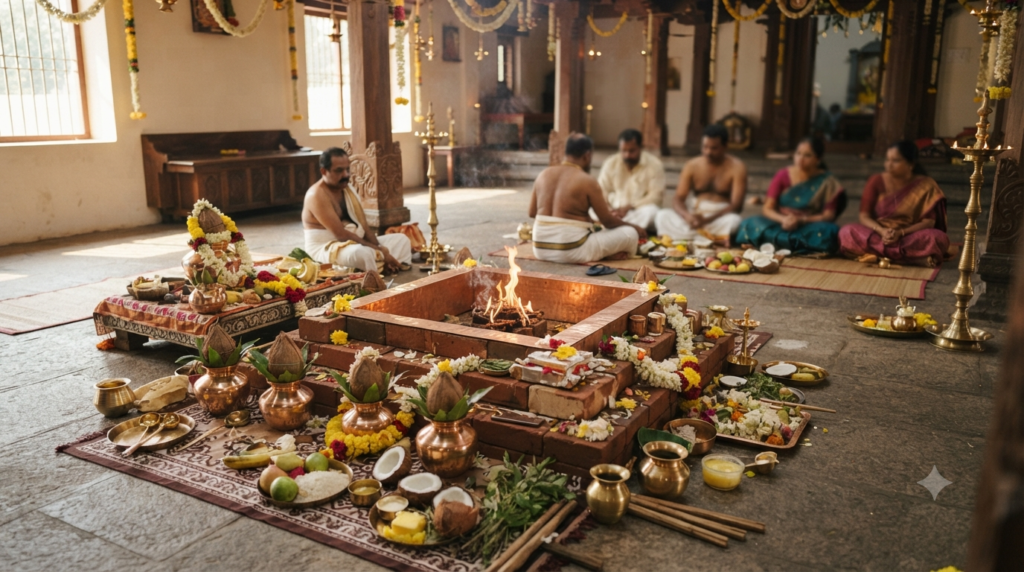
Ayush Homam Procedure is a Vedic fire ritual used by Hindu families to pray for long life and well-being. Families often choose it for birthdays and other milestones. The sequence varies because the priest may follow a particular Vedic shakha, sampradaya, family custom, or temple paddhati. This guide explains the common structure, pooja items, Ayushya Suktam, cost planning, and the details to confirm before fixing the ceremony.
Go Kshetra is an independent guide and is not affiliated with any temple, mutt, priestly organisation, or booking service. We do not accept pooja bookings, donations, or payments. Ritual benefits described here are matters of Hindu faith and tradition, not medical outcomes. If illness or recovery prompts the ceremony, continue professional medical care.
Ayush Homam Procedure at a Glance
The ritual usually moves through preparation, sankalpam, deity invocation, Vedic chanting, fire offerings, poornahuti, and blessings. However, not every priest will insert the same supporting poojas. Families should therefore use online checklists only for planning. The officiating priest’s own list should guide the final preparation.
| Part | What usually happens | What to confirm |
|---|---|---|
| Date | Birthday, janma nakshatra day, or another accepted muhurtham | Local panchanga and priest’s guidance |
| Opening | Purification, sankalpam, and usually Ganapathi worship | Family names, gotra, and nakshatra details |
| Main worship | Ayushya-related invocation and Vedic recitation | Which sukta and supporting mantras are used |
| Homam | The priest offers ghee and prescribed materials into the fire | Exact homa dravya and quantities |
| Closing | Poornahuti, blessings, teertham or prasadam | Temple or family custom |
A useful correction is important here. There is no single India-wide tariff, fixed duration, or universal shopping list for Ayush Homam. Temple service fees, home-ritual costs, priest dakshina, and material requirements can differ sharply, so verify them at the specific venue.
What Is Ayush Homam?
Ayush Homam, also written as Ayushya Homam or Ayushya Homa, centres on prayers for ayus, meaning life or longevity. The Ayush Homam Procedure brings those prayers into a structured sequence of worship, recitation, and fire offerings. Families commonly arrange it for a child’s birthday, a janma nakshatra observance, or an elder’s milestone. They may also choose another family occasion for well-being prayers.
Traditional institutions clearly recognise Ayushya Homam as a distinct homa. For example, the Sri Sringeri Sharada Peetham’s Mumbai branch lists Ayushya Homa among its homas. Kanchi Kamakoti Peetam has also included Ayushya Homam in recorded jayanthi programmes. These examples support the ritual’s established place in living Vedic practice, although they do not create one mandatory sequence for every family.
Why Do Families Perform Ayush Homam?
Families perform the ritual as a devotional prayer for longevity, strength, protection, and auspiciousness. Many also connect it with a child’s first birthday or later birth-star observances. The sankalpam can include the person’s name and birth details.
These meanings belong to religious tradition. Do not describe them as proof that a homam prevents disease, improves immunity, cures chronic illness, or guarantees a longer life. If someone is unwell, the ritual can accompany treatment as a faith practice. However, it should never replace medical advice, medicines, tests, or emergency care.
Ayush Homam Procedure: Step-by-Step
The following Ayush Homam Procedure is a practical framework rather than a mantra-by-mantra script. The priest may change the order, add rites, or omit supporting elements according to tradition. That variation is normal, so ask for the priest’s final sequence before purchasing materials.
- Purification and preparation: The family bathes, wears clean clothes, and prepares the pooja area. The priest may begin with achamanam, punyahavachanam, or another purification rite.
- Sankalpam: The priest states the beneficiary’s name, gotra, nakshatra, and purpose. Because wording varies, provide the correct family details in advance.
- Ganapathi worship: Many traditions begin with Ganapathi pooja so the rite proceeds without obstacles. Some lineages may include additional preliminary worship.
- Kalasha and deity invocation: The priest may establish and worship a kalasha. The paddhati may call for Ayur or Ayushya-related devatas, Mrityunjaya, Navagrahas, nakshatra devata, or other deities.
- Agni establishment: The priest prepares the homa kunda and establishes the sacred fire. The priest uses samidha and ghee as required.
- Ayushya recitation and homam: The priest recites Ayushya Suktam or the prescribed ayushya mantras while making offerings into the fire. The priest may add other mantras.
- Poornahuti: The principal final offering marks the completion of the homa portion. The priest then performs the closing rites required by that tradition.
- Ashirvadam and prasadam: Elders and priests bless the beneficiary. The family may then receive teertham, akshata, raksha, or prasadam according to local custom.
How the Ayush Homam Procedure Varies by Tradition
The Ayush Homam Procedure can differ because Vedic recitation is preserved through different schools and regional traditions. Some priests include Navagraha worship, nakshatra mantras, Mrityunjaya japa, Dhanvantari prayers, or extra kalasha rites. Others keep the ceremony focused on the ayushya prayoga used in their lineage.
Therefore, treat phrases such as “the only authentic sequence” carefully. A trustworthy priest should be able to tell you which paddhati they follow and which items are essential. The Vedic Heritage Portal is an initiative under India’s Ministry of Culture. It helps readers understand the wider textual traditions behind Vedic recitation.
Ayush Homam Pooja Items List
The item list for the Ayush Homam Procedure should come from the priest who will actually perform the ceremony. Still, most families can begin with the following categories because they appear across common homa preparations. Do not buy large quantities until the officiant confirms the final list.
| Category | Common items | Planning note |
|---|---|---|
| Basic pooja | Turmeric, kumkum, sandalwood, akshata, flowers | Flower type and quantity vary |
| Kalasha | Kalasha vessel, water, mango leaves, coconut, rice | Number of kalashas is tradition-specific |
| Homa | Homa kunda, samidha, ghee, prescribed grains or havis | Use only the dravya requested by the priest |
| Offerings | Fruits, coconut, betel leaves, betel nuts, naivedyam | Follow family and regional custom |
| Lamp and incense | Oil or ghee lamp, cotton wicks, camphor, incense | Keep fire-safety equipment nearby |
| Participant needs | Clean clothing, asana, towels, drinking water | Especially useful for children and elders |
The old version of this page gave fixed quantities such as several pounds of rice and ghee. That looks precise, but it can mislead readers. A small temple group homam and a full home ceremony may use very different quantities. Ask the priest for an exact shopping list after you fix the date and format.
Which Mantras Are Used in Ayush Homam?
In the Ayush Homam Procedure, Ayushya Suktam is one of the key texts associated with South Indian Vedic practice. A recognised text archive lists Ayushya Suktam among Yajurveda suktas, while the Vedic Heritage Portal provides broader access to Vedic samhitas, aranyakas, and recitation traditions.
The opening of a commonly transmitted Ayushya Suktam begins with “Yo Brahma Brahmana ujjahara…”. Vedic accents and pronunciation matter. Therefore, learn the full recitation from a qualified teacher or priest instead of an unaccented blog transcription.
Is the Maha Mrityunjaya Mantra the Ayushya Suktam?
No. The Maha Mrityunjaya Mantra and Ayushya Suktam are different texts. A priest may use both in one ceremony, but calling the Mrityunjaya mantra itself “the Ayushya Suktam” is inaccurate.
This distinction matters because many online guides collapse several longevity prayers into one label. If you want to follow the chant, ask which text the priest will recite. Also ask whether the ceremony includes Ayushya Suktam, Mrityunjaya japa, nakshatra mantras, or all of them.
What Is the Best Day and Time for Ayush Homam?
There is no single clock time that applies to every family in India. Many families choose the person’s janma nakshatra, birthday, first-birthday observance, or another muhurtham accepted by their priest. The exact date can change by location because panchanga calculations depend on local sunrise and other factors.
Morning ceremonies are common because many temples and priests schedule homas then. However, “Brahma Muhurtham is mandatory” is too strong unless your priest or tradition specifically requires it. Confirm the date, reporting time, and expected duration before inviting relatives or ordering food.
How Much Does Ayush Homam Cost?
There is no reliable national Ayush Homam Procedure price because each venue and ritual format uses its own fee structure. The old page mixed temple tickets, private priest services, materials, and packages into broad ₹2,000 to ₹30,000 bands. Those bands did not show what any one ceremony actually costs.
Official venue fees show why a single national range is misleading. The live Tamil Nadu Hindu Religious and Charitable Endowments service list for Arulmigu Adivyadhihara Bagtha Anjaneyar Temple, Nanganallur lists Ayush Homam at ₹200, while the Sri Sringeri Math Mumbai branch lists Ayushya Homa at ₹600. These are venue-specific service listings, not universal home-ceremony prices.
For a home ceremony, ask for a written cost split. It should separate priest dakshina, travel, samagri, vessels, food, and optional rites. This makes comparison easier and prevents a marketplace package from being mistaken for a temple’s official fee.
Temple or Home: Which Is Better?
Neither setting is automatically more valid. A temple can be simpler because the venue may already provide the fire area, priest, and some materials. A home ceremony can allow more family participation, but it requires space, ventilation, fire safety, and clearer planning.
If you are choosing a temple, confirm what its ticket includes before paying. Go Kshetra’s separate guide to Ayush Homam at Nanganallur Anjaneyar Temple shows how one official temple fee can differ greatly from private package prices. Families planning a longevity milestone can also review the site’s 60th-year marriage temple guide for the broader context of ayushya-related rites.
Safety During a Home Homam
A homa uses an open flame and produces smoke, so basic safety matters. Use a stable fireproof kunda, keep loose cloth away from the flame, and maintain ventilation. Keep young children at a safe distance unless an adult is directly supervising them.
People with asthma, breathing disorders, smoke sensitivity, or recent illness may need to sit farther away or limit exposure. If symptoms are significant, follow medical advice. Also keep water or appropriate fire-safety equipment nearby, especially in apartments or enclosed halls.
Common Mistakes to Avoid
- Buying a generic kit before speaking to the priest: you may end up with the wrong quantities or unnecessary items.
- Treating one online sequence as universal: the ritual can vary by Vedic school, region, and family tradition.
- Confusing Ayushya Suktam with the Maha Mrityunjaya Mantra: they are distinct, even when both appear in one ceremony.
- Believing a quoted package price is an official temple fee: always separate temple charges from private service costs.
- Making medical promises: longevity and health benefits are devotional beliefs, not guaranteed clinical effects.
- Ignoring fire and smoke safety: home ceremonies need ventilation, supervision, and a stable ritual area.
What If the Preferred Date, Priest, or Temple Slot Is Unavailable?
An Ayush Homam booking or preferred muhurtham is never guaranteed until the priest or temple confirms it. If the chosen janma nakshatra slot is unavailable, ask the officiating priest for the next acceptable date under your family tradition. Do not invent a substitute muhurtham from a generic online calendar.
If a temple cannot accommodate the ceremony, ask for another date. You can also ask whether your family may perform it at home with a qualified priest. If a required item is unavailable, do not substitute it on your own. The priest can tell you whether that paddhati permits a replacement.
Ayush Homam Procedure Checklist Before the Ceremony
Use this Ayush Homam Procedure checklist only after the priest has confirmed the ritual format. It keeps logistics separate from the spiritual details. Therefore, the family can focus on the ceremony instead of last-minute shopping.
- Confirm the date, reporting time, expected duration, and venue.
- Give the priest the correct name, gotra, and nakshatra details.
- Ask whether the priest includes Ganapathi, Navagraha, Nakshatra, Mrityunjaya, or other supporting rites.
- Get the final pooja-item list and quantities directly from the officiant.
- Confirm which costs are temple fees, priest dakshina, materials, travel, and optional extras.
- Arrange ventilation and fire safety if the homam is at home.
- Plan simple food and water for children, elders, and guests after the ritual.
Before You Fix the Ceremony
The best Ayush Homam plan is not the one with the longest shopping list. It is the one that matches the family’s tradition, uses the correct Vedic recitation, and follows a clear priest-approved sequence. Therefore, confirm the paddhati first, then buy materials and finalise the schedule.
Most importantly, keep faith claims in their proper place. Families may perform the ritual with deep devotion for long life and well-being, while medical care handles medical problems. That distinction makes the guide both more respectful and more trustworthy.
Frequently Asked Questions
What is the main purpose of Ayush Homam?
Ayush Homam is traditionally performed as a prayer for long life, well-being, protection, and auspiciousness. Families often connect it with birthdays or birth-star observances. These are religious intentions, so do not present them as guaranteed medical effects.
Why is Ayush Homam performed on a child’s first birthday?
Many families use the first birthday or the corresponding janma nakshatra as a major occasion for longevity prayers. However, customs vary by community and family. Ask the officiating priest which day your tradition follows.
Can adults and elders perform Ayush Homam?
Yes. Ayushya Homam is not limited to babies. Traditional institutions also conduct it for adult birthdays, jayanthis, and longevity milestones. Therefore, families may arrange it for adults or elders according to custom.
Can Ayush Homam be performed at home?
Yes, many families perform the ceremony at home with a qualified priest and a suitable homa area. However, the room needs ventilation and safe handling of the sacred fire. Also check apartment rules before lighting a homa indoors.
Which mantra is central to Ayush Homam?
Ayushya Suktam is closely associated with Ayushya Homam in several South Indian Vedic traditions. A priest may also include Maha Mrityunjaya, Dhanvantari, nakshatra, or other mantras. The exact recitation depends on the priest’s paddhati.
Is the Maha Mrityunjaya Mantra the same as Ayushya Suktam?
No. They are separate Vedic or Vedic-associated recitations with distinct textual identities. They may appear together in a ceremony, but do not label one as the other.
How long does the Ayush Homam Procedure take?
There is no universal duration. Supporting poojas, japa repetitions, temple schedules, and family customs can all change the length. Ask the priest for the expected start and finish time after you fix the ritual plan.
How much does Ayush Homam cost?
Costs depend on the venue and the items or services it includes. Some official temple service listings cost only a few hundred rupees. A home ceremony may add separate priest, travel, material, and food costs. Always compare like with like.
Does Ayush Homam cure illness or improve immunity?
A ritual cannot guarantee a medical cure or stronger immunity. Hindu families may perform Ayush Homam as a faith practice for health and longevity prayers. However, qualified healthcare professionals should handle diagnosis and treatment.