
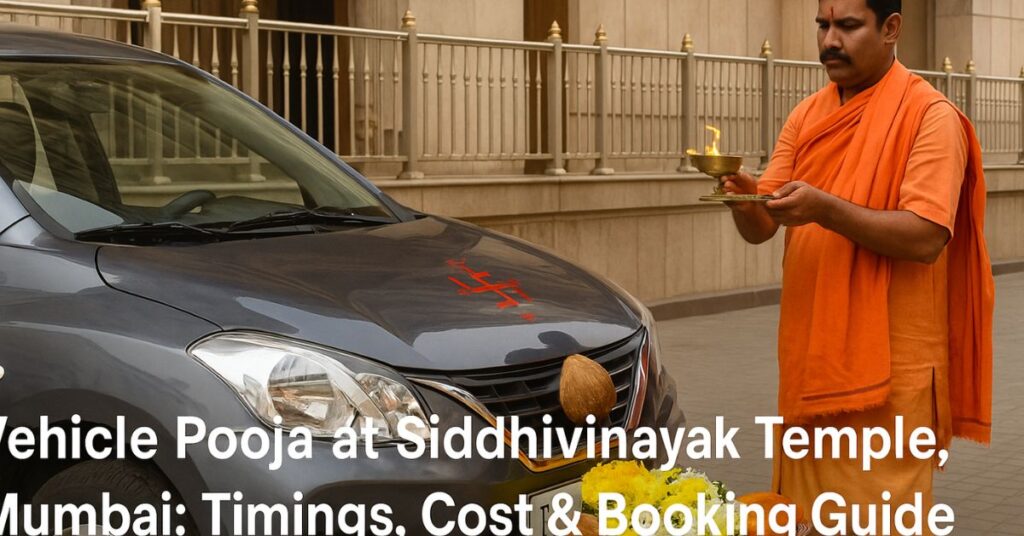
Planning a Vehicle Pooja at Siddhivinayak Temple in Mumbai? Here’s a detailed guide to timings, cost, booking procedure and what you should know for a smooth pooja.
Key Information at a Glance
- Timings: to go)
FAQs covering common queriesThe majestic Siddhivinayak Temple, Mum
- Entry/Ticket: details
Step-by-step booking and arrival process
What happens during the p - Contact: the temple directly in advance
Brief Summary
- Overview of the vehicle pooja tradition at the temple
- Typical timings and cost details
- Step-by-step booking and arrival process
- What happens during the pooja itself
- Things to know (vehicle cleanliness, items to bring, best time to go)
- FAQs covering common queries
The majestic Siddhivinayak Temple, Mumbai draws devotees from across India, and one of its cherished rituals is the vehicle pooja — invoking blessings for safety, peace and smooth journeys for your vehicle and its passengers.
What is the Vehicle Pooja?
The vehicle pooja is a special ritual carried out for your vehicle — whether a two-wheeler or four-wheeler — where the deity (Lord Ganesha) is invoked for protection, safe travel and trouble-free operation. The ceremony includes offerings like flowers, coconut, sweets, holy water sprinkling and an aarti.
This tradition allows vehicle-owners to symbolically begin their journey under divine guidance.
Timings
The vehicle pooja at the Siddhivinayak Temple takes place during the temple’s normal operational hours. Since these may change on festival days or special occasions, it is strongly recommended to check the official temple website or contact the temple directly in advance.
Typically, early mornings and weekdays tend to be less crowded, giving a more peaceful experience.
Cost
The cost for performing a vehicle pooja at the temple is described as nominal, enabling most devotees to avail of it without heavy expense. That said, rates may vary over time (depending on the temple administration) so verifying at the time of booking is wise.
Booking & Arrival Procedure
Here’s a step-by-step guide:
Step 1: Contact the Temple — Before visiting, call the temple’s helpdesk or check the website for any booking requirement or special instructions.
Step 2: Arrive at the Designated Area — On arrival, ask the security or reception for the vehicle-pooja zone. The temple has a designated space for this.
Step 3: Complete Formalities — Fill any required form (vehicle details, owner details), pay the applicable cost and get queued for the pooja.
What Happens During the Pooja
- The vehicle is parked in the designated area, and the devotee participates in preliminary rituals (cleansing, offerings).
- A priest chants mantras invoking Lord Ganesha, and speaks blessings over the vehicle.
- Offerings such as flowers, coconut, sweets are presented.
- The pooja concludes with an aarti, sprinkling of holy water over the vehicle, and a vermilion mark (tilak) applied on the vehicle as a sign of divine protection.
Things to Know Before You Go
- Clean your vehicle: Bringing a clean vehicle shows respect and makes for better photographs.
- Bring essential items: Although many items are provided, carrying fresh flowers, coconut and sweets can make the ritual more personal.
- Choose an off-peak time: Early morning or a weekday tends to be less crowded and more peaceful.
- Any vehicle type allowed: Bikes, cars or other registered vehicles are usually eligible (but check with the temple for any specific restrictions).
- Advance booking optional but wise: While not always mandatory, checking ahead prevents disappointment especially on busy days.
7. Frequently Asked Questions (FAQ)
Q: Can any type of vehicle undergo the pooja?
Yes — typically all types of vehicles (two-wheelers, four-wheelers, private vehicles) are allowed.
Q: Is advanced booking necessary?
Not always, but booking or at least a phone call to check availability and procedure is recommended.
Q: How long does the vehicle pooja take?
It usually takes around 15-30 minutes depending on the number of devotees present.
Q: Is there a specific day better for the pooja?
Any day the temple is open works, but auspicious days or festivals may draw bigger crowds and thus longer waits.
Key Takeaways
- The vehicle pooja at Siddhivinayak Temple is a meaningful way to start journeys with blessings for safety and success.
- Confirm timings and cost ahead — operations may vary on festival days or due to special events.
- Arrive early, bring your vehicle cleaned, and carry basic offerings for a smooth experience.
- Booking ahead or checking with the temple helps avoid surprises.
Author: Vijaya Durga Pemmasani
Important Tips for Visitors
- Book online in advance to avoid disappointment — rooms and darshan slots fill up fast.
- Check cancellation policies before booking — most temple trusts have strict refund rules.
- Verify the official website URL carefully — many fraudulent booking sites exist.
- Keep your booking confirmation handy (print or digital) as it will be checked at entry.
Official Resources

V S Anantha Sharma is a Senior Content Researcher at Go Kshetra with over 20 years of experience in Indian archaeology, temple architecture, and Hindu pilgrimage traditions. A lifelong devotee and...
Go Kshetra covers 1,600+ Hindu temples across 28 states. Content sourced from official temple websites and first-hand visits. About our editorial process