
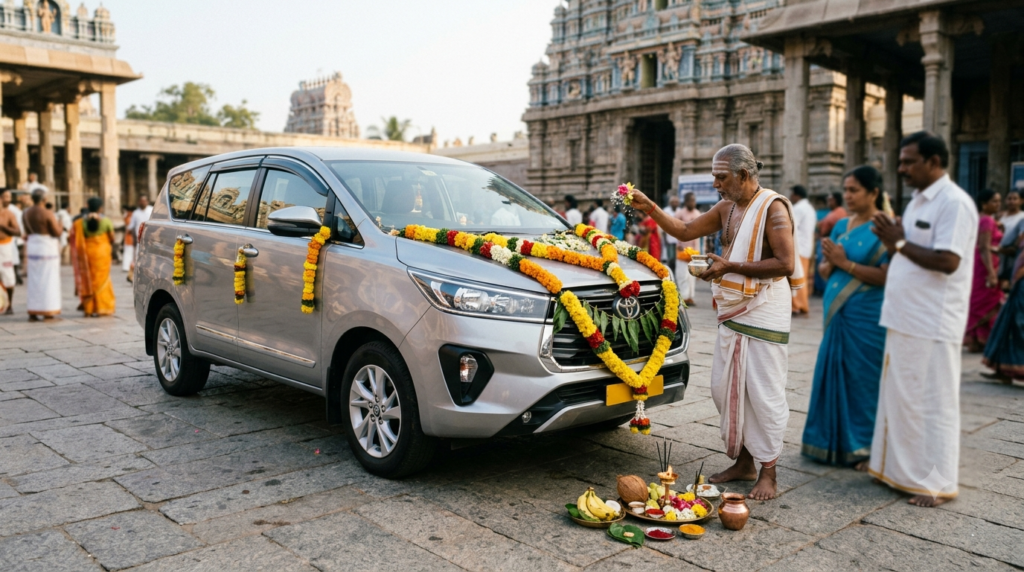
Kanipakam Vahana Pooja is a traditional vehicle blessing at Sri Varasiddhi Vinayaka Swamy Temple in Chittoor district. If you are bringing a bike, car or larger vehicle, confirm the current fee and ritual time with the temple before you travel. Older online price lists are not proof of today’s tariff, and regular darshan hours are not necessarily vehicle-pooja hours.
Independence notice: Go Kshetra is an independent pilgrimage guide. We are not affiliated with Sri Kanipaka Devasthanam or the Andhra Pradesh Endowments Department. We do not accept bookings, tickets, donations or payments. Use only the official temple or government channels for any transaction.
Kanipakam Vahana Pooja at a Glance
- Temple: Swayambhu Sri Varasiddhi Vinayaka Swamy Vari Devasthanam, Kanipakam, Chittoor district, Andhra Pradesh.
- Purpose: A Hindu prayer seeking Lord Ganesha’s blessings for a vehicle and its journeys.
- Vehicles: Older seva references mention two-wheelers, cars, autos and heavy vehicles. Check current eligibility with temple staff.
- Current fees: A current official vehicle-wise price list could not be confirmed from publicly accessible sources.
- Ritual timings: No dedicated, verified Vahana Pooja time window was found in the public daily schedule.
- Booking method: Check the official online seva list and ask the temple’s authorised counter. Neither route should be assumed to guarantee a ticket.
- Official sources: Sri Kanipaka Devasthanam and the AP Endowments Temple Management System.
The key distinction is between what older guides describe and what the temple currently confirms. That matters if you are travelling with a newly delivered vehicle or a large bus, since a wrong timing or access assumption can disrupt the whole trip.
What Is Kanipakam Vahana Pooja?
Vahana Pooja is a Hindu ritual in which devotees seek a deity’s blessing for a vehicle. At Kanipakam, worship centres on Lord Sri Varasiddhi Vinayaka Swamy, a form of Ganesha. Families may request the ritual when they buy a vehicle, begin using it or simply wish to offer prayers before travel.
The details can vary with local practice. A vehicle blessing may involve prayers, turmeric, kumkum, flowers, a coconut and harathi, the ritual offering of light. However, the temple’s present public pages do not confirm a fixed list of materials included with each vehicle ticket.
Devotees regard this as a religious observance, not a mechanical inspection or a promise of accident-free travel. Maintain your vehicle properly, obey traffic rules and use a helmet or seat belt as appropriate.
Kanipakam Vahana Pooja Fees by Vehicle Type
The current official Kanipakam Vahana Pooja fee for each vehicle class could not be established from the accessible public temple pages. Several older guides quote rupee amounts, but their lists are not fully consistent. Therefore, this page does not label any historical rate as a current or verified ticket price.
| Vehicle category | Current verified fee | What to confirm |
|---|---|---|
| Bike or scooter | Not publicly confirmed | Current two-wheeler ticket rate |
| Auto or three-wheeler | Not publicly confirmed | Whether it shares a tariff with two-wheelers |
| Car, jeep or van | Not publicly confirmed | Applicable four-wheeler category and rate |
| Bus, lorry or larger vehicle | Not publicly confirmed | Heavy-vehicle eligibility, fee and access route |
You may see ₹50, ₹125 and ₹150 in older online tables. Another historical listing uses a different four-wheeler figure. These numbers show why copying an old tariff into a new guide would be misleading. A flat ₹500 charge is also not established as the universal vehicle-pooja price.
Before paying, ask the authorised temple counter for the vehicle category, amount and official receipt. If staff direct you to an online channel, check that the site belongs to the Devasthanam or Andhra Pradesh Endowments Department. The displayed official charge takes priority over any blog table.
Kanipakam Vahana Pooja Timings: What Is Known?
The temple publishes a daily schedule for darshan and several named sevas. Yet that schedule does not clearly publish a separate Kanipakam Vahana Pooja window in the accessible public information. As a result, it is unsafe to describe the blessing as available throughout every hour the temple opens.
Some older pages give long operating windows or several fixed ritual slots. Those claims may reflect earlier arrangements, but they do not establish today’s vehicle-pooja hours. Check the official Devasthanam website before leaving, then confirm the time at the authorised counter.
Should you arrive early for a shorter queue?
Allow spare time for vehicle access, parking, ticket enquiries and the ritual itself. An earlier arrival may make travel planning easier, but no specific hour guarantees a shorter queue. Crowd size, staffing and festival arrangements can all affect the day’s waiting time.
If your journey involves another booked seva, leave a generous gap. Do not assume a brief pooja automatically means a brief total visit. The queue, reporting point and allowed vehicle movement may take longer than the prayer.
Kanipakam Vahana Pooja Booking: Online or Counter?
The Sri Kanipaka Devasthanam website offers online booking categories, including Pratyaksha Seva for rituals attended in person. However, a general online-seva facility does not confirm that Vahana Pooja is listed for every date. The publicly visible pages also do not establish that this vehicle ritual is exclusively counter-only.
For Kanipakam Vahana Pooja, treat the booking route as a question to check rather than a fixed promise. Use the temple’s own system when the ritual appears there. Otherwise, ask the authorised temple counter about current same-day arrangements before making any payment.
How to check the correct ticket procedure
- Visit the official Sri Kanipaka Devasthanam website directly rather than following an agent’s payment link.
- Open its official online booking area and check the available Pratyaksha Seva options for your intended date.
- Look for a vehicle-blessing entry. If it is absent, do not assume an online ticket exists or that the ritual has stopped permanently.
- At Kanipakam, ask the authorised seva counter where vehicle-pooja enquiries and tickets are currently handled.
- Confirm the vehicle category, price, reporting location, material requirements and accepted payment method.
- Pay only through the temple’s approved channel. Retain any official receipt or booking confirmation.
- Follow staff directions before moving your vehicle to the assigned area.
This is a practical verification sequence, not a claim that all seven steps form a formally published temple procedure. The exact counter location and ticket method can change. Therefore, on-site directions from authorised staff must come first.
Where Do You Take the Vehicle?
Older descriptions mention a separate vehicle-pooja area near the temple. However, the current public official site does not provide a clear reporting map for this ritual. Do not drive towards a temple entrance or restricted lane based solely on an old blog’s directions.
Stop at a lawful parking or holding point and ask authorised personnel where your vehicle category should report. A bike and a bus may need different movement arrangements. If staff ask you to wait, keep the road clear for pedestrians, emergency access and other vehicles.
Large-vehicle drivers should confirm access before entering crowded approaches. This is particularly useful during Ganesh Chaturthi and Brahmotsavam programmes, when vehicle circulation may change.
What to Bring for a Vehicle Blessing
Bring the vehicle you want blessed, along with the documents you normally need for lawful road use. Also carry a valid driving licence and basic identification for practical convenience. The public temple information does not establish a special document checklist for this particular pooja.
- Keep the vehicle roadworthy and allow enough fuel for parking and queue movement.
- Carry any official booking confirmation if the temple system issues one.
- Have an approved way to pay the temple’s current ticket charge once staff confirm it.
- Ask whether flowers, turmeric, kumkum, a coconut or other materials are needed before buying them.
- Bring drinking water for passengers during warm weather, while respecting restrictions inside the shrine.
- Follow temple directions for clothing, entry and where ritual materials may be used.
Do not assume that a ticket includes ritual materials or that outside vendors sell an official package. Staff can tell you what the Devasthanam currently provides. Also keep flames and loose offerings away from fuel, hot engine parts and moving traffic.
What Happens During the Vehicle Pooja?
A typical blessing involves prayers to Lord Ganesha and symbolic offerings around the vehicle. A priest may apply auspicious marks and perform harathi according to the temple’s practice. Yet the exact sequence, duration and materials are not guaranteed to match descriptions from an earlier visit.
After the ritual, follow staff instructions about clearing the area and disposing of offerings. Do not leave broken coconuts or other items on a road where they could endanger vehicles or pedestrians. For devotees who also want darshan, a separate queue or ticket condition may apply.
Kanipakam is known for its swayambhu, or self-manifested, image of Lord Vinayaka. That tradition explains why many families choose this shrine for new beginnings. The Government of India’s Utsav listing identifies the Kanipakam Devasthanam and links to its official website.
What If Kanipakam Vahana Pooja Is Unavailable?
A specific vehicle-blessing time or ticket is not guaranteed. The ritual may be absent from an online list, the authorised counter may have different instructions, or vehicle movement may face restrictions. If this happens, do not pay an intermediary who promises an instant priority slot.
- First: Recheck the official Devasthanam booking information for the correct date and ritual name.
- Next: Ask the authorised counter whether the service is operating, and whether it has another official reporting window.
- Then: If the service is not available that day, plan a later visit instead of relying on an unofficial arrangement.
You may still be able to attend ordinary darshan under its own rules, but that is not a substitute for a confirmed vehicle-pooja ticket. If the temple announces a temporary suspension, respect it. There is no verified private shortcut to an official seva.
Best Day to Plan Your Kanipakam Visit
Many devotees prefer a vehicle’s delivery day or an auspicious date chosen by their family. Tuesday, Ganesh Chaturthi and other festival periods may hold particular devotional meaning. Yet those preferences do not establish that Kanipakam Vahana Pooja operates on every such day.
For a flexible trip, a non-festival weekday may reduce the chance of major crowd-related disruptions. Even then, availability and waiting time remain uncertain. Check temple notices close to travel, especially if you must bring a heavy vehicle from another town.
Kanipakam lies near Chittoor in Andhra Pradesh. The Ministry of Tourism’s official temple listing gives travel context and identifies Chittoor as the nearby rail connection. If you are combining this visit with darshan or other sevas, see Go Kshetra’s Kanipakam temple guide and Kanipakam arjitha sevas guide.
Mistakes to Avoid When Planning the Ritual
- Calling historical fees verified: A copied price table is not a current Devasthanam tariff.
- Using darshan hours as pooja hours: These are different questions and need separate confirmation.
- Assuming counter-only or online-only booking: The live official instructions must decide the route.
- Expecting a fast queue: Neither a short prayer nor a weekday guarantees a quick visit.
- Paying for priority access: Avoid agents and private transfers, since an unofficial payment does not create an official ticket.
- Driving to an old reporting point: Follow current traffic and parking directions from temple staff.
Before You Set Out
For Kanipakam Vahana Pooja, the safest plan is to confirm three things: your vehicle’s current ticket charge, the day’s ritual timing and the authorised reporting procedure. Use the Devasthanam portal first, then clarify anything missing at the official counter. Leave time for parking and keep proof of any official payment.
This guide deliberately avoids an invented price, fixed queue estimate or guaranteed booking method. Those details can change, while careful verification protects your time and money. The prayer is an act of faith, so normal driving safety remains essential after you leave the shrine.
Kanipakam Vahana Pooja Frequently Asked Questions
What is the current Kanipakam Vahana Pooja fee?
A current official vehicle-wise price list was not confirmed in the public pages reviewed. Older third-party amounts may no longer apply. Ask the authorised temple counter or check an official live listing before paying.
What are the Kanipakam Vahana Pooja timings?
No separate, current ritual window could be verified in the publicly accessible temple schedule. General darshan hours do not prove continuous vehicle-pooja availability. Confirm the day’s specific timing with the Devasthanam.
Is Kanipakam Vahana Pooja available for online booking?
The official portal includes online booking for some in-person sevas. However, public information does not prove that vehicle pooja is available online on every date. Check the live list and use the authorised counter for clarification.
Can I simply buy a ticket at the temple counter?
Older visitor guides describe a counter process, but the current arrangement was not independently confirmed. Ask official staff whether they issue same-day vehicle-pooja tickets. Do not assume that arrival guarantees a place or a ticket.
Can I bring a car, bike, auto or lorry?
Historical seva descriptions include these vehicle groups. However, current category rules, access routes and fees need confirmation. Ask the Devasthanam before bringing a large vehicle into congested temple approaches.
Does the temple provide coconuts and flowers?
The publicly accessible information does not establish a current included-materials package for vehicle pooja. Check the temple’s instructions first, since requirements may differ. Avoid buying a large bundle based on an unverified third-party list.
How long does the vehicle-pooja queue take?
There is no verified fixed waiting time. Vehicle access, crowds and counter arrangements affect the total visit. Keep a time buffer and avoid planning a tight onward connection.
Can an older vehicle receive the blessing?
Vahana Pooja is traditionally associated with new beginnings, but devotees may also seek prayers for vehicles they already use. The current temple eligibility policy is not clearly published. Ask official staff before arranging a special trip.
Does Vahana Pooja guarantee protection from accidents?
No ritual can guarantee road safety. Devotees seek blessings as a matter of faith. Safe driving, proper maintenance, legal documents and protective equipment remain essential.