
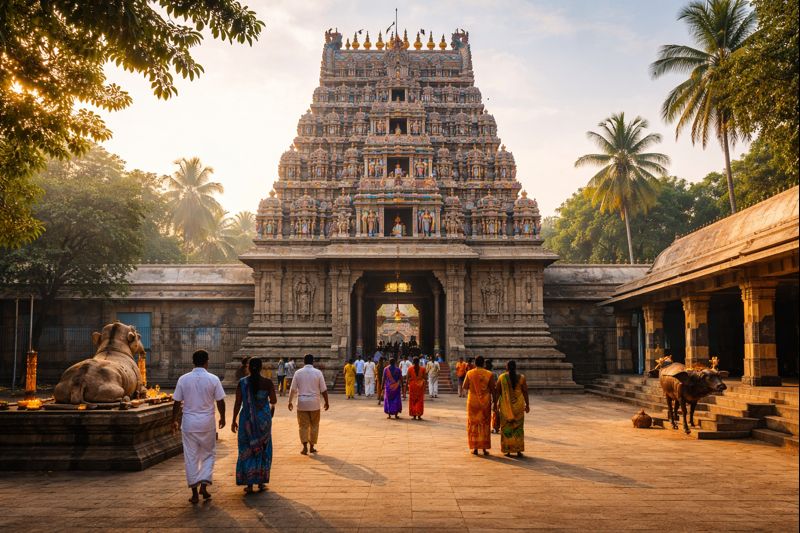
Kanjanur Agneeswarar Temple Darshan Guide – Essential Travel Insights
Kanjanur Agneeswarar Temple Darshan is a spiritually enriching ritual at one of Tamil Nadu’s sacred Navagraha temples dedicated to Lord Shiva as Agneeswarar (and associated with Sukran/Venus), nestled in the village of Kanjanur near Kumbakonam in Thanjavur District, Tamil Nadu, India. Visiting this temple offers you not only divine darshan but a profound cultural experience in the heartland of South Indian temple architecture and devotion. Wikipedia – Agniswarar Temple, Kanjanur gives authoritative background on the temple’s significance and location. For official information, visit official TTD portal.
Key Information at a Glance
- Timings: and priest’s name
- Entry/Ticket: Information There is no general entry fee for Kanjanur Agneeswarar Temple Darsha
- Contact: number; sometimes, local priests ask for minimal details
Quick Facts
| Attribute | Details |
|---|---|
| Temple Name | Sri Agneeswarar Temple (Navagraha Sukran Temple) |
| Location | Kanjanur Village, Thanjavur District, Tamil Nadu – 609804 |
| Main Deity | Agneeswarar (Lord Shiva / Sukran association) |
| Temple Timings | 6:00 AM – 12:00 PM & 4:00 PM – 9:00 PM (daily) |
| Entry Fee | Free (no general entry fee) |
| Special Pooja Booking | Paid (varies by ritual) – see below |
| Contact | +91-435-2473737 |
| Nearest Town | Kumbakonam (~18 km) |
| Festivals | Masi Magam, Arudra Darshan, Navaratri, Shivaratri etc. |
About The Temple
At the heart of the Navagraha pilgrimage circuit around Kumbakonam is the Agneeswarar Temple at Kanjanur, revered as the Sukran (Venus) sthalam. While the temple is popularly referred to as the Sukran Temple, the main idol is Lord Shiva in the form of Agneeswarar, representing divine energy that transcends individual planetary identities.
The temple’s rich history is chronicled in Tamil Saivite traditions and it is one of the 36 temples sung in the Tevaram hymns by Nayanmars such as Thirunavukkarasar — a proof to its antiquity. Understanding Kanjanur Agneeswarar Temple Darshan is essential.
How To Reach
By Air
The nearest major airport is Tiruchirappalli International Airport (TRZ), approximately 110–120 km from Kanjanur. From the airport, you can hire a taxi or board a bus to Kumbakonam and then proceed to Kanjanur by road.
By Train
The closest railway station is Kumbakonam Railway Station, about 18 km away. Trains connect Kumbakonam to major cities like Chennai, Tiruchirappalli, and Madurai. From Kumbakonam, you can take an auto-rickshaw, taxi, or bus to reach the temple.
By Road
Kanjanur is well connected via road from Kumbakonam and nearby towns. Regular buses operate between Kumbakonam and Kanjanur. If you’re self-driving or on a road trip, the temple is easy to access off the Kumbakonam-Aduthurai Road. The road process from Kumbakonam takes approximately 30–40 minutes depending on traffic. This relates to Kanjanur Agneeswarar Temple Darshan.
Booking And Ticket Information
There is no general entry fee for Kanjanur Agneeswarar Temple Darshan — devotees are welcome to enter the temple free of charge.
Special Pooja Bookings
While general darshan is free, specific poojas and homams have associated fees. I confirmed these costs from pilgrimage info listings which are representative of current practices (always confirm locally closer to your visit date):
- Sukran Abhishekam – ₹500
- Homam (Family Well-Being) – ₹5,000
- Shankabhishekam – ₹7,500
- 108 Kalasha Pooja – ₹20,000
If you want to book one of these rituals, here’s a simple step-by-step approach I used when I visited: Learn more about Kanjanur Agneeswarar Temple Darshan.
- Reach the temple reception desk (usually near the main entrance) early in the morning before darshan lines build up.
- Mention the specific pooja you want (for example, Homam for family welfare).
- Provide your name and contact number; sometimes, local priests ask for minimal details.
- Pay the fee in cash as most temples in this region do not accept digital payments.
- Collect your receipt and pooja token; this will include the timing and priest’s name.
Note: There is no widely published online booking portal; most arrangements are done in person or possibly through local travel agents in Kumbakonam. I recommend arriving early to get your slot confirmed. What surprised me was how smoothly the temple staff handled bookings even on busy days like weekends and festival seasons.
Insider Tips From My Visit
During my visit to Kanjanur Agneeswarar Temple Darshan, I learned a few practical tips that will help you have a more peaceful experience:
- Arrive before 9:00 AM – The morning hours before the crowds arrive are the most serene for darshan and photography (if permitted). Some sources mention that photography is generally discouraged inside sanctums, so check on arrival.
- Wear traditional attire – Many devotees wear dhoti and saree, and while not mandatory, it shows respect and blends with the sacred ambience.
- Ask for local prasadam – The temple prasadam is simple but delicious; I personally recommend trying it if you get a chance.
- Plan for a calm midday break – The temple closes around noon and reopens at 4:00 PM, so you can explore nearby spots during this interval.
- Consult priests for planetary remedies – As a Navagraha sthalam (specifically for Sukran), priests often suggest simple rituals or offerings for devotees facing Sukran dosha. This personal guidance was enlightening compared to generic online descriptions.
Best Time To Visit And Why
The optimum months to visit Kanjanur Agneeswarar Temple are from October to March. This period has relatively cool and pleasant weather in Tamil Nadu, making your temple visits more comfortable.
Key festivals that draw devotees include:
- Masi Magam (around February–March) – A significant festival where idols are taken to water bodies for ritualistic baths.
- Arudra Darshan – Celebrated during the Tamil month of Margazhi (December–January), it is special for Shiva temples with deep spiritual fervour.
- Shivaratri – A major festival celebrated across all Shiva shrines with night vigils.
Avoid the peak summer months (April–June) if possible, as midday temperatures in the region can exceed comfortable limits for prolonged outdoor temple exploration.
Nearby Attractions With Distances
If you are turning your visit into a fuller cultural trip, here are nearby temples and attractions worth your time (distances are approximate from Kanjanur):
- Suryanar Kovil – ~3 km – Famous Navagraha temple dedicated to Surya (Sun God).
- Kumbakonam Town – ~18 km – Historic temple town with numerous ancient shrines.
- Mahalinga Swamy Temple, Thiruvidaimaruthur – ~10 km – Renowned Shiva temple with tranquil ambience.
- Sarangapani Temple, Kumbakonam – ~18 km – A major Vaishnavite temple with elegant architecture.
- Airavatesvara Temple, Darasuram – ~22 km – A UNESCO World Heritage Site for Dravidian temple architecture.
Frequently Asked Questions
Is there an entry fee for Kanjanur Agneeswarar Temple?
No, general entry for Kanjanur Agneeswarar Temple Darshan is free. Any charges apply only for specific poojas or special rituals.
What are the darshan timings?
The temple is typically open from around 6:00 AM to 12:00 PM and 4:00 PM to 9:00 PM daily, though timings can vary slightly during festivals.
Can I book poojas online?
At present, there appears to be no official online pooja booking portal. Most devotees book special rituals in person at the temple office or through local travel agents in Kumbakonam.
Is photography allowed inside?
Photography is generally discouraged inside sanctum areas in many traditional temples. Always ask temple staff before capturing photos.
How much time should I allocate for a visit?
For darshan and a couple of rituals, plan for around 2–3 hours. If you include nearby temples, a full day is ideal.
What is the best mode of transport within the region?
Auto-rickshaws and local taxis from Kumbakonam offer flexible travel to the temple. Buses also ply regularly on the Kumbakonam-Aduthurai route.
Important Tips for Visitors
- Book accommodation well in advance — rooms fill up quickly during festival season.
- Check the exact festival dates on the official temple website as lunar calendar dates may shift.
- Carry sufficient cash — ATMs near temple towns may run out during peak festival periods.
- Be prepared for long queues and allocate extra time for darshan during festivals.
Official Resources

Go Kshetra covers 1,600+ Hindu temples across 28 states. Content sourced from official temple websites and first-hand visits. About our editorial process