
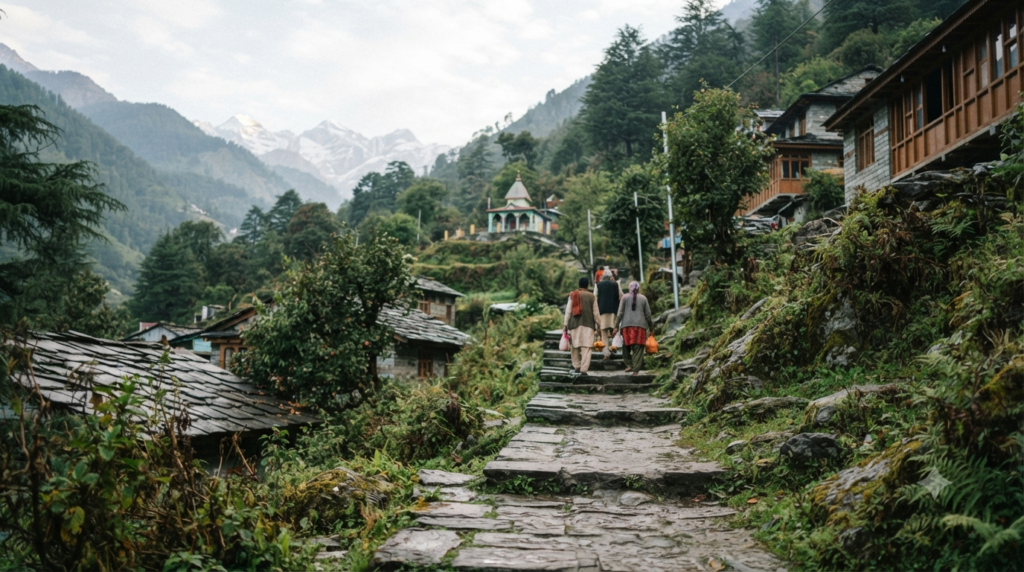
Vriddha Badri Darshan Guide planning starts with one correction that changes the whole trip: Vriddha Badri in Animath is described by Uttarakhand Tourism as a year-round Panch Badri shrine, not a temple that routinely closes for winter. The temple lies about 7 km from Joshimath, so it works well as a short pilgrimage stop while travelling through Chamoli.
Gokshetra.com is an independent pilgrimage guide. We are not affiliated with the temple, Uttarakhand Tourism, or Shri Badarinath Kedarnath Temple Committee. We do not accept temple bookings, donations, or payments, so use official sources for any transaction or last-minute notice.
Vriddha Badri Darshan Guide at a Glance
The most dependable facts are simple. Vriddha Badri is in Animath village near Joshimath, forms part of the Panch Badri circuit, and remains open throughout the year according to Uttarakhand Tourism. However, an exact daily opening and closing timetable is not published on the current state tourism page, so treat fixed hours copied across travel sites with caution.
| Planning point | Current guidance |
|---|---|
| Location | Animath village, about 7 km from Joshimath |
| Deity | Lord Vishnu worshipped in the form of an elderly man |
| Pilgrimage circuit | Panch Badri |
| Season | Temple described as open throughout the year |
| Exact daily timings | Confirm locally because current official tourism material does not publish a fixed schedule |
| Online darshan ticket | No dedicated official Vriddha Badri darshan-booking page found |
| Best base | Joshimath for transport, food and accommodation choices |
For the official circuit description, see the Uttarakhand Tourism Panch Badri page. The Shri Badarinath Kedarnath Temple Committee also identifies Vriddha Badri within the wider Badrinath and Panch Badri tradition.
Why Vriddha Badri matters in the Panch Badri circuit
Vriddha Badri is one of the five shrines named by Uttarakhand Tourism in the Panch Badri circuit. The group includes Badrinath, Yogdhyan Badri, Bhavishya Badri, Vriddha Badri and Adi Badri. This makes Animath more than a roadside temple stop because it belongs to a connected Vishnu pilgrimage tradition across the Alaknanda region.
The temple’s name comes from the Sanskrit word vriddha, meaning old or elderly. Local religious tradition says Sage Narada performed penance here and Lord Vishnu appeared before him as an old man. The state tourism board presents this as legend, so it should be understood as sacred tradition rather than documented history.
That distinction also corrects a serious error in the older version of this page. The previous article said Lord Vishnu appeared here as Narasimha and meditated to remove his sins. Uttarakhand Tourism instead links Vriddha Badri with Vishnu appearing as an old man before Narada. Narasimha belongs to other Badri-related traditions, and reliable sources do not place him in this Vriddha Badri legend.
Vriddha Badri Darshan Guide: timings and entry
This is where online guides disagree most. Some pages publish 5 AM to noon and 2 PM to 9 PM, while others give 6 AM to 6 PM, 6 AM to 7 PM, or 6 AM to 8 PM. Because the current official Uttarakhand Tourism listing does not publish a fixed daily schedule, this refresh does not present any of those conflicting hours as official.
Use the Vriddha Badri Darshan Guide timing advice in a practical way instead. Plan to reach Animath during daylight, allow time for the short approach to the shrine, and confirm the day’s opening pattern with temple staff after arrival. Festival days, local rituals, weather, or priest availability can affect access even when the shrine itself remains a year-round temple.
Is there an entry fee?
No current official source found during this refresh lists a separate entry ticket for ordinary darshan. Several long-running pilgrimage guides describe entry as free, but the safest wording is that no dedicated official entry-ticket system could be verified. If a paid ritual or offering is available, ask at the temple and use an official channel where one exists.
Can you book Vriddha Badri darshan online?
This Vriddha Badri Darshan Guide found no dedicated official online booking page for ordinary Vriddha Badri darshan. Therefore, avoid websites or private numbers that claim they can sell guaranteed darshan access. Shri Badarinath Kedarnath Temple Committee operates official services for temples under its management, so check its portal directly if you need the latest information on puja or donation facilities.
Vriddha Badri Darshan Guide: How to Reach from Joshimath
Joshimath is the easiest planning base because Uttarakhand Tourism places Vriddha Badri at Animath, about 7 km away. Reach Joshimath first, then continue by local road transport toward Animath. The final approach is short compared with major Himalayan treks, although recent visitor reports describe steps or an uneven village path near the shrine.
- Reach Joshimath. Travellers commonly approach from Rishikesh or Haridwar through the Garhwal road network.
- Continue to Animath. Use a local taxi, shared vehicle, or your own vehicle depending on current road conditions.
- Ask for the temple access point. Drop-off points can vary, so confirm the easiest approach if someone in your group has limited mobility.
- Walk carefully to the shrine. Wear shoes with grip because stone steps and mountain paths can become slippery after rain.
- Confirm the day’s darshan schedule on arrival. Do this before planning another tightly timed stop.
Jolly Grant Airport in Dehradun is the usual air gateway for the Badrinath-Joshimath region. Rishikesh is a common rail gateway, after which the journey continues by road. Exact driving time can change sharply because mountain traffic, repairs and weather affect the route.
Vriddha Badri Darshan Guide for winter visits
The key winter fact is unusually favourable: Uttarakhand Tourism says Vriddha Badri remains open throughout the year. That makes it different from the main Badrinath shrine, which has a seasonal opening pattern. However, a temple being open does not guarantee that every road will be clear or that transport will run normally on the day you travel.
Winter visitors should check weather and road conditions before leaving Joshimath. Snow, cold waves and local road disruption can change a simple seven-kilometre journey into a slow or impractical trip. Carry warm layers, water, required medicines and footwear with strong grip.
Monsoon travel needs the same caution for a different reason. Uttarakhand State Disaster Management Authority repeatedly warns about landslide-prone routes and weather-related road closures during heavy rain. Therefore, keep schedule buffers and never force onward travel when local authorities advise waiting. See the Uttarakhand State Disaster Management Authority for official safety information.
Vriddha Badri Darshan Guide: Best Time to Visit
For most pilgrims, late spring and the post-monsoon autumn period offer the easiest combination of road access, milder weather and wider pilgrimage options around Joshimath. Summer also lets you combine the visit with Badrinath when that shrine is open. Still, Vriddha Badri itself is not limited to that seasonal window.
July and August can bring heavy rain, so road delays and landslides matter more than temple opening status. Winter offers a quieter experience, yet cold conditions can be severe. Choose the season based on the whole route and your group’s health rather than on a copied “best month” list.
If you are travelling with older adults, small children, pregnant travellers, or anyone with heart, breathing, balance, or mobility concerns, keep the plan conservative. A short temple approach can still involve steps and cold mountain weather. Ask a doctor before high-altitude travel if a medical condition makes exertion or cold exposure risky.
Vriddha Badri Darshan Guide: What to Wear and Carry
No current official source found in this refresh publishes a formal dress code specifically for Vriddha Badri. Modest clothing that suits an active Hindu temple is the sensible choice. In the mountains, practical layering matters as much as etiquette because the temperature can shift quickly between sun and shade.
- Wear modest, comfortable clothing that allows easy movement on steps.
- Carry a warm layer even when the day begins bright.
- Use footwear with good grip for the approach, then follow local instructions about removing shoes.
- Keep drinking water and essential medicines with you.
- Carry some cash because mobile networks and digital payments can be unreliable in mountain areas.
- Ask before taking photographs inside or near the sanctum.
Do not treat photography permission, ritual access, or priest timings from old blogs as permanent rules. Temple practice can change, so signs and instructions at the shrine take priority.
Vriddha Badri Darshan Guide: Pooja and Aarti Timings
The earlier article published exact Mangal Aarti, Abhishekam, Shringar, Bhog Aarti, Sandhya Aarti and Shayan Aarti timings. This refresh could not verify those details on a current official source. Keeping them would create false precision, so this Vriddha Badri Darshan Guide removes them.
This Vriddha Badri Darshan Guide now uses a safer rule: confirm ritual timings at the temple or through the responsible official authority. Small Himalayan shrines may follow local schedules that change with season, festival practice or daylight. A flexible visit plan is more reliable than organising your day around an unsupported timetable.
The same rule applies to special pujas. Do not send money to a person who contacts you through WhatsApp or a private number claiming to represent the temple. Use official portals and published authority channels only.
Vriddha Badri Darshan Guide: Where to Stay
Joshimath is the most practical base because it offers a wider choice of rooms, food and onward transport than a small village stop. Garhwal Mandal Vikas Nigam, a Government of Uttarakhand enterprise, lists tourist accommodation in Joshimath on its official booking site. You can review current options at GMVN.
The old page named several private hotels and homestays without a current verification trail. This Vriddha Badri Darshan Guide removes those listings because room ownership, rates and contact details can change. They also make an informational temple guide look like a booking page, which Gokshetra should avoid.
When booking any stay, compare cancellation rules and recent reviews before paying. In winter or monsoon, flexible cancellation is especially useful because road conditions may force a change of plan.
Vriddha Badri Darshan Guide: Nearby Pilgrimage Stops
The Vriddha Badri Darshan Guide works best when you combine Animath with one nearby Joshimath-area cluster. Choose the cluster by season and direction of travel rather than trying to cover every famous place in one day.
- Joshimath and Narsingh Temple: useful for travellers interested in Badrinath’s winter tradition and the religious role of Joshimath.
- Badrinath: combine it in the main pilgrimage season. Read the Gokshetra Badrinath temple guide before planning the longer road journey.
- Yogadhyan Badri: another Vishnu shrine in the wider Badri tradition. See the Yogadhyan Badri guide.
- Bhavishya Badri: a more involved visit with trekking or walking considerations. Use the Bhavishya Badri guide for separate planning.
- Kalpeshwar: useful if you are already travelling through the Helang-Urgam side. The Kalpeshwar travel guide explains current access.
Avoid using the old article’s distance of around 30 km from Vriddha Badri to Badrinath as a fixed planning number. Road routing and reference points matter, while travel time is more useful than a single unsourced distance.
Common mistakes this Vriddha Badri Darshan Guide fixes
The biggest mistake is assuming the temple shuts in winter. Uttarakhand Tourism explicitly says it is the only Panch Badri temple that remains open throughout the year. That makes the old winter-closure statement inaccurate.
The second mistake is repeating one precise set of darshan or aarti timings as official. Current web sources disagree, and the state tourism listing does not settle the conflict. Therefore, this page now tells readers what is known, what is not verified, and where to check.
The third mistake is treating “online booking” as a requirement. We found no dedicated official Vriddha Badri darshan ticket system during this refresh. Do not pay private agents for a supposed guaranteed slot.
Finally, do not confuse Vriddha Badri’s legend with Narasimha traditions. The official state tourism account says Vishnu appeared as an old man before Sage Narada, which explains the name Vriddha Badri.
A simple half-day plan from Joshimath
A half-day visit usually works better than a rushed multi-temple checklist. Start from Joshimath after checking weather and road conditions, then travel to Animath and allow time for the temple approach. Confirm darshan access when you arrive instead of assuming an internet timetable is exact.
After darshan, return toward Joshimath for food and the next leg of your route. If roads and daylight allow, add one nearby stop rather than several distant attractions. This keeps the plan resilient when mountain travel runs late.
If access fails because of weather, road closure, or an unexpected temple schedule, do not try to bypass a closure. Return to Joshimath, check official local guidance, and retry when conditions improve. A year-round shrine can still be temporarily difficult to reach.
Before you go
The updated Vriddha Badri Darshan Guide relies on three dependable facts: Animath is about 7 km from Joshimath, Vriddha Badri belongs to the Panch Badri circuit, and Uttarakhand Tourism says it remains open year-round. Exact daily timings and ritual schedules are less certain, so confirm those locally.
Keep the visit flexible, use official sources, and avoid private booking claims. Most importantly, treat weather and road safety as part of darshan planning because the final seven kilometres still sit in a Himalayan travel environment.
Frequently asked questions
Is Vriddha Badri open throughout the year?
Yes. Uttarakhand Tourism states that Vriddha Badri is the only Panch Badri temple that remains open throughout the year. However, weather or road disruption can still affect access on a particular day, so check local conditions before travelling from Joshimath.
What are the official Vriddha Badri temple timings?
The official Uttarakhand Tourism Panch Badri page does not publish a current fixed timetable. Online guides publish conflicting hours, so this refresh does not label any one schedule as official. Reach during daylight and confirm the day’s timing locally.
Is online booking required for Vriddha Badri darshan?
This Vriddha Badri Darshan Guide found no dedicated official online darshan-booking page for Vriddha Badri during the refresh. Ordinary visitors should not pay private agents for “guaranteed” access. Check the Shri Badarinath Kedarnath Temple Committee portal if you need current official service information.
Is there an entry fee at Vriddha Badri?
No current official source found here lists a separate entry ticket for ordinary darshan. Several pilgrimage references describe entry as free, but fees for any special ritual should be confirmed at the temple or through an official authority before payment.
How far is Vriddha Badri from Joshimath?
Uttarakhand Tourism places Vriddha Badri in Animath village about 7 km from Joshimath. Road time varies with traffic, repairs and weather, so avoid planning a tight connection immediately after the visit.
What is the story of Vriddha Badri?
According to the tradition presented by Uttarakhand Tourism, Sage Narada performed penance here and Lord Vishnu appeared before him as an old man. The word vriddha means elderly, which explains the temple’s name and the form associated with the deity.
Can senior citizens visit Vriddha Badri?
Many older pilgrims can visit, but the final approach may include steps or uneven surfaces. Ask locally for the easiest drop-off point and avoid rushing. Anyone with significant mobility, heart, breathing or balance problems should plan conservatively.
Where should I stay for a Vriddha Badri visit?
Joshimath is the most practical base because it has more accommodation and transport options. The official GMVN site lists government-run properties, while travellers can use reputable channels with clear cancellation terms for other stays.