
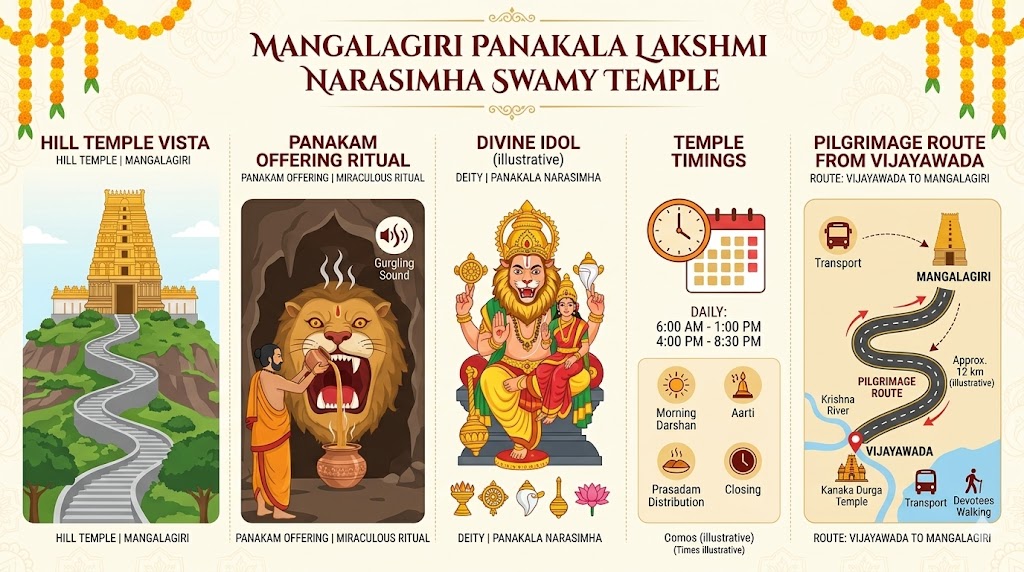
Mangalagiri Panakala Lakshmi Narasimha Swamy Temple is one of the most unique and sacred temples dedicated to Lord Narasimha in Andhra Pradesh. Located on the Mangalagiri Hill near Vijayawada, this temple is famous for the extraordinary ritual of offering Panakam (jaggery water) to the deity. Devotees believe that Lord Narasimha personally consumes half of the Panakam offered, while the remaining portion flows back as prasadam. Therefore, this temple attracts thousands of pilgrims seeking protection, prosperity, and relief from difficulties. The temple is also one of the important Narasimha Kshetras in South India and holds immense spiritual significance in Vaishnavism. Moreover, the temple is part of the Pancharama and Narasimha pilgrimage circuit visited by devotees across Andhra Pradesh. Understanding the Mangalagiri Panakala Lakshmi Narasimha Swamy Temple timings, rituals, history, and darshan details helps pilgrims plan their visit smoothly. This complete guide explains temple timings, Panakam offering ritual, temple history, festivals, travel information, and visitor tips.
Key Information at a Glance
- Timings: 7:00 AM
Morning Darshan
7:00 AM – 12:30 PMAfternoon Break
12:30 P - Location: on the Mangalagiri Hill near Vijayawada, this temple is famous for the extraordi
Mangalagiri Panakala Lakshmi Narasimha Swamy Temple Timings and Darshan Guide
Mangalagiri Panakala Lakshmi Narasimha Swamy Temple Timings
The temple follows specific timings for darshan and the famous Panakam offering ritual.
| Temple Activity | Timings |
|---|---|
| Temple Opening Time | 7:00 AM |
| Morning Darshan | 7:00 AM – 12:30 PM |
| Afternoon Break | 12:30 PM – 3:00 PM |
| Evening Darshan | 3:00 PM – 8:00 PM |
| Temple Closing Time | 8:00 PM |
However, timings may change during major festivals and special rituals.
Unique Panakam Offering Ritual
The most special tradition at the temple is the Panakam offering.
What is Panakam?
Panakam is a sweet drink made from:
- Jaggery
- Water
- Black pepper
- Cardamom
- Dry ginger
How the Ritual is Performed
Priests pour the Panakam directly into the deity’s mouth using a conch or vessel. Devotees believe that the deity drinks about half of the offering while the rest returns as sacred prasadam.
Interestingly, when the Panakam is poured, devotees can hear a gurgling sound, which many believe indicates the deity accepting the offering.
Because of this miraculous tradition, the temple has become famous across India.
Significance of Mangalagiri Temple
The temple has deep religious significance in Hindu tradition.
One of the Important Narasimha Temples
Mangalagiri is considered one of the prominent Narasimha Kshetras in South India.
Meaning of Mangalagiri
The word Mangalagiri means “Auspicious Hill.”
Temple on the Hill
The temple is located on a hill shaped like an elephant, which is believed to symbolize Lord Vishnu’s divine presence.
Therefore, devotees visit the temple to seek blessings from Lord Narasimha for protection and prosperity.
History of Mangalagiri Panakala Narasimha Temple
The temple history dates back to ancient times.
According to legends:
- The temple is mentioned in Puranas and regional scriptures.
- The hill itself is believed to represent Adi Sesha, the divine serpent of Lord Vishnu.
- Saints and devotees have visited this temple for centuries.
The temple architecture reflects traditional Dravidian style.
Deities Worshipped in the Temple
The temple is dedicated primarily to Lord Panakala Lakshmi Narasimha Swamy.
Important deities include:
- Panakala Lakshmi Narasimha Swamy (Hill Temple)
- Lakshmi Narasimha Swamy (Temple at foothills)
- Goddess Lakshmi
Devotees often visit both the hill temple and the foothill temple during their pilgrimage.
Major Festivals Celebrated at Mangalagiri Temple
Several important Hindu festivals are celebrated at the temple.
Major festivals include:
- Brahmotsavam
- Narasimha Jayanti
- Ugadi Festival
- Vaikuntha Ekadasi
- Rama Navami
During these festivals, thousands of devotees visit the temple.
How to Reach Mangalagiri Temple
The temple is easily accessible from major cities in Andhra Pradesh.
By Air
The nearest airport is Vijayawada International Airport, located about 25 km away.
By Train
The nearest railway station is Mangalagiri Railway Station, which connects to Vijayawada and Guntur.
By Road
The temple is well connected by road.
Distance from nearby cities:
| City | Distance |
|---|---|
| Vijayawada | 12 km |
| Guntur | 20 km |
| Amaravati | 35 km |
Local buses, taxis, and autos are easily available.
Best Time to Visit Mangalagiri Temple
Although the temple remains open throughout the year, some times offer a better experience.
Best visiting periods include:
- Early morning darshan
- Narasimha Jayanti festival
- Brahmotsavam celebrations
- Winter months (October–February)
However, weekends and festival days usually attract large crowds.
Important Visitor Guidelines
Devotees should follow temple rules during their visit.
Key guidelines include:
- Wear traditional and modest clothing
- Remove footwear before entering the temple
- Follow darshan queue system
- Maintain silence in temple premises
- Respect temple rituals
These guidelines help maintain the sacred atmosphere.
FAQ About Mangalagiri Panakala Lakshmi Narasimha Swamy Temple
What are Mangalagiri Panakala Lakshmi Narasimha Swamy Temple timings?
The temple usually opens from 7:00 AM to 8:00 PM with a break in the afternoon.
Why is Panakam offered to Lord Narasimha?
Panakam is offered as a sacred drink, and devotees believe the deity consumes part of the offering.
Where is Mangalagiri Narasimha Temple located?
The temple is located in Mangalagiri near Vijayawada in Andhra Pradesh.
Which deity is worshipped in this temple?
Devotees worship Panakala Lakshmi Narasimha Swamy, an incarnation of Lord Vishnu.
What is the best time to visit the temple?
Early mornings and festival days like Narasimha Jayanti are considered highly auspicious.
External Official Links
https://www.aptemples.ap.gov.in
https://www.incredibleindia.gov.in
Important Tips for Visitors
- Remove footwear before entering the temple premises. Shoe storage is usually available near the entrance.
- Carry a valid ID proof — some temples require it for special darshan or accommodation booking.
- Arrive early morning for a peaceful darshan experience — most temples are less crowded before 8 AM.
- Visit during weekdays for shorter queues. Weekends and festival days see significantly higher footfall.
Official Resources

V S Anantha Sharma is a Senior Content Researcher at Go Kshetra with over 20 years of experience in Indian archaeology, temple architecture, and Hindu pilgrimage traditions. A lifelong devotee and...
Go Kshetra covers 1,600+ Hindu temples across 28 states. Content sourced from official temple websites and first-hand visits. About our editorial process