
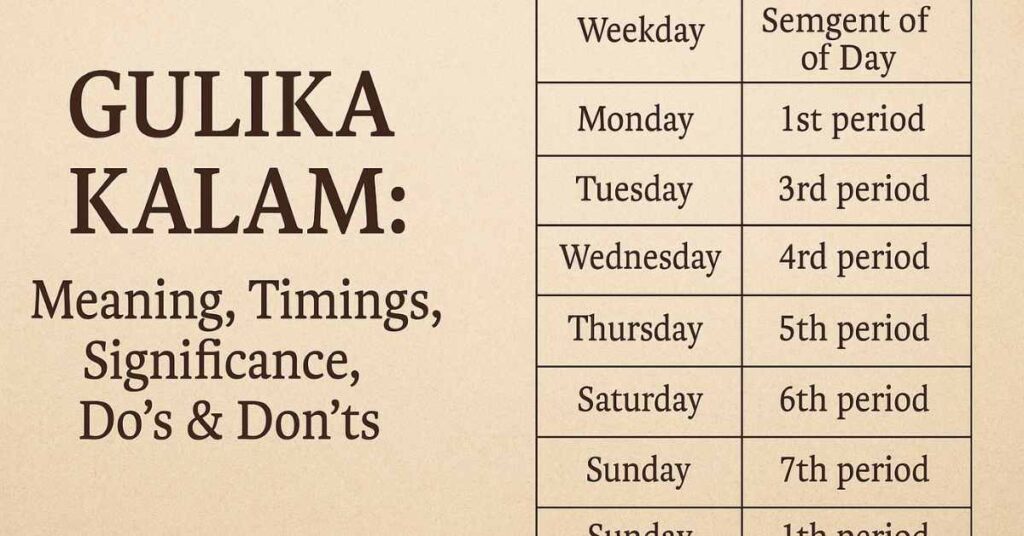
Gulika Kalam is a powerful and often misunderstood time segment in Vedic astrology. Discover its meaning, daily timings, effects, and important do’s and don’ts to use this period wisely.
Brief Summary
- Meaning and origins of Gulika Kalam
- Daily timings based on weekdays
- Spiritual and practical significance
- Activities to avoid and recommended practices
- Remedies, myths, and expert insights
- FAQs and quick reference table
Gulika Kalam: Meaning, Timings, Significance, Do’s & Don’ts
Gulika Kalam is one of the most intriguing and misunderstood time periods in Vedic astrology. Rooted in ancient Panchang calculations, this segment of the day is associated with Gulika, a powerful shadow planet similar to Rahu and Ketu. Although feared by many, Gulika Kalam holds deep spiritual significance and can be used productively—provided one understands its nature and effects.
In this comprehensive guide, you’ll learn the meaning of Gulika Kalam, how it is calculated, its daily timings, what to avoid, and how to use it to your advantage.
What Is Gulika Kalam? Understanding Its True Meaning
Gulika Kalam (also called Mandi Kalam) refers to a specific duration ruled by the sub-planet Gulika. In Vedic astrology, Gulika belongs to Saturn’s family and is considered a shadow planet. Unlike mainstream celestial bodies, shadow planets influence human behaviour and karmic patterns energetically.
Although Gulika is linked to Saturn and often associated with delays, obstacles, and seriousness, its influence is not always negative. Instead, it amplifies karmic outcomes—meaning activities performed during this time carry long-lasting effects.
Key Insight: Gulika Kalam magnifies the results of actions. Use it for spiritual growth, healing, and introspection.
How Is Gulika Kalam Calculated?
Each day of the week has a unique Gulika Kalam period, determined by dividing the daylight duration (sunrise to sunset) into eight equal sections. One of these sections is ruled by Gulika.
The Gulika segment changes daily depending on the weekday and the time of sunrise. It is not the same as Rahu Kalam or Yamaganda, although these time segments follow a similar pattern in the Panchang.
Pro Tip: Since sunrise varies by location, Gulika Kalam also changes by city. Always check your regional Panchang for exact timings.
Gulika Kalam Timings for Each Day of the Week
Below is the standard weekday pattern for Gulika Kalam during daylight hours:
| Weekday | Gulika Kalam (Segment of Day) |
|---|---|
| Monday | 2nd period |
| Tuesday | 3rd period |
| Wednesday | 4th period |
| Thursday | 5th period |
| Friday | 6th period |
| Saturday | 7th period |
| Sunday | 1st period |
These periods represent the eight divisions between sunrise and sunset. For example, if sunrise is at 6:00 AM and sunset at 6:00 PM, each segment becomes 1.5 hours long.
Why Gulika Kalam Matters: Spiritual and Practical Significance
1. Karmic Intensification
Gulika magnifies karmic imprints, which means actions performed during this time can have deeper and more lasting consequences.
2. Powerful for Spiritual Practices
Meditation, mantra chanting, and introspection are highly beneficial during this period. Many spiritual teachers consider Gulika Kalam a doorway to inner transformation.
3. Not Ideal for Important Beginnings
Activities like signing agreements, starting a new venture, or performing auspicious ceremonies are generally avoided. Since Gulika relates to Saturn’s energy, beginnings made in this window may face hurdles or delays.
4. Excellent for Healing and Personal Development
Gulika Kalam supports psychological healing, ancestral work, shadow-work meditation, and clearing past karmic patterns.
Do’s and Don’ts During Gulika Kalam
Do’s (Recommended Activities)
- Meditation, prayer, and mantra chanting
- Reading spiritual texts
- Studying astrology or philosophy
- Cleaning and decluttering spaces
- Planning or analyzing long-term goals
- Performing remedies for Saturn
- Introspection and journaling
Don’ts (Avoid These Activities)
- Starting new projects or ventures
- Buying valuables or property
- Attending job interviews
- Signing legal documents
- Conducting marriage-related events
- Initiating travel
- Beginning medical procedures (unless urgent)
Myth-Busting: Gulika Kalam is not harmful for the entire day. Only the specific segment ruled by Gulika carries intensified karmic effects.
How Gulika Differs from Rahu Kalam and Yamaganda
Many confuse Gulika with other inauspicious time windows. Here’s a quick comparison:
| Aspect | Gulika Kalam | Rahu Kalam | Yamaganda |
|---|---|---|---|
| Ruling Planet | Shadow of Saturn | Rahu | Ketu |
| Nature | Karmic amplification | Obstacles, illusions | Negative outcomes |
| Best Use | Spiritual practices | Avoid beginnings | Avoid beginnings |
| Duration | 1 segment | 1 segment | 1 segment |
Gulika is less feared compared to Rahu Kalam and more spiritually oriented, whereas Rahu and Ketu segments are linked to more immediate material challenges.
Expert Insights From Vedic Tradition
According to many classical Jyotisha texts, Gulika’s influence is subtle yet powerful. Renowned astrologers note that:
- Activities done during Gulika Kalam carry karmic weight for longer durations.
- Spiritual disciplines initiated during this time lead to deeper self-awareness.
- Gulika plays a significant role in horoscope interpretation, especially related to health, longevity, and past karma.
This makes Gulika Kalam a meaningful period rather than one to fear.
Practical Tips to Use Gulika Kalam Wisely
⭐ Tip 1: Avoid Major Beginnings
Use this time for analysis rather than action.
⭐ Tip 2: Perform Saturn Remedies
Chant “Om Sham Shanicharaya Namaha” or meditate silently.
⭐ Tip 3: Practice Grounding Rituals
Simple breathing techniques or lighting a lamp can calm Saturn’s energy.
⭐ Tip 4: Use It for Internal Work
Solve long-pending emotional issues or begin healing practices.
Final Thoughts: Should You Fear Gulika Kalam?
Not at all. Gulika Kalam is neutral by nature—neither entirely auspicious nor fully inauspicious. Its power lies in the way it magnifies the results of actions.
When understood correctly, this time window becomes an opportunity for self-improvement, discipline, and spiritual advancement.
Understanding the focus keyword: Gulika Kalam helps you make informed decisions and align your actions with the energy of the day.
Frequently Asked Questions
Is Gulika Kalam always bad?
No. It is neutral but karmically significant.
Can I travel during Gulika Kalam?
Travel isn’t recommended unless necessary.
Is it good for spiritual activities?
Yes, it is one of the best times for meditation and inner work.
Does it affect my daily life if I ignore it?
Not severely, but being aware of it helps minimize obstacles and improve focus.
Author: Vijaya Durga Pemmasan
References & Helpful Links
Related Articles
- https://gokshetra.com/rahu-kalam-timings-dos-donts/
- https://gokshetra.com/yamaganda-kalam-timings-dos-donts/
- https://gokshetra.com/abhijit-muhurtham-meaning-benefits/
Official Resources
Helpful Tips
- Plan your visit in advance and check official websites for the latest timings and guidelines.
- Carry valid ID proof as it may be required at certain locations.
- Respect local customs and traditions during your visit.
- Keep your belongings secure and avoid carrying valuables.

V S Anantha Sharma is a Senior Content Researcher at Go Kshetra with over 20 years of experience in Indian archaeology, temple architecture, and Hindu pilgrimage traditions. A lifelong devotee and...
Go Kshetra covers 1,600+ Hindu temples across 28 states. Content sourced from official temple websites and first-hand visits. About our editorial process