
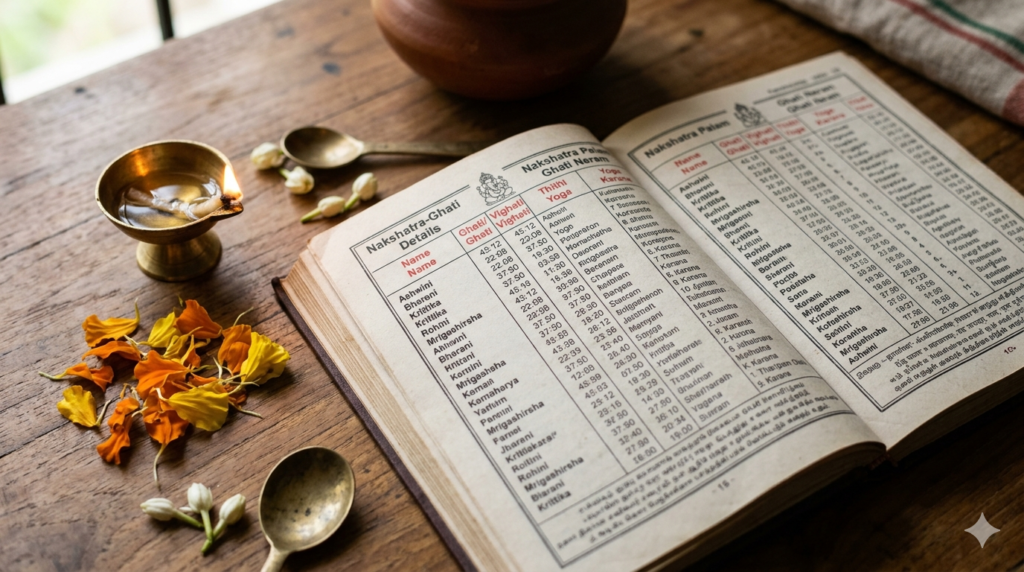
Varjyam Kalam is the one inauspicious period most people get wrong, because they expect it to repeat on a fixed weekday like Rahu Kalam. It does not. This window is tied to the Moon’s nakshatra, so it shifts every single day and even from one city to the next. If you are planning a wedding, a house-warming or a long journey, you need the exact window for your date and place. Start your most important task inside it by accident, and you have done the very thing elders warn against.
Varjyam Kalam at a Glance
Here are the essentials before we go deeper into each point.
- What it is: an inauspicious daily window, also called Nakshatra Thyajyam or Visha Ghati.
- Set by: the Moon’s nakshatra, or star, and not the day of the week.
- Duration: roughly 1 hour 36 minutes, according to Drik Panchang.
- How often it shifts: daily and by location, so you must check a local panchang.
- What to avoid: marriage, griha pravesh, naming, mundan, travel and other fresh starts.
What Is Varjyam Kalam?
Varjyam Kalam is an inauspicious time window in the Hindu panchang, also known as Nakshatra Thyajyam in Tamil tradition and Visha Ghati in the north. It marks the portion of a nakshatra that scriptures label “thyajya,” meaning “to be discarded.” During this stretch, tradition advises against beginning any auspicious act.
The word itself carries the warning. “Varjyam” comes from the Sanskrit root meaning “to avoid” or “to leave out.” Because of this, devotees treat the window as a no-go zone for new beginnings, while ongoing or routine work continues without worry. You may also see it spelt Vaarjyam, Varjam or Tyajyam in different almanacs.
What the Varjyam Window Really Means
Every nakshatra spans 60 ghatis, where one ghati equals 24 minutes. Within that span sits a small “poison” segment, the visha ghati, which astrologers mark as tyajya. When the Moon crosses this exact segment, the inauspicious window opens.
This is why the older name, Visha Ghati, literally means “poison hour.” The idea is symbolic rather than literal, so nobody is in physical danger. Still, the tradition holds that work begun here tends to stall, so families simply schedule around it. The auspicious counterpart, Amrita Kalam or “nectar hour,” is calculated from the same nakshatra logic but signals a favourable stretch instead.
Why Varjyam Does Not Follow the Weekday
This is the biggest myth circulating online, and correcting it saves real planning mistakes. Varjyam Kalam does not repeat on a fixed weekday slot. It is fixed entirely by the nakshatra running on that day, so the window can fall in the early morning on one date and after sunset on the next.
Many readers confuse it with Rahu Kalam, Yamagandam and Gulika, which truly do follow a fixed weekday pattern. Those three divide daylight into eight equal parts, so their slots stay roughly steady for each weekday. Varjyam works on a completely different clock, because the Moon moves through a new nakshatra roughly every 24 hours. Treating it like Rahu Kalam is exactly how people pick the wrong muhurtam.
How Long Does the Window Last?
Varjyam Kalam lasts about 1 hour and 36 minutes on most days, a figure Drik Panchang lists directly. Some days carry two separate windows, which happens when the nakshatra changes during those 24 hours. Rarely, a day may show no window at all.
The duration can stretch or shrink slightly, since the Moon’s speed varies day to day. A faster Moon clears the visha segment sooner, while a slower Moon drags it out. Because of this small variation, you should read the exact start and end from your panchang rather than assuming a flat 96 minutes every time.
Varjyam Kalam Timings by Nakshatra
The table below shows the tyajya ghatis and the reference start time for each of the 27 nakshatras, based on Drik Panchang data. Read the start time as a guide only. It assumes the nakshatra begins around sunrise, so your real clock window shifts depending on when that nakshatra actually starts in your city.
| Nakshatra | Tyajya Ghatis | Reference Start |
|---|---|---|
| Ashwini | 51–54 | 20:00 |
| Bharani | 25–28 | 09:36 |
| Krittika | 31–34 | 12:00 |
| Rohini | 41–44 | 16:00 |
| Mrigashira | 15–18 | 05:36 |
| Ardra | 22–25 | 08:24 |
| Punarvasu | 31–34 | 12:00 |
| Pushya | 21–24 | 08:00 |
| Ashlesha | 33–36 | 12:48 |
| Magha | 31–34 | 12:00 |
| Purva Phalguni | 21–24 | 08:00 |
| Uttara Phalguni | 19–22 | 07:12 |
| Hasta | 22–25 | 08:24 |
| Chitra | 21–24 | 08:00 |
| Swati | 15–18 | 05:36 |
| Vishakha | 15–18 | 05:36 |
| Anuradha | 11–14 | 04:00 |
| Jyeshtha | 15–18 | 05:36 |
| Mula | 57–60 | 08:24 |
| Purva Ashadha | 25–28 | 09:36 |
| Uttara Ashadha | 21–24 | 08:00 |
| Shravana | 11–14 | 04:00 |
| Dhanishta | 11–14 | 04:00 |
| Shatabhisha | 19–22 | 07:12 |
| Purva Bhadrapada | 17–20 | 06:24 |
| Uttara Bhadrapada | 25–28 | 09:36 |
| Revati | 31–34 | 12:00 |
Notice how widely the start times swing. Ashwini opens near 8 PM, while Anuradha opens around 4 AM. Because the swing is this large, a single “today” slot you saw last week tells you nothing about today.
How to Find Today’s Varjyam Kalam
To get today’s Varjyam Kalam, open a location-set daily panchang, note the running nakshatra and read the Varjyam line for your city. It takes under a minute, and it beats guessing from a generic chart. Follow these steps.
- Pick a trusted daily panchang. Use the Drik Panchang Dainik Panchang or a similar tool that adjusts for your location.
- Set your city first. Sunrise and nakshatra timings depend on it, so an unset location gives wrong results.
- Find the Varjyam or Thyajyam line. It shows the start and end clock time for the day, sometimes as two windows.
- Cross-check the nakshatra. Match it against the table above as a quick sanity test.
- Block that slot. Schedule your important task before or after it, never inside.
Keep one habit in mind. Because the window moves daily, check it fresh each morning rather than trusting yesterday’s value.
Varjyam Kalam Do’s and Don’ts
Drik Panchang lists the activities to avoid clearly, and the logic is consistent across regional almanacs. The rule is simple: skip new beginnings, but carry on with what is already underway. Use this quick split before you plan.
What to Avoid
- Marriage and engagement ceremonies.
- Griha Pravesh, or entering a new house for the first time.
- Annaprasana, the baby’s first-rice ceremony.
- Mundan or Chudakarana, the first head-shaving.
- Starting travel for an important trip or pilgrimage.
- Signing major deals, registrations or new business launches.
What Stays Fine
- Daily prayers and routine pooja already in your schedule.
- Ongoing work that simply continues, such as a journey already in motion.
- Eating, resting and normal household chores.
- Emergencies, including medical care, which never wait on a calendar.
What You Can Still Do Safely
Here is a nuance most short guides skip. Varjyam restricts the start of a new venture, not its continuation. So if a task is already running when the window opens, you do not stop and restart it later.
Devotional acts also stay open. Chanting, listening to a discourse or doing seva is welcome at any hour, because these are continuous practices rather than fresh undertakings. Many priests treat the window as a good time for quiet prayer and introspection. Therefore the period is not “dead time,” even though it blocks formal muhurtams.
Varjyam Kalam vs Rahu Kalam and Gulika
Devotees often lump every inauspicious period together, yet each follows its own logic. The table makes the difference clear, since the basis of calculation is what really separates them.
| Period | Based On | Approx. Duration | Fixed Weekday? |
|---|---|---|---|
| Varjyam Kalam | Nakshatra | ~1 hr 36 min | No |
| Rahu Kalam | Weekday | ~1 hr 30 min | Yes |
| Gulika Kalam | Weekday | ~1 hr 30 min | Yes |
| Yamagandam | Weekday | ~1 hr 30 min | Yes |
| Durmuhurtam | Day division | ~48 min | Pattern |
The takeaway is one line. Rahu Kalam, Gulika Kalam and Yamagandam stay tied to the weekday, while Varjyam Kalam rides the nakshatra. Because of this, you cannot memorise Varjyam the way you memorise Tuesday’s Rahu Kalam slot.
If You Cannot Avoid This Period
Sometimes a fixed appointment, a registrar’s slot or a travel booking lands inside the window. When that happens, tradition offers a practical cushion rather than a panic. The most common remedy is to anchor your action inside an overriding auspicious muhurtam.
The strongest such window is Abhijit Muhurat, the midday slot ruled by Lord Vishnu, which is believed to neutralise minor doshas. If Abhijit also overlaps Varjyam on that day, priests usually suggest pushing the task to the nearest clear time instead. A short prayer to your family deity before starting is the simplest fallback when timing is truly out of your hands.
What Most Panchang Apps Won’t Tell You
After cross-checking several almanacs, a few practical points stand out that the app screens rarely explain.
- Two windows are normal. When the nakshatra changes mid-day, expect two Varjyam lines, not one.
- Ayanamsa changes the minute. Different software uses different ayanamsa systems, so two apps may differ by a few minutes.
- The end matters too. People note the start and forget the end, then begin a task one minute too early.
- It overrides a good nakshatra. Even on an otherwise excellent star day, the visha segment still blocks new starts.
- Location is not optional. A Chennai window and a Delhi window for the same date will not match.
Before You Fix Your Muhurtam
Varjyam Kalam is easy to handle once you stop treating it like a weekday slot. Check your local panchang each morning, find the start and end, and simply plan your important beginnings outside that band. For weddings, house-warmings or naming ceremonies, confirm the window with a family priest as well, since they weigh it alongside the full muhurtam chart. Handled this way, the period becomes a quick checkbox rather than a source of worry.
Varjyam Kalam FAQs
What is Varjyam Kalam in simple words?
Varjyam Kalam is a short inauspicious window each day when you should not begin auspicious work. It is set by the Moon’s nakshatra and lasts about 1 hour 36 minutes. Tradition also calls it Nakshatra Thyajyam or Visha Ghati.
Does Varjyam change every day?
Yes, it changes every day and even by city. Because it depends on the running nakshatra and your local sunrise, the clock window shifts constantly. So you must read a location-set panchang each morning rather than reusing an old time.
What should I not do during Varjyam Kalam?
Avoid starting marriages, griha pravesh, naming ceremonies, mundan, important travel and major signings. These are fresh beginnings, which the tradition specifically blocks. Routine work and ongoing tasks may continue normally.
Can I do pooja during Varjyam?
Yes, you can do daily pooja, chanting and seva during this window. Devotional practice is continuous rather than a new venture, so it stays open. Many priests even treat the period as good for quiet prayer.
Is Varjyam the same as Rahu Kalam?
No, the two are different. Rahu Kalam follows a fixed weekday pattern, while Varjyam Kalam follows the nakshatra and shifts daily. Confusing the two is the most common planning mistake people make.
Can there be two Varjyam periods in one day?
Yes, a single day can carry two windows. This happens when the nakshatra changes during those 24 hours, giving each star its own visha segment. Some rare days, however, may show no Varjyam at all.
How do I find today’s Varjyam time for my city?
Open a daily panchang, set your location, then read the Varjyam or Thyajyam line. The Drik Panchang Dainik Panchang shows it with start and end times. Always set the city first, since timings depend on local sunrise.
Is Varjyam mentioned only in South Indian panchangs?
No, it appears across regional almanacs under different names. South Indian panchangs call it Varjyam or Thyajyam, while northern ones use Visha