
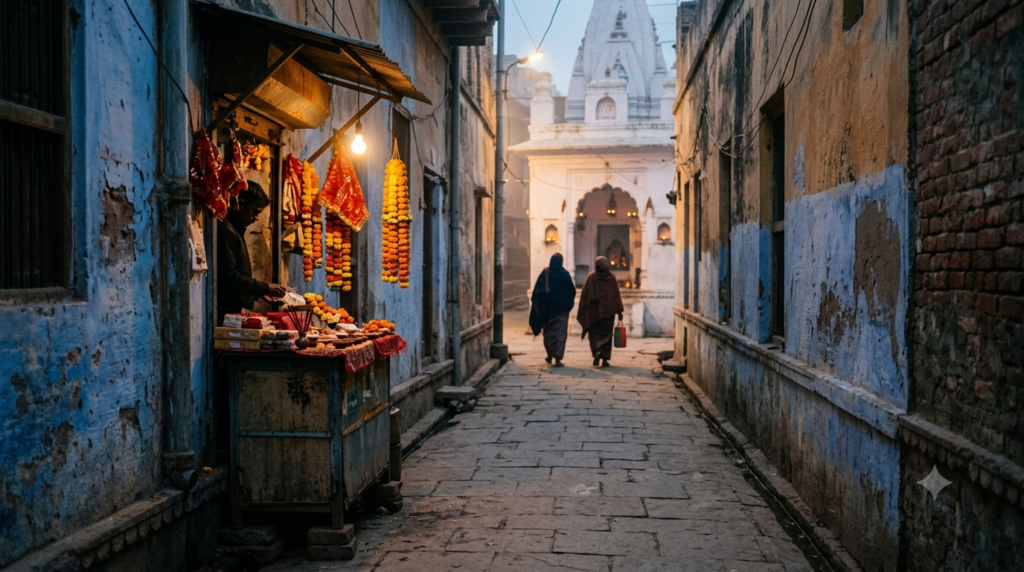
Yogmaya Temple Darshan Timings confuse first-time visitors more than almost any other shrine in Delhi, because different websites list completely different hours. Some say the temple stays open all day, while others report a long afternoon break. The truth sits somewhere in between. Knowing it decides whether your trip to Mehrauli ends in darshan or at a closed sanctum door.
This guide sets out the reliable Yogmaya Temple Darshan Timings, the aarti schedule, and the metro route that actually works. It also flags a festival calendar change that most guides still miss.
Go Kshetra is an independent pilgrimage guide. We do not run, represent or speak for the Shri Yogmaya Mandir, its trust, or any Delhi government body. We take no bookings, donations or payments. In any case nobody needs to book here, because entry is free and walk-in.
Yogmaya Temple Darshan Timings at a Glance
The temple sits in Mehrauli village, roughly 260 yards east of the Iron Pillar inside the Qutub complex. Entry costs nothing, and no ticket or online slot exists. Because the shrine is small, darshan itself rarely takes more than a few minutes outside festival days.
| Detail | Information |
|---|---|
| Temple name | Shri Yogmaya Mandir (also written Jogmaya Temple) |
| Location | Kali Mata Mandir Road, Seth Sarai, Mehrauli, New Delhi 110030 |
| Deity | Goddess Yogmaya, worshipped as a black-stone pindi set in a marble well |
| Reliable darshan windows | Roughly 5:00 AM to noon, and about 4:00 PM to 8:30–9:00 PM |
| Aarti | Morning around 5:00–5:30 AM; evening around 8:00 PM |
| Entry fee | Free for everyone |
| Booking | None — no online portal, no tickets, no paid darshan |
| Nearest metro | Qutub Minar (Yellow Line), about 1.2 km away |
| Time needed | 20–30 minutes, or 90 minutes during Navratri |
Treat the Yogmaya Temple Darshan Timings above as indicative rather than official. A local committee runs the shrine and publishes no timetable online. Priests therefore adjust hours around rituals, weather and festival days.
Yogmaya Temple Darshan Timings and the Daily Aarti Schedule
The reliable Yogmaya Temple Darshan Timings run from about 5:00 AM until noon. The shrine then reopens near 4:00 PM and closes around 8:30 or 9:00 PM. Morning aarti falls close to 5:00–5:30 AM, while priests perform the evening aarti around 8:00 PM. Both sessions stay short and intimate, since no separate queue or paid line exists.
Daily worship follows a simple rhythm. Priests perform Mata Snanam, the ritual bathing of the deity with milk, and then the aarti, followed by hymn recitation. Devotees can buy flowers, chunri and prasad from the small shops that line the approach lane.
Why Sources Disagree on Yogmaya Temple Darshan Timings
Several temple directories list the shrine as open continuously from 5:00 AM to 8:30 PM. Recent first-hand visitor accounts, however, describe a midday closure between roughly noon and 4:00 PM. Both versions can hold true on different days, because the priests decide hours locally. So plan around the two confirmed windows, and treat the early afternoon as uncertain.
This single detail is where most Delhi temple guides let readers down. They copy one continuous timing from an aggregator. A visitor then turns up at 2:00 PM and finds the inner shrine shuttered.
What to Do if You Miss the Yogmaya Temple Darshan Timings
You lose nothing by landing in Mehrauli at the wrong hour, because the neighbourhood offers plenty nearby. The outer courtyard usually stays open even when priests draw the sanctum curtain, so you can still sit quietly. After that, use the gap productively rather than waiting at the gate.
- Walk 300–400 metres to the Qutub Minar complex, which stays open through the afternoon.
- Explore Mehrauli Archaeological Park, Jamali Kamali and the Adham Khan tomb nearby.
- Return by 4:00 PM, when the evening half of the Yogmaya Temple Darshan Timings resumes.
- If your schedule is tight, prefer a dawn visit — that window is the most dependable of the day.
Is Entry Free During Yogmaya Temple Darshan Timings?
Yogmaya Temple charges no entry fee, and it runs no online booking system. Several travel pages and social posts still imply that you can reserve darshan slots or poojas digitally. That claim is simply false. Anyone asking you to pay in advance for entry here is running a scam, so ignore the offer.
Offerings work the traditional way. Buy a small thali of flowers, a chunri or sweets from the vendors outside. Then hand it to the priest at the sanctum. Donations go straight into the temple hundi, and no counter or agent handles your money.
Practical caution: touts occasionally offer “quick darshan” or paid pooja arrangements near heritage sites in Mehrauli. Since darshan here is free and takes minutes anyway, decline politely and walk in yourself.
How to Reach Yogmaya Temple in Mehrauli
By Metro
Qutub Minar station on the Yellow Line sits about 1.2 km from the temple lane. That means a 15–20 minute walk through Mehrauli’s bazaar, or a short auto ride of roughly ₹30–₹50. Saket station works as a second option, though it lies further out. Check live routes on the Delhi Metro Rail Corporation site before you travel.
Ignore any guide that lists Malviya Nagar as a walkable station, because that stop lies several kilometres away. This is one of the more common errors circulating on Delhi temple pages.
By Road and Bus
Mehrauli Terminal is the closest bus stand, and it sits within a five-minute walk of the temple. Several DTC routes stop there through the day. Cabs can drop you only at the main road, since the final approach runs through lanes too narrow for cars.
By Train and Air
New Delhi Railway Station lies roughly 12–15 km away, while Hazrat Nizamuddin is a similar distance. From either, the metro is faster than a taxi during peak hours. Indira Gandhi International Airport is about 15–20 km away, so a cab takes 40–60 minutes depending on traffic.
Best Time to Visit for Calm Yogmaya Temple Darshan Timings
Dawn suits the Yogmaya Temple Darshan Timings best. Between 5:00 AM and 7:00 AM the lane falls quiet and the bells carry. You will often share the courtyard with only a handful of local devotees. Evenings feel livelier, because Mehrauli residents drop in after work, so the 8:00 PM aarti draws a warmer crowd.
Seasonally, November to February is the comfortable stretch for exploring Mehrauli on foot. May and June turn brutally hot, so restrict yourself to the early morning or the post-sunset window then. Monsoon months bring waterlogged lanes, though the temple itself stays open.
Festivals That Change the Yogmaya Temple Darshan Timings
Navratri, which falls twice a year in spring and autumn, brings the heaviest crowds. It also stretches the Yogmaya Temple Darshan Timings well past their usual close. Sandhya aarti during these nine days can run close to an hour, and devotees fill the small courtyard long before it starts. Arrive 45–60 minutes early if you want to stand near the sanctum.
Phool Walon Ki Sair needs a fresh look, because its schedule shifted recently. Organisers traditionally held it after the monsoon, in September or October. In 2026, though, the Delhi Development Authority withheld permission for the Aam Bagh venue and the edition collapsed. Organisers then moved it to spring, and the rescheduled festival ran from 15 to 21 March 2026.
So do not assume an autumn date any more. Check the organiser Anjuman Sair-e-Gul Faroshan, or the Delhi Tourism announcements, before planning a trip around it.
During the festival, devotees carry a floral pankha in procession to Yogmaya Temple. A matching floral chaadar goes to the nearby dargah of Khwaja Bakhtiyar Kaki. This shared Hindu-Muslim tradition dates to the reign of Akbar Shah II in the early nineteenth century.
The History Most Temple Guides Skip
Devotees revere Yogmaya as the sister form of Krishna, the girl child exchanged in Kansa’s prison. Tradition holds that the Pandavas founded this shrine after the Mahabharata war. That belief makes it one of Delhi’s oldest continuously worshipped sites. Local accounts also place Krishna and Arjuna here in prayer before Jayadratha’s death.
The documented history is just as striking. The temple stands inside the walls of Lal Kot, the first fortress city of Delhi. The Tomar Rajputs raised those walls around the eighth century. Twelfth-century Jain texts called this area Yoginipura, after the goddess herself.
The present structure is far younger than the site. Lala Sethmal rebuilt it during the reign of Mughal emperor Akbar Shah II, between 1806 and 1837. Because of that layered past, the building itself looks modest. Yet the ground beneath carries more than a thousand years of continuous worship, and that contrast repays a slow visit.
Delhi’s Five Mahabharata-Era Temples: A Half-Day Circuit
Yogmaya is one of five Delhi shrines traditionally linked to the Mahabharata period, and few visitors realise the set exists. Devotees who want a themed pilgrimage can cover them across a long day, since all five sit within the city.
| Temple | Area | Deity |
|---|---|---|
| Shri Yogmaya Mandir | Mehrauli | Goddess Yogmaya |
| Kalkaji Mandir | Kalkaji, South Delhi | Goddess Kali |
| Pracheen Hanuman Mandir | Connaught Place | Bala Hanuman |
| Bhairav Mandir | Near Purana Qila | Bhairava |
| Nili Chhatri Mahadev | Nigambodh Ghat | Shiva |
Start at Yogmaya at dawn, then move north through Kalkaji and Connaught Place as the day warms. The Yellow Line links most of the route, so the circuit works on public transport alone. Browse our other Delhi temple guides to plan the rest. Our Birla Mandir Delhi timings guide and Birla Mandir metro route cover the next stop well.
Pairing the Temple With Qutub Minar
The two sites sit barely 300–400 metres apart, yet their hours do not overlap neatly. The Archaeological Survey of India opens Qutub Minar around 7:00 AM and shuts it at 5:00 PM. The Yogmaya Temple Darshan Timings begin two hours earlier, so the sequence writes itself.
Visit Yogmaya for the 5:30 AM aarti, walk the lanes as the light comes up, then enter the Qutub complex at opening. Unlike the temple, that monument charges an entry ticket. Expect roughly ₹35–₹40 for Indian visitors and around ₹550–₹600 for foreign nationals, with children under 15 free. Confirm current rates on the official Archaeological Survey of India portal, since ASI revises them periodically.
What First-Time Visitors Get Wrong
- Trusting a single timing. Published Yogmaya Temple Darshan Timings vary widely, so build slack into your plan and prefer the morning window.
- Looking for a grand gopuram. The shrine is small and tucked into a residential lane, which surprises people expecting a monumental complex.
- Missing the entrance. The lane branches off the main road, so people walk past it. Ask any shopkeeper for “Yogmaya Mandir” and they will point you correctly.
- Carrying valuables loosely. Footwear racks exist but fill up fast, so travel light on festival days.
- Photographing the sanctum. The temple restricts photography inside the inner shrine out of respect for worship, though the outer courtyard is generally fine.
Dress and conduct: wear modest clothing that covers shoulders and knees, as at any active Hindu shrine. Remove footwear before entering the premises.
A note on comfort and safety: Mehrauli’s lanes run narrow, uneven and busy with two-wheelers. Elderly visitors, and anyone with mobility difficulty, should take an auto rather than walk the full 1.2 km from the metro. Delhi summers regularly cross 43°C, so carry water and skip the midday hours.
If you plan to fast during Navratri and have a medical condition, speak to your doctor first. Ritual practice is a matter of faith, and it never replaces medical care.
Yogmaya Temple Darshan Timings: Before You Go
The Yogmaya Temple Darshan Timings reward planning far more than spontaneity, because the hours stay informal. Aim for the 5:00 AM to noon window if you can. Treat the evening session from 4:00 PM as your backup. Entry costs nothing, no booking exists, and Qutub Minar sits a short walk away for anyone building a half-day around the visit.
Above all, confirm the hours with the priests on arrival, since local practice always overrides anything published online.
Frequently Asked Questions
What are the Yogmaya Temple Darshan Timings?
The Yogmaya Temple Darshan Timings generally start around 5:00 AM and run until roughly noon. The shrine then reopens near 4:00 PM and closes around 8:30 to 9:00 PM. Some sources list continuous hours instead. Because the temple publishes no official timetable, plan for the morning or evening window and confirm locally.
Is there an entry fee at Yogmaya Temple?
No. Entry and darshan are completely free for every visitor. There are no paid darshan categories, no VIP lines and no tickets of any kind at this shrine.
Can I book Yogmaya Temple darshan online?
No online booking exists for this temple. Any website or agent offering paid darshan slots is not legitimate, so avoid them. Simply walk in during the open hours.
Which is the nearest metro station to Yogmaya Temple?
Qutub Minar station on the Yellow Line is nearest, about 1.2 km from the temple. That is a 15–20 minute walk or a short auto ride of roughly ₹30–₹50. Saket station works as an alternative.
What are the aarti timings at Yogmaya Temple?
Priests usually perform morning aarti between 5:00 and 5:30 AM. Evening aarti falls close to 8:00 PM, near the end of the Yogmaya Temple Darshan Timings. During Navratri it can stretch to nearly an hour, so arrive early on festival days.
When is Phool Walon Ki Sair held now?
The date is no longer fixed to autumn. Permission delays derailed the 2025 edition, and organisers rescheduled the festival to 15–21 March 2026. Check the organisers’ announcement each year rather than assuming a September date.
Is photography allowed inside Yogmaya Temple?
The temple restricts photography inside the sanctum, as most active shrines do. The outer complex usually allows respectful photos. When in doubt, ask a priest before taking pictures.
How much time should I allow for the visit?
Twenty to thirty minutes covers darshan and a quiet sit on an ordinary day. Allow 90 minutes or more during Navratri, when queues build. Add another two hours if you plan to combine the trip with Qutub Minar.
Why is Yogmaya Temple historically important?
Tradition counts it among Delhi’s five Mahabharata-era shrines, and it survives as the only pre-Sultanate temple in the Qutub area. The site stands inside the ancient Lal Kot walls. Twelfth-century Jain texts named the locality Yoginipura after the goddess, while Lala Sethmal rebuilt the present structure in the early nineteenth century.