
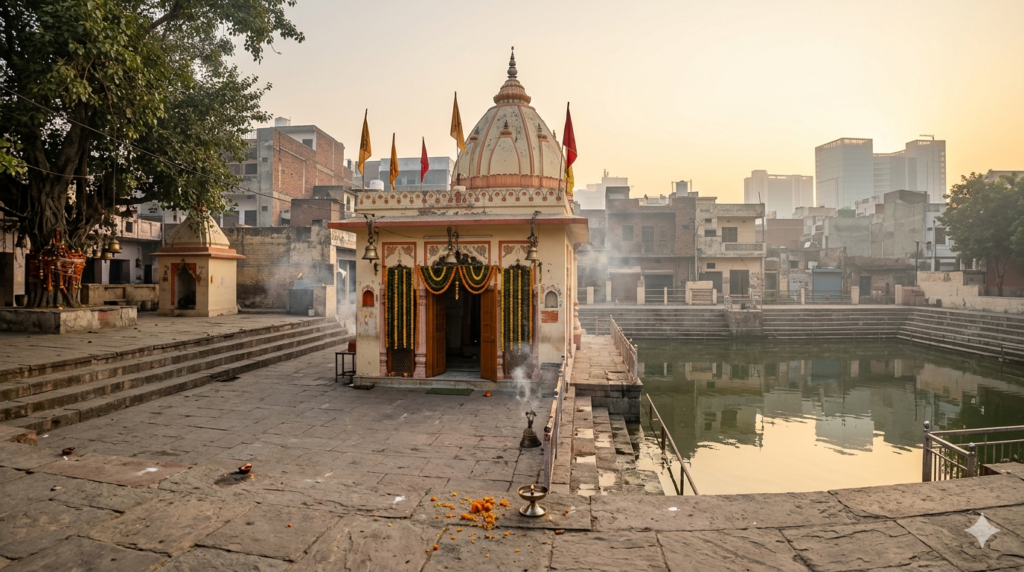
The Sheetla Mata Mandir Gurugram is the spiritual heart of the Millennium City, and it draws thousands of devotees every single day. People come to seek the blessings of a goddess believed to cool fevers and shield children from illness. If you are planning a visit, this guide covers darshan timings, aarti, the famous Masani fair, dress code and the exact routes to reach the shrine. What surprises most first-timers is the contrast — a centuries-old temple sitting quietly beside glass towers and humming highways. Read on, because everything you need to plan a smooth trip is right here.
Sheetla Mata Mandir Gurugram at a Glance
Here are the essentials before you go, so you can plan your visit at a glance.
- Deity: Sheetla Devi, also called Mata Masani — the goddess who “cools” and heals.
- Location: Sheetla Mata Road, Masani village, Sector 6, Old Gurugram, Haryana 122001.
- Timings: 6:00 AM to 8:00 PM on normal days; extended hours during Navratri.
- Entry fee: Free for all devotees; only parking carries a charge.
- Best time: Early weekday mornings, and the Chaitra Navratri season.
- Managed by: Shree Mata Sheetla Devi Shrine Board.
The Goddess and the Legend Behind the Shrine
Sheetla Devi is worshipped across North India as a healing mother. Her name comes from the Sanskrit word for “the one who cools.” Because of this, devotees believe she calms fevers, smallpox, measles and other heat-borne illnesses. Mothers have prayed to her for the health of their children for generations.
The Gurugram tradition gives her a deeply local identity. Here, the goddess is linked with Kripi, also called Lalita, the wife of Guru Dronacharya from the Mahabharata. According to the legend, Dronacharya ran his ashram in this region while teaching the Pandava and Kaurava princes. After Kripi devoted her life to nursing sick children, the people honoured her as Mata Masani. Like other great Devi shrines such as the Vaishno Devi temple, she is revered as a living form of the Divine Mother.
The present temple dates to the 18th century. Maharaja Jawahar Singh of Bharatpur, son of the famous Suraj Mal, built it as thanksgiving after a victory over the Mughals. Sheetla Devi is also regarded as the kuldevi, or guardian deity, of Gurugram itself. This history is what makes the Sheetla Mata Mandir Gurugram more than a temple — it is woven into the city’s identity.
What the Main Idol Actually Looks Like
Many blogs describe the deity as a plain stone, yet on the ground the truth is different. The presiding idol is a gold-polished metal image weighing around four kilograms. Priests keep it in a wooden casket on a small marble platform. Because the sanctum is railed off, devotees view the goddess through a window-like opening rather than approaching her directly.
Sheetla Mata Mandir Gurugram Darshan Timings
The Sheetla Mata Mandir Gurugram opens at 6:00 AM and closes at 8:00 PM on normal days. Morning aarti happens around 6:00 AM, while the evening aarti takes place near 7:00 PM. During Navratri, the temple stays open far longer, sometimes almost round the clock, with short breaks only for cleaning and rituals. Always check the official shrine board website before festival visits, because hours shift with the season.
Aarti and Daily Schedule
Priests perform several aartis and poojas through the day. The morning and evening aartis are the most popular, so the hall fills quickly at those times. In summer, the temple may open earlier and close later to help devotees avoid the afternoon heat. Weekdays stay calmer than weekends throughout the year.
Sheetla Mata Mandir Gurugram Entry Fee and Darshan
Entry to the temple is completely free for every devotee. You do not need a ticket or an online pass for general darshan. Some websites push paid “VIP darshan” links — treat these with caution, since no official paid darshan system exists here. Only vehicle parking carries a small charge, so keep some cash ready.
Sheetla Mata Mandir Gurugram Dress Code and Rules
There is no rigid uniform, yet modest clothing is expected. Men usually wear kurta-pajama, shirts or trousers. Women prefer sarees, salwar suits or other covered outfits. Avoid shorts, sleeveless tops and very short dresses, because this is a place of worship.
Carry minimal luggage, since large bags may be checked on busy days. Remove footwear before entering the sanctum area. Photography is restricted near the inner shrine, so follow the signs and the government security staff, who assist visitors free of cost.
The Masani Fair and Sheetla Ashtami
The temple’s biggest draw is its annual fair, the Masani Mela. It runs through the Hindu month of Chaitra, which falls in March and April. Mondays during this month see Kumbh-like crowds. A second, smaller fair also takes place during Ashadh, around June and July.
Sheetla Ashtami, also called Basoda, is the goddess’s signature festival. It arrives soon after Holi, on the eighth day of the Chaitra fortnight. On this day, families offer cold food cooked the previous evening, because lighting a fresh fire is traditionally avoided. The custom honours the “cooling” nature of the goddess, and festival season is when this ancient shrine truly comes alive.
Mundan Ceremony: A Tradition Unique to This Temple
Few temples in the region are as closely tied to the mundan ritual, the first hair-cutting ceremony for a child. Parents bring infants and toddlers here to offer the first locks of hair to the goddess. The trust has built dedicated mundan halls for this purpose. If you plan a mundan, arrive early, since slots fill fast on auspicious days.
How to Reach Sheetla Mata Mandir Gurugram
The Sheetla Mata Mandir Gurugram sits in Old Gurugram, well connected by road, rail, metro and air. It lies about 3 km from Gurugram Railway Station and close to the old bus stand. From central Delhi, the drive is roughly 30 to 35 km, depending on traffic.
| Mode | Nearest Hub | Approx. Distance |
|---|---|---|
| Air | Indira Gandhi International Airport | ~20 km |
| Train | Gurugram Railway Station | ~3 km |
| Metro | HUDA City Centre (Yellow Line) | ~6 km |
| Road | Old Gurugram Bus Stand | ~1 km |
By Metro, Auto and Cab
The closest metro stop is HUDA City Centre on the Delhi Metro Yellow Line. From there, an auto-rickshaw or cab reaches the temple in about fifteen minutes. Cabs and autos are easy to find across Gurugram. During fairs, expect traffic diversions, so leave extra time.
Best Time to Visit Sheetla Mata Mandir Gurugram
Early morning, between 6 and 8 AM, is the calmest window for darshan. Weekdays are far lighter than weekends. The Chaitra Navratri season is the most auspicious time, although it is also the most crowded. If you prefer peace over festivity, avoid Mondays and the fair days.
Weather matters too. October to March brings pleasant conditions across Delhi-NCR. Summers turn harsh by midday, so plan early visits between April and June, and carry water during the warmer months.
Nearby Attractions and Where to Stay
Gurugram offers plenty around the shrine. Kingdom of Dreams, Cyber Hub and Sultanpur National Park are popular stops within a short drive. Families often pair a temple visit with a meal at the city’s many restaurants.
For an overnight stay, Gurugram has hotels across every budget, from guesthouses to luxury chains near Cyber City. The temple itself does not run large pilgrim lodging, so book a city hotel ahead during fair season. Travellers touring North India sometimes add the Maya Devi Temple in Haridwar to the same trip. If Devi temples draw you, the Mahalakshmi Temple in Kolhapur is another revered Shakti shrine worth exploring.
Insider Tips Most Guides Skip
- Go on a weekday morning if you want a quiet darshan, because weekends and Mondays get packed.
- Keep small change ready for offerings, prasad and the parking fee.
- Don’t fall for touts near the gate, since the government security staff guide you at no cost.
- Plan a mundan early in the day, as the halls get busy by mid-morning.
- Walk to the sacred pond beside the temple, which many rushed visitors miss.
These small habits make a temple trip far smoother for first-time visitors.
Common Myths, Corrected
Plenty of online guides repeat errors about this shrine, so here are three worth clearing up before you go.
“The temple is in Delhi.” It is not. The shrine stands in Gurugram, Haryana, though it sits close to the Delhi border. “You must pay for darshan.” General darshan is free, full stop. “There is only one fair a year.” In fact, two melas take place — one in Chaitra and a smaller one in Ashadh. You can confirm these basics on the Gurugram district tourism page.
Before You Go
A visit to the Sheetla Mata Mandir Gurugram rewards both faith and curiosity. Aim for an early weekday morning, dress modestly and keep some cash handy. Time your trip with Chaitra Navratri if you want the full festive energy, or skip it for a calmer darshan. Above all, give yourself a few quiet minutes by the pond, because that stillness, beside a roaring city, is the temple’s real gift.
Frequently Asked Questions
What are the Sheetla Mata Mandir Gurugram timings?
The temple opens at 6:00 AM and closes at 8:00 PM on normal days. Morning aarti is around 6:00 AM and evening aarti near 7:00 PM. During Navratri, the hours extend well beyond this, so check before festival visits.
Is there an entry fee at the temple?
No, entry and general darshan are free for all devotees. There is no official paid or VIP darshan here. Only vehicle parking carries a small charge.
Which goddess is worshipped here?
The shrine is dedicated to Sheetla Devi, also known as Mata Masani. She is revered as a healing goddess who protects children from fevers and diseases. In local tradition she is linked to Kripi, the wife of Guru Dronacharya.
How do I reach Sheetla Mata Mandir Gurugram from Delhi?
The temple is about 30 to 35 km from central Delhi by road. The nearest metro is HUDA City Centre on the Yellow Line, followed by a short auto or cab ride. Indira Gandhi International Airport is roughly 20 km away.
When is the Masani fair held?
The main Masani Mela runs through Chaitra, in March and April, with huge crowds on Mondays. A second, smaller fair takes place in Ashadh, around June and July. Sheetla Ashtami, just after Holi, is the goddess’s special day.
What is the dress code at the temple?
Modest, covered clothing is expected. Men can wear kurta-pajama or trousers, while women prefer sarees or salwar suits. Avoid shorts and sleeveless tops.
Can I do my child’s mundan at the temple?
Yes, the temple is famous for the mundan ceremony. Dedicated halls host the first hair-cutting ritual for children. Arrive early on auspicious days, because the halls fill quickly.