
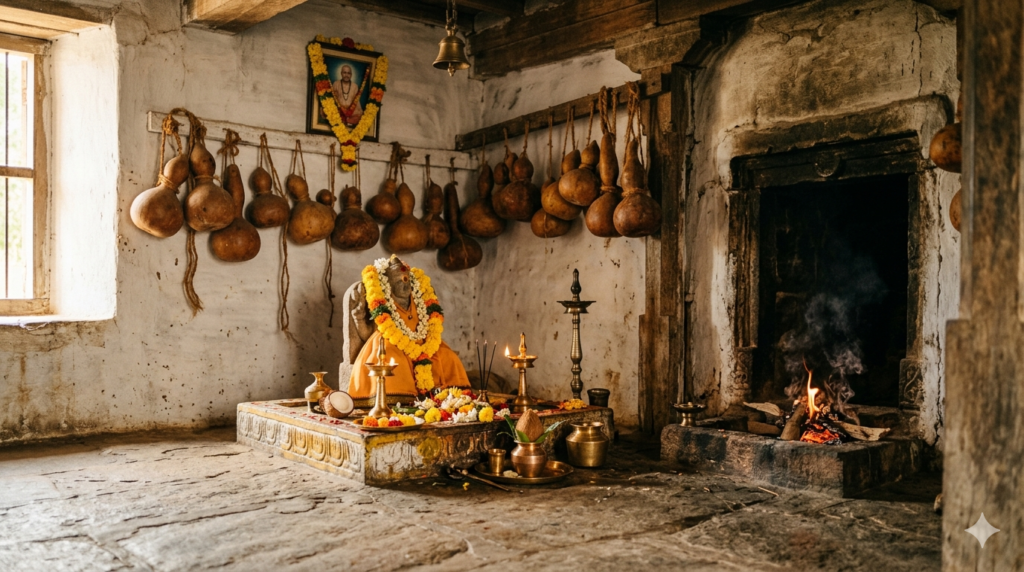
The Sorakayala Swamy Temple in Narayanavanam opens daily from 6:00 AM to 8:00 PM. This small shrine honours a saint who took living samadhi here in 1902. It draws devotees who come for quiet prayer, healing faith, and inner calm. The temple sits right opposite the famous Kalyana Venkateswara Swamy Temple. Yet most Tirupati pilgrims walk past it without knowing the story. A sacred fire still burns inside, much like the dhuni at Shirdi. Below you will find verified timings, the saint’s real history, the bottle-gourd ritual, and how to reach the temple.
Sorakayala Swamy Temple at a Glance
Here are the essentials before you plan a visit. Bookmark this list, because it answers the questions most first-time visitors ask.
- Location: Nagar Street, Narayanavanam, Tirupati district, Andhra Pradesh – 517581
- Timings: 6:00 AM to 8:00 PM, every day of the week
- Revered figure: Sri Sorakayala Swamy, an Avadhoota saint linked to the Dattatreya tradition
- Known for: the saint’s jeeva samadhi, a perpetual dhuni (sacred fire), and the bottle-gourd offering
- Nearest landmark: directly opposite the Kalyana Venkateswara Swamy Temple
- Distance from Tirupati: about 38 km, while Puttur railway station is just 5 km away
- Entry: free, since no ticket is needed for darshan
Sorakayala Swamy Temple Timings and Darshan
The Sorakayala Swamy Temple stays open from 6:00 AM to 8:00 PM on all days. Mornings before 9 AM feel calmest, while Pournami (full moon) and Amavasya (new moon) days draw the biggest crowds. Darshan is free, and no online booking exists. The temple may adjust its hours slightly on festival days.
Several travel blogs list the opening time as 5:00 AM. However, the temple’s official website states 6:00 AM. So plan around the later figure, because an early dawn arrival can mean a locked gate.
| Detail | Information |
|---|---|
| Opening time | 6:00 AM |
| Closing time | 8:00 PM |
| Weekly off | None — open daily |
| Busiest days | Pournami and Amavasya |
| Darshan fee | Free |
Allow 20 to 30 minutes for an unhurried darshan. Many devotees sit near the samadhi much longer, since the space stays quiet through most of the day. If you want stillness, weekdays beat weekends easily.
History Behind the Sorakayala Swamy Temple
Sri Sorakayala Swamy lived in Narayanavanam during the late 1800s. He took jeeva samadhi on 9 August 1902, and devotees revere him as an Avadhoota — a wandering ascetic of the Dattatreya tradition. The temple later grew around his samadhi, which faces the Kalyana Venkateswara Swamy Temple.
He looked like an ordinary beggar, yet people say he carried deep knowledge. He moved with a stick and a dried gourd shell, while two dogs always followed him. He gave his food to the dogs and kept little for himself.
Stories describe how he treated wounds and skin diseases with neem leaves, turmeric, and simple herbs. Devotees also remember him as a fortune-teller who spoke of past and future. Although he seemed unlettered, he knew the Vedas, the Puranas, and the hymns of the Alwars and Nayanmars.
His birthplace, caste, and family remain unknown even today. Some accounts call him Ramaswamy, yet no record confirms it. A separate shrine in Purasaiwalkam, Chennai, is also dedicated to him.
One myth needs correcting here. A few listing sites claim the saint lived for 600 years. No evidence supports that. He is remembered across roughly the final decades of the 19th century in Narayanavanam, up to his samadhi in 1902.
Why He Is Called Sorakaya Swami
“Sorakaya” means bottle gourd in Telugu. The saint used a dried bottle-gourd shell as his only bowl for food and water. Because that gourd became his constant companion, villagers named him Sorakaya Swami, or Sorakayala Swamy. The name stuck, and it now identifies both the saint and the temple.
The Dhuni That Still Burns
A small sacred fire, the dhuni, burns continuously inside the shrine. The saint once sat before this fire for hours and comforted those who came to him. Priests still gather ash from the fire and offer it as vibhuti (holy ash) prasad. Devotees believe this dhuni vibhuti supports their health and peace of mind, much as the Shirdi dhuni does for Sai devotees.
Rituals, Poojas and the Bottle-Gourd Offering
The temple keeps a simple but distinctive set of rituals. The most unusual one involves the bottle gourd itself, and it gives the shrine its signature look.
Devotees tie or hang bottle gourds on the temple walls while they pray. As a result, gourds of many sizes dangle around the prayer area. People believe that offering a gourd with a sincere wish can bring relief from problems, so the custom continues year after year.
Special poojas take place on every Pournami and Amavasya. On these days, families travel from nearby villages for prayers, annadanam (free meals), and quiet time near the samadhi. A larger Guru Pooja, the saint’s aradhana, falls in the month of August, when his samadhi is remembered.
Dhuni vibhuti remains the main prasad here. Lighting lamps, offering coconuts, and sitting in silence are also common. These are acts of faith and tradition, and the temple makes no medical claim about them.
How to Reach the Sorakayala Swamy Temple
The Sorakayala Swamy Temple sits about 38 km from Tirupati and only 5 km from Puttur. Buses, autos, and taxis connect all three towns easily. The nearest railway station is Puttur, while the nearest airport is Tirupati at Renigunta.
| Mode | Details |
|---|---|
| By road | ~38 km from Tirupati; APSRTC buses run toward Puttur, Picchatur and Nagalapuram |
| By train | Puttur station, 5 km away; take an auto or local bus from there |
| By air | Tirupati (Renigunta) airport, around 45 km, then a taxi |
If you travel by bus, get down at the Puttur Bypass when a direct service is not available. From there, Narayanavanam is a short 5 km hop by auto. Because the town is small, the samadhi is an easy walk once you reach the bus stand.
Temples and Places to Visit Nearby
Narayanavanam packs several sacred sites into a small area. So a single trip can cover much more than one shrine.
The Kalyana Venkateswara Swamy Temple stands right across the road, managed by Tirumala Tirupati Devasthanams (TTD). Devotees believe Lord Venkateswara married Goddess Padmavathi at this very spot. The daily Kalyanotsavam, performed from 10 AM to 4 PM, is its main draw.
Close by, the Avanakshamma Temple sits on the Tirupati–Chennai highway near the River Aruni. The Kailasakona waterfalls, about 15 km away, make a refreshing add-on when water levels are good. For a wider plan, see our guide to the best temples near Tirupati within 50 km.
Best Time to Visit and Dress Code
The temple welcomes devotees throughout the year. Still, the months from October to February feel most pleasant, since the weather stays cool and dry. Summer afternoons can get harsh, so morning visits work best then.
Dress modestly, as you would for any traditional shrine. Men usually wear shirts with trousers or a dhoti, while women prefer sarees or salwar suits. Remove your footwear before entering, because shoe storage is available near the gate. Carry a small bottle of water and a valid ID for convenience.
A Simple One-Day Plan from Tirupati
Many pilgrims try to fit Narayanavanam into a Tirupati trip. With an early start, one relaxed day covers everything comfortably.
- Leave Tirupati by 7:30 AM and reach Narayanavanam in about an hour.
- Begin at the Sorakayala Swamy samadhi for a calm early darshan and dhuni vibhuti.
- Cross the road to the Kalyana Venkateswara Swamy Temple for the Kalyanotsavam.
- Stop at the Avanakshamma Temple before lunch.
- Drive to the Kailasakona waterfalls in the afternoon if the season allows.
- Return to Tirupati by evening, well before the temples close.
This combined route is the real value of the area. No single official page maps it out, yet it saves you a wasted second trip.
Insider Tips Most Guides Miss
A little planning makes the visit smoother. These practical pointers come from how devotees actually use the shrine.
- Visit on a weekday for near-empty prayer halls and unhurried darshan.
- Carry a bottle gourd from home, since shops near the gate may run out on busy days.
- Reach before 9 AM, because the morning ambience here is the quietest you will find.
- Combine the trip with the temple opposite, as both sit within a two-minute walk.
- Keep small change for annadanam donations and lamp offerings.
- Pournami and Amavasya are spiritually charged but crowded, so choose based on your mood.
Before You Go
The Sorakayala Swamy Temple rewards travellers who value stillness over spectacle. Verified timings run from 6 AM to 8 PM, entry is free, and the samadhi sits right opposite a major Venkateswara shrine. If you want a peaceful pause on your Tirupati circuit, start here early, collect the dhuni vibhuti, and pair it with the temple across the road. A weekday morning gives you the calmest experience of all.
Frequently Asked Questions
What are the Sorakayala Swamy Temple timings?
The temple is open daily from 6:00 AM to 8:00 PM. These hours come from the temple’s official website. Timings may shift slightly on major festival days, so a morning visit is the safest plan.
Where is the Sorakayala Swamy Temple located?
It stands on Nagar Street in Narayanavanam, Tirupati district, Andhra Pradesh – 517581. The shrine sits directly opposite the Kalyana Venkateswara Swamy Temple. Narayanavanam lies about 38 km from Tirupati.
Why do devotees offer bottle gourds at the temple?
The saint carried a dried bottle-gourd shell as his bowl, which gave him his name. So devotees now tie gourds on the temple walls with a prayer. They believe a sincere offering can bring relief from troubles, and gourds of many sizes hang around the shrine.
Who was Sri Sorakayala Swamy?
He was a revered Avadhoota saint who lived in Narayanavanam and took jeeva samadhi on 9 August 1902. Devotees link him to the Dattatreya tradition. People remember him for healing the sick, guiding the troubled, and sitting before a sacred fire.
Is there an entry fee or online booking?
No, darshan at the temple is free. There is no online booking, and you simply walk in during open hours. Donations for poojas and annadanam are voluntary.
How far is the temple from Tirupati?
The temple is roughly 38 km from Tirupati and 5 km from Puttur. APSRTC buses, autos, and taxis cover the route. Puttur is the nearest railway station, while Tirupati (Renigunta) is the nearest airport.
What is dhuni vibhuti and why is it given?
Dhuni vibhuti is the holy ash collected from the sacred fire that still burns inside the shrine. Priests offer it as prasad to devotees. Many believe it supports health and peace of mind, though the temple makes no medical claim about it.