
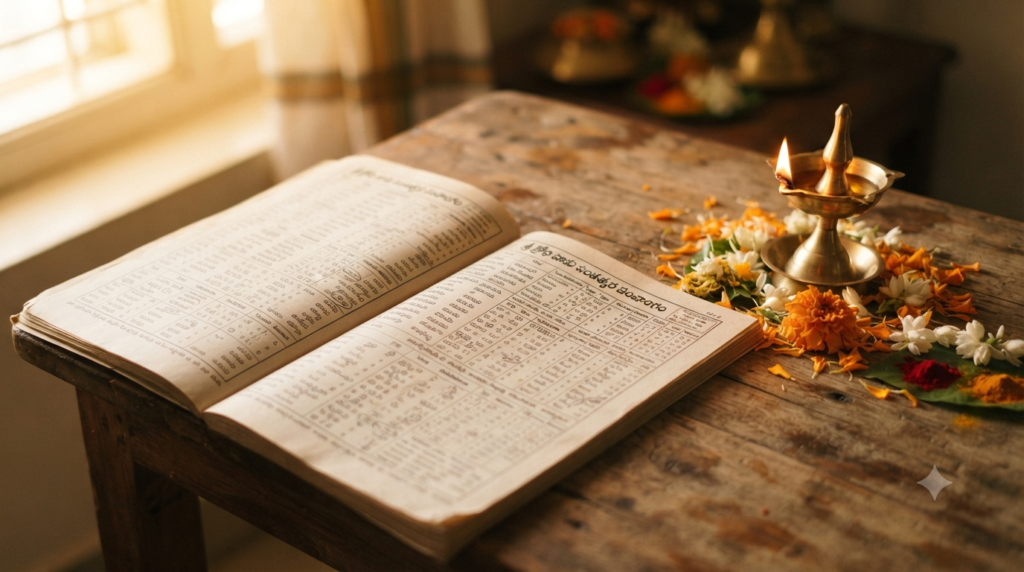
The Kalabhairava Guru Gantala Panchangam is a traditional Telugu almanac used to pick auspicious dates and plan festivals. Telugu families rely on it for daily muhurthas through the whole year. It is a printed booklet, released fresh for each Telugu Samvatsara, and trusted across Andhra Pradesh and Telangana.
This guide covers what the almanac contains, the verified 2026-27 Parabhava festival dates, and the truth about “free PDF” downloads. Go Kshetra is an independent temple and pilgrimage guide. We are not affiliated with any panchangam publisher. We do not sell, host, or distribute the almanac or its PDF.
Quick Facts at a Glance
- What it is: a yearly Telugu drik-ganita (astronomically computed) almanac.
- Publisher: commonly associated with Mohan Publications, prepared for the Rajahmundry region but used across the Telugu states.
- Current edition: the Parabhava Nama Samvatsara year, which began on Ugadi, 19 March 2026, and runs to Ugadi 2027.
- Where to get it: printed copies from bookshops, publisher outlets, and marketplaces like Amazon.
- Price: usually a modest booklet cost of roughly ₹50–₹150; confirm the current price with the seller.
What Is Kalabhairava Guru Gantala Panchangam?
A panchangam is a Hindu almanac built from five daily elements, and this edition presents them for the whole Telugu year. The five parts are Tithi (lunar day), Vara (weekday), Nakshatra (star), Yoga (a lunar-solar combination), and Karana (half of a tithi). Together these fix the auspicious and inauspicious windows for any given day.
The “Gantala” in the name points to timing, because gantalu means hours in Telugu. So a Gantala Panchangam is prized for its hour-by-hour muhurtha detail. The Kalabhairava Guru Gantala Panchangam also honours Kalabhairava, a fierce form of Lord Shiva. He is revered as the guardian of time.
Who Publishes It and Where It Applies
This almanac is prepared using drik-ganita, the modern astronomical method that the Government of India also endorses for calendar calculations. It was originally computed for Rajahmundry (Rajamahendravaram), yet its readings suit devotees across Andhra Pradesh and Telangana. The calculations depend on local sunrise and sunset. So users far outside the Telugu region should adjust timings or check a local panchangam.
Every year the publisher releases a new edition named after that year’s Samvatsara. The Telugu calendar follows a 60-year cycle, and each year carries its own name. The 2025-26 book, for instance, was the Vishwavasu edition, while the current one is the Parabhava edition.
What’s Inside the Kalabhairava Guru Gantala Panchangam
The booklet is far more than a date list. It packs a full year of ritual planning into about a hundred Telugu pages. Most editions include the following core sections.
| Section | What it covers |
|---|---|
| Daily panchangam | Tithi, Vara, Nakshatra, Yoga and Karana for each day |
| Muhurthas | Auspicious windows for weddings, gruhapravesam and new ventures |
| Festival calendar | Dates for Ugadi, Sri Rama Navami, Deepavali and more |
| Planetary transits | Movements of the Sun, Moon and planets through the year |
| Vratams and fasts | Ekadashi, Sankashti and other observance days |
Many editions also print the year-ahead rasi phalalu (zodiac forecasts) that families read aloud on Ugadi day. Some copies flag kartari and mudhami periods too, when tradition advises against starting new work or ceremonies. These forecasts are shared as tradition and belief, so treat them as cultural guidance rather than guaranteed outcomes.
Verified 2026-27 Festival Dates (Parabhava Samvatsara)
Older copies of this article carried wrong dates after an automated year-swap, so here are the corrected, source-checked ones. The current Telugu year is Parabhava Nama Samvatsara, and it opened on Ugadi, 19 March 2026. Notably, most 2026 festivals land about three weeks later than in 2026. This happened because the Hindu lunisolar calendar added a leap month, called adhik maas.
| Festival | Date (2026) | Day |
|---|---|---|
| Ugadi (Telugu New Year) | 19 March 2026 | Thursday |
| Sri Rama Navami | 26 March 2026 | Thursday |
| Sri Krishna Janmashtami | 4 September 2026 | Friday |
| Vinayaka Chavithi | 14 September 2026 | Monday |
| Vijaya Dasami (Dussehra) | 20 October 2026 | Tuesday |
| Deepavali (Lakshmi Puja) | 8 November 2026 | Sunday |
A few dates split by tradition, so confirm the exact one your family follows. Vaishnava households observe Sri Rama Navami on 27 March 2026, a day after the common date. In much of South India, Deepavali is kept on Naraka Chaturdashi, which falls on 7 November 2026. For precise tithi end-times and muhurthas, always read them from the printed panchangam or a trusted source like Drik Panchang.
Where to Buy Kalabhairava Guru Gantala Panchangam Safely
The genuine almanac is a printed publication, so the safest route is to buy a fresh copy for the current year. Bookshops across the Telugu states stock it, especially in the weeks around Ugadi when new editions arrive. You can also order it online through Amazon. Established Telugu book portals list titles from Mohan Publications too.
Always check the Samvatsara name on the cover before you pay. A 2025-26 Vishwavasu copy will mislead you if you need Parabhava-year timings. If a seller cannot confirm the year, treat that as a warning sign. Buying direct from the publisher or a known bookseller also supports the astrologers who compute these readings each year.
The Truth About the Kalabhairava Guru Gantala Panchangam PDF
Many websites promise a “free Kalabhairava Guru Gantala Panchangam PDF,” yet that claim needs a careful reality check. There is no free official government PDF of this almanac, because it is a copyrighted commercial publication. Files floating on random third-party sites are usually unofficial scans, and they may be outdated, incomplete, or riddled with typing errors.
An error in a muhurtha or a tithi can quietly wreck a wedding date. So accuracy matters far more than a free download.
If you use a digital copy, get it only from the publisher or an authorised seller. Then cross-check key dates against a second trusted panchangam. This caution is the single most important tip most other pages skip.
Spotting a fake copy is not hard once you know the signs. A genuine edition names the Samvatsara and the publisher on the cover. A dubious file often has no publisher, a mismatched year, or an upfront “processing fee” demanded by an unknown site. When in doubt, buy the print copy instead.
What the Parabhava Samvatsara Year Signifies
Each Telugu year in the 60-year cycle carries its own name, and 2026-27 is the Parabhava Nama Samvatsara. The word Parabhava can sound heavy, since it is often translated as setback or humbling. In tradition, though, scholars read it more gently. Many describe it as a year for introspection and for rising above ego.
This meaning is a matter of belief and cultural interpretation, not a fixed prediction. The Kalabhairava Guru Gantala Panchangam simply records the year under this name, with its timings. How you read the significance is left to your own faith and family custom.
How to Read the Kalabhairava Guru Gantala Panchangam
The daily tables look dense at first, though they follow a simple left-to-right logic. Each row is one calendar day, and the columns march through the five elements plus sunrise and sunset. Once you know what each column means, planning gets quick.
Understand the five elements
Read Tithi to know the lunar phase, and Vara to confirm the weekday. Nakshatra tells you the ruling star, which many rituals depend on. Yoga and Karana refine whether the window is favourable, so priests weigh all five together.
Match a date to your event
Find the muhurtha section for the event you are planning, such as a marriage or a gruhapravesam. Then cross-check that date against the daily table for the nakshatra and tithi. If both agree, you have a strong window.
Consult a priest for big decisions
For weddings, property rituals, or naming ceremonies, a purohit who reads Telugu panchangams can interpret the finer details. A priest also weighs your family’s lineage and birth stars, which a printed table alone cannot capture. This step is optional for minor plans, yet it is wise for major ones.
Common Mistakes to Avoid
First-time users tend to trip on the same few points, so keep this short checklist handy.
- Using the wrong year: a Vishwavasu (2025-26) copy will not match Parabhava (2026-27) timings.
- Ignoring your location: timings shift with sunrise and sunset, so adjust if you live far from the Telugu states.
- Trusting a random PDF: unofficial files often carry errors, as noted above.
- Reading terms loosely: Sanskrit and Telugu terms are precise, so double-check any you do not know.
- Skipping verification: for a major muhurtha, confirm with a priest or a second panchangam.
How Devotees Actually Use the Kalabhairava Guru Gantala Panchangam
In many Telugu homes, the new Kalabhairava Guru Gantala Panchangam is bought right around Ugadi. The family then gathers to hear the year’s forecast. From there, people mark the nakshatra days that matter to them, weeks ahead of any ceremony. That early planning is why the booklet stays popular even in the smartphone era.
Astrologers and purohits keep the print edition on hand for a reason. It carries local samskaras and regional timings that generic apps often miss. So the almanac serves both the casual reader and the professional.
Panchangam Booklet or a Calendar App?
Free calendar apps show tithis and festivals, so many people ask whether they still need the printed booklet. For a quick daily check, an app is fine. For serious planning, the print edition still has an edge.
The booklet gives the full muhurtha detail and the regional samskaras that apps often skip. It also works without a phone or a signal, which matters in many homes. So most families keep both, and use the print copy for the big decisions.
Before You Buy: Key Points to Remember
The Kalabhairava Guru Gantala Panchangam remains one of the most trusted Telugu almanacs. Buy the current Parabhava (2026-27) edition, and verify the Samvatsara printed on the cover. Avoid dubious “free PDF” links, because they can carry errors. For any major event, confirm the muhurtha with a priest or a second source.
Used this way, the almanac is a dependable companion for a whole year of planning. You may also find our guides to Rahu Kalam and Yamagandam timings and the Pidaparthi Gantala Panchangam 2026 useful alongside it.
Frequently Asked Questions
What makes Kalabhairava Guru Gantala Panchangam different from other panchangams?
All gantala panchangams share the same five core elements, so the daily astronomy is broadly similar. This edition is known for its detailed hour-by-hour muhurtha timings and its association with the Kalabhairava tradition. Many Telugu families simply prefer the publisher and layout they grew up with.
Which Kalabhairava Guru Gantala Panchangam edition should I use now?
Use the Parabhava Nama Samvatsara edition, which covers Ugadi 2026 to Ugadi 2027. It replaced the 2025-26 Vishwavasu edition in March 2026. Always check the Samvatsara name printed on the cover before buying.
Is there a free official PDF of the panchangam?
No. The almanac is a copyrighted print publication, so there is no free government PDF. Any free file online is unofficial, and it may contain errors, so buy a genuine copy for accurate timings.
Can I use this panchangam outside Andhra Pradesh and Telangana?
Yes, with care. The five elements apply anywhere, but the exact timings depend on local sunrise and sunset. If you live in another state or country, adjust for your location or check a regional panchangam.
Is the panchangam only for religious events?
Not at all. Families also consult it for business openings, education milestones, travel, and naming ceremonies. Any decision that benefits from an auspicious time can use it.
How much does the Kalabhairava Guru Gantala Panchangam cost?
The printed booklet usually costs a modest amount, roughly ₹50–₹150, though prices vary by seller and edition. Online orders may add shipping. Confirm the current price directly with the bookshop or portal.
When does the new edition release each year?
A fresh edition appears just before Ugadi every year, since that marks the Telugu New Year. Publishers time the release so devotees can hear the new forecast on Ugadi day. Copies reach most bookshops in the weeks leading up to the festival. Buy early, because popular editions can sell out near Ugadi.