
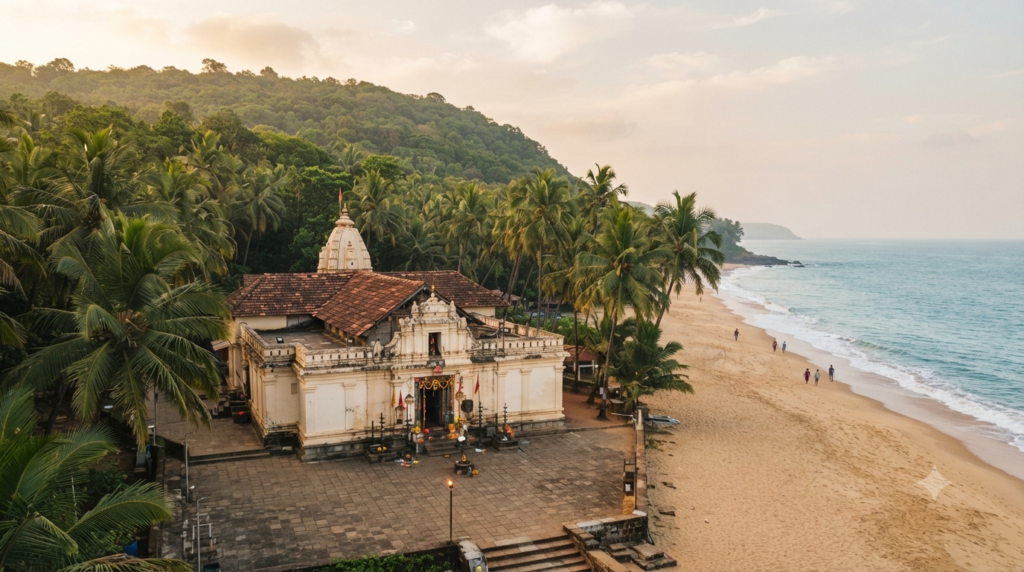
A Ganpatipule Temple Darshan puts you before one of the rarest forms of Lord Ganesha in India. The shrine holds a swayambhu (self-manifested) idol, and unusually it faces west toward the Arabian Sea. This coastal shrine sits in Ratnagiri district on the Konkan coast of Maharashtra, right where the sand meets the waves. Ancient texts call the deity the Paschim Dwar-Devata, the Western Sentinel God who guards this shore.
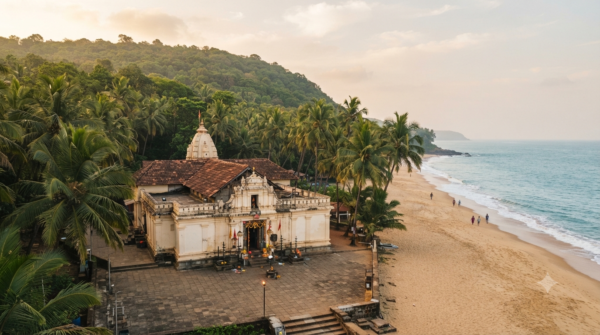
Below you will find verified timings, the real entry-fee position, and the pradakshina that most guides skip. With clear travel steps too, you can plan the trip once and get it right.
Go Kshetra is an independent pilgrimage guide. We are not affiliated with, endorsed by, or the official website of the Ganpatipule temple trust. We do not take bookings, donations, or payments — please use the official Sansthan Shreedev Ganpatipule portal for reservations and official information.
Ganpatipule Temple Darshan at a Glance
Here are the core facts before you plan. Because timings and fees can change, always confirm the current details on the official portal linked below.
| Detail | Information |
|---|---|
| Temple | Shree Swayambhu Ganpati, Ganpatipule (Sansthan Shreedev Ganpatipule) |
| Location | Ganpatipule, Ratnagiri District, Maharashtra |
| Darshan timings | 5:00 AM – 9:00 PM daily |
| Aarti | 5:00 AM, 12:00 noon, 7:00 PM |
| Entry | Free; special darshan around ₹200 / ₹500 (confirm at counter) |
| Prasad | Khichdi 12:30 PM – 2:00 PM; besan ladoo at the counter |
| Nearest railway | Ratnagiri (about 25–30 km) |
| Nearest airports | Kolhapur (~140 km), Mumbai (~340 km) |
| Official site | ganpatipule.co.in |
Ganpatipule Temple Darshan Timings and Aarti
The temple opens at 5:00 AM and closes at 9:00 PM every day. General darshan is free, so you can simply join the queue during these hours. Three aartis punctuate the day. These fall at 5:00 AM, at 12:00 noon, and again at 7:00 PM.
Devotees can also offer direct puja on the symbolic image between 7:00 AM and 11:00 AM, when a priest guides the ritual. If you want the calmest experience, aim for the first aarti, because the queue is shortest just after opening. For a section-by-section breakdown, our Ganpatipule temple timings guide tracks the daily schedule in detail.
Entry Fee and Special Ganpatipule Temple Darshan
There is no entry fee for a Ganpatipule Temple Darshan. General darshan is free for everyone, and donations are entirely voluntary. Because the shrine is small, the queue usually moves faster than at large hill temples.
The trust does offer a special or expedited darshan, typically around ₹200 and ₹500, usually arranged near the morning and evening aarti. These figures are indicative, so confirm the current amount at the temple counter before you pay. This page does not book or sell any darshan — arrange special darshan only in person at the temple or through the official trust portal.
Ganpatipule is a free darshan shrine — no ticket is needed for the general queue, and any special-darshan fee is confirmed at the temple counter.
Prasad on Your Ganpatipule Temple Darshan
Two prasad experiences stand out here. Khichdi prasad is served daily between 12:30 PM and 2:00 PM, so a midday visit lets you receive it fresh. Many pilgrims plan their darshan around this window because the khichdi is simple, warm, and deeply satisfying.
The temple counter also sells the famous besan ladoo, made in pure ghee and sold in small packs. Prices are modest, though they change over time, so check the current rate at the counter. If free-lunch details matter to your plan, our khichdi prasad timings guide covers the daily serving in full.
Pradakshina: The Heart of a Ganpatipule Temple Darshan
This is the part most guides miss, yet it defines the pilgrimage. At Ganpatipule, the pradakshina (circumambulation) does not circle the sanctum alone — devotees walk around the entire hill on which the swayambhu shrine rests. The path runs roughly a kilometre, so allow around 30 minutes at an easy pace.
The route hugs the coast, with the Arabian Sea on one side and the hillside on the other. Because it is largely flat and paved, most pilgrims manage it comfortably.
On Sankashti Chaturthi, the temple palkhi sets out for a ceremonial pradakshina in the evening, usually around 4:00 PM. The atmosphere turns festive as it moves. Our Kolhapur Mahalakshmi darshan guide is a useful companion if you are touring Maharashtra’s coastal temples.
The Story Behind the Swayambhu Shrine
The Ganpatipule shrine dates back roughly 400 years. Local tradition credits a devotee named Balbhat Bhide, who was deep in penance in a kevada grove at the foot of the hill. He is said to have found a self-formed idol of Ganesha here, and a shrine grew around it.
The name itself carries the story. “Ganpati” honours the Lord of the Ganas, while “pule” means sand dune in Marathi. So Ganpatipule reads as “Ganesha of the sand dune,” which fits the idol that rose from the coastal sand. Because the deity faces west, ancient texts count it among the Ashta Dwar Devatas, the eight guardian deities of the subcontinent.
This heritage is the real draw of a Ganpatipule Temple Darshan. You are not visiting a built idol placed by hand, but a form devotees believe emerged on its own. That distinction is what sets this Konkan shrine apart from the many crafted Ganesha temples across Maharashtra.
Festivals at the Temple
Ganesh Chaturthi is the grandest festival here, drawing huge crowds late in the monsoon. The town fills with lamps, music, and processions, so book any stay months ahead. Expect long queues throughout the festival days.
Sankashti Chaturthi, observed every month, is special too. On this day the temple palkhi sets out for a ceremonial pradakshina in the late afternoon. Deepotsav, the festival of lamps, is another highlight, when the shrine and shoreline glow after dark. If you prefer a peaceful visit, plan around these dates rather than during them.
How to Reach for Ganpatipule Temple Darshan
Ganpatipule sits on the Konkan coast, so most pilgrims arrive by road after a train or flight to a nearby hub. Here is how each route works.
By Air
The two commonly used airports are Kolhapur (about 140 km) and Mumbai (about 340 km). From either, you can hire a taxi or take a state transport bus toward Ratnagiri and then Ganpatipule. Newer regional airports at Ratnagiri and Sindhudurg are developing, so check current flight availability before you rely on them.
By Train
Ratnagiri is the primary railhead, about 25–30 km away on the Konkan Railway line. Trains connect it with Mumbai, Pune, Goa, and several southern cities. After you reach Ratnagiri, local buses, autos, and taxis run directly to the temple.
By Road
Ganpatipule is well linked by NH-66 and state transport buses from Mumbai, Pune, Kolhapur, and Ratnagiri. The coastal drive is scenic, since it winds past creeks, hills, and glimpses of the Arabian Sea. Private cabs and self-drive both work well, though the ghats can be slow after heavy rain.
Where to Stay for Your Ganpatipule Temple Darshan
The temple trust runs a Bhakta Niwas with clean two- and three-bed rooms, both AC and non-AC, close to the shrine. Maharashtra Tourism’s MTDC resort and several private homestays fill in the rest. Indicative tariffs start at roughly ₹1,000 and rise with the season, so treat any figure as approximate.
Rooms fill fast on weekends, holidays, and during Ganesh Chaturthi, so book early through the official trust portal. This guide does not handle bookings or publish private contact numbers — reserve only through official channels to stay safe from fake portals.
Best Time for Ganpatipule Temple Darshan
Winter, from October to February, is the best window for a Ganpatipule Temple Darshan. Daytime temperatures stay pleasant, roughly 16–30 °C, and the sea breeze makes post-darshan beach walks a joy. November to January is the peak, so expect livelier crowds.
The monsoon, from June to September, turns the Konkan lush and green, although heavy rain and rough seas can disrupt travel. Summer, from March to May, gets hot and humid, so plan an early-morning or evening darshan if you visit then.
Insider Tips Most Guides Miss
- Arrive around 4:30–5:00 AM for the first aarti, because you get a quiet sanctum and the shortest queue.
- Complete the hill pradakshina — it is the signature ritual here, and many visitors leave without doing it.
- Time a midday visit if you want khichdi prasad, since it is served only between 12:30 PM and 2:00 PM.
- Dress modestly with shoulders and knees covered, as this is a living temple, not just a beach spot.
- Photography is usually restricted inside the sanctum, so ask staff before you click.
- Carry small change for coconuts, flowers, and ladoo packs sold near the entrance.
Health and Safety on the Coast
The pradakshina and temple steps are gentle, but the sea beside them needs respect. Currents at Ganpatipule Beach can be strong, so avoid deep water, especially during and just after the monsoon. Check tide timings before a beach walk, because high tide narrows the shore quickly.
Summer sun is intense here, so carry water, wear a cap, and pace elderly pilgrims. Anyone with mobility concerns should ask temple staff for help, since parts of the pradakshina path can be uneven.
Nearby Attractions
- Ganpatipule Beach — right beside the temple, ideal for a sunset walk after darshan.
- Prachin Konkan Museum — about 1 km away, showcasing Konkan life and heritage.
- Aare-Ware Beaches — roughly 8 km away, twin coves with a scenic viewpoint.
- Jaigad Fort and Lighthouse — around 20 km away, with sweeping coastal views.
- Malgund — about 1–2 km away, birthplace of the Marathi poet Keshavsut.
Distances are approximate by road, so confirm routes locally before you set off.
Before You Go
A Ganpatipule Temple Darshan blends devotion, coastline, and calm in a way few shrines match. Keep the plan simple. Arrive early for the first aarti and walk the hill pradakshina. Then receive khichdi prasad at midday, and end with a quiet beach sunset.
Verify timings and fees on the official portal, since a coastal temple’s schedule can shift with festivals and weather. Do that, and this west-facing Ganesha will reward the effort.
FAQ About Ganpatipule Temple Darshan
Is there an entry fee for Ganpatipule Temple Darshan?
No, general darshan is completely free. Donations are voluntary, and a special or expedited darshan is available for roughly ₹200 to ₹500. Confirm the current amount at the temple counter.
What are the darshan and aarti timings?
The temple is open from 5:00 AM to 9:00 PM daily. Aartis take place at 5:00 AM, 12:00 noon, and 7:00 PM. Direct puja on the symbolic image runs from 7:00 AM to 11:00 AM.
What is special about the Ganpatipule Ganesha idol?
It is a swayambhu, or self-manifested, idol believed to be around 400 years old. Unusually, it faces west toward the sea. For this reason the deity is revered as the Western Sentinel God of the Konkan coast.
Do I need to book darshan in advance?
No advance booking is needed for the free general darshan — just join the queue during opening hours. For special darshan or accommodation, use the official Sansthan Shreedev Ganpatipule portal or arrange it at the temple.
What prasad is available at the temple?
Khichdi prasad is served daily between 12:30 PM and 2:00 PM. The counter also sells the famous besan ladoo made in pure ghee, at modest, counter-confirmed prices.
How long should I plan for the visit?
Allow one to two hours for darshan, the aarti, and the hill pradakshina. Add a half-day if you also want to explore the beach, museum, or nearby forts.
Is the temple suitable for senior citizens?
Yes, the main darshan is accessible, though the pradakshina path can be uneven in places. Senior and mobility-limited pilgrims should ask temple staff for assistance when needed.
For official details, see the Sansthan Shreedev Ganpatipule trust website and the Government of India’s Utsav portal listing for this temple.