
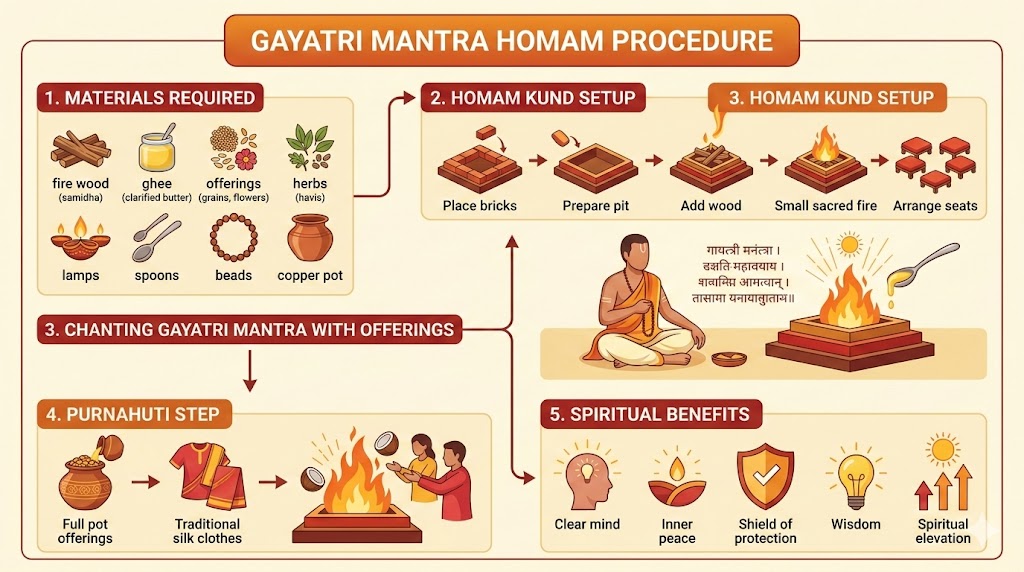
Gayatri Mantra Homam is a Vedic fire ritual centred on the powerful Gayatri Mantra—one of the most revered mantras in Sanatana Dharma. During the homam, offerings such as ghee, rice, and herbs are placed into a sacred fire while the mantra is chanted repeatedly.
Key Information at a Glance
- Timings: Practitioners
If you plan to perform Gayatri Mantra Homam at home, keep these g - Location: Purpose of the ritual
This step anchors the ritual with personal purpose
- Contact: used in many Hindu practices
The purpose is simple yet profound: offer impurities into the fire and awaken divine intelligence within the mind.
This practice traces back thousands of years to Vedic yajna traditions described in ancient scriptures. Even today, temples and spiritual households across India perform Gayatri Mantra Homam for purification, spiritual growth, and positive energy.
If done correctly—with sincerity and discipline—it becomes more than a ritual. It becomes a powerful meditation in action.
Key Takeaways
- Gayatri Mantra Homam is a sacred Vedic fire ritual performed while chanting the Gayatri Mantra and offering ghee, grains, and herbs into a consecrated fire.
- The ritual is believed to purify the mind, remove negative karma, and strengthen spiritual awareness.
- It can be performed at home with proper preparation, though traditional practice often involves a trained priest.
- The central practice involves chanting the Gayatri Mantra 108 times while making offerings to Agni (the sacred fire).
- Devotees perform Gayatri Mantra Homam for mental clarity, family well-being, spiritual protection, and prosperity.
What Is Gayatri Mantra Homam?
Gayatri Mantra Homam is a yajna (fire ritual) dedicated to the divine light of Savita—the solar consciousness represented by Surya. The ritual combines mantra chanting, fire offerings, and prayer.
At its heart lies the Gayatri Mantra, considered the “mother of the Vedas.”
The Gayatri Mantra:
Om Bhur Bhuvah Swaha
Tat Savitur Varenyam
Bhargo Devasya Dheemahi
Dhiyo Yo Nah Prachodayat
Meaning (simplified):
We meditate on the radiant divine light of the Sun. May that light awaken and guide our intellect.
Because of this meaning, Gayatri Mantra Homam is traditionally performed for clarity of thought, wisdom, and spiritual awakening.
Materials Required for Gayatri Mantra Homam
Preparing the correct materials ensures the ritual flows smoothly.
Essential Homam Items
- Homam kund (fire altar)
- Mango wood sticks
- Dried cow dung cakes
- Pure cow ghee
- Raw rice (Akshata)
- Black sesame seeds
- Navadhanyam (nine sacred grains)
- Camphor
- Coconut
- Betel leaves and betel nuts
- Fresh flowers
- Incense sticks
- Kalasha (sacred water pot)
- Turmeric and kumkum
Optional Sacred Items
- Image or idol of Gayatri Devi
- Rudraksha or tulsi mala
- Brass spoon and panchapatra
These items represent the five elements—earth, water, fire, air, and space—which form the foundation of Vedic rituals.
Step-by-Step Gayatri Mantra Homam Procedure
1. Cleanse the Space and Yourself
Begin by bathing and wearing clean clothes. Choose a quiet area facing east or north, directions associated with spiritual energy.
Light a lamp and incense before the deity image.
Pause for a moment. Slow your breathing. Let the mind settle.
2. Sankalpam (Declare the Intention)
Hold water in your right palm and state your intention for performing the Gayatri Mantra Homam.
Typical sankalpam includes:
- Your name
- Family lineage (gotra if known)
- Location
- Purpose of the ritual
This step anchors the ritual with personal purpose.
3. Kalasha Pooja
Fill a copper or brass kalasha with water. Place mango leaves and a coconut on top.
This vessel symbolises the presence of divine energy during the homam.
Offer flowers and chant short invocations to invite blessings.
4. Lighting the Sacred Fire
Prepare the fire in the homam kund using mango sticks and cow dung cakes.
Steps:
- Arrange the wood in a pyramid shape.
- Light camphor to ignite the fire.
- Slowly add ghee to stabilise the flame.
In Vedic tradition, Agni (fire) acts as the messenger carrying offerings to the divine.
5. Chant Gayatri Mantra With Offerings
This is the main ritual.
For each chant of the Gayatri Mantra:
- Offer a mixture of rice, sesame seeds, and ghee into the fire.
- Conclude each offering with the word “Swaha.”
Most practitioners complete 108 chants, a sacred number used in many Hindu practices.
The rhythmic chanting combined with the rising flames creates a powerful meditative state.
6. Purnahuti (Final Offering)
After completing the mantra repetitions, offer a final sacred mixture into the fire.
Typical purnahuti items include:
- Coconut
- Fruits
- Navadhanyam
- Betel leaves
- Ghee
This act symbolises complete surrender of ego and gratitude for divine blessings.
7. Aarti and Distribution of Prasadam
End the ritual with an aarti to Gayatri Devi.
Offer fruits or sweets as prasadam and share them with participants. This marks the closing of the homam.
Gayatri Mantra Homam Benefits
Devotees believe this ritual brings both spiritual and psychological benefits.
1. Mental Clarity
The Gayatri Mantra focuses on illumination of the intellect. Regular chanting is known to improve concentration and emotional balance.
2. Spiritual Purification
The homam fire symbolically burns negative tendencies and karmic impurities.
3. Positive Energy at Home
Fire rituals release aromatic compounds from herbs and ghee, which traditionally are believed to purify the environment.
4. Stronger Spiritual Discipline
The process requires focus, mantra repetition, and ritual discipline. Over time, this strengthens spiritual practice.
5. Family Harmony
Many households perform Gayatri Mantra Homam during festivals or special prayers for household peace.
Gayatri Mantra Homam Ritual Overview
| Stage | Purpose | Key Actions |
|---|---|---|
| Preparation | Purify body and space | Bath, clean altar |
| Sankalpam | Set intention | Declare purpose |
| Kalasha Pooja | Invoke divine presence | Decorate sacred pot |
| Fire Setup | Prepare sacred fire | Mango wood + ghee |
| Mantra Chanting | Core ritual | 108 Gayatri mantra offerings |
| Purnahuti | Completion offering | Coconut, grains, fruits |
| Aarti | Closing prayer | Distribute prasadam |
Expert Insights: Why Fire Rituals Still Matter
Vedic fire rituals like Gayatri Mantra Homam may appear symbolic, yet they serve several practical functions:
- Mantra repetition trains mental focus.
- Fire ceremonies create strong sensory anchors for meditation.
- Community rituals strengthen shared spiritual identity.
Researchers studying meditation and mantra chanting have found that rhythmic repetition can slow brain waves and reduce stress levels, similar to deep breathing techniques.
So while the ritual carries ancient symbolism, its effects often feel surprisingly modern—calm mind, steady focus, and emotional clarity.
Practical Tips for First-Time Practitioners
If you plan to perform Gayatri Mantra Homam at home, keep these guidelines in mind:
- Perform the ritual during sunrise if possible.
- Keep the fire controlled and small.
- Use natural materials only—avoid chemical products.
- Maintain silence or chant softly.
- Beginners may consult a priest for the first performance.
Consistency matters more than complexity. Even a simple, sincere homam can be deeply meaningful.
Frequently Asked Questions
Can Gayatri Mantra Homam be performed at home?
Yes. Many households perform it at home using a small homam kund. Beginners often seek guidance from a priest initially.
How many times should the Gayatri Mantra be chanted during the homam?
Traditionally 108 repetitions are used, though smaller counts such as 27 or 54 may also be performed.
Which day is best for Gayatri Mantra Homam?
Sunday, Purnima (full moon), and spiritually significant days such as Guru Purnima are considered auspicious.
What is the ideal time to perform Gayatri Mantra Homam?
Early morning during sunrise or Brahma Muhurta is considered the most favourable time.
Who can chant the Gayatri Mantra?
Anyone who chants with respect, discipline, and understanding can practise the mantra and participate in the homam.
External Official Links
Gayatri Mantra Meaning
Vedic Ritual Traditions
Gayatri Mantra Explanation
Official Resources
Helpful Tips
- Plan your visit in advance and check official websites for the latest timings and guidelines.
- Carry valid ID proof as it may be required at certain locations.
- Respect local customs and traditions during your visit.
- Keep your belongings secure and avoid carrying valuables.

V S Anantha Sharma is a Senior Content Researcher at Go Kshetra with over 20 years of experience in Indian archaeology, temple architecture, and Hindu pilgrimage traditions. A lifelong devotee and...
Go Kshetra covers 1,600+ Hindu temples across 28 states. Content sourced from official temple websites and first-hand visits. About our editorial process