
An Arunachaleswarar Temple wedding is one of the most quietly powerful ways to begin married life in Tamil Nadu, because you exchange vows before Lord Shiva worshipped as the Agni Lingam, the element of fire. Many couples assume the temple runs a slick online booking system with a fixed package, so they are surprised when the reality turns out to be more hands-on. This guide gives you the honest, on-the-ground process, since the gap between what blogs claim and what actually happens at the temple office is where most families get confused.
Here you will find the real way to arrange the ceremony, the likely costs, the rules the temple expects, and the separate legal step that turns your wedding into a recognised marriage. Above all, you will know exactly what to confirm before you travel.
Arunachaleswarar Temple Wedding at a Glance
- Where: Arulmigu Arunachaleswarar Temple, East Gopuram Street, Tiruvannamalai – 606601, Tamil Nadu.
- Administered by: the Hindu Religious and Charitable Endowments (HR&CE) Department, Government of Tamil Nadu.
- Booking: arranged in person at the temple administrative office, because there is no official online wedding-hall portal.
- Indicative cost: roughly ₹8,000 to ₹20,000 for a simple temple ceremony, though this is unofficial and varies.
- Legal status: the ritual alone is not your marriage certificate; you must register separately with the Sub-Registrar.
- Temple timings: darshan runs 5:30 AM to 8:30 PM daily.
Can You Really Get Married at the Temple?
Yes, couples do solemnise Hindu weddings at the Arunachaleswarar Temple, since it has a historic Kalyana Mandapam and priests who conduct ceremonies. The temple sits among the Pancha Bhoota Sthalams, the five element-shrines of Shiva, and represents fire. So a wedding here carries deep meaning for devotees from Tamil Nadu and neighbouring states.
That said, you should understand how this works in practice. The temple is not a commercial wedding resort. It is a living shrine where lakhs pray each month, so any private function fits around darshan and festival schedules. Because of this, simple, traditional ceremonies are far easier to arrange than large, decorated events.
The Kalyana Mandapam and where ceremonies happen
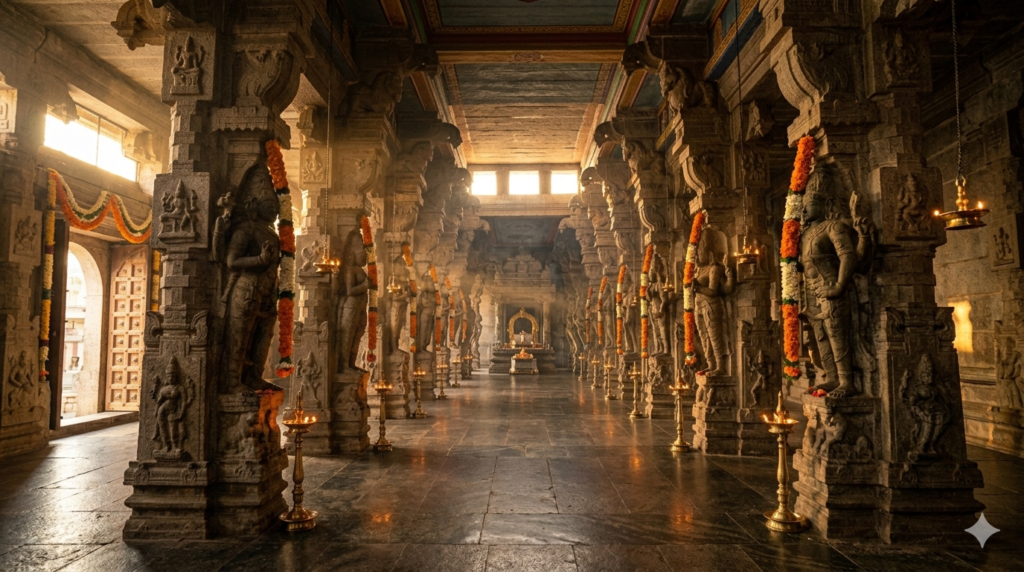
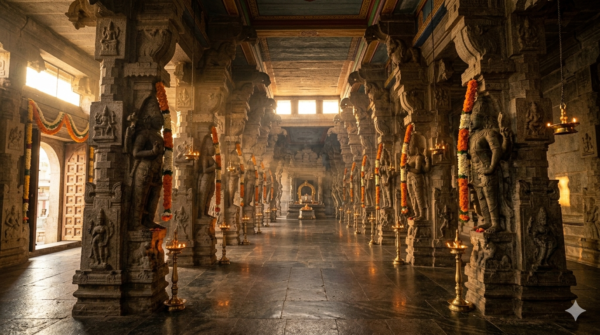
The temple complex includes a Kalyana Mandapam, a marriage hall built in the Vijayanagara style, located in the south-western section of the precinct. There is also a Thirukalyana Mandapam linked to the deities’ own celestial wedding. While these halls exist, you should never assume one is automatically available on your chosen date.
Some couples perform only the core rituals before the deity and hold the larger function at a private hall nearby. Many marriage halls cluster around the temple and Girivalam Road, so you can keep the sacred part inside and the feast outside.
How to Book an Arunachaleswarar Temple Wedding
To arrange an Arunachaleswarar Temple wedding, you visit the temple administrative office in person and submit a written request with your preferred date, muhurtham time, ritual type and guest count. The office, headed by the Executive Officer, confirms availability and the applicable charges, since these are not published online. Early booking matters because auspicious dates fill quickly.
Follow these steps for a smooth booking:
- Call ahead first. Phone the temple office on 04175-252438 before travelling, so you do not arrive on a blocked festival day.
- Visit the administrative office. Go to the office inside the temple complex and ask for the marriage or function in-charge.
- Submit your request. Provide both partners’ details, the muhurtham time, and the number of guests.
- Carry your documents. Take age and identity proof for the bride and groom, because the office verifies these before confirming.
- Confirm the charges. Ask for the exact temple service and pooja fees in writing if possible.
- Get a receipt. Request a booking or ritual receipt, since it helps later during legal registration.
Because policies shift, always reconfirm everything closer to the date. You can check the temple’s official details on the HR&CE temple portal.
Why there is no online wedding booking
Several websites present a tidy “online temple marriage booking” with a fixed tariff, yet the official HR&CE portal lists no such service. Its e-services cover donations, prasadam by post and annadanam, not wedding-hall reservations. So treat any third-party “instant booking” claim with caution, and confirm directly with the temple office instead.
Arunachaleswarar Temple Wedding Costs and Fees
A simple Arunachaleswarar Temple wedding usually costs far less than a commercial banquet hall. Reported figures range from about ₹8,000 to ₹20,000, depending on the rituals, the hall, the priest’s dakshina and any extras. However, these numbers come from blogs, not an official tariff sheet, so use them only as a rough guide.
| Expense | Indicative Cost (₹) | Notes |
|---|---|---|
| Temple service / pooja | 2,000 – 8,000 | Set by the office; confirm directly |
| Priest dakshina | 1,000 – 5,000 | Varies with ritual scale |
| Mandapam / hall use | Varies | Subject to availability |
| Nadaswaram / music | 3,000 – 10,000 | Optional, arranged privately |
| Legal registration fee | ~100 – 150 | Paid to the Sub-Registrar, not the temple |
Notice that the legal registration fee is tiny and separate. Most of your spend goes on the ceremony and optional add-ons, not paperwork.
Documents You Must Carry
You need clear proof of age and identity for both partners before the temple confirms a date. Carry Aadhaar, plus a birth certificate or school leaving certificate for age. The bride must be at least 18 and the groom at least 21, since Indian law sets these minimums.
Keep these ready:
- Aadhaar cards for the bride and groom.
- Age proof, such as a birth or 10th-standard certificate.
- Passport-size photographs of both partners.
- If either was married before, a divorce decree or death certificate of the former spouse.
- Witness ID proofs, because witnesses sign during legal registration.
The Wedding Rituals: What Actually Happens
During the ceremony, the priest seats the couple before the deity and guides them through the core Hindu rites. The heart of the wedding is the saptapadi, the seven steps the couple takes together, along with tying the mangalsutra. Family members and witnesses gather in the hall while the priest chants the Vedic mantras.
Because this is a Shiva shrine of fire, the agni (sacred fire) ritual feels especially fitting here. After the rites, many couples take darshan of Lord Arunachaleswarar in their wedding attire. You can read more in our Tiruvannamalai and Arunachala pilgrimage guide to understand the spiritual setting.
Rules for an Arunachaleswarar Temple Wedding
The temple expects traditional dress, modest conduct and respect for ongoing worship. So the dress code, photography limits and entry rules matter as much as the booking itself. Couples who plan around these rules avoid last-minute stress on the wedding morning.
Dress code and conduct
Men usually wear a dhoti or veshti, while women wear a saree or traditional attire. Leather items are discouraged inside, and footwear stays outside. Because it is a sacred space, loud music and elaborate decoration are limited within the temple itself.
Photography and videography
Photography rules vary by area, so always ask the office before bringing professional gear. Some inner sections restrict cameras entirely. When you confirm your date, get clarity on where your photographer may and may not stand.
Non-Hindu and foreign couples
Entry to the inner sanctum is generally reserved for Hindus, so interfaith couples should ask the office what is possible. Foreign nationals can usually take part in rituals, yet they must register their marriage under the Special Marriage Act, 1954. Therefore, plan the legal side carefully if either partner is not an Indian Hindu.
Legal Registration After Your Arunachaleswarar Temple Wedding
Your Arunachaleswarar Temple wedding becomes a legally recognised marriage only after you register it with the Sub-Registrar; the temple ceremony alone does not issue a marriage certificate. In Tamil Nadu, registration runs through the TNREGINET portal under the Tamil Nadu Registration of Marriage Act, 2009. You must register within 90 days to avoid a late fee.
Three legal routes apply, depending on your situation:
| Route | Who it suits | Witnesses |
|---|---|---|
| Hindu Marriage Act, 1955 | Both partners are Hindu, Buddhist, Jain or Sikh | 2 |
| Tamil Nadu Registration of Marriage Act, 2009 | Any marriage solemnised in the state | 3 |
| Special Marriage Act, 1954 | Interfaith couples or where a partner is not Hindu | 3 |
For a temple wedding between two Hindus, the Hindu Marriage Act route is simplest, since registration follows the ceremony. The priest’s receipt and a photo from the rituals support your application. Apply online at the TNREGINET portal, then visit the Sub-Registrar with both partners and your witnesses for verification.
Why the ritual and the certificate are different
A traditional Hindu wedding is religiously valid the moment the rites are complete. Still, banks, passport offices and embassies want the official certificate as proof. So treat the registration as a non-negotiable second step, not an optional formality. This single point causes more problems for couples than any other, because many skip it for months.
Best Time and Auspicious Dates
Tamil tradition avoids certain months for weddings, so most families consult a panchangam (almanac) before fixing a muhurtham. The months of Aadi and Margazhi are traditionally avoided, while Thai, Vaikasi and Maasi are considered favourable. Because demand peaks during auspicious windows, book the temple early.
Weekdays are calmer than weekends, since Saturdays, Sundays and full-moon (Pournami) days draw heavy Girivalam crowds. If you want a quieter ceremony, a weekday muhurtham is the smarter choice.
Where to Stay and How to Reach
Tiruvannamalai is well connected by road and rail, so guests rarely struggle to arrive. The railway station and bus stand both sit about 2 km from the temple. Chennai airport, roughly 185 km away, is the nearest major airport.
For accommodation, the temple devasthanam and local ashrams offer simple rooms, while private hotels cover mid-range needs. Our Tiruvannamalai temple room booking guide explains the options and rates. Booking stay early helps, because wedding-season weekends get tight.
Insider Tips Most Guides Skip
After speaking with families who married here, a few practical lessons stand out. These small details save real money and stress.
- Confirm in writing. Get fees and the date noted on paper, because verbal quotes change.
- Avoid festival clashes. Skip Karthigai Deepam and Maha Shivaratri weeks, since the temple is overwhelmed.
- Keep the temple part small. Hold the feast at a nearby hall, so the shrine stays uncluttered.
- Register quickly. Visit the Sub-Registrar within days, while your witnesses and documents are together.
- Plan darshan after. Couples can take a calmer darshan once the rites finish.
Before You Plan Your Big Day
An Arunachaleswarar Temple wedding rewards couples who plan simply and confirm details directly with the temple office. Treat the online “fixed package” claims with caution, keep your documents ready, and never skip the legal registration step. If you want the sacred fire of Arunachala to bless your union, call the office, fix a clear muhurtham, and arrive prepared. Do that, and your wedding day will carry both spiritual depth and full legal recognition.
Frequently Asked Questions
How much does an Arunachaleswarar Temple wedding cost?
A simple ceremony reportedly costs around ₹8,000 to ₹20,000, covering pooja, priest dakshina and basic arrangements. However, the temple does not publish an official tariff, so confirm the exact charges at the administrative office before your date.
Can I book the temple wedding online?
No, there is no official online wedding-hall booking for this temple. The HR&CE portal handles donations and prasadam, not marriage bookings. You must arrange the ceremony in person at the temple office.
Is a temple wedding legally valid in India?
The ritual is religiously valid, but it is not legal proof on its own. You must register the marriage with the Sub-Registrar under the Hindu Marriage Act or Special Marriage Act to receive a certificate.
What documents do I need for the ceremony?
Carry Aadhaar and age proof for both partners, plus photographs. If either partner was married before, bring a divorce decree or death certificate. Witnesses also need ID for the legal registration.
Can foreigners or interfaith couples marry here?
Foreign nationals can usually take part in the rituals, though inner-sanctum entry is generally for Hindus. Interfaith and foreign couples must register under the Special Marriage Act, 1954, so plan the legal route in advance.
What should we wear for the temple wedding?
Traditional attire is expected. Men wear a dhoti or veshti, and women wear a saree. Leather items and footwear stay outside the temple, since it is a sacred Shiva shrine.
How soon must we register the marriage?
Register within 90 days of the ceremony to avoid a late fee in Tamil Nadu. Registration after 150 days becomes difficult and may need a court order, so complete it quickly.
Which months are best for a wedding here?
Thai, Vaikasi and Maasi are traditionally favoured, while Aadi and Margazhi are usually avoided. Always check a panchangam for an exact muhurtham, and book the temple early because auspicious dates fill fast.