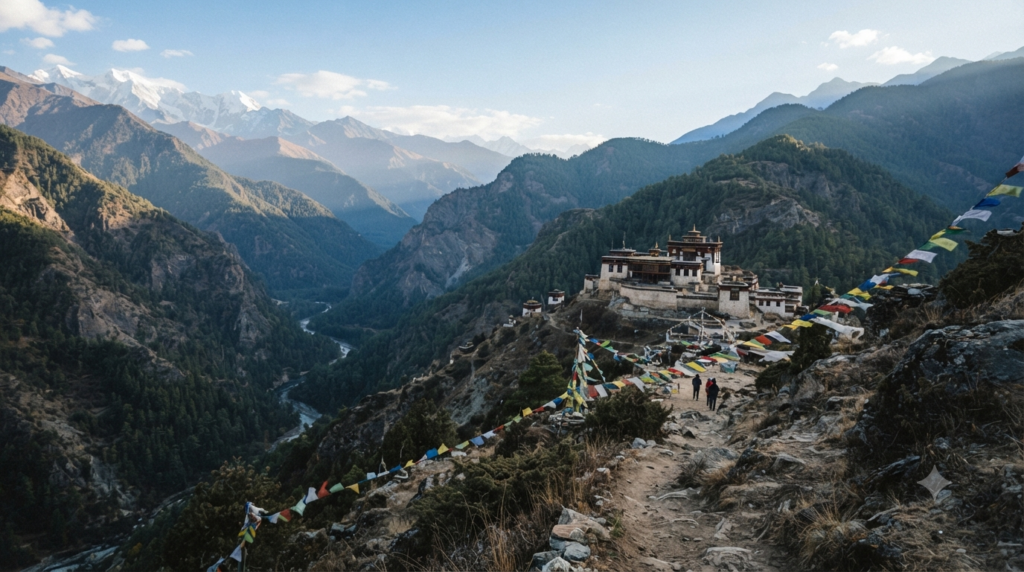
Tawang Monastery Arunachal Pradesh is India’s largest Buddhist monastery. The current Government of India tourism listing gives visitor hours of 7:00 AM to 7:00 PM. The bigger planning issue is reaching Tawang with the correct permit and road time. You are visiting a living Gelug Buddhist institution, so respectful conduct matters too.
Go Kshetra is an independent travel and pilgrimage guide. We are not affiliated with Tawang Monastery, the Government of Arunachal Pradesh, or the Ministry of Tourism. We do not accept monastery bookings, permits, donations, or payments.
The old version of this page said visitors could reserve a monastery visit online. That claim was misleading. Current government tourism pages do not link to an advance monastery-entry booking system. Instead, the Arunachal Pradesh eILP portal handles the separate state entry permit for Indian tourists.
Tawang Monastery Arunachal Pradesh at a Glance
Tawang Monastery, also called Gaden Namgyal Lhatse, stands above Tawang at more than 10,000 feet in the Eastern Himalayas. Merak Lama Lodre Gyatso founded it in the 17th century in accordance with the wishes of the Fifth Dalai Lama. It remains a working centre of Tibetan Buddhist study, prayer, community life, and Monpa culture.
- Official visitor hours: 7:00 AM to 7:00 PM, according to Incredible India.
- Advance monastery booking: No official government tourism booking flow is published for ordinary visitors.
- Entry charge: No fixed monastery entry tariff is published on the current Incredible India or Tawang district tourism pages. Confirm any on-site museum or special-area charge locally.
- Altitude: Over 10,000 feet, so cold, wind, and thinner air can affect visitors.
- Indian visitors: An Inner Line Permit is required to enter Arunachal Pradesh.
- Foreign visitors: Protected Area Permit rules apply; use the official government route.
- Best broad travel windows: March to June and September to November, according to Tawang district guidance.
What Is Tawang Monastery and Why Does It Matter?
Tawang Monastery Arunachal Pradesh is a 17th-century Gelug Buddhist monastery and a major religious institution for the Monpa community. Government tourism sources describe it as the largest monastery in India. Its importance comes from living practice, manuscripts, art, printing traditions, and monastic education.
The monastery’s Tibetan name appears in several English spellings, including Gaden Namgyal Lhatse. Incredible India translates it as “the divine paradise of complete victory.” It also records the tradition that Merak Lama’s horse helped identify the site.
This is a living monastery, not a static monument. Monks study, pray, and work here, so inner access can change with religious activity.
Tawang Monastery Arunachal Pradesh History and Highlights
Incredible India says Merak Lama Lodre Gyatso established the monastery in the latter part of 1681 with local support. It also describes a three-storey complex enclosed by a roughly 282-metre compound wall, with 65 residential buildings. The library preserves important Buddhist scriptures, including Kangyur and Tengyur texts.
Inside Tawang Monastery Arunachal Pradesh, the entrance structure known as the Kakaling deserves a slow look. Its stone walls and painted roof introduce the wider complex. The government tourism description also notes a traditional printing press. It used locally made paper and wooden printing blocks for religious books.
The Tawang district tourism page highlights a 28-foot gilded Buddha statue and the manuscript collection. Visit quietly because these are parts of a functioning religious institution, not just photo stops. Readers interested in another Himalayan Buddhist centre can compare the setting with our Hemis Monastery visiting guide.
Tawang Monastery Arunachal Pradesh Timings and Entry
For Tawang Monastery Arunachal Pradesh, Incredible India lists 7:00 AM to 7:00 PM as the general visitor window. That does not guarantee continuous access to every hall. Prayer, maintenance, weather, or special events can change inner access.
| Visit detail | Current planning guidance | Best source |
|---|---|---|
| General visitor hours | 7:00 AM to 7:00 PM | Incredible India |
| Main monastery ticket | No fixed tariff published on current government tourism pages | Confirm on arrival |
| Online visit booking | No official advance monastery-entry booking flow found | Do not prepay third parties |
| Prayer access | Depends on monastic activity and local instructions | Ask monastery staff |
| Photography | Ask before photographing interiors, rituals, monks, or manuscripts | Follow on-site signs |
Do not confuse a state travel permit with a monastery reservation. The Arunachal Pradesh eILP is permission for eligible Indian visitors to enter the state. It is not a Tawang Monastery ticket, fast-track pass, or guaranteed prayer-hall slot.
Is There Online Booking for Tawang Monastery?
For Tawang Monastery Arunachal Pradesh, no government tourism source currently links to an online booking system for a normal visit. The old Go Kshetra page was misleading on this point. Do not pay a private website for a claimed “monastery visit slot” unless an official source later announces one.
If an inner hall is temporarily closed when you arrive, there is no online workaround. Wait respectfully, ask staff whether public access will resume, and continue through the open courtyard areas. If a ceremony restricts entry for the day, return later rather than pressuring monks or trying to bypass local instructions.
Tawang Monastery Arunachal Pradesh Permits and ILP Rules
A Tawang Monastery Arunachal Pradesh trip also requires the correct state permit. Indian citizens need an Inner Line Permit to enter Arunachal Pradesh. The Tawang district administration links to the official eILP system.
The current tourist eILP page lists ₹300 for up to three days and ₹500 for longer stays up to 14 days. Check the live portal because categories and fees can change.
- Open the official Arunachal Pradesh eILP portal.
- Choose the tourist eILP route that matches your trip and current eligibility.
- Enter only the details requested by the government portal and upload the required documents.
- Check that your planned districts and travel dates match the permit before departure.
- Keep an accessible copy during the journey because permits can be checked en route.
Foreign nationals follow a different process. The official eILP site states that its tourist eILP is for Indian citizens and directs foreign nationals toward PAP or RAP procedures through the government’s foreigner-services route. Border excursions such as Bum La can also require additional local and security clearance, so a Tawang town permit should not be treated as blanket permission for every frontier location.
How to Reach Tawang Monastery Arunachal Pradesh
For Tawang Monastery Arunachal Pradesh, the district administration lists Guwahati Airport as the primary air gateway. Donyi Polo Airport near Itanagar is another option, while Tezpur Airport serves regional flights. By rail, Guwahati is the major junction, with Rangapara North and Bhalukpong as feeder railheads.
Road route from Assam
The most-used route runs from Guwahati or Tezpur through Bhalukpong, Bomdila, Dirang, the Sela sector, Jang, and finally Tawang. The district page gives a broad 14 to 16 hour road journey from the Guwahati or Tezpur side, so many travellers break the trip at Bomdila or Dirang. That stop also helps your body adjust before higher sections.
What changed after the Sela Tunnel opened?
The Sela Tunnel materially improved the Tezpur–Tawang road. The Ministry of Defence says the project was dedicated to the nation on 9 March 2024 and provides all-weather connectivity on the Balipara–Chariduar–Tawang Road. Even so, mountain travel can still slow because of weather, landslides, traffic, or local restrictions, so keep buffer time.
Our Kailash Manasarovar guide also shows why acclimatization and weather margins matter on high-altitude journeys.
Best Time to Visit Tawang Monastery Arunachal Pradesh
For Tawang Monastery Arunachal Pradesh, March to June and September to November are the stronger travel windows. The district warns that July and August bring heavy rain, landslides, and road blockages. Winter can bring heavy snow, severe cold, and occasional travel disruption.
Tawang itself sits around 10,000 feet, and the approach crosses still higher terrain. Therefore, visitors can feel headache, unusual tiredness, poor sleep, or breathlessness if they ascend quickly. The district advises acclimatization and tells senior citizens and travellers with asthma, COPD, serious bronchitis, chronic heart conditions, or similar risks to seek medical clearance before high-altitude travel.
Carry prescribed medicines, warm layers, water, and a simple buffer plan. Do not treat the monastery visit as a race after a long overnight drive. If you feel unwell, rest and seek medical help rather than forcing a full sightseeing schedule.
Tawang Monastery Arunachal Pradesh Dress and Etiquette
At Tawang Monastery Arunachal Pradesh, modest clothing is the sensible standard because this is an active place of worship. The government tourism pages reviewed here do not publish a detailed dress-code rule. Cover shoulders and knees, keep voices low, and follow footwear instructions before entering prayer spaces.
- Ask before photographing monks, prayer sessions, manuscripts, statues, or inner rooms.
- Do not use flash where it can disturb worship or damage sensitive materials.
- Walk around prayer objects in the direction indicated locally and avoid touching sacred items.
- Keep residential and school areas private unless staff explicitly invite visitors in.
- Do not block entrances or prayer routes while taking photographs.
Morning can be quieter, yet do not assume that an early arrival guarantees access to a prayer ritual. A daily public prayer timetable is not published on the official tourism pages. Ask on site, then observe only from areas where visitors are permitted.
What Else to See Around Tawang
Use the monastery as the anchor for a wider Tawang plan instead of packing every high-altitude attraction into one day. The district tourism page lists Urgelling Monastery, Tawang War Memorial, Sela Pass, Bum La Pass, Sungester Lake, and Nuranang Falls among the region’s main attractions. Incredible India places Urgelling Monastery about three kilometres from Tawang township.
| Place | Why add it | Planning note |
|---|---|---|
| Urgelling Monastery | Associated with the birthplace of the Sixth Dalai Lama | Easy cultural pairing in the Tawang area |
| Tawang War Memorial | 1962 war remembrance and regional history | Fits a town-focused day |
| Sela Pass and Sela Lake | High-altitude scenery on the approach | Weather can change quickly |
| Nuranang Falls | Major waterfall near Jang | Works well on the road itinerary |
| Bum La Pass | High border viewpoint | Needs additional clearance |
If Buddhist heritage is your main interest, Go Kshetra’s Thotlakonda Buddhist Complex guide offers a useful contrast between a living Himalayan monastery and an excavated early Buddhist monastic site.
Where to Stay and How Much Time to Keep
Stay in Tawang town rather than treating the monastery as a remote overnight destination. Arunachal Tourism lists hotels, guest houses, homestays, and government lodging across the Tawang circuit. Rates change by season, so compare current options and confirm directly with the property before travel.
For Tawang Monastery Arunachal Pradesh, a practical first visit usually needs around two hours. That allows time for courtyards, public areas, architecture, and views without rushing. Keep longer if prayer access opens. This is a planning estimate, not an official timed slot.
A three-night Tawang stay is more comfortable than a rushed one-night stop because the road journey is long and altitude rewards slower pacing. Use one day for the monastery and town sites, while keeping separate time for weather-dependent high routes.
Common Mistakes First-Time Visitors Make
The most expensive mistake is paying for a fake “Tawang Monastery online booking.” Tawang Monastery Arunachal Pradesh does not currently have a government tourism booking flow for an ordinary visit. The eILP belongs to the state entry system, not the monastery.
- Using stale transport advice: Older pages still describe the pre-Sela-Tunnel road as if nothing changed.
- Skipping the ILP: Indian tourists need the state permit before entering Arunachal Pradesh.
- Assuming every hall follows 7:00 AM–7:00 PM: General visitor hours do not guarantee uninterrupted inner access.
- Rushing altitude: A long overnight road arrival followed by high sightseeing can leave you exhausted.
- Treating monks as photo subjects: Ask first, especially during prayer or study.
- Overloading one day: Bum La and other high routes have separate permit and weather constraints.
Before You Go
Plan Tawang Monastery Arunachal Pradesh around four facts: the 7:00 AM to 7:00 PM visitor window, state permit rules, the long mountain approach, and its living religious role. Use government portals for permits and advisories. Treat private “entry booking” claims with caution, and keep a road and weather buffer.
With the permit, road buffer, and altitude plan settled, you can focus on the monastery rather than chasing a booking that does not exist.
Tawang Monastery Arunachal Pradesh FAQs
What are the official Tawang Monastery timings?
Incredible India currently lists the monastery’s opening time as 7:00 AM and closing time as 7:00 PM. Those are general visitor hours. Individual halls can have shorter access during prayers, ceremonies, maintenance, or local restrictions, so follow the instructions given on arrival.
Is there an entry fee for Tawang Monastery?
The current government tourism pages reviewed for this refresh do not publish a fixed main-monastery entry tariff. Therefore, do not rely on copied private-site price lists as an official fee. Carry a little cash for any locally posted museum, camera, or donation arrangement and confirm it on site.
Do I need to book Tawang Monastery online?
No official advance booking system is currently linked for ordinary Tawang Monastery Arunachal Pradesh entry. The Arunachal eILP portal is separate and covers state entry permission for eligible Indian tourists. Never treat an eILP as a monastery ticket.
Do Indian tourists need an Inner Line Permit for Tawang?
Yes. The Tawang district administration states that Indian visitors need an Inner Line Permit for Arunachal Pradesh. Use the official eILP portal and check the current fee, permitted stay, districts, and document rules before you submit an application.
What permit do foreign tourists need for Tawang?
Foreign nationals follow Protected Area Permit rules rather than the tourist eILP used by Indian citizens. The Arunachal eILP portal directs foreign visitors to the government foreigner-services channel. Check the latest national and state rules because restricted-area conditions can change.
What is the best time to visit Tawang Monastery?
March to June and September to November are the most reliable broad travel windows in the current Tawang district guidance. July and August bring monsoon-related road risk, while winter can bring snow and severe cold. Always check a current district advisory before a mountain trip.
How do I reach Tawang Monastery from Guwahati?
The district administration gives Guwahati as a primary gateway and places Tawang about 480 km away by road. The common route goes through Bhalukpong, Bomdila, Dirang, the Sela sector, and Jang. Many travellers stop overnight in Dirang or Bomdila rather than completing the entire mountain drive in one stretch.
Is Tawang Monastery suitable for elderly visitors?
Many older travellers can visit Tawang Monastery Arunachal Pradesh, but the town sits around 10,000 feet and the wider trip crosses higher terrain. The district advises medical clearance for senior citizens and people with significant heart or respiratory conditions. Pace walking, stay warm, and allow time to acclimatize.
Can I take photos inside Tawang Monastery?
Do not assume every interior permits photography. Ask staff before photographing monks, rituals, manuscripts, statues, or prayer rooms, and follow posted signs. Exterior courtyards are generally easier for photography, but religious activity should always take priority over a picture.