
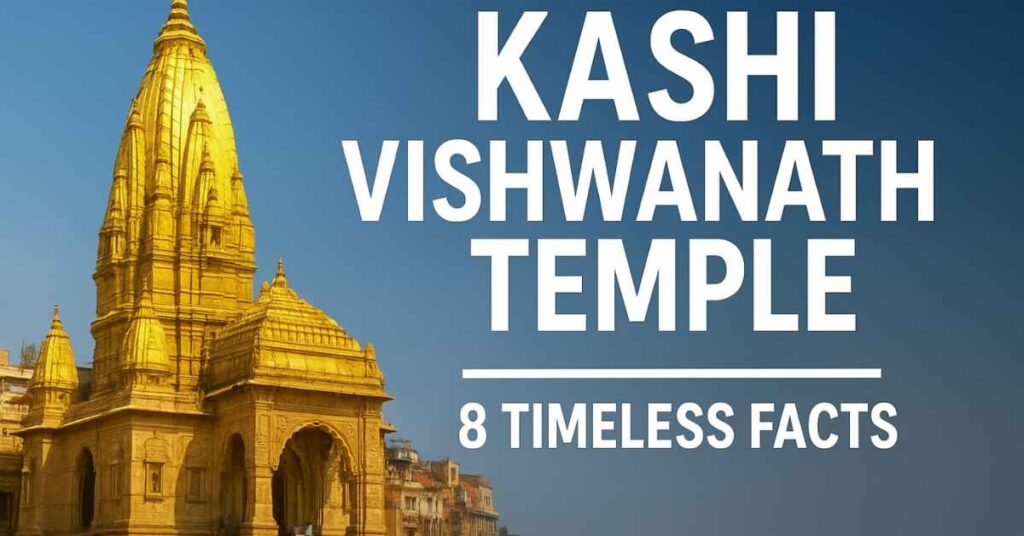
Explore Kashi Vishwanath Temple’s divine secrets, rituals, darshan tips & the spiritual power of Lord Shiva in Varanasi.
Key Information at a Glance
- Timings: to attain spiritual cleansing and liberation
- Location: Varanasi, Uttar Pradesh, India
Deity
Lord Shiva (as Vishwanath or Vishwesh
The Kashi Vishwanath Temple in Varanasi (Kashi) stands as one of Hinduism’s most sacred sites, revered as the abode of Lord Shiva and a gateway to moksha (liberation). Nestled on the western banks of the Ganga River, the temple’s golden spire gleams as a beacon of eternal faith and divine energy.
Dedicated to Shri Vishwanath—“Lord of the Universe”—this Jyotirlinga temple is mentioned in the ancient Skanda Purana and Kashi Khanda as the cosmic center of creation. Every Hindu aspires to visit Kashi once in a lifetime to attain spiritual cleansing and liberation.
In this guide, we uncover eight timeless facts about Kashi Vishwanath Temple that make it the living heart of Varanasi.
Quick Facts
| Fact | Detail |
|---|---|
| Location | Varanasi, Uttar Pradesh, India |
| Deity | Lord Shiva (as Vishwanath or Vishweshwara) |
| Type | Jyotirlinga Temple |
| River | Ganga |
| Built/Rebuilt | Original shrine traced to 11th century; current form rebuilt by Ahilyabai Holkar in 1780 |
| Special Feature | Golden spire (domes plated with 800 kg of gold) |
| Main Festival | Maha Shivaratri |
| Official Website | kashivishwanath.org |
1. Kashi — The City That Never Dies
Varanasi, also called Kashi, is believed to be the oldest living city on Earth. Scriptures say that Lord Shiva established Kashi himself, making it a spiritual axis of the universe. Life and death coexist peacefully here—where cremation at Manikarnika Ghat is considered the final step toward liberation.
2. The Jyotirlinga of Light and Energy
Among the twelve sacred Jyotirlingas in India, Kashi Vishwanath holds a special place. The lingam symbolizes the eternal flame of Shiva’s cosmic energy—light that destroys ignorance and rebirth. Devotees believe that simply chanting “Om Namah Shivaya” within the temple cleanses lifetimes of karma.
3. The Temple’s Golden Glory
The temple’s iconic gold-plated dome and spire were donated by Maharani Ahilyabai Holkar of Indore in the 18th century, and later enhanced by Maharaja Ranjit Singh of Punjab. The gold glistening under the sun represents both material and spiritual radiance—the perfect union of wealth and worship.
4. The Sacred Gyanvapi Well
Adjacent to the main temple stands the Gyanvapi (Well of Knowledge), considered as sacred as the temple itself. According to legend, Lord Shiva concealed the original Jyotirlinga here to protect it from invaders. Pilgrims often bow before the Gyanvapi before entering the temple for darshan.
5. Rituals and Spiritual Practices
Devotees perform various rituals at Kashi Vishwanath daily, including:
- Mangala Aarti (3:00 AM) — The earliest darshan of Lord Vishwanath.
- Bhog Aarti (11:15 AM) — Midday offering of food and prayers.
- Sandhya Aarti (6:00 PM) — Evening worship accompanied by bells and conch sounds.
- Shringar Aarti (9:00 PM) — Lord Shiva is adorned beautifully for the night.
The entire city of Kashi vibrates with Shiva’s presence, especially during Maha Shivaratri, when lakhs of devotees perform parikrama and night-long chants.
6. The Kashi Vishwanath Corridor — Modern Revival
In 2021, the Kashi Vishwanath Corridor project was inaugurated, connecting the temple directly to the Ganga ghats. This transformative development has made darshan more accessible while preserving the temple’s historic sanctity. The corridor blends ancient architecture with modern design—symbolizing the revival of India’s spiritual heart.
7. Liberation Through Faith
It is believed that anyone who dies in Kashi attains moksha—freedom from the cycle of rebirth. According to legend, Lord Shiva himself whispers the Taraka Mantra (“Ram Nam Satya Hai”) into the ears of the dying, granting them eternal peace. This makes Kashi not just a place of worship, but a sacred crossing between life and eternity.
8. Places to Visit Around Kashi Vishwanath
- Annapurna Devi Temple — Adjacent to the main shrine; Goddess of nourishment.
- Dashashwamedh Ghat — Famous for its daily Ganga Aarti.
- Manikarnika Ghat — The sacred cremation ground linked to the cycle of liberation.
- Sankat Mochan Hanuman Temple — Established by Tulsidas, dedicated to Hanuman.
- Bharat Mata Mandir — Unique temple with a map of undivided India carved in marble.
Travel Tips
- Dress Code: Traditional Indian attire; modest clothing required.
- Best Time: October–March (pleasant weather, festival season).
- Avoid: Mondays and Maha Shivaratri if seeking a less crowded experience.
- Online Booking: Darshan passes available on
- Local Tip: Combine your visit with a sunrise boat ride on the Ganga—an unforgettable spiritual sight.
FAQs
Q1. Why is Kashi Vishwanath considered so sacred?
Because it houses one of the twelve Jyotirlingas of Lord Shiva, representing divine light and liberation.
Q2. Can women enter the sanctum sanctorum?
Yes, all devotees—men and women—can have darshan, though only priests perform direct abhishek rituals.
Q3. What is the best time to visit for peaceful darshan?
Early morning (before 6 AM) or late evening during the Shringar Aarti.
Q4. How to reach Kashi Vishwanath Temple?
Varanasi is well connected by air, rail, and road. The temple is about 5 km from Varanasi Junction Railway Station.
Q5. Is photography allowed?
No, mobile phones and cameras are not permitted inside the temple complex.
Kashi Vishwanath Temple is not merely a shrine—it is a spiritual current that has flowed for millennia, guiding seekers from ignorance to enlightenment. The chants of “Har Har Mahadev,” the ringing bells, and the golden shimmer of the spire echo through eternity.
A visit to Kashi is more than pilgrimage—it is the soul’s reunion with the divine. As scriptures say, “He who comes to Kashi becomes free while living.”
Make this journey once in your lifetime, and you may find not just the Lord of the Universe—but the Lord within.
Usefull Links
- Connects South India’s Vaishnava pilgrimage to Kashi’s Shaiva tradition.
- Link Varanasi to the northern circuit of Ramayana pilgrimages.
- Completes the Char Dham reference set with Puri, Dwarka, and Badrinath.
- → Direct authority source for temple timings, rituals, and darshan booking.
- Government tourism details about accessibility, nearby temples, and events.
Author Box
Author: Gokshetra Blog Team | Gokshetra.com
Authentic, spiritually accurate coverage of Hindu temples, sacred cities & pilgrim traditions.
Important Tips for Visitors
- Remove footwear before entering the temple premises. Shoe storage is usually available near the entrance.
- Photography may be restricted inside the main sanctum. Check with temple authorities before clicking pictures.
- Visit during weekdays for shorter queues. Weekends and festival days see significantly higher footfall.
- Wear modest, traditional clothing — most temples require covered shoulders and knees.
Official Resources

Go Kshetra covers 1,600+ Hindu temples across 28 states. Content sourced from official temple websites and first-hand visits. About our editorial process