
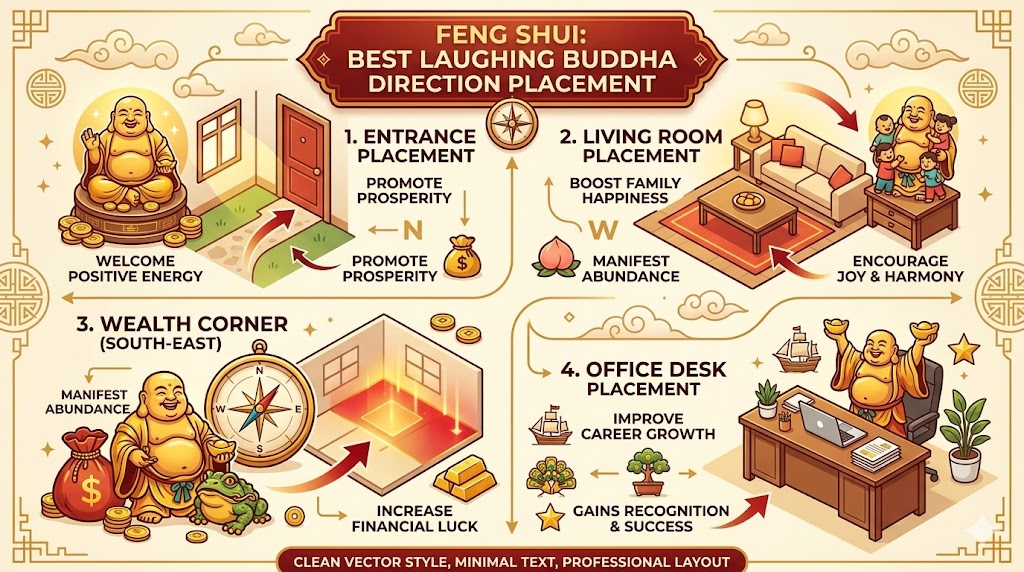
The Laughing Buddha Direction plays an important role in Feng Shui practices because correct placement is believed to attract wealth, happiness, prosperity, and positive energy. The Laughing Buddha, also known as Budai or the Happy Buddha, symbolises abundance, contentment, and good fortune. Therefore, many people place this statue in their homes, offices, and businesses to invite success and remove negative energies.
However, simply placing the statue anywhere may not provide the desired benefits. According to Feng Shui principles, the direction, height, and location of the Laughing Buddha determine how effectively it enhances positive energy flow. For example, placing the statue facing the main entrance is considered highly auspicious because it welcomes prosperity into the house. Similarly, positioning it in the living room or office reception area is believed to attract financial growth and happiness.
This complete guide explains the best direction to keep Laughing Buddha in home and office, including Feng Shui placement rules, mistakes to avoid, ideal locations, and powerful tips to maximise positive energy and prosperity.
Best Laughing Buddha Direction for Home and Office
The Laughing Buddha Direction should follow Feng Shui energy principles. Proper placement ensures that the statue attracts prosperity, joy, and harmony.
According to Feng Shui experts, the statue should ideally face the main entrance of the house or office.
This placement symbolises welcoming positive energy and abundance into the space.
Why Laughing Buddha Placement Direction Matters
The Laughing Buddha represents wealth, happiness, and good fortune.
However, the direction and placement determine how energy flows within the space.
Correct placement helps to:
- Attract prosperity
- Remove negative energy
- Improve financial luck
- Create a joyful atmosphere
- Enhance harmony in the household
Therefore, understanding the correct direction is essential.
Best Direction to Keep Laughing Buddha in Home
Entrance Facing Placement
The most recommended Laughing Buddha Direction is facing the main entrance.
Why this placement works
- Welcomes prosperity into the house
- Blocks negative energies
- Creates a positive first impression
Ideal setup
- Place the statue on a table or shelf
- Keep it about 2.5 to 3 feet above the floor
- Ensure it faces the entrance
However, avoid placing it directly on the floor.
Living Room Placement
The living room is one of the best places for the statue.
Benefits include:
- Creates positive energy for the family
- Encourages harmony and happiness
- Attracts financial prosperity
Place the statue in a clean and visible area.
Wealth Corner Placement
According to Feng Shui, the south-east corner of the house represents the wealth area.
Placing the Laughing Buddha here is believed to:
- Enhance financial prosperity
- Increase business success
- Attract new opportunities
Best Direction to Keep Laughing Buddha in Office
Proper Laughing Buddha Direction in an office can promote success and growth.
Office Entrance Placement
- Place the statue facing the office entrance.
- This placement symbolises welcoming clients and financial opportunities.
Reception Desk Placement
Many businesses keep Laughing Buddha statues at the reception area.
Benefits include:
- Attracts positive energy
- Creates a welcoming environment
- Encourages prosperity in business
Work Desk Placement
Some professionals keep a small Laughing Buddha statue on their desk.
However:
- Place it in front of you
- Ensure it faces the room
- Avoid placing it behind you
Feng Shui Rules for Laughing Buddha Placement
Following certain rules enhances the effectiveness of the Laughing Buddha Direction.
Important placement rules
- Always place the statue at eye level or above waist height
- Keep the area clean and clutter-free
- Place it in a visible location
- Choose a smiling or happy Buddha statue
These steps ensure positive energy flow.
Places Where You Should Not Keep Laughing Buddha
Incorrect placement may reduce its positive effects.
Avoid placing the statue in the following locations:
Bedroom
Feng Shui generally discourages placing Laughing Buddha in bedrooms.
Bathroom
Bathrooms represent draining energy.
Kitchen
The kitchen environment is not considered spiritually appropriate.
Directly on the Floor
The statue should always be elevated.
Different Types of Laughing Buddha and Their Meaning
Different Laughing Buddha statues symbolise different blessings.
Laughing Buddha with Money Bag
Symbolises wealth and prosperity.
Laughing Buddha with Children
Represents happiness and family blessings.
Laughing Buddha with Gold Ingot
Represents financial success and abundance.
Reclining Laughing Buddha
Symbolises relaxation and contentment.
Choosing the right statue depends on your intention.
Tips to Activate Laughing Buddha Energy
To maximise the benefits of the Laughing Buddha Direction, follow these simple practices.
- Keep the statue clean
- Place it in a well-lit area
- Avoid clutter around it
- Show respect to the statue
Some traditions also suggest gently rubbing the Buddha’s belly for good luck.
FAQ – Laughing Buddha Direction
What is the best direction for Laughing Buddha?
The best direction is facing the main entrance of the house or office.
Can Laughing Buddha face the door?
Yes. Facing the door is considered highly auspicious.
Which corner is best for Laughing Buddha?
The south-east corner (wealth corner) is considered ideal.
Can Laughing Buddha be placed in the bedroom?
Feng Shui experts generally advise against placing it in the bedroom.
What height should Laughing Buddha be placed?
The statue should be placed at least 2.5–3 feet above the floor.
External Official Links
International Feng Shui Guild
World of Feng Shui Resource
Official Resources
Helpful Tips
- Plan your visit in advance and check official websites for the latest timings and guidelines.
- Carry valid ID proof as it may be required at certain locations.
- Respect local customs and traditions during your visit.
- Keep your belongings secure and avoid carrying valuables.

V S Anantha Sharma is a Senior Content Researcher at Go Kshetra with over 20 years of experience in Indian archaeology, temple architecture, and Hindu pilgrimage traditions. A lifelong devotee and...
Go Kshetra covers 1,600+ Hindu temples across 28 states. Content sourced from official temple websites and first-hand visits. About our editorial process